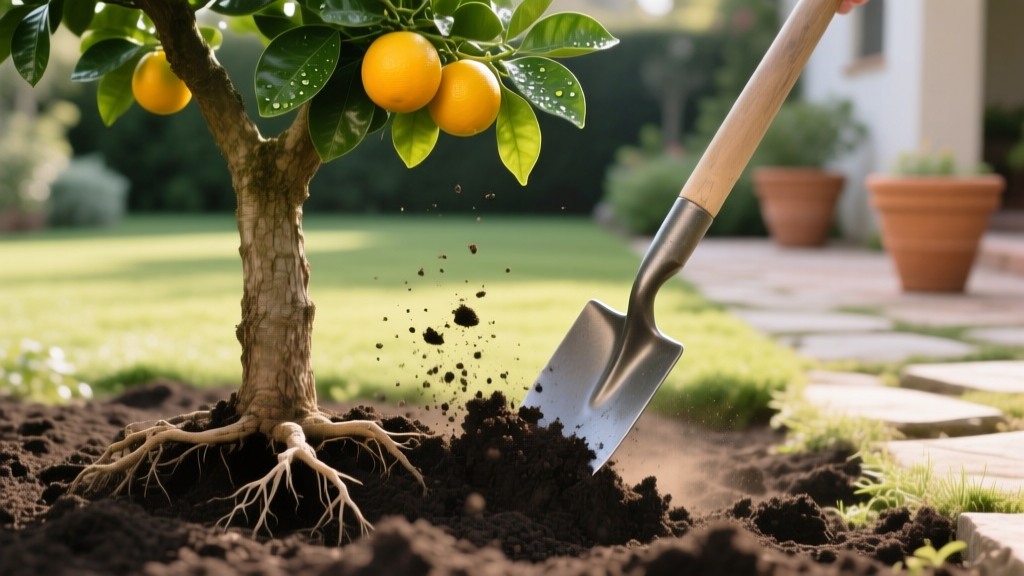
Aerating Soil Around Citrus Trees for Better Drainage
You water your lemon tree like you always do, and two days later the ground is still squishy. The leaves start paling, a few drop for no obvious reason, and the tree just looks “tired.” A lot of home gardeners respond by watering less (sometimes helpful), or fertilizing more (usually not helpful). But with citrus, the sneaky culprit is often the same: oxygen-starved roots sitting in soggy soil. Aeration—done the right way, at the right time, and without shredding roots—can be the difference between a tree that limps along and one that pushes glossy new growth.
Here’s the surprising part: most citrus “watering problems” are actually drainage and soil structure problems. Citrus roots want moisture, but they also need air. When pore spaces are filled with water for too long, roots can’t breathe, feeder roots die back, and then the canopy shows stress. Let’s fix the soil so watering becomes easier, not a constant guessing game.
How to tell if your citrus soil needs aeration (and when not to)
Aeration is about restoring air pockets in the root zone—either by relieving compaction, improving structure, or both. Before you grab a digging fork, confirm you’re treating the right issue.
Fast field checks you can do in 10 minutes
- Puddle test: After irrigation or rain, does water stand longer than 4–6 hours near the drip line? That’s a drainage red flag.
- Screwdriver test: Push a long screwdriver into the soil near (not against) the canopy edge. If you can’t get down 6–8 inches without serious force, compaction is likely.
- Smell test: Dig a small hole 8 inches deep. Sour/rotten odor suggests anaerobic conditions.
- Root check: Healthy feeder roots are light-colored and firm. Dark, mushy roots point toward waterlogging and possible root rot.
Times to avoid aggressive aeration
There are moments when “aeration” can do more harm than good:
- During extreme heat: If daytime highs are above 95°F, disturbing soil can dry out fine roots quickly.
- When the soil is saturated: Working wet soil smears clay particles and can worsen compaction.
- Very close to the trunk: Most feeder roots are in the top 6–12 inches and extend well beyond the canopy. The trunk flare area is not where you want to be stabbing holes.
Watering after aeration: keeping moisture without re-compacting
Aerating soil changes how water moves. The goal is steady moisture with good oxygen exchange—no swamp, no bone-dry swings.
A practical watering rhythm for established in-ground citrus
Adjust for climate and soil type, but these numbers keep many home gardens out of trouble:
- Deep watering target: Wet soil to 18–24 inches deep for mature trees (feeder roots are shallower, but deeper wetting encourages resilience).
- Frequency guide: In warm months, many established citrus do best with deep watering every 7–14 days in loam; every 4–7 days in sand; every 14–21 days in heavier clay once drainage is improved.
- Morning timing: Water early to reduce evaporation and lower fungal risk.
If you use drip, spread emitters around the drip line rather than clustering near the trunk. After aeration, water gently the first time so soil settles around air pockets without collapsing them all at once.
“Most citrus roots are in the upper 12 to 18 inches of soil, and good drainage is critical—roots decline quickly when soils stay saturated.” — University of Florida IFAS Extension publication (2020)
Simple “drainage-aware” watering check
- Water long enough to moisten at least 12 inches deep.
- Wait 24 hours.
- Dig a small check hole near the drip line. The soil should feel cool and damp, not sticky and smeary.
Soil structure: what aeration can (and can’t) fix
Aeration is a tool, not magic. If you have heavy clay, a perched water table, or hardpan, poking holes helps—but long-term improvement comes from building structure and correcting how water enters and exits the root zone.
Know your soil type (because the method changes)
- Sandy soil: Drains fast. Aeration is usually about root oxygen after foot traffic compaction and about improving water-holding with organic matter.
- Loam: Often the easiest. Occasional aeration plus mulch is usually enough.
- Clay soil: Drainage is slow; compaction is common. Aeration helps most when combined with surface organic matter and avoiding soil disturbance when wet.
Comparison table: aeration methods around citrus
| Method | How deep? | Best for | Risk to roots | What to expect |
|---|---|---|---|---|
| Garden fork “wiggle” aeration | 6–10 inches | Moderate compaction in loam/clay | Low–Medium (if kept at drip line) | Improves infiltration; quick oxygen boost |
| Core aerator (manual or powered) | 2–4 inches | Surface crusting, turf near citrus | Low | Good for surface exchange; limited depth |
| Vertical mulching (augered holes filled with compost) | 12–18 inches | Clay soils, slow infiltration, mild hardpan | Medium (spacing matters) | Longer-lasting pathways for water/air |
| Top-dressing + mulch (no holes) | Surface | Long-term structure building | Very low | Slow, steady improvement over months |
Method A vs Method B: real-world performance differences
Here’s a grounded comparison many gardeners notice:
- Fork aeration (Method A): You may see better infiltration immediately after the next irrigation—often within 1–2 waterings. But in clay, the effect can fade in 6–12 weeks if you don’t add organic matter and keep traffic off the root zone.
- Vertical mulching (Method B): Takes longer to do, but the benefits often last a full season because the compost-filled channels resist collapsing and encourage biological activity.
University guidance consistently emphasizes drainage and avoiding saturated soils for citrus health. For example, Texas A&M AgriLife Extension notes citrus performs best in well-drained soils and declines in poorly drained sites (Texas A&M AgriLife Extension publication, 2022).
Step-by-step: aerating around citrus without damaging roots
For most home gardens, the safest approach is gentle aeration at the drip line—where the feeder roots are plentiful but not as thick and woody as closer to the trunk.
Option 1: Garden fork aeration (fast, low-tech)
- Choose the right day: Soil should be slightly moist, not wet. If you can form a sticky ribbon, wait another day or two.
- Mark your “no-stab zone”: Stay at least 12–18 inches away from the trunk.
- Work at the drip line: Insert the fork 6–8 inches deep, then gently rock it back and forth to open the soil. Don’t pry up chunks.
- Spacing: Make holes roughly every 8–12 inches in a ring (or two rings) around the tree.
- Finish with mulch: Add 2–4 inches of wood chips or leaf mulch, keeping it 6 inches away from the trunk flare.
Option 2: Vertical mulching (best for stubborn clay)
This is my go-to when citrus sits in heavy soil that stays wet too long.
- Use a bulb auger or soil auger to create holes 2–3 inches wide and 12–18 inches deep.
- Place holes around the drip line, spaced 12–18 inches apart.
- Fill holes with a blend of finished compost and native soil (about 50/50). Avoid straight compost in very dry climates—it can shrink and create gaps.
- Water lightly to settle.
- Mulch the surface.
Important: Don’t turn this into trenching. Trenches sever roots. Holes are gentler and create vertical “chimneys” for air and water.
Option 3: Fix the surface first (often overlooked)
If your soil has a crust or you’re dealing with irrigation runoff, you can get a lot of benefit without poking anything:
- Rake away matted debris and algae.
- Top-dress 1 inch of compost under the canopy (not against the trunk).
- Cover with 3 inches of coarse mulch.
This improves infiltration by encouraging worms and microbes to do the aerating for you.
Light and canopy habits that affect drainage (yes, really)
Light doesn’t change soil texture, but it changes water use. A citrus tree in full sun transpires more, pulling more water from the root zone. A tree shaded half the day may keep soil wetter longer, especially in cool seasons.
- Best light: Aim for 6–8 hours of direct sun for most citrus.
- Pruning note: Don’t “lion tail” (stripping inner foliage). You want a balanced canopy that shades soil lightly without blocking airflow.
If your citrus is on the north side of a wall (or under a big tree), aeration helps—but you may still need to reduce irrigation frequency because evaporation and transpiration are lower.
Feeding citrus in aerated soil: don’t overdo it
When drainage improves, nutrient uptake often improves too. That’s great—unless you respond by fertilizing heavy and pushing tender growth that the roots can’t support.
Practical feeding guidelines
- Timing: Feed during active growth—typically spring through late summer. Avoid heavy nitrogen late in the season in frost-prone areas.
- How much: Follow the label rates for citrus fertilizers; if your tree is stressed from wet feet, start with 50% of the recommended rate, then reassess in 4–6 weeks.
- Where to apply: Spread evenly from 12 inches out from the trunk to a foot or two beyond the drip line; water in.
As UC Agriculture and Natural Resources notes, citrus benefits from regular nitrogen applications during the growing season, but overwatering and poor drainage can predispose trees to disease and nutrient issues (UC ANR guidance, 2023).
Common drainage-related problems in citrus (and what to do)
Poor drainage doesn’t always look like a puddle. Sometimes it looks like nutrient deficiency, leaf drop, or fruit problems—because compromised roots can’t do their job.
Troubleshooting: symptoms, likely causes, and fixes
- Symptom: Yellowing leaves, especially newer growth, and slow flushes
Likely cause: Root stress from low oxygen; nutrient uptake disruption
Fix: Aerate at drip line, add 2–4 inches mulch, adjust watering interval; consider a soil test before adding more fertilizer. - Symptom: Leaf drop after watering or rain (without heat wave)
Likely cause: Waterlogged root zone
Fix: Stop watering until top 2–3 inches dry; improve infiltration with fork aeration and compost top-dress; check for downspouts dumping near the tree. - Symptom: Gum oozing near base, bark darkening, dieback
Likely cause: Phytophthora risk increases with wet soils and trunk moisture
Fix: Pull mulch back 6 inches from trunk, keep irrigation off trunk, improve drainage; consult local extension for diagnosis and treatment options. - Symptom: Fruit splits or drops early
Likely cause: Irregular watering (soil swings from waterlogged to dry)
Fix: After drainage improvement, aim for consistent deep watering; mulch to buffer moisture; avoid “rescue” flooding.
Three real-world scenarios (and what actually worked)
These are the situations I see repeatedly in home gardens. The details change, but the pattern is the same: drainage first, then fine-tune watering and feeding.
Scenario 1: Heavy clay backyard, lemon tree that never perks up
The homeowner watered every 5 days in summer because the surface looked dry. But a quick hole showed wet, sticky soil at 6 inches down even a week after watering. We did vertical mulching: holes 15 inches deep around the drip line, compost/native mix, then 3 inches of wood-chip mulch. Watering shifted to every 10–14 days with longer run time. Within a month, new leaves came in darker and the tree held fruit better.
Scenario 2: Citrus planted in a lawn, compacted by foot traffic
This is common: sprinklers run often, people walk the same route, and the soil becomes a brick. The fix was not “more water.” We used a core aerator over the turf area (shallow, low root risk) and removed a grass ring to create a mulch zone out to 3 feet from the trunk. Drip irrigation replaced frequent sprinkling. The soil stopped sealing over, and the tree needed fewer irrigations overall.
Scenario 3: Container citrus that stays wet and smells sour
Aeration outdoors isn’t just for in-ground trees. In pots, drainage failure is often a mix issue. The gardener had a 20-inch pot with a peat-heavy mix that stayed wet. The solution was repotting (not poking holes): move to a fast-draining citrus mix, ensure drainage holes are open, and water only when the top 2 inches are dry. If you must “aerate” a pot temporarily, gently loosen the top 1–2 inches and stop watering until it dries down—then plan a repot.
Preventing re-compaction: the habits that keep drainage improved
Aeration is easiest when it’s maintenance, not emergency surgery. Once you open the soil, protect that structure.
- Keep a mulch blanket: Maintain 2–4 inches year-round. Top up as it breaks down.
- Stop the soil pounding: Avoid walking under the canopy, especially when wet.
- Redirect runoff: Make sure downspouts and hardscape drainage don’t dump into the root zone.
- Water slowly: If runoff happens, split irrigation into two cycles spaced 30–60 minutes apart to improve soak-in.
- Check once per season: Do the screwdriver test each spring and mid-summer; if resistance returns, do light fork aeration and refresh mulch.
Common mistakes I’d avoid if this were my tree
These are the “well-intended” moves that backfire:
- Digging a trench around the tree: It severs roots and can destabilize the tree.
- Adding sand to clay: In many real garden soils, clay + sand can behave like concrete. Build structure with compost and mulch instead.
- Piling mulch against the trunk: Keep a clear gap of about 6 inches to reduce rot and pest issues.
- Fertilizing hard to “green it up”: Fix oxygen and drainage first, then feed.
If you take only one habit from this: after you aerate, mulch and adjust watering. Those two steps keep the benefits going long after the holes disappear.
Once citrus roots have air again, the whole tree tends to respond—leaves firm up, new growth flushes more evenly, and you stop living in fear of every rainstorm. Drainage isn’t glamorous work, but it’s the kind that pays you back for years, one healthy crop at a time.