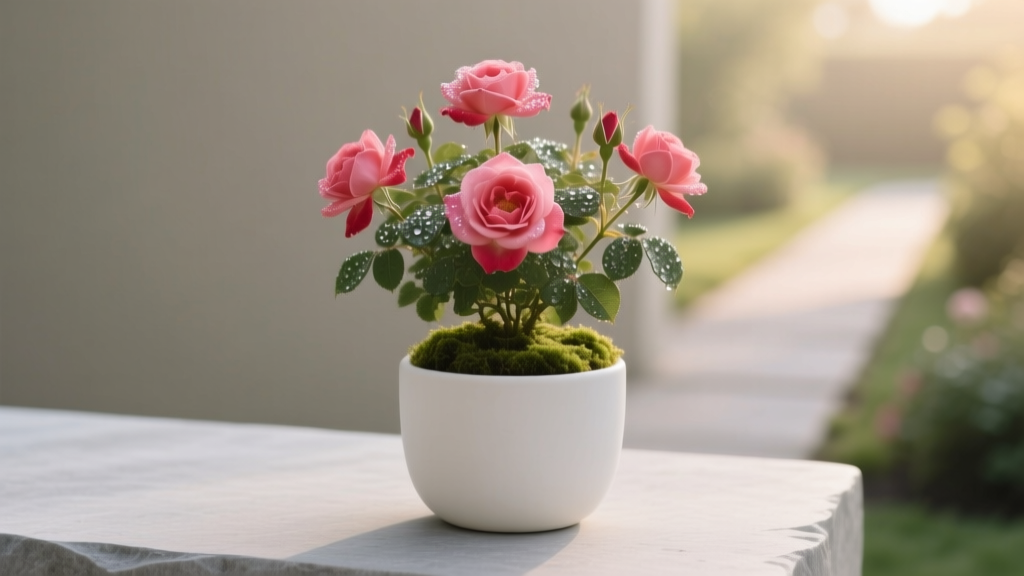
How to Maintain a Moss Roses Mother Plant
Every summer I hear the same frustration: “My moss roses (portulaca) looked amazing for two weeks, then they got leggy, stopped blooming, and the stems started thinning out.” The surprising part? Moss roses usually fail from too much kindness—extra water, rich potting mix, or shade that seems “safer” during heat. A mother plant is the one you keep strong and stocky so you can take cuttings, refresh baskets, and restart next season’s color without buying new plants. Treat it like a little desert engine: bright light, lean soil, and a watering rhythm that matches how portulaca actually grows.
This care guide is built for home gardeners who want a mother plant that stays compact, blooms hard, and produces cuttings on demand—without turning into a floppy, half-blooming tangle by midsummer.
What “mother plant” care means for moss roses
A moss roses mother plant isn’t a display plant you baby. It’s your propagation factory. The goal is a sturdy plant with lots of short, healthy shoots—because each shoot is potential cuttings, and compact growth makes it less likely to rot.
Here’s the mindset shift: you’re managing structure (pinching and light), root health (fast drainage), and stress balance (enough dryness to keep it tough, enough water to keep it growing).
Light: the #1 lever for a compact, blooming mother plant
If there’s one reason mother plants get weak, it’s insufficient sun. Moss roses are sun addicts. They don’t just “prefer” bright light—they use it to keep stems thick and nodes close together.
How much light is enough?
- Outdoors: Aim for 8+ hours of direct sun. Six hours can work, but expect longer internodes (leggier growth) and fewer blooms.
- Indoors/overwintering: Put the plant in your brightest south or west window. If you’re using a grow light, target 12–14 hours/day and keep the light 8–12 inches above the plant (adjust based on heat and stretching).
Portulaca flowers also respond to sunlight—they often stay closed on cloudy days or in shade. That’s not a “problem” so much as the plant telling you it’s not getting what it needs.
Real-world scenario: the “bright porch” that isn’t actually bright
A covered porch can look sunny to us and still be low-light for moss roses. If your plant leans toward the edge, develops long bare stretches between leaves, and blooms only at the rim, move it to true open sun. Within 10–14 days, new growth should come in tighter and greener.
Soil and containers: lean, gritty, and fast-draining
Moss roses are drought-tolerant succulents, and their roots hate sitting in water. The best mother plants live in soil that drains fast enough that you can water deeply without fear.
A practical soil mix (no guesswork)
For containers, I like a mix that behaves more like cactus soil than potting soil:
- 50% quality potting mix
- 25% perlite or pumice
- 25% coarse sand (or extra pumice if you don’t have sand)
If you’re planting in-ground, work to create a mound or raised area. Moss roses do much better on a slight slope than in a low spot where water lingers.
Container sizing and why it matters
For a single mother plant you plan to pinch and harvest, a 6–8 inch pot is usually perfect. Too large a pot stays wet too long. You want the root zone to dry reasonably fast after watering.
- Use a pot with at least 1 drainage hole (more is better).
- Avoid “self-watering” planters for mother plants unless you’re extremely experienced with them.
Comparison table: soil approaches that affect rot risk and growth
| Approach | Typical Dry-Down Time (summer, outdoor pot) | Bloom/Compactness | Rot Risk | Best Use |
|---|---|---|---|---|
| Standard potting mix only | 3–6 days | Often leggy; fewer blooms | High (especially after rain) | Only in very hot/arid climates |
| Potting mix + 25–50% perlite/pumice | 1–3 days | Compact growth; steady blooming | Low–Moderate | Most container mother plants |
| Cactus/succulent mix + extra grit | 1–2 days | Very compact; strong stems | Low | Rainy climates; heavy pinch/harvest |
Watering: deep, then dry—no “sips”
Watering is where most mother plants are lost. Portulaca stores water in its leaves and stems, but it still grows best with a rhythm: thorough watering, then a real dry-down.
Outdoor watering schedule that works
Use this as a starting point and adjust for your heat and pot size:
- Newly potted mother plant: Water every 2–3 days for the first 10 days, but only if the top 1 inch is dry.
- Established plant in summer heat (85–95°F): Usually 1–2 times/week.
- During a cool spell (below 70°F): Often every 7–10 days.
The method matters: water until it runs freely out the bottom, then empty the saucer. Avoid frequent light watering—it keeps surface roots alive and the core too wet, which invites rot.
How to tell if it needs water (fast checks)
- Pick up the pot. If it feels surprisingly light, it’s probably time.
- Check the top 1–2 inches with your finger. Dry and dusty is good; cool and damp means wait.
- Leaves looking slightly less plump by late afternoon can be normal in heat; if they perk up by morning, you’re fine.
Real-world scenario: week of summer rain
In rainy periods, moss roses can rot quickly in heavy mixes. If your forecast shows several wet days:
- Move the mother plant under an overhang where it still gets sun.
- Stop all manual watering.
- If the pot is staying wet more than 48 hours, increase airflow and consider repotting into a grittier mix once conditions improve.
Extension resources consistently emphasize that portulaca performs best in well-drained soils and full sun, with overwatering as a primary cause of decline (North Carolina State Extension, 2023; University of Florida IFAS Extension, 2022).
Feeding: keep it lean to keep it strong
Moss roses don’t need heavy fertilizer. Too much nitrogen gives you lush, weak stems and fewer flowers—exactly what you don’t want in a mother plant.
A simple feeding plan
- At potting time: mix in a small amount of slow-release fertilizer at 1/2 the label rate, or skip it if your potting mix already includes fertilizer.
- During active growth: use a liquid bloom-friendly fertilizer (something like 5-10-5 or similar) at 1/4 strength every 3–4 weeks.
If you prefer organic: a light top-dressing of worm castings is fine, but keep it thin—think 1 tablespoon for a 6-inch pot, scratched into the surface.
“For many flowering annuals, excessive nitrogen encourages vegetative growth at the expense of flowers—moderation is key.” — University of Minnesota Extension nutrient management guidance (2021)
Comparison analysis: heavy feeding vs lean feeding (what you’ll actually see)
Here’s what I see in real gardens when people feed mother plants differently:
- Heavy feeding (weekly full-strength liquid fertilizer): Stems elongate fast, blooms slow down, and plants get more vulnerable to stem rot after watering.
- Lean feeding (1/4 strength every 3–4 weeks): Shorter internodes, thicker stems, better branching after pinching, and more consistent blooming.
If you’re keeping one mother plant mainly for cuttings (not constant blooms), you can feed slightly more often—but never more than 1/2 strength, and only when the plant is in strong sun and drying well between waterings.
Pinching and pruning: how to keep a mother plant stocky
A mother plant becomes a mother plant when you start managing its shape. Pinching is how you turn one stem into many cutting-ready shoots.
When to pinch
- Start when stems are 4–6 inches long.
- Pinch every 2–3 weeks during peak growth.
- Stop heavy pinching about 4 weeks before you want maximum bloom display.
How to pinch (step-by-step)
- Use clean snips or pinch with your fingers (stems snap easily).
- Remove the top 1–2 inches above a leaf joint.
- Take cuttings from the healthiest, non-woody tips.
- Let cut ends dry for 30–60 minutes before sticking if conditions are humid (helps prevent rot).
Don’t be timid. A moss roses mother plant responds to pruning like a champ when it’s in full sun and fast-draining soil.
Temperature and seasonal handling: when to push, when to protect
Moss roses love heat and sulk in cold. Growth really takes off when days are warm and nights aren’t chilly.
- Best growth range: roughly 70–95°F (hotter is fine with airflow and proper watering).
- Cold sensitivity: protect when nights drop below 50°F; significant damage can occur near frost.
Real-world scenario: overwintering a mother plant indoors
If you want to keep a specific color or double-flowering type, overwintering can work—but you must lower expectations. Indoors, moss roses often stretch without intense light.
- Before first cold snap, take 6–10 tip cuttings as insurance.
- Bring the mother plant inside and place it in the brightest window you have (or under a grow light 12–14 hours/day).
- Cut watering by at least half. Water only when the mix is dry several inches down.
- In late winter, hard-prune to encourage fresh shoots for spring cuttings.
If indoor light is mediocre, it’s often better to overwinter cuttings than a whole mother plant. A few small pots are easier to keep bright and dry than one big plant.
Common problems (and what to do when it happens)
This is the section that saves mother plants. The trick is matching the symptom to the real cause—most issues trace back to light, water, or drainage.
Troubleshooting: leggy stems and fewer blooms
Symptoms: long bare stretches between leaves, plant flops open, blooms only at the ends, pale green growth.
Most likely causes:
- Not enough direct sun (common on patios and bright shade)
- Too much nitrogen fertilizer
- Overcrowding in a mixed planter
Fix (do this in order):
- Move to a spot with 8+ hours direct sun.
- Stop fertilizer for 3–4 weeks.
- Hard pinch: remove up to 1/3 of the length of the longest stems.
- If it’s in rich soil, repot into a gritty mix.
Troubleshooting: mushy stems / sudden collapse (rot)
Symptoms: stems turn translucent or brown at the base, plant collapses even though soil is wet, unpleasant smell.
Most likely causes:
- Soil staying wet too long (heavy mix, large pot, rainy stretch)
- Watering too often
- Poor airflow
Fix:
- Stop watering immediately.
- Cut away all mushy sections back to firm tissue.
- Take healthy tip cuttings (3–5 inches long) from unaffected stems and root them as backups.
- Repot the remaining plant into a drier, grittier mix and a smaller pot if needed.
Root and stem rots are consistently associated with excess moisture and poor drainage in many ornamentals, including succulents and succulent-like bedding plants (University of Florida IFAS Extension, 2022).
Troubleshooting: wrinkled leaves and stalled growth
Symptoms: leaves look thin, slightly shriveled, plant stops pushing new tips, soil is bone dry.
Most likely causes:
- Underwatering during extreme heat or wind
- Root-bound plant drying too fast
Fix:
- Water deeply until it drains freely.
- Check again the next morning; if the pot is already light, consider moving up one pot size (for example from 6 inches to 8 inches) but keep the gritty mix.
- Add a thin top layer of gravel to reduce splash and slow surface drying without trapping moisture at the roots.
Troubleshooting: aphids or small pests on tender tips
Symptoms: sticky residue, distorted new growth, clusters of tiny green/black insects on tips.
Fix:
- Blast with a firm jet of water early in the day.
- If needed, spray insecticidal soap, covering undersides; repeat every 5–7 days for 2–3 rounds.
- Avoid heavy nitrogen feeding—soft growth attracts pests.
Keeping a mother plant productive: a simple monthly routine
If you like checklists, here’s the routine that keeps mother plants in “cutting mode” without drama.
Every week
- Rotate the pot a quarter turn so growth stays even in strong sun.
- Remove faded blooms and any soft stems immediately.
- Check soil moisture depth at least 1 inch down before watering.
Every 2–3 weeks (peak season)
- Pinch growing tips to keep the plant branching.
- Take cuttings from the healthiest shoots (don’t strip the plant bare—leave plenty of leaf area).
Every 3–4 weeks
- Feed lightly at 1/4 strength if the plant is in full sun and actively growing.
- Inspect for pests on the newest growth.
Three mother-plant case studies (what I’d do in each situation)
Case 1: “My hanging basket mother plant looks great on top but dead underneath”
This is usually a light and airflow problem. In baskets, the top gets sun; the interior stays shaded and damp.
- Take cuttings from the best top growth.
- Thin the plant by removing crowded interior stems (up to 20–30%).
- Move the basket to brighter, breezier sun.
- Switch to bottom watering only if the mix is very fast draining; otherwise water from the top but less often, thoroughly.
Case 2: “My mother plant bloomed like crazy, then quit in midsummer”
Often it’s a combination of legginess, fertilizer creep, and heat stress without a deep watering rhythm.
- Hard pinch the longest stems back by 1/3.
- Skip fertilizer for a month.
- Reset watering: deep soak, then wait until the pot is light again.
- Make sure it’s getting 8+ hours sun; midsummer shade from trees can shift as the season changes.
Case 3: “I need lots of cuttings for next month’s party planters”
To push a mother plant for cuttings, you want steady growth—without turning it into a soft, rot-prone mess.
- Keep it in maximum sun.
- Water a bit more consistently (don’t let it get bone dry), but still allow a dry-down.
- Feed lightly at 1/4 strength every 3 weeks.
- Harvest in rounds: take no more than 25% of the plant at once, then let it regrow for 10–14 days before harvesting again.
Sources you can trust (and why they match real garden experience)
When I’m sanity-checking portulaca care, I lean on extension sources because they’re written for real conditions—heat, storms, and the way gardeners actually water.
- North Carolina State Extension. Portulaca grandiflora (moss rose) cultural notes emphasizing full sun and well-drained soils (2023).
- University of Florida IFAS Extension. Guidance on bedding plants and moisture management; stresses the role of drainage and avoiding overwatering for succulent-like ornamentals (2022).
- University of Minnesota Extension. Nutrient management principles describing reduced flowering with excess nitrogen (2021).
If you remember only two rules for a moss roses mother plant, make them these: more sun than you think, and faster drainage than you think. When those are right, everything else—watering rhythm, pinching, even pest pressure—gets easier. And once you’ve kept one mother plant thriving through a full season, taking your own cuttings starts to feel less like propagation “projects” and more like having a standing invitation to make new planters whenever you want.