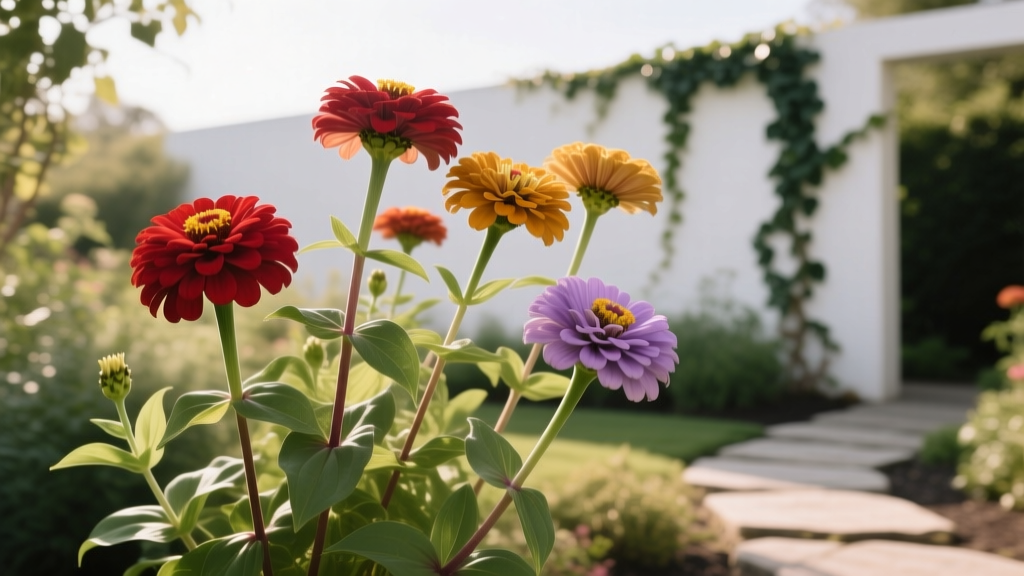
Supporting Heavy-Bearing Zinnias
You walk out after a summer thunderstorm and there it is: your zinnias—yesterday standing tall and smug—now flopped like they’ve given up. Stems bent at odd angles. Flower heads splashed with mud. A few snapped clean off where they were carrying the biggest blooms. The frustrating part? These were the plants you babied. The ones you fed. The ones you planned to cut for bouquets. Heavy-bearing zinnias are a good problem to have, but they’re still a problem—because big flowers plus fast growth plus wind or overhead watering equals lodging (garden-speak for “your plant fell over”).
The good news is you don’t need fancy cages or complicated systems. What you need is the right support at the right time, plus a few cultural tweaks that make stems thicker and root systems stronger. I’ll walk you through what actually works in home gardens—based on what I’ve seen in beds, cutting rows, and containers—so your zinnias can carry those dinner-plate blooms without face-planting.
Why heavy-bearing zinnias flop (and why it’s fixable)
Zinnias (especially tall Zinnia elegans types) can put on 12–24 inches of growth quickly, then top it with a bloom that can be 3–5 inches wide. That’s a lever. Add wet petals after rain, and the leverage gets worse. Wind gusts don’t have to be dramatic—20–30 mph is plenty to tip long, soft stems.
There are three main causes behind floppy, heavy-bearing zinnias:
- Rapid, soft growth from too much nitrogen, too much shade, or inconsistent watering.
- Weak anchoring from shallow roots (often caused by frequent light watering or compacted soil).
- Top-heavy blooms on long internodes (stem segments) when plants stretch for light.
Support solves the immediate physics problem, but your biggest win is growing sturdier stems from day one.
Light: the first “support system” for sturdy stems
If I could pick one factor that makes zinnias stand up on their own more often, it’s full sun. Zinnias grown in shade lean and elongate. Longer stems can be great for cutting, but they’re also more likely to topple if they’re thin.
What “enough sun” looks like
- Minimum: 6 hours of direct sun per day.
- Better for stout stems: 8+ hours of direct sun.
- Heat note: In very hot climates, zinnias still want sun, but appreciate afternoon airflow more than shade. Crowded, humid shade is where problems multiply.
Real-world scenario #1: A side-yard bed that gets 4–5 hours of sun often produces zinnias that look fine in the morning but lean hard toward the light by midseason. In that situation, support becomes mandatory, not optional. If you can’t increase sun, plan on a corral system (stakes and twine) from the start.
Soil: anchoring roots and preventing the “loose tooth” wobble
Zinnias aren’t fussy, but they do best in soil that drains well and isn’t overly rich in quick-release nitrogen. You want a plant that grows strong, not just fast.
Soil texture and drainage targets
- Ideal: Loamy soil that drains within a few hours after a deep watering.
- If your soil puddles for 6+ hours: Expect weaker roots and more flopping—fix drainage or grow in raised beds.
- Raised bed depth: Aim for at least 10–12 inches of workable soil for better root anchoring.
Spacing is part of “soil management”
Crowded zinnias compete for light and stretch; they also trap humidity, which increases leaf disease and weakens plants over time. University extension guidance repeatedly emphasizes spacing and airflow for zinnia health. For example, the University of Minnesota Extension notes that powdery mildew and leaf spot pressure increases with poor airflow and crowding (University of Minnesota Extension, 2023).
- Typical spacing: 9–12 inches for medium types; 12–18 inches for tall/cutting types.
- Row planting for cut flowers: Leave 18–24 inches between rows so you can get in to tie, deadhead, and harvest.
Watering: deep roots are self-support
Most floppy zinnias I see were watered “often but lightly.” That trains roots to stay near the surface, which is exactly where soil dries fastest and where plants have the least grip.
How much water zinnias actually need
A solid baseline is 1 inch of water per week from rain and irrigation combined—more during extreme heat, less during cool spells. This aligns with general garden watering guidance used by many extension programs; for example, Texas A&M AgriLife Extension commonly recommends deep, infrequent irrigation to encourage deeper rooting in ornamentals (Texas A&M AgriLife Extension, 2022).
A practical watering routine
- Check soil moisture: Push a finger down 2–3 inches. If it’s dry at that depth, it’s time.
- Water deeply: Apply enough to wet the root zone to roughly 6–8 inches deep.
- Timing: Water early morning so foliage dries quickly.
- Avoid overhead watering: Wet leaves and heavy blooms increase flopping and disease.
Real-world scenario #2: Container zinnias on a hot patio can go from perky to wilted in a single afternoon. If you compensate by splashing water daily, you may get lush, soft stems and plants that keel over as soon as blooms get big. In pots, the fix is consistent deep watering (until water drains from the bottom) plus earlier support, because containers don’t provide the same anchoring mass as garden beds.
Feeding: strong stems need balance, not a buffet
If you want sturdy zinnias, be careful with nitrogen. High-nitrogen fertilizers can give you tall growth with stems that bend too easily—especially in rich soil or after heavy compost additions.
What to use (and when)
- At planting: If your soil is average, mix in compost at 1–2 inches on the surface and incorporate lightly. Avoid overloading.
- After first flush of blooms: Use a balanced fertilizer like 5-5-5 or 10-10-10 at 1/2 the label rate.
- If plants are tall and floppy but not flowering: Stop feeding nitrogen-heavy products. Consider a low-N option (like a “bloom” formula) sparingly.
A simple rule from years of growing cut rows: Feed to maintain bloom, not to push height. The goal is a plant that can hold a flower without help—or needs only light help.
Support methods that actually work (with a data-based comparison)
The trick with zinnia support is timing. If you wait until they flop, you’re doing plant physical therapy. If you support early, you’re quietly preventing the problem.
Here’s how the most common support methods compare in real gardens:
| Support method | Best for | Install timing | Typical height supported | Material cost (approx.) | Performance in wind/rain |
|---|---|---|---|---|---|
| Single stake per plant | Wide spacing, show plants | At 8–12 inches tall | Up to 36–48 inches | $0.50–$2 per plant | Good if tied 2–3 times |
| Florida weave (stakes + twine) | Rows, cutting gardens | At 10–14 inches tall | Up to 48–60 inches | $0.10–$0.30 per plant (in rows) | Excellent; creates a “living fence” |
| Peony rings / grow-through grids | Clumps, ornamental beds | Very early (6–10 inches tall) | Up to 24–36 inches | $5–$15 per ring | Very good; discreet support |
| Tomato cage | Containers, isolated plants | At planting or by 8 inches | Up to 48 inches | $3–$10 per cage | Good, but can trap foliage and reduce airflow |
Method A vs Method B: single stakes vs Florida weave
If you grow more than a handful of heavy-bearing zinnias, this is where efficiency matters.
- Single stakes: Assume a 4-foot stake and 2–3 tie points per plant. For 20 plants, that’s 20 stakes and easily 40–60 ties. It’s precise but time-consuming.
- Florida weave: For a 10-foot row with 10–12 plants, you might use 4–5 stakes and run twine on both sides, adding a new layer every 8–10 inches of growth. It’s fast and holds groups upright better in wind.
My experience: Florida weave wins for heavy-bearing rows because it supports the whole stand, not just individual stems. Single stakes are best when you want perfect, straight, show-quality stems on a few plants.
Step-by-step: supporting zinnias before they flop
Option 1: Florida weave for rows (most effective for heavy bloomers)
- Set sturdy stakes (wood or metal) every 3–4 feet down the row.
- Start weaving when plants are 10–14 inches tall—before they lean.
- Run twine along one side of the row, loop around a stake, then return along the other side—sandwiching plants between twine lines.
- Add another twine “tier” every 8–10 inches of new growth.
- Keep twine snug but not tight enough to pinch stems.
Option 2: Grow-through grid or ring support for bed clumps
- Install the ring when plants are still short (6–10 inches).
- Let stems grow up through the grid; don’t try to thread them later.
- If plants outgrow one ring, add a second ring higher or switch to discreet stakes on the outside.
Option 3: Single staking for prize blooms or individual plants
- Use a 36–48 inch stake for tall zinnias.
- Tie stems with soft ties (cloth strips, silicone ties) in a loose figure-eight.
- Place ties at 12–16 inch intervals as the plant grows.
“The best time to stake is before plants need it; waiting until after stems bend can cause permanent damage and reduced vigor.” — Royal Horticultural Society guidance on staking herbaceous plants (RHS, 2021)
Common problems that lead to weak stems (and what to do)
Support helps, but if the plant is sick, crowded, or growing too soft, you’ll be re-tying all season. Here are the usual culprits.
Powdery mildew: white coating, tired plants, smaller stems
Symptoms: White, dusty film on leaves; leaves yellow and drop; plants look exhausted by late summer.
Fix:
- Increase spacing to 12–18 inches for tall varieties next planting.
- Water at soil level; avoid wetting foliage.
- Remove the worst affected leaves (don’t strip the plant bare).
- Choose resistant cultivars when possible; many modern series have improved tolerance.
Powdery mildew doesn’t always kill zinnias, but it reduces vigor—which reduces stem strength. The University of Minnesota Extension emphasizes airflow and avoiding overhead irrigation to reduce disease pressure (University of Minnesota Extension, 2023).
Overfeeding nitrogen: giant plants that can’t hold themselves up
Symptoms: Fast growth, lush dark leaves, long floppy stems, fewer blooms.
Fix:
- Stop high-N feeding immediately.
- Switch to a light bloom-support fertilizer (lower N) at 1/2 rate after buds form.
- Pinch growing tips early next time (see below) to encourage branching and a sturdier structure.
Leggy growth from insufficient sun
Symptoms: Plants lean, stretch between leaves, fall toward the brightest direction; blooms form on long, thin stems.
Fix:
- Move future plantings to 6–8+ hours sun.
- Use corral support (weave or rings) early.
- Pinch early to create a shorter, bushier plant.
Pinching: a simple way to reduce top-heavy stems
If your zinnias are destined to be heavy-bearing, pinching early changes the architecture. You trade a single tall stem for multiple slightly shorter stems that support each other.
- When seedlings reach 8–12 inches tall, snip the main stem just above a set of leaves.
- Expect branching within 7–14 days depending on heat and water.
- Stake or weave slightly earlier because branching creates more mass and more blooms.
Troubleshooting: specific flop scenarios and quick saves
Let’s get practical. Here are the situations I see most often and how to respond without making things worse.
Scenario #3: “They were fine until a big rain—now they’re splayed open”
What happened: Wet blooms got heavy, stems bent outward, and the plant’s center opened up.
Do this today:
- Gently lift stems upright (do not force a sharp bend back).
- Add a ring support or do a quick corral: 3–4 stakes around the clump with twine at 12–18 inches high.
- Deadhead the heaviest, mud-splashed blooms to reduce weight and encourage new growth.
Do this next week: Add a second twine line 8–10 inches higher if plants keep pushing growth.
Scenario: “Stems are snapping at the base”
Likely causes: Wind whipping (no support), shallow roots from light watering, or stems weakened by disease.
Fix:
- Install support immediately—Florida weave if in a row.
- Water deeper, less often to encourage rooting (aim to wet 6–8 inches deep).
- Thin surrounding plants to improve airflow.
Scenario: “Plants are upright, but the flower heads droop on long necks”
Likely causes: Too much shade, nitrogen push, or a variety with naturally long stems.
Fix:
- Harvest blooms earlier (morning, when fully hydrated) and let new buds take over.
- Use a soft tie to attach the flowering stem to a sturdier neighboring stem or support line.
- Next planting, reduce fertilizer rate and increase sun exposure.
Scenario: “My zinnias are in containers and keep tipping the whole pot”
What’s going on: The plant becomes top-heavy, and the container base isn’t wide or heavy enough.
Fix:
- Use a heavier pot or add weight (a layer of gravel in the bottom can help, but don’t sacrifice drainage).
- Install a tomato cage at planting time.
- Keep container size appropriate: for tall zinnias, use at least a 12–14 inch diameter pot.
Preventive habits that make support easier all season
Supporting heavy-bearing zinnias isn’t a one-and-done task. It’s small habits repeated at the right moments.
- Deadhead or harvest every 2–4 days in peak bloom. Regular cutting reduces weight and encourages branching.
- Rotate tie points upward as plants grow—don’t let stems lean into twine at odd angles.
- Keep the base clean: Remove lower leaves that are touching soil to reduce splash-up disease and keep stems healthier.
- Watch the weather: If a storm with high winds is forecast, add a support tier the day before.
One last bit of hard-won advice: don’t be shy about removing a few of the biggest blooms after a storm. It feels wrong, but it’s often the difference between a plant that rebounds and one that stays bent for the rest of the season.
When zinnias are carrying heavy flower loads and still standing tall, it’s not luck—it’s timing, deep roots, balanced feeding, and a support method matched to how you grow. Get the support in place early, keep the growth sturdy with sun and sensible watering, and your plants will keep throwing armloads of blooms instead of throwing themselves onto the ground.