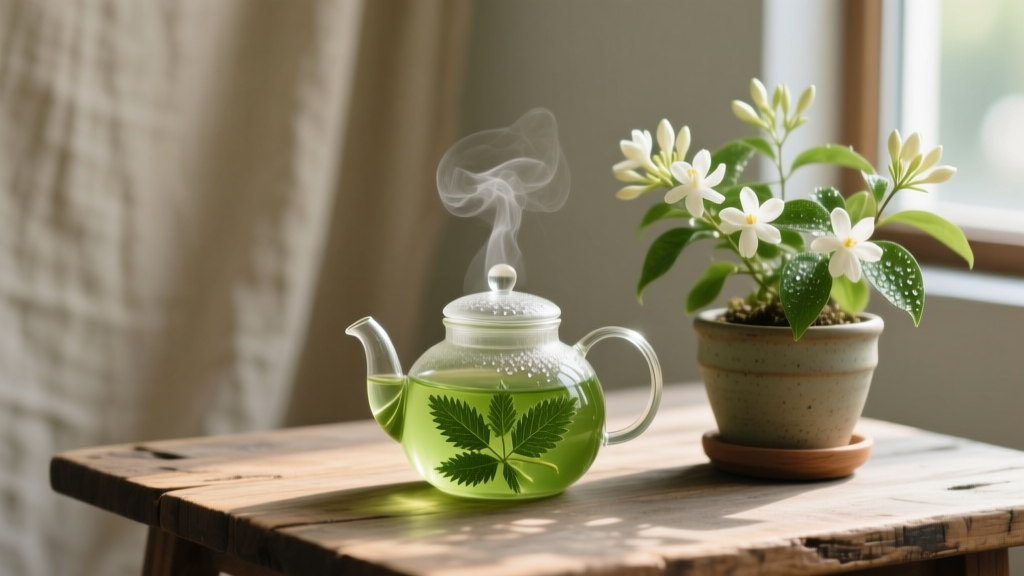
Nettle Tea Boost for Jasmine
You bring a jasmine home because you want that perfume—then it sits there making plenty of green vines and not much scent. Or worse: yellowing leaves, weak new growth, and buds that form but drop before opening. The surprising part is that jasmine often isn’t “hard”—it’s just hungry in a very specific way, and it hates being pushed with the wrong kind of fertilizer at the wrong time. That’s where nettle tea (a simple fermented plant feed) can help: it delivers gentle nitrogen, trace minerals, and a microbial kick that perks up growth without the chemical whiplash that can reduce flowering.
I’ve used nettle tea on container jasmine on patios, on greenhouse vines, and on in-ground jasmine trained on trellises. The trick is using it as a support—not a magic potion—and matching it to light, watering, and your jasmine’s growth stage. Let’s get practical.
First, set expectations: what nettle tea can (and can’t) do
Nettle tea is essentially a home-brewed plant tonic made by soaking or fermenting stinging nettles (Urtica dioica) in water. It’s typically richer in nitrogen and minerals than plain compost tea, but it’s not a complete fertilizer. If your jasmine is failing to bloom due to low light, incorrect pruning time, or a chronic wet root zone, nettle tea won’t fix that by itself.
“Liquid plant feeds are best used to support active growth, not to compensate for poor light or water management.” — Royal Horticultural Society advice on feeding and watering container plants (RHS, 2023)
Think of nettle tea as a targeted boost during active growth—especially in spring and early summer—then taper it so you don’t end up with lush leaves and few flowers.
Real-world scenarios: where nettle tea shines (and where it backfires)
Scenario 1: Patio pot jasmine that looks healthy but won’t bloom
This is the classic. The plant gets bright shade, consistent water, and a little all-purpose fertilizer. It grows, but the fragrance is missing. Often the issue is light intensity and a feeding balance that’s too nitrogen-forward late in the season. Nettle tea can help early (to build a strong framework), then you switch to a bloom-leaning feed and higher light.
Scenario 2: Yellowing leaves after frequent watering
If lower leaves yellow and drop while the pot stays damp, you likely have a root-oxygen problem (overwatering, compacted mix, or poor drainage). Nettle tea won’t help until you fix the root zone. Once roots recover, diluted nettle tea can gently encourage new growth without burning stressed roots.
Scenario 3: In-ground jasmine with pale growth in spring
In sandy or heavily leached soils, jasmine can wake up hungry. A few nettle tea drenches early in the season can improve leaf color and vigor. Pair it with mulch and a soil test so you aren’t guessing long-term.
Light: the bloom lever most people underestimate
If you want flowers, light comes first. Many jasmines bloom best with strong light and a few hours of direct sun. As a practical rule:
- For flowering jasmine in containers: aim for 4–6 hours of direct sun, ideally morning sun with afternoon protection in very hot climates.
- Indoors: place within 1–2 feet of a bright south or west window, or supplement with a grow light 12–14 hours/day.
- Heat note: when daytime highs exceed 32°C (90°F), jasmine may pause flowering; keep roots cool and water consistent.
Nettle tea works best when the plant can actually use the nutrients—meaning it has enough light to photosynthesize and enough warmth to grow. If your jasmine is parked in dim shade, nettle tea can produce long, weak stems searching for light.
Soil and potting mix: where nettle tea helps, and where it hurts
Jasmine likes moisture-retentive soil that still drains well. In containers, you want a mix that doesn’t collapse and suffocate roots. A reliable blend:
- 60% quality peat-free potting mix (or coco-based)
- 25% fine pine bark (adds air space)
- 15% perlite or pumice
Target a slightly acidic to neutral pH. Many jasmines are happy around pH 6.0–7.0. If you’re seeing chronic yellowing between veins (interveinal chlorosis), test pH and iron availability rather than pouring on more feed.
Drainage test: after watering thoroughly, the pot should drain freely within 30–60 seconds. If it doesn’t, fix the mix or the pot (more holes, elevate it, or repot).
When nettle tea hurts
If your mix is already rich and water-retentive, adding frequent liquid feeds can push soft growth and invite pests. Also, fermented teas can reduce oxygen in the root zone if you drench too often into an already-wet pot. Use nettle tea like a measured tool, not a daily beverage.
Watering: keep jasmine evenly moist, not constantly wet
Jasmine wants consistency. Big swings—bone dry to soaking—cause bud drop and leaf stress. Here’s a method that works in real gardens:
- Water until water runs out the bottom (in pots), or until the topsoil is evenly moist (in-ground).
- Wait until the top 2–3 cm (about 1 inch) of soil is dry before watering again.
- In summer containers, that may mean watering every 2–4 days; in cooler weather, every 7–10 days.
Temperature tip: Use water that’s roughly ambient—cold water straight from a hose when it’s 10°C (50°F) outside can shock roots and slow uptake.
Best time to apply nettle tea
Apply nettle tea on a day when the plant is already slightly drying down (not bone dry, not waterlogged). I like mid-morning. If you’re in a heat wave, apply in the cool of the morning and follow with plain water the next day if the soil is drying too fast.
Feeding jasmine with nettle tea: recipes, dilution, timing
Nettle tea can be made two main ways: a quick soak (mild) or a fermentation (stronger). Fermented nettle tea smells rough—there’s no polite way to say it—so site your bucket downwind.
Recipe A: quick nettle “tea” (milder, less odor)
- Fill a bucket with fresh nettle leaves and stems (avoid roots and seeds).
- Add water to cover (rainwater is ideal).
- Steep 24–48 hours, stirring once or twice.
- Strain.
- Dilute 1:10 (1 part tea to 10 parts water) for jasmine.
Recipe B: fermented nettle tea (stronger, longer-lasting)
- Use roughly 1 kg fresh nettles per 10 L water (or about 200–300 g dried nettle per 10 L).
- Ferment in a loosely covered container for 10–14 days, stirring daily.
- When bubbling slows and the brew darkens, strain.
- Dilute 1:20 for soil drench on jasmine (stronger mixes can scorch tender roots).
How much to apply: For a 25–30 cm (10–12 inch) pot, apply 250–500 mL of diluted nettle tea as a soil drench. For in-ground plants, use 2–4 L around the root zone depending on plant size and soil drainage.
Timing: the “bloom-safe” schedule
This is the schedule I use to support flowers rather than replace them with leaves:
- Early spring (new growth starting): nettle tea every 14 days for 2–3 applications.
- Late spring to early summer (buds forming): reduce to every 3–4 weeks, or stop if growth is already lush.
- Mid to late summer (peak flowering): pause nettle tea; switch to a low-N bloom feed if needed.
- Autumn/winter: stop liquid feeding unless you’re growing under lights and the plant is actively pushing new growth.
This approach lines up with a broader principle taught by extension horticulture: fertilize to support active growth, and avoid heavy nitrogen when you want flowers. Soil testing and nutrient timing are emphasized by university extension guidance (University of Minnesota Extension, 2023; North Carolina State Extension, 2022).
Comparison: nettle tea vs fish emulsion vs granular fertilizer (with actual use data)
Here’s a practical comparison using typical home-garden application rates. Exact nutrient analysis varies by brand and recipe, but the garden behavior is consistent.
| Method | Typical dilution / rate | How fast you see response | Risk of leaf-heavy growth | Best use on jasmine |
|---|---|---|---|---|
| Nettle tea (fermented) | 1:20 dilution; 250–500 mL for a 10–12" pot every 14–28 days | 5–10 days (greener new growth) | Medium if overused | Spring framework growth; recovery after mild stress |
| Fish emulsion (liquid) | Often 1–2 Tbsp per gallon (3.8 L) every 2–4 weeks (per label) | 3–7 days | Medium–High | Quick green-up; use early season, not during heavy bud set |
| Granular slow-release fertilizer | Commonly 1–2 Tbsp mixed into topsoil for a 10–12" pot every ~3 months (per label) | 1–3 weeks | Low–Medium (more stable) | Baseline nutrition; pair with light nettle tea as needed |
My take: If you’re the kind of gardener who forgets to feed, a slow-release granular as the baseline is more foolproof, and nettle tea becomes your spring “booster.” If you love weekly routines, nettle tea can replace some liquid feeds—but keep it diluted and timed so you don’t trade blooms for vines.
Step-by-step: my tried-and-true nettle tea routine for jasmine in pots
This is the routine that’s saved the most jasmines for me on patios and balconies.
- Start with drainage: confirm the pot drains freely within 60 seconds after watering.
- Water normally first: if the pot is quite dry, water with plain water, wait 30–60 minutes, then apply nettle tea (prevents root burn).
- Dilute properly: use 1:20 for fermented tea, 1:10 for quick tea.
- Apply measured volume: 250–500 mL for a 10–12" pot, poured slowly over the soil surface.
- Skip foliar spraying: jasmine leaves can spot, and foliar teas can spread disease if your plant already has leaf issues.
- Repeat at 14-day intervals only during active spring growth, then stretch to 3–4 weeks or stop.
Common problems (and exactly what to do)
Problem: Lots of leaves, few or no flowers
Symptoms: long green shoots, big leaves, minimal buds; plant looks “too happy” vegetatively.
Most likely causes:
- Too much nitrogen (nettle tea too frequent, or combined with other N-rich feeds)
- Not enough direct light
- Pruning at the wrong time (especially for types that bloom on older wood)
Fix:
- Stop nettle tea for 4–6 weeks.
- Move to brighter conditions: add 2 hours more direct sun if possible.
- Switch to a bloom-leaning fertilizer (lower N) at label rate, or top-dress with compost and let the plant settle.
Problem: Yellow leaves (especially lower leaves)
Symptoms: older leaves yellow first; may drop; soil stays damp.
Most likely causes: overwatering, compacted soil, root stress. Less often: nitrogen deficiency.
Fix (in order):
- Let the top 2–3 cm dry between waterings.
- Check roots: if sour smell or black, mushy roots appear, repot into an airier mix.
- After the plant shows new root growth (usually 2–3 weeks), use one light nettle tea drench (1:20) to encourage recovery.
Problem: Buds form, then drop
Symptoms: buds appear, then dry up or fall; leaves may curl slightly.
Most likely causes: irregular watering, hot dry air, sudden temperature swings, or the plant drying too far between waterings.
Fix:
- Stabilize moisture: water when top inch is dry, not when the whole pot is dry.
- In hot spells above 32°C (90°F), give afternoon shade and mulch the pot surface with 2–3 cm compost or fine bark.
- Pause nettle tea until buds hold steady—too much pushy growth can worsen drop if watering isn’t consistent.
Problem: Aphids on new shoots after feeding
Symptoms: clusters of green/black aphids on tips; sticky honeydew; ants farming them.
Why it happens: nitrogen-rich feeding (including nettle tea) can make tender growth that aphids love.
Fix:
- Rinse tips with a firm water spray for 30–60 seconds per plant.
- Pinch badly infested tips and dispose.
- If needed, use insecticidal soap, following label directions, and spray at dusk when temps are below 27°C (80°F) to reduce leaf stress.
- Reduce nettle tea frequency; don’t feed again for 2–3 weeks.
Problem: Leaf spots or mildew
Symptoms: speckled spots, yellow halos, powdery coating, leaf drop in humid conditions.
Fix:
- Improve airflow: don’t let vines mat; thin lightly.
- Water the soil, not the foliage.
- Stop foliar applications of any teas.
- Remove the worst leaves; don’t compost if disease is active.
Using nettle tea safely: small details that prevent big headaches
A few grounded cautions that come from experience (and from cleaning up the mess when I ignored them):
- Wear gloves. Fresh nettles sting; even wilted nettles can irritate.
- Don’t use seedy nettles. If you ferment plants with mature seed heads, you may spread nettles around your garden when you pour out sludge.
- Store strained tea no longer than 1–2 weeks. It becomes more anaerobic over time; use fresh and dilute.
- Keep it off hard surfaces. Fermented tea can stain patios and smell for days.
- Don’t combine with every other fertilizer. If you’re already using slow-release granules, treat nettle tea as an occasional supplement, not an addition on top of weekly liquid feeding.
Fine-tuning for different jasmine setups
Indoor jasmine (bright window or grow lights)
Indoors, evaporation is slower and overwatering is common. Use nettle tea sparingly—think once per month in spring if the plant is actively growing under strong light. If you don’t have enough light, prioritize a grow light over any feeding tweak.
Outdoor container jasmine
This is where nettle tea is most useful. Containers leach nutrients faster. If your pot dries fast in summer, don’t “fix” it with more tea—fix it with watering rhythm, mulch, and an appropriate potting mix. Nettle tea every 14 days in spring is plenty.
In-ground jasmine on a trellis
In-ground plants usually need less frequent feeding. Apply 2–4 L of diluted nettle tea around the dripline in early spring, then again 3–4 weeks later if growth is pale. After that, let the plant run on compost mulch and normal soil fertility.
A quick reality check: what the research says about “teas” and fertility
Homemade teas vary widely. That’s not a flaw—it just means you should treat them as mild, adjustable inputs rather than precision fertilizers. Extension guidance consistently recommends using tested fertilizers and soil tests when diagnosing nutrient issues, and being cautious about overapplying any nutrient source (University of Minnesota Extension, 2023; North Carolina State Extension, 2022).
If you want the most dependable path: use a baseline slow-release fertilizer at label rate, add compost as a top-dress, and use nettle tea as a spring-time nudge when jasmine is clearly ramping up growth.
When you get the balance right—good light, steady moisture, airy soil, and restrained feeding—you’ll notice the shift: sturdier stems, deeper leaf color, buds that hold, and flowers that actually open and scent the evening air. Nettle tea won’t replace sunlight or drainage, but in a well-run setup it’s one of those old-fashioned tools that earns a permanent spot behind the potting bench.