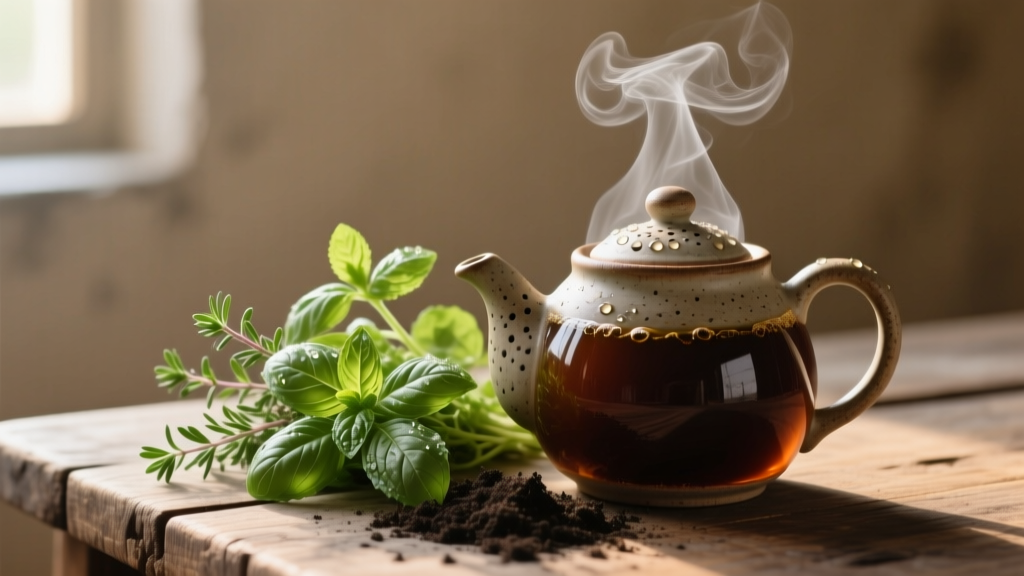
How to Make Compost Tea for Herbs
You know that moment when your basil looks fine at breakfast, then by dinner it’s drooping like it’s given up on life? Or your potted parsley turns pale even though you “fed it last week”? Most herb problems aren’t solved by dumping more fertilizer in the pot. Herbs want steady moisture, good drainage, and gentle nutrition. Compost tea—made correctly—can be that gentle, steady nudge that gets herbs growing again without scorching roots or pushing floppy, weak growth.
I’ve used compost tea for years on container herbs, raised beds, and greenhouse starts. When it works, it’s not magic—it’s simply biology and timing. When it fails, it’s usually because it was brewed too strong, applied at the wrong time, or made from questionable compost. Let’s make the kind that helps herbs, not hurts them.
What compost tea actually does for herbs (and what it doesn’t)
Compost tea is water that’s been infused with compost and (sometimes) aerated to encourage microbial activity. For home herb growing, it can:
- Provide a mild, broad-spectrum nutrient boost (especially nitrogen and micronutrients) without the “spike” of synthetic feeds.
- Introduce beneficial microbes that can help nutrient cycling in soil and potting mixes.
- Help stressed herbs bounce back after transplanting, heat, or over-harvesting—when used gently.
What it won’t do: fix a pot with no drainage, reverse chronic underwatering, or “cure” a disease that’s already taken hold. Think of compost tea like good soup stock—supportive, not surgical.
“Compost tea can contain plant nutrients and microorganisms, but results are inconsistent and depend on starting materials and brewing methods.” — Oregon State University Extension (2015)
Scenario check: when compost tea is the right move
Here are three real-world cases where compost tea tends to shine—and one where it’s the wrong tool.
Scenario 1: Container basil that keeps paling out
If your basil is watered often (containers dry fast) and you’ve been using a sterile potting mix, compost tea can provide a gentle fertility bump plus biology. This is especially helpful mid-season when the potting mix has “spent” its starter charge.
Scenario 2: Newly transplanted herb seedlings (basil, cilantro, dill)
A light compost tea drench (not a heavy fertilizer) can reduce transplant stall. You’re not force-feeding; you’re supporting root-zone activity while roots re-establish.
Scenario 3: Raised-bed herbs that grow slowly despite decent compost in spring
If your bed is cool or your compost wasn’t fully mature, nutrients can be tied up early. A mild tea applied when soil temperatures are consistently above 55°F (13°C) can help bridge the gap.
Scenario 4 (don’t use tea): herbs with clear fungal leaf disease
If you’ve got spreading leaf spots or fuzzy mildew, skip foliar compost tea. Focus on airflow, sanitation, and appropriate disease management. Some extension publications caution that compost teas can carry human pathogens if made or handled improperly, especially if sprayed on edible leaves close to harvest (University of Minnesota Extension, 2020).
Before you brew: compost quality and safety for edible herbs
The best compost tea starts with compost you’d feel comfortable top-dressing around salad greens. Use compost that is:
- Fully finished: earthy smell, no sharp ammonia, no recognizable food scraps.
- Moist like a wrung-out sponge, not soggy.
- From safe inputs: avoid pet waste compost for herb tea, and be cautious with unknown manures.
Food safety matters because we’re talking about herbs you’ll eat raw. The USDA National Organic Program includes rules around raw manure timing (commonly referenced: 120 days between raw manure application and harvest of crops contacting soil). While compost is different from raw manure, the spirit is the same: don’t take risks with questionable inputs, and avoid spraying any biological brew onto leaves right before harvest.
Methods: Aerated vs non-aerated compost tea (with real differences)
Home gardeners usually choose between two approaches:
| Method | Time | Equipment | Typical dilution for herbs | Best use | Risk level |
|---|---|---|---|---|---|
| Non-aerated “soak” tea | 24–48 hours | Bucket + stir stick | 1:1 to 1:3 (tea:water) | Soil drench for established herbs | Moderate odor risk; can go anaerobic if left too long |
| Aerated compost tea (ACT) | 18–36 hours | Bucket + aquarium pump + air stone | Often used 1:4 to 1:10 depending on strength | Gentle, frequent soil drenches; seedling support | Lower odor if aerated; still needs clean handling |
Comparison analysis with practical numbers: a simple soak tea can be effective, but if it sits beyond 48 hours in warm weather, it often turns funky and anaerobic. Aerated tea, brewed around 70°F (21°C) for 24 hours, tends to smell earthy and is easier to apply more regularly without that sour note.
How to make compost tea for herbs (two reliable recipes)
Recipe A: Simple bucket compost tea (non-aerated)
This is my “low-gear” method for established rosemary, sage, thyme, oregano, and mature basil—especially in beds.
- Fill a bucket with 2 gallons (7.6 L) of water. If you have chlorinated tap water, let it sit uncovered for 24 hours to off-gas chlorine (or use filtered/rain water).
- Add compost: put 2 cups of finished compost into a mesh bag, old pillowcase, or a doubled layer of cheesecloth. Tie it off.
- Soak and stir: submerge the bag, then stir vigorously for 1 minute now and again every few hours if you’re around.
- Brew time: let it steep 24–36 hours. In hot weather (above 85°F / 29°C), stop at 24 hours.
- Strain if needed (especially if watering cans clog) and use immediately.
How to apply (herbs): dilute 1:1 (equal parts tea and water) for tender herbs like basil and cilantro; use 1:3 for small pots that already get regular fertilizer. Apply as a soil drench, not a leaf spray.
Recipe B: Aerated compost tea (ACT) for herb containers
This is what I use when I’m caring for lots of potted herbs and want consistent results without odor.
- Water: add 5 gallons (19 L) of dechlorinated water to a clean bucket.
- Compost: add 4 cups of finished compost in a mesh bag.
- Air: place an aquarium air stone at the bottom and run the pump continuously.
- Optional microbe food (go easy): add 1 tablespoon unsulfured molasses. For herbs, I keep sugars minimal; too much can push the brew in weird directions.
- Brew for 18–24 hours at about 65–75°F (18–24°C). If it’s cooler, go closer to 30–36 hours; if warmer, shorten it.
- Use right away. Compost tea is most predictable when applied within a few hours of stopping aeration.
Herb dilution: for seedlings and small pots, start at 1:10 (1 part tea to 10 parts water). For established, hungry basil or parsley in midsummer, 1:4 is usually safe.
Watering: pairing compost tea with smart moisture habits
Compost tea won’t help if your watering is swinging between dust-dry and soggy. Herbs respond best to a steady rhythm.
- Containers: water when the top 1 inch (2.5 cm) is dry. In summer, that can be daily for small pots.
- Raised beds: aim for about 1 inch of water per week from rain and irrigation combined, adjusting for heat and wind.
- After applying compost tea: don’t flush the pot immediately. Apply tea to already-moist soil (not bone dry), and let it settle in. If soil is dry, water lightly first, then apply tea.
Practical tip: compost tea is a soil drench, not a substitute for watering. If you apply it to drought-stressed thyme in a blazing afternoon, you’ll often see no benefit because the plant can’t take it up efficiently. Early morning is best.
Soil: what compost tea can’t fix (and what it can support)
Herbs want drainage first, fertility second. If your mix holds water like a sponge, compost tea may make things worse by keeping the root zone too wet.
Container herb mix reality check
- If your potting mix is older than one season and stays wet for days, refresh it or repot with a lighter mix.
- For Mediterranean herbs (rosemary, thyme, oregano), prioritize drainage: add extra perlite/pumice and avoid frequent tea applications.
- For leafy herbs (basil, parsley, chives), compost tea can be a steady, gentle feed—especially in sterile mixes.
Soil biology helps most when the soil environment is already livable: oxygen in the root zone, decent organic matter, and consistent moisture.
Light: compost tea won’t replace the sun
A pale basil plant in a windowsill might not be hungry—it might be light-starved. Most culinary herbs want:
- 6–8 hours of direct sun outdoors for best flavor and growth.
- Indoors, a bright window often isn’t enough in winter; consider a grow light for 12–14 hours a day.
If herbs are stretching (long internodes, floppy stems) and leaves are small, cut back on feeding—including compost tea—and increase light. Overfeeding in low light makes weak, pest-prone growth.
Feeding schedule: how often to use compost tea on herbs
Compost tea is mild, but “mild” doesn’t mean unlimited. Here’s a schedule that keeps herbs productive without turning them soft.
For leafy, fast herbs (basil, parsley, cilantro)
- Containers: every 10–14 days at 1:4 to 1:10 dilution depending on plant size and how fast your mix drains.
- In-ground: every 2–4 weeks during active growth, especially after heavy harvesting.
For woody Mediterranean herbs (rosemary, thyme, sage, oregano)
- Use compost tea sparingly: every 4–6 weeks at 1:10 dilution, or skip it entirely if plants are growing well.
- Too much nitrogen reduces essential oil concentration and can make growth lanky and winter-tender.
For mint (the exception that loves to eat)
- Mint in containers can take compost tea every 2 weeks at 1:4 without batting an eye, as long as drainage is good.
Extension guidance generally emphasizes that compost tea nutrient content is variable and not a precise fertilizer replacement. If you need exact feeding, use a measured organic fertilizer and treat tea as a supplement (Oregon State University Extension, 2015).
Common problems (and what compost tea can tell you)
Problem: Tea smells rotten or like sewage
What you see/smell: sour, putrid odor; sometimes a gray film.
- Cause: anaerobic brew (too long, too warm, not enough oxygen).
- Fix: don’t use it on herbs. Pour it into an ornamental bed soil area, not on edible leaves. Next batch: shorten brew time to 24 hours, keep it cooler (65–75°F), or use aeration.
Problem: Basil leaves curl downward after feeding
What you see: leaves droop/curl; soil stays wet.
- Cause: root stress from overwatering or poor drainage; tea applied to already saturated soil.
- Fix: let the pot dry to the top 1–2 inches before watering again. Improve drainage. Reduce tea frequency to every 2 weeks at 1:10.
Problem: White crust on soil after repeated tea applications
What you see: mineral/salt buildup on pot surface.
- Cause: hard water minerals and repeated fertilizing of any kind (tea included).
- Fix: once a month, flush the pot with plain water equal to 2–3 times the pot’s volume (do this outdoors or in a sink). Consider rainwater or filtered water for brewing.
Problem: Fungus gnats explode after “improving soil biology”
What you see: tiny black flies; larvae in wet potting mix.
- Cause: consistently wet soil, often from overwatering; compost tea isn’t the root cause, but damp conditions plus organic matter can fuel it.
- Fix: let soil surface dry between waterings, bottom-water when possible, and use yellow sticky cards. If needed, apply BTI (mosquito dunks) in waterings for 2–3 weeks.
Troubleshooting by symptom: quick diagnosis for herb gardeners
Yellow leaves on parsley (starting from older leaves)
- Likely cause: nitrogen shortage or root-bound pot.
- What to do: apply compost tea at 1:4 once, then again in 10 days. If roots are circling, repot up one size and water thoroughly.
Slow growth + purple tinge on basil stems
- Likely cause: cool nights or phosphorus availability issues in cold soil.
- What to do: wait until nights are reliably above 55°F (13°C) before pushing feed. Use tea lightly (1:10) and focus on warmth and light.
Rosemary looks healthy but tastes bland after frequent feeding
- Likely cause: too much nitrogen; fast, watery growth reduces flavor concentration.
- What to do: stop compost tea for a month, water a bit less (without drought-stressing), and keep in high sun.
Applying compost tea: best practices for edible herbs
For home herb gardens, I strongly prefer soil applications over foliar sprays. It’s cleaner, simpler, and avoids unnecessary food-safety questions.
- Apply to soil, not leaves, especially within 7–10 days of harvest.
- Use the tea the same day you brew it. Don’t bottle it and store it warm in the garage.
- Clean your gear: rinse buckets, air stones, and strainers promptly. A quick wash with soap and water goes a long way.
University Extension sources repeatedly note that compost tea quality and safety depend heavily on inputs and handling, particularly for edible crops (University of Minnesota Extension, 2020; Oregon State University Extension, 2015).
Three practical “mini-plans” you can copy this week
Plan A: Revive a grocery-store basil pot
- Split the crowded clump into 2–3 pots with drainage holes.
- Water thoroughly, let drain.
- After 48 hours, apply ACT at 1:10.
- Harvest tips weekly to encourage branching.
Plan B: Keep patio parsley productive through summer
- Check moisture daily; water when top 1 inch dries.
- Apply compost tea every 10–14 days at 1:4.
- Once a month, flush the container with plain water to prevent crusting.
Plan C: Protect flavor in rosemary and thyme
- Skip frequent tea—use at most every 4–6 weeks at 1:10.
- Keep in full sun (6–8 hours).
- Let the pot dry slightly between waterings; never let it sit in a saucer of water.
If you take one lesson from years of tinkering: compost tea is most useful when it’s part of a steady system—good light, consistent water, and a soil mix that breathes. Brew it clean, keep it mild, and use it like a supportive tonic. Your herbs will tell you quickly if you’ve hit the sweet spot: deeper color, steady new growth, and that strong, unmistakable fragrance when you brush past them on the way to the kitchen.