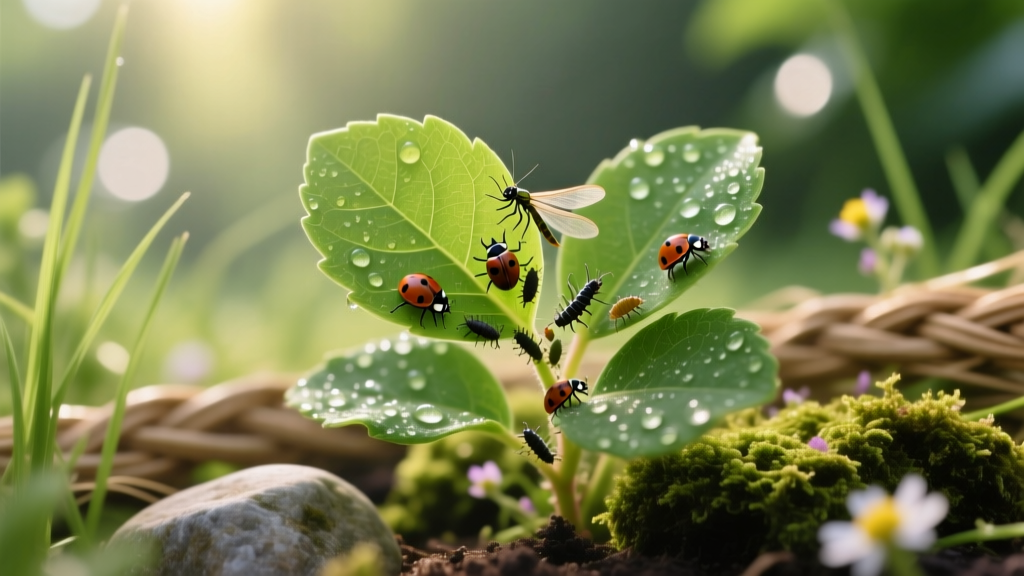
Organic Aphid Control: 10 Natural Methods That Actually Work in 2026
Why Aphids Are a Problem
Aphids are sap-sucking insects that weaken plants, transmit viruses, and produce honeydew that attracts ants and causes sooty mold. A single female can produce 12 offspring per day without mating — populations explode from a few individuals to thousands in under two weeks.
Method 1: Strong Water Spray
The simplest approach: blast aphids off with a strong jet of water from your hose. This knocks them off and disrupts feeding. Repeat every 2-3 days. Most aphids cannot climb back up before they die.
- Best for: sturdy plants like roses, peppers, tomatoes
- Avoid on: delicate seedlings and herbs
- Frequency: every 2-3 days until aphids disappear
Method 2: Insecticidal Soap Spray
Mix 1 tablespoon of pure Castile soap (not dish detergent) per quart of water. Spray directly on aphids, covering both leaf surfaces. Soap dissolves the aphid's protective wax coating, causing dehydration within hours.
- Apply in early morning or evening (never in direct sun — causes leaf burn)
- Test on one leaf first, wait 24 hours for damage
- Repeat every 5-7 days for 2-3 applications
Method 3: Neem Oil Spray
Cold-pressed neem oil disrupts aphid hormones, stopping feeding and reproduction. Mix 1 teaspoon neem oil + 1/2 teaspoon soap per quart of water. Shake well before spraying.
- Works on contact and has residual effect for 5-7 days
- Safe for beneficial insects once dry
- Also prevents powdery mildew and fungal diseases
Method 4: Ladybugs and Lacewings
Release live ladybugs (1,500 for $15 online) at dusk near infested plants. One ladybug eats 50-75 aphids per day. Green lacewing larvae are even more effective — each larva consumes 200+ aphids per week.
Method 5: Companion Planting
| Trap Crop (attracts aphids away) | Repellent Plant (deters aphids) |
|---|---|
| Nasturtiums | Garlic |
| Mustard greens | Chives |
| Sunflowers | Mint |
| Marigolds | Cilantro |
Method 6: Garlic-Chili Spray
Blend 6 cloves garlic + 2 hot peppers + 1 quart water. Strain and spray. The capsaicin and allicin repel aphids and many other pests. Wear gloves when preparing.
Method 7: Diatomaceous Earth
Sprinkle food-grade diatomaceous earth around plant bases. The microscopic sharp edges cut aphid exoskeletons. Reapply after rain. Must be dry to work.
Method 8: Aluminum Foil Mulch
Place reflective aluminum foil mulch around plants. The reflected light disorients winged aphids, reducing landing rates by 50-70%. Remove in peak summer to avoid root overheating.
Method 9: Banana Peel Tea
Soak 3 banana peels in 1 quart water for 48 hours. Strain and spray on leaves. The potassium strengthens cell walls and the sweet smell attracts aphids away from your main plants.
Method 10: Ant Control
Ants farm aphids for their honeydew, protecting them from predators. Place sticky barriers (Tanglefoot) on plant stems to block ants. Without ant protection, natural predators clear aphids much faster.
Final Thoughts
Start with water spray for light infestations. For heavier outbreaks, combine soap spray with ladybug releases. Prevention through companion planting and ant control keeps aphids from returning. Organic methods take 1-2 weeks longer than chemicals but build a resilient garden ecosystem.