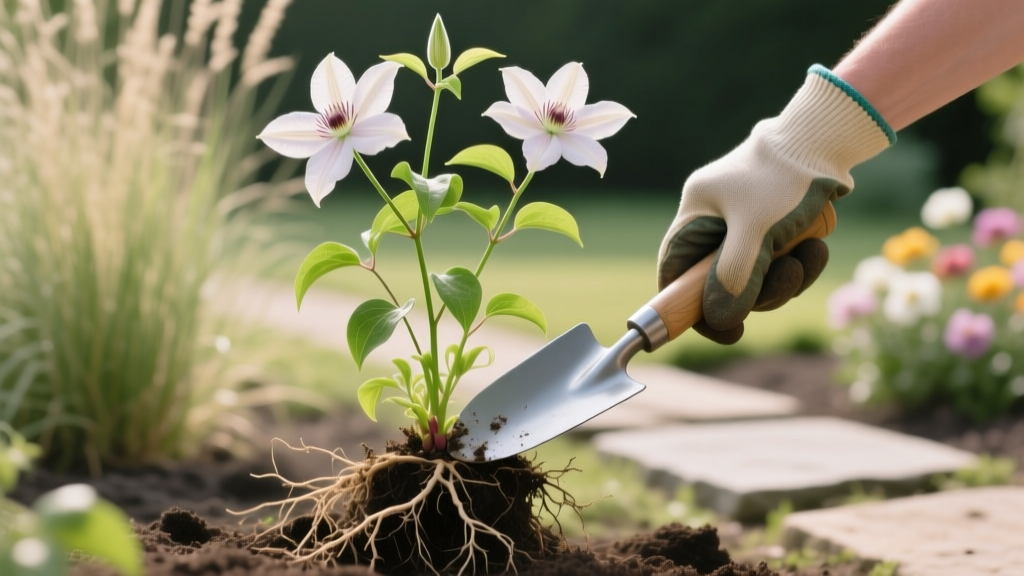
Dividing Clematis: When and How
You go out to admire your clematis in spring, and instead of that tidy, flower-loaded vine, you’ve got a woody thicket with bare legs at the bottom, a few spindly shoots up top, and flowers only where the plant can still reach the sun. Or maybe you inherited a mature clematis when you moved in—beautiful, but planted in the wrong spot—and now you need to relocate it without losing it. Here’s the surprising truth: clematis can be divided, but it’s not like splitting hostas. The crown can be tough, the roots can be deep, and the timing matters a lot. Done well, division can rejuvenate an old plant, rescue a struggling one, or let you share a prized variety—without setting it back for years.
This is the approach I use in real gardens: decide if division is the right tool, pick the right season, prep the plant, and split only as much as the root system can support. You’ll also see when not to divide and what to do instead.
First: Should You Divide This Clematis?
Not every clematis is a good candidate. Many modern hybrids don’t love having their crowns disturbed, and older plants can be so woody that division becomes more like careful surgery. Before you dig, check the plant’s age, type, and what you’re trying to accomplish.
Good reasons to divide
- Rejuvenation: The crown is congested and flowering is reduced, especially at the base.
- Relocation: It’s in the wrong place (too shady, too dry, poor support).
- Sharing: You want a duplicate of the same plant (division gives you a clone).
- Damage control: Part of the crown has rotted, been chewed, or snapped, and you want to salvage healthy sections.
When not to divide
- Brand-new plants: If it’s been in the ground less than 2–3 years, let it establish.
- Weak or diseased plants: If it’s in active decline from drought stress, severe clematis wilt, or root rot, stabilize first.
- Very old, massive crowns: Sometimes layering or taking cuttings is safer than a full split.
If your main goal is “more plants,” layering is often easier and less risky than division. But if the crown is crowded or you must move it, division can be the right call.
When to Divide Clematis (Timing That Actually Works)
The best window is when the plant is least stressed and most capable of regrowing roots. For most home gardens, that’s early spring or early fall, depending on your climate.
Best seasons
- Early spring: Just as buds swell and new growth is 1–3 inches long. Soil is moist, temperatures are mild, and the plant hasn’t poured energy into top growth yet.
- Early fall: About 6–8 weeks before the ground freezes. This gives time for root recovery before winter.
Temperature and weather targets
- Aim for daytime temperatures around 50–70°F (10–21°C).
- Avoid dividing during heat above 80°F (27°C)—transplant shock rises fast.
- Pick a stretch of 2–3 cool, cloudy days if possible. Clematis hate drying out during recovery.
These timing recommendations line up with research-based transplant guidance from extension sources that emphasize cool conditions and adequate establishment time before freezes (University of Minnesota Extension, 2023).
What to Know About Clematis Roots (So You Don’t Break the Plant)
Clematis commonly form a woody crown with multiple stems arising from buds near the base, plus a root system that can be surprisingly deep. Some types make thicker, ropey roots that don’t like being torn; others have more fibrous roots and split more readily.
“Most transplant failures come down to roots drying out during the move. Keep roots shaded and moist from the moment they’re exposed.” — Royal Horticultural Society advice on transplanting and establishing climbers (RHS, 2022)
The practical takeaway: plan your hole and materials before you lift the plant, and don’t leave the root ball exposed to sun and wind.
Method A vs. Method B: Division vs. Layering (With Real Tradeoffs)
If you’re on the fence, here’s a clear comparison based on what gardeners typically experience in home landscapes.
| Propagation/Repair Method | Best Timing | Time to a Separate Plant | Typical Setback | Success Rate (home garden typical) | Best For |
|---|---|---|---|---|---|
| A) Division | Early spring or early fall | Immediate (same day) | Moderate: 1 season of reduced bloom is common | 50–80% depending on plant age and handling | Rejuvenating crowded crowns; relocating |
| B) Layering | Spring through early summer | 3–12 months | Low: parent plant usually keeps blooming | 70–95% when kept moist | Making a new plant with minimal risk |
Division is faster and solves location/crown issues immediately. Layering is slower but usually safer. If your clematis is rare or sentimental and reasonably placed, layering is often the “sleep at night” option.
Tools and Supplies (Don’t Skimp on This)
Having the right tools is half the job, especially with older crowns.
- Sharp spade (a pointed transplant spade is ideal)
- Hand pruners and loppers
- Pruning saw or soil knife for woody crowns
- Two tarps: one for soil, one for the root ball
- Bucket of water (or damp burlap) to keep roots covered
- Compost and a bag of pine bark fines (optional, but helpful in clay)
- Mulch (shredded bark or leaf mold)
Clean cutting tools before you start. A quick disinfecting wipe-down reduces the chance of moving disease into fresh wounds (Clemson Cooperative Extension, 2021).
Step-by-Step: How to Divide Clematis Without Losing It
This is the method that works reliably in typical home garden soils. Read through once before you dig.
1) Water the plant ahead of time
- Water deeply 24 hours before digging.
- A good target is 2–3 gallons for a mid-sized clematis, applied slowly at the root zone.
Moist soil holds together better and protects fine roots. Dry soil crumbles off and exposes roots to air.
2) Cut back the top (yes, even if it hurts)
Reduce water loss and make the plant manageable.
- For spring division: cut stems back to 12–18 inches.
- For fall division: cut to 18–24 inches so you can tie in and protect stems if needed.
If you know your pruning group, follow it later for flowering—right now, you’re prioritizing survival. Most clematis tolerate a hard reset when roots are disturbed.
3) Dig a generous root ball
Start farther out than you think.
- Dig a circle at least 12–18 inches from the crown for younger plants.
- For older plants, start at 18–24 inches out and expect deeper roots.
- Go down 12–18 inches initially, then undercut.
Lift with the spade under the root mass rather than yanking on stems. If you hit thick roots, cut cleanly—don’t tear.
4) Expose the crown and find natural split points
Set the root ball on a tarp. Gently tease soil away from the crown so you can see where stems and buds originate.
- Look for 2+ distinct stem clusters with their own roots.
- If everything originates from a single woody knot, division may be risky—consider replanting the whole plant deeper instead of splitting.
5) Make the division
- Use a soil knife, pruning saw, or sharp spade to separate sections.
- Each division should have:
- At least 2–3 viable buds at the crown, and
- a portion of healthy roots (not just a sliver).
- Trim away dead, blackened, or mushy roots.
Expect to use force on older crowns. Clean cuts heal better than crushed tissue.
6) Replant immediately—deeper than before
Clematis are typically planted with the crown a little deeper than it was, which can encourage new shoots from below the soil line.
- Set the crown so it sits about 2–4 inches below the finished soil level.
- Backfill with native soil amended with 20–30% compost if your soil is poor.
- Water in with 1–2 gallons per division to settle soil around roots.
Planting depth advice is commonly recommended by horticultural authorities to improve resilience and regrowth after dieback (RHS, 2022).
7) Mulch and shade the root zone
- Add 2–3 inches of mulch, keeping it 2 inches away from stems.
- If the site is sunny and hot, shade the root zone for the first 2 weeks with a board or temporary shade cloth.
“Cool roots, sunny tops” is more than a saying—root-zone temperature swings can stall recovery.
Watering After Division (The Make-or-Break Detail)
Most divided clematis fail because the plant dries out before new feeder roots form. For the first month, treat it like a new transplant.
Practical watering schedule
- Week 1–2: Water every 2–3 days if there’s no rain. Apply 1–2 gallons slowly each time.
- Week 3–6: Water weekly with 2–3 gallons, adjusting for rainfall and soil type.
- After 6 weeks: Shift to deep watering every 7–10 days during dry spells.
Check moisture with your finger or a trowel: aim for evenly moist soil down about 4–6 inches. If it’s dusty at that depth, you’re behind.
Soil Setup: Drainage First, Fertility Second
Clematis want moisture, but they won’t tolerate waterlogged roots—especially after division when wounds are fresh.
Ideal soil conditions
- Drainage: Water should soak in, not puddle for hours.
- Texture: Loamy soil is ideal; clay needs structure; sand needs organic matter.
- pH: Slightly acidic to neutral is usually fine (roughly 6.0–7.0).
Quick fixes by soil type
- Heavy clay: Work in compost plus pine bark fines; plant slightly raised by 1–2 inches if puddling is common.
- Fast-draining sand: Add compost and mulch heavily; plan on more frequent watering.
Light: Give the Tops Sun, Protect the Base
After division, light becomes a balancing act: enough sun to fuel regrowth, but not so much heat that the root zone bakes.
- Most clematis bloom best with 6+ hours of sun.
- In hot climates, morning sun + afternoon shade can reduce stress.
- Keep the root zone shaded with mulch, a low perennial, or a flat stone (not touching the stem).
Feeding: Don’t Push Too Hard Too Soon
Right after division, your goal is roots first—not a burst of soft, thirsty top growth.
Feeding schedule that avoids setbacks
- At planting: Skip strong fertilizer in the hole. Compost is enough.
- After 3–4 weeks: If you see new growth, apply a light feeding:
- Example: a balanced granular fertilizer (like 10-10-10) at 1 tablespoon scratched into the soil, watered in well.
- Mid-season: Repeat lightly if growth is steady; stop nitrogen-heavy feeding by late summer so growth can harden off.
If you prefer organic: a small ring of compost plus a light sprinkle of alfalfa meal works, but keep it modest the first season.
Common Problems After Division (And What To Do Right Away)
Most issues show up in the first 30 days. Here’s how to read the symptoms like a gardener, not a guesser.
Troubleshooting: Wilting even though the soil is moist
- Likely cause: Root loss + wind/sun stress (transplant shock).
- What to do:
- Provide temporary shade for 7–10 days.
- Cut back the top another 6 inches to reduce demand.
- Water deeply in the morning; avoid frequent shallow sprinkles.
Troubleshooting: Blackening stems near soil line
- Likely cause: Stem rot or clematis wilt entering through wounds; overly wet soil can contribute.
- What to do:
- Cut affected stems down to healthy tissue and discard (don’t compost).
- Improve airflow and avoid splashing soil onto stems.
- Check drainage; if water stands, consider replanting slightly raised.
Troubleshooting: No new growth by late spring
- Likely cause: Division lacked viable buds, or plant is slow to break dormancy after stress.
- What to do:
- Scratch-test stems: green under the bark means life.
- Keep soil evenly moist; don’t fertilize heavily trying to “force” it.
- Be patient until soil temps are consistently above 50°F (10°C).
Troubleshooting: Leaves turning yellow with green veins
- Likely cause: Nutrient lockout (often high pH) or roots struggling to take up nutrients post-division.
- What to do:
- Check watering first—erratic moisture can mimic deficiencies.
- Add compost and refresh mulch.
- If your water/soil is alkaline, consider an iron chelate drench per label directions.
Three Real-World Scenarios (What I’d Do in Each Case)
Scenario 1: The “woody octopus” clematis that only flowers at the top
You’ve got a clematis with a thick, tangled base and bare lower stems. If it’s at least 5 years old and otherwise healthy, division can help, but only if you can find multiple rooted stem clusters.
- Best plan: Early spring division into 2 chunks (not 4—older crowns don’t like being over-split).
- Key move: Replant each division with the crown 3 inches deeper and cut back hard to 12 inches.
- Expectation: Lighter flowering the first season; stronger basal shoots next year.
Scenario 2: You must move a clematis because of construction
This is common: a new patio, fence, or drainage project. If you can’t wait for perfect timing, you can still succeed by controlling stress.
- If it’s summer: Avoid dividing. Move as a single root ball if possible.
- Reduce shock: Cut back to 12–18 inches, shade for 2 weeks, and water every 2–3 days initially.
- Soil fix: Prioritize drainage and mulch; skip strong fertilizer for a month.
Scenario 3: A clematis got wilt last year and keeps dying back
If clematis wilt has been an issue, division can sometimes help you salvage healthy crown sections, but it can also spread problems if you’re not careful.
- Best plan: Early spring, inspect the crown closely and remove all dead/blackened sections with clean tools.
- Don’t over-handle: Make the smallest split that leaves a robust root mass.
- Reset conditions: Plant deeper (4 inches), mulch, and avoid splashing irrigation.
Aftercare Checklist (First Season Expectations)
Divided clematis often look a little sulky. That’s normal. What you’re watching for is steady, incremental progress.
- Support: Tie new shoots loosely to a trellis; don’t let wind whip them.
- Mulch: Maintain 2–3 inches all season.
- Weeding: Keep competition down within a 12-inch radius of the crown.
- Pruning: Remove only broken or dead stems the first season; save “training” pruning for next year.
- Bloom expectations: If you get fewer flowers the first year, that’s a fair trade for a healthier plant long-term.
Common Mistakes I See (And How to Avoid Them)
Most failures aren’t mysterious—they’re predictable. Avoid these and your odds climb dramatically.
- Leaving roots exposed: Cover with damp burlap or tuck into a shaded bucket while you prep the hole.
- Dividing into tiny pieces: Two strong divisions beat four weak ones every time.
- Over-fertilizing early: Pushing top growth before roots recover leads to wilted stems and setback.
- Planting too shallow: A slightly deeper crown (2–4 inches) improves resilience.
- Ignoring drainage: Soggy soil plus fresh root cuts is asking for rot.
If you’re still unsure, do a “test dig” first: dig one side to see what the crown looks like. If you find one solid woody knot with no natural split points, replanting deeper and improving soil/moisture may give you most of the benefits without the risk of a full division.
When division is the right move and you treat the roots like the main event—cool, moist, and handled quickly—clematis can surprise you with how well it rebounds. Give it one season to settle, keep the root zone evenly moist, and you’ll usually be rewarded with stronger basal shoots and a plant that looks younger than it did before you ever put a spade in the ground.