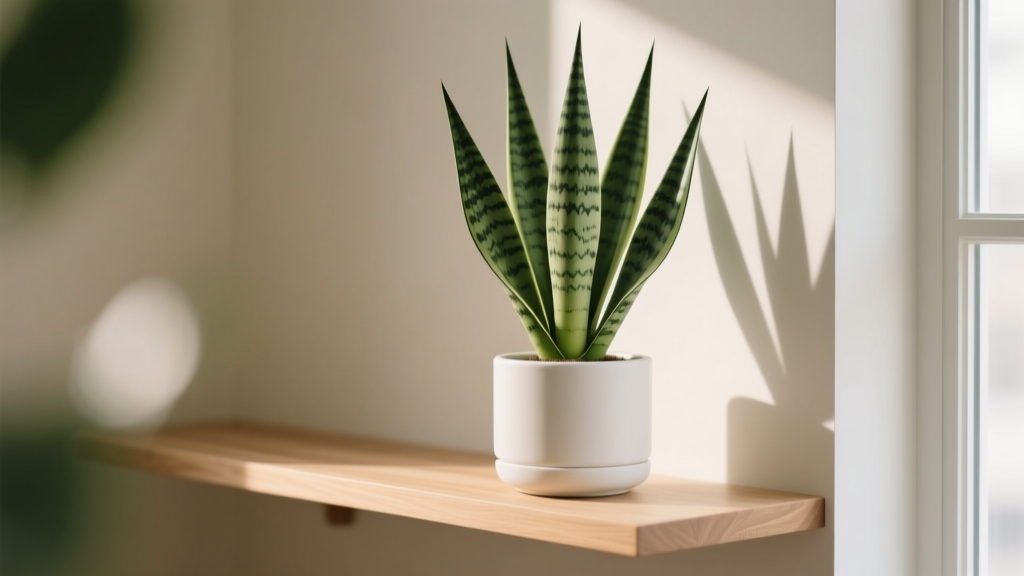
How to Shape Snake Plants for a Tidy Look
You buy a snake plant because it’s supposed to be “easy,” then six months later it’s leaning like a tipsy metronome—leaves flopping outward, a pot that looks lopsided, and a clump that keeps creeping toward the edge. I see this all the time in real homes: the plant isn’t unhealthy, it’s just growing in a way that doesn’t match the neat, upright silhouette you pictured. The good news is you can shape a snake plant without fighting its nature—if you use the right mix of light, watering, grooming, and (when needed) division.
Snake plants (Dracaena trifasciata, formerly Sansevieria) don’t respond to “pruning for branching” like many houseplants. A leaf cut shorter won’t regrow from the top. Shaping, instead, is a mix of training the plant to grow straighter and editing the clump so the best leaves are the ones you see.
What “Shaping” Really Means for Snake Plants
When gardeners ask me how to shape snake plants, they usually mean one (or more) of these goals:
- Keep leaves upright instead of splaying outward.
- Create a symmetrical clump (balanced height and density).
- Reduce crowding so the plant looks intentional, not chaotic.
- Control height (especially in smaller spaces).
Here’s the hard-won truth: most “messy” snake plants are responding to low light, uneven light, overwatering, or pot crowding. Fix those, and shaping gets dramatically easier.
Quick Checklist Before You Start Cutting or Dividing
Take 2 minutes and assess what you’ve got. Shaping works best when you choose the right tactic for the right cause.
- Check the lean: Are leaves leaning toward a window? That’s uneven light.
- Check the base: Are leaves loose at the soil line? That can be rot from too much water.
- Check density: Can you see soil, or is it a packed “leaf forest”? Packed plants often splay outward.
- Check the pot: Is the rhizome pressing hard against the pot wall? Time to divide.
Three Real-World Scenarios (and What Actually Works)
Scenario 1: “It leans hard toward the window.”
This is the most common tidy-look problem. Snake plants grow toward their light source. If you never rotate the pot, you’ll get a fan shape.
- Fix: Rotate the pot 90° every 2 weeks.
- Bonus: Move it so light hits more evenly (a spot with bright, indirect light from multiple angles is ideal).
- When shaping helps: If the clump is already “set” in a one-sided spread, division plus re-potting upright sections will reset the look.
Scenario 2: “The pot is crowded and leaves are forced outward.”
Snake plants spread by rhizomes. In a tight pot, new pups have nowhere to go, so the whole clump starts pushing sideways.
- Fix: Divide and replant the best-looking sections in the center of the pot.
- Timing: Do this in spring or early summer, when the plant is actively growing and heals faster.
Scenario 3: “Leaves are tall but floppy and wrinkled.”
Floppiness plus wrinkling usually points to watering problems—either chronic underwatering (leaves fold/wrinkle) or overwatering (base gets soft and unstable). Shaping won’t hold if the plant’s hydration is off.
- Fix: Adjust watering (details below), and remove any leaves that are permanently kinked or collapsing.
- Rule of thumb: If the leaf base is soft or smells sour, treat it like rot and act quickly.
Shaping Methods: What Works, What Backfires
Let’s compare the common approaches people try, with real pros/cons and when I recommend them.
| Method | Best for | Time to see improvement | Risk level | Key numbers |
|---|---|---|---|---|
| Rotate pot regularly | Leaning toward light | 4–8 weeks | Low | Rotate 90° every 14 days |
| Selective leaf removal at the base | Messy, crowded clumps; damaged leaves | Immediate | Low–Medium | Cut 0.5–1 cm above rhizome; disinfect tools |
| Division and replanting | Overcrowding; resetting shape | Immediate + 6–12 weeks recovery | Medium | Let cuts dry 24–48 hours before potting |
| Staking or tying leaves | Temporary support for a show spot | Immediate | Medium | Use soft ties; check every 7 days to prevent scarring |
| Cutting leaf tops to reduce height | Almost never ideal | Immediate (but permanent scar) | High (cosmetic) | Leaf will not regrow a pointed tip |
“Allow potting media to dry between waterings; overwatering is the most common cause of failure with snake plant.” — University of Florida IFAS Extension (2022)
I quote that a lot because shaping is mostly about preventing the conditions that make leaves collapse or sprawl.
Step-by-Step: How to Shape a Snake Plant by Grooming (No Repot Needed)
If your plant mostly looks fine but has a few awkward, bent, or scarred leaves, grooming is the cleanest approach.
What you’ll need
- Sharp pruners or a sturdy knife
- Isopropyl alcohol (70%) or disinfecting wipes
- Paper towels
- Optional: cinnamon powder (a dry, mild antimicrobial dusting for cuts)
Steps
- Disinfect tools. Wipe blades with 70% alcohol before you start and between cuts if rot is suspected.
- Choose leaves to remove. Prioritize:
- Leaves that are creased (they rarely stand straight again)
- Leaves that are twisting outward and ruining the silhouette
- Leaves with soft bases or dark, mushy tissue
- Cut at the base. Slice the leaf 0.5–1 cm above the rhizome. Don’t yank—pulling can tear tissue and invite rot.
- Keep the best structure. Aim for an even “crown” of upright leaves, with the tallest in the center and shorter around the edges.
- Let the wound dry. Keep the plant dry for 3–5 days after heavy grooming so cuts callus.
Tip from experience: removing just 2–4 problem leaves often makes the whole plant look intentional again. More isn’t always better.
Resetting the Shape: Division and Replanting for a Clean, Upright Clump
If your snake plant is sprawling or crowded, division is the most powerful shaping tool. You’re not just making more plants—you’re redesigning the clump.
When to divide
- Pot is bulging or cracking
- New pups are pushing at the rim
- Leaves are forced outward in a wide ring
- Water runs through oddly because the pot is packed with rhizomes
Best timing and conditions
- Season: Spring to early summer
- Room temperature: Keep the plant at 18–29°C (65–85°F) during recovery
- Dry soil: Divide when the mix is on the dry side (easier, cleaner, less rot risk)
Division steps for a tidy design
- Slide the plant out. If stuck, squeeze the pot or run a blunt knife around the inside edge.
- Find natural sections. Look for clusters with their own roots and rhizome pieces.
- Cut or snap cleanly. Use a disinfected knife to separate sections. Don’t shred roots unnecessarily.
- Let cuts dry. Set divisions in a warm, airy spot for 24–48 hours so cut rhizomes callus.
- Replant with intent. Place the most upright, attractive section in the center. Surround with smaller pups to create a balanced “bouquet.”
- Wait to water. After repotting, hold off watering for 5–7 days to reduce rot risk.
For a tidy look, I prefer a pot that’s only 2–5 cm (1–2 inches) wider than the root mass you’re replanting. Oversized pots stay wet too long and encourage sloppy growth.
Watering: The Hidden Lever That Keeps Leaves Upright
Watering affects shape more than most people realize. Too much water weakens tissues and can cause leaves to wobble or collapse at the base; too little can lead to wrinkled, folded leaves that never look crisp again.
Practical watering routine
- Check depth: Let the soil dry at least 5–7 cm (2–3 inches) down before watering again.
- Typical interval: Every 2–4 weeks indoors, slower in winter (often 4–6 weeks).
- Water thoroughly: Water until you see runoff, then empty the saucer within 10 minutes.
If you want an evidence-based touchpoint, the University of Florida IFAS Extension emphasizes drying between waterings for snake plant success (UF/IFAS Extension, 2022). That drying cycle is also what keeps the base firm, which keeps the whole plant looking more upright.
Soil and Pot Choice: Build a Base That Doesn’t Slump
A tidy snake plant starts below the soil line. A mix that stays wet too long leads to soft bases and leaning leaves.
My go-to indoor mix (simple and effective)
- 2 parts cactus/succulent potting mix
- 1 part perlite or pumice
Aim for a pot with drainage holes. For tall varieties, a heavier pot (ceramic or terracotta) helps prevent tipping. Terracotta also breathes, which reduces the risk of keeping the root zone soggy.
Missouri Botanical Garden notes snake plants tolerate low light but perform best in brighter conditions and with well-drained media (Missouri Botanical Garden Plant Finder, 2023). In practice, “well-drained media” is what allows you to water properly without sacrificing structure.
Light: The Easiest Way to Grow Straighter Leaves
If your snake plant is stretching, leaning, or growing unevenly, light is usually the culprit.
Best light for a tidy shape
- Bright, indirect light produces sturdier, more upright leaves.
- Low light is survivable, but it often leads to slower growth and more leaning toward the nearest window.
Action steps
- Place within 0.5–2 m (1.5–6 ft) of a bright window, depending on how strong the sun is in your home.
- Rotate the pot 90° every 2 weeks for even growth.
- If you use a grow light, run it 10–12 hours/day and keep it roughly 30–45 cm (12–18 inches) above the foliage (adjust based on the light’s strength and plant response).
Feeding: Don’t Overdo It (Overfed Snake Plants Get Awkward)
Snake plants don’t need much fertilizer. Too much can push soft, fast growth that doesn’t hold its shape as well.
A sensible feeding plan
- Feed only during active growth: April through August in many homes.
- Use a balanced houseplant fertilizer diluted to 1/4 strength.
- Apply every 6–8 weeks.
If your plant is in low light, cut feeding further. Fertilizer can’t compensate for weak light—and it can make the plant look less tidy, not more.
Common Problems That Ruin a Tidy Look (and How to Fix Them)
Problem: Leaves flopping outward
Likely causes: uneven light, overcrowding, or soft base from overwatering.
Fix:
- Rotate the pot on schedule (every 14 days).
- Increase light gradually over 2–3 weeks (avoid sudden full sun).
- Divide if crowded; choose a pot only 2–5 cm wider than the replanted root mass.
- Let soil dry properly before watering again.
Problem: Tall leaves that kink or crease
Likely causes: physical damage, weak light, or dehydration cycles.
Fix:
- Remove badly creased leaves at the base; they rarely look tidy again.
- Stabilize watering—avoid “bone dry for weeks, then flood.”
- Move to brighter indirect light to strengthen new growth.
Problem: Soft, mushy base or foul smell
Likely cause: root/rhizome rot from excess moisture.
Fix now (don’t wait):
- Unpot the plant and inspect rhizomes and roots.
- Cut away mushy tissue with a disinfected blade.
- Let healthy sections dry 24–48 hours.
- Repot into fresh, gritty mix and wait 5–7 days before watering.
Problem: Brown tips and ragged edges
Likely causes: inconsistent watering, salt buildup from fertilizer, or dry air plus underwatering.
Fix:
- Flush the pot with clean water every 3–4 months (water thoroughly until it runs freely, then drain).
- Trim tips only if cosmetic: follow the natural point with scissors, knowing the cut edge will remain.
- Keep watering consistent—snake plants prefer steady neglect, not random extremes.
Troubleshooting: Symptom-to-Solution (Fast Answers)
- Symptom: Plant looks “exploded,” wide and unruly.
Do this: Divide and replant with the best upright fans centered; use a snug pot (only 1–2 inches wider than roots). - Symptom: Leaves lean in one direction, otherwise healthy.
Do this: Rotate 90° every 2 weeks; move to brighter indirect light. - Symptom: New leaves are thin and stretched.
Do this: Increase light; reduce fertilizer; confirm you’re not watering too often. - Symptom: Leaves wobble at the base.
Do this: Check for rot; if healthy, repot deeper only slightly (don’t bury leaves), and firm the mix around rhizomes.
A Few Shaping Tricks I Use in Real Homes
Temporary “event-ready” tidying (without harming the plant)
If you need the plant to look sharp for guests or a photo, you can gently gather leaves together, but do it safely.
- Use a soft plant tie or fabric strip (not wire).
- Bundle loosely—leave a finger’s width of slack.
- Remove or loosen after 7–10 days so leaves don’t scar.
Re-centering a leaning clump when repotting
When you repot, you can correct years of lean in one go.
- Set the rhizome mass so the leaf fans are vertical.
- Backfill and firm gently—think “secure,” not “compacted.”
- Top-dress with a thin layer (1 cm) of gravel if you want extra stability and a cleaner look (optional, not a substitute for proper watering).
Designing a tidy silhouette on purpose
When you divide, you can build a plant that looks professionally arranged:
- Center: tallest, straightest fan.
- Mid-ring: 2–4 medium fans angled slightly outward.
- Edges: small pups to soften the rim without crowding.
Common Mistakes That Make Snake Plants Messier
- Overpotting: A pot that’s too big stays wet longer; leaves soften and sprawl.
- Watering on a calendar: Water by soil dryness, not by date.
- Cutting leaves halfway: It creates a permanent blunt, browned end and doesn’t “branch.”
- No rotation: A one-sided light source produces a one-sided plant—every time.
A tidy snake plant is mostly a plant with a firm base, even light, and enough room for its rhizomes to sit naturally. Once you get those right, shaping becomes simple maintenance: rotate on schedule, remove the occasional awkward leaf, and divide when the clump starts to bully its pot. That’s how you keep the crisp, architectural look that makes snake plants worth growing in the first place.
Sources: University of Florida IFAS Extension (2022); Missouri Botanical Garden Plant Finder (2023).