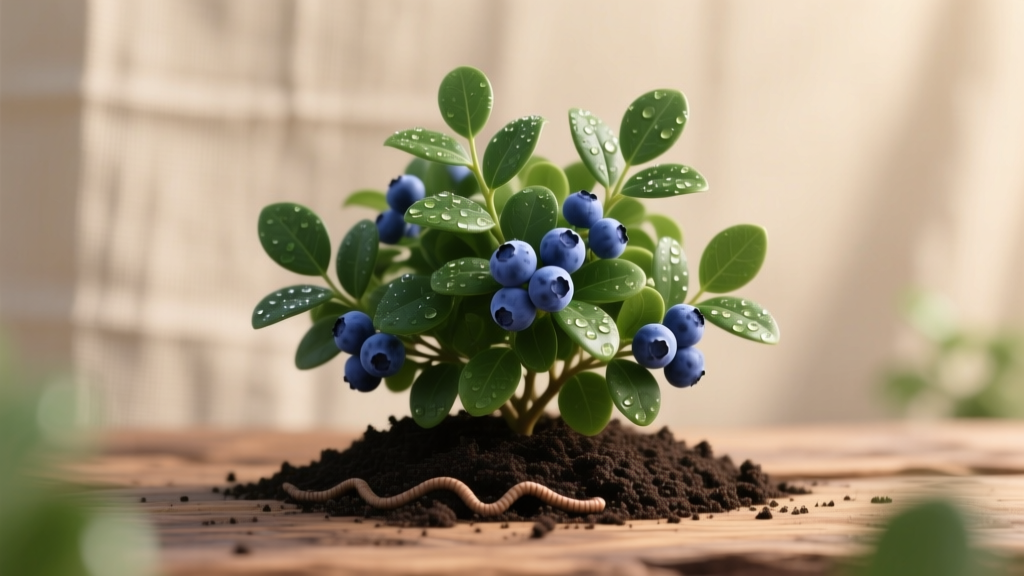
Vermicompost Top-Dressing for Blueberries
The most common “mystery” I see with home blueberry bushes goes like this: the plant looks alive, even leafy, but the berries stay small, the new growth is weak, and the leaves start paling between the veins. The gardener adds more fertilizer, the problem gets worse, and by midsummer the bush looks tired—almost offended. A surprising amount of that disappointment traces back to two things blueberries are picky about: root-zone conditions (especially pH) and how we feed them. Vermicompost top-dressing can be a gentle, reliable tool—but only when you use it like a scalpel, not a shovel.
I’ve used worm castings on blueberries for years in raised beds, in-ground plantings, and containers. Done right, it improves moisture-holding, nudges biology in the right direction, and provides slow nutrients without the “fertilizer burn” that blueberries can’t tolerate. Done wrong (too thick, too close to the crown, the wrong product, or paired with the wrong mulch), it can raise pH, invite fungus gnats in pots, and make an already iron-starved plant look even more chlorotic.
What vermicompost top-dressing does (and what it doesn’t)
Vermicompost (worm castings) is best thought of as a microbial inoculant plus a mild, slow nutrient source. It’s not a substitute for getting blueberry basics right—acidic soil, consistent moisture, and appropriate fertilizer timing. Blueberries are ericaceous plants with fine, shallow roots and limited ability to take up nutrients when pH drifts upward.
Two research-based points to keep in mind:
- Blueberries generally perform best in acidic soil around pH 4.5–5.5; outside that, iron and other nutrients become less available even if they’re “in the soil.” (University of Maine Cooperative Extension, 2016)
- Blueberry roots are shallow—often concentrated in the top 6–12 inches—so top-dressing and mulching practices strongly affect them. (North Carolina State Extension, 2023)
“Maintaining an acidic soil pH is one of the most important factors in successful blueberry production; when pH is too high, plants often show iron deficiency symptoms even when iron is present.” — University of Maine Cooperative Extension bulletin (2016)
Vermicompost top-dressing supports that shallow root system by improving the immediate surface layer, where feeder roots and mycorrhizal partners tend to be active. But it will not “fix” alkaline native soil by itself, and it won’t replace the need for an acid-forming fertilizer when nutrients are truly lacking.
Soil: get pH right before you top-dress
If I had to pick one make-or-break step, it’s this: test your soil pH. Worm castings vary. Some are close to neutral; some can drift slightly alkaline depending on feedstock and processing. Blueberries don’t want neutral.
Target pH and how to test
- In-ground blueberries: aim for pH 4.5–5.5.
- Container blueberries: aim for pH 4.5–5.2 (containers drift faster).
Use a soil lab test when possible, especially if plants are struggling. If you’re doing a quick home check, use it as a trend indicator, not gospel. If your soil reads pH 6.2 and your blueberry looks chlorotic, don’t argue with the plant—address pH.
Best base mix for blueberries (before vermicompost)
Vermicompost works best on top of a blueberry-appropriate base:
- In-ground: amended planting area with pine bark fines and/or peat moss (where appropriate), then mulched with pine needles or aged pine bark.
- Containers: a bark-forward mix (often 60–80% pine bark fines) with peat or coir adjusted for acidity, plus perlite for air space.
If your native soil is heavy clay and alkaline, top-dressing castings alone is like putting premium fuel in a car with four flat tires. Build the system first, then top-dress.
How to top-dress blueberries with vermicompost (amounts, timing, method)
Here’s the practical method I use. It’s conservative on purpose. Blueberries respond better to steady, moderate feeding than big hits.
How much to apply
Use vermicompost as a thin layer, not a thick blanket.
- In-ground mature bush (3+ years): 2–4 cups of vermicompost per plant per application, spread in a ring under the drip line.
- Young bush (1–2 years): 1–2 cups per plant.
- Containers (5–15 gallons): 1/4–1/2 cup per pot.
As a thickness guideline, aim for about 1/4 inch or less. I rarely exceed that with blueberries.
When to top-dress
Timing matters because blueberries have distinct growth phases.
- Early spring: apply when buds swell and daytime temps are reliably above 50°F (10°C). This supports the first growth push.
- After harvest: a lighter application can support root growth and next year’s bud formation—especially in long-season areas.
In many home gardens, that’s 1–2 applications per year. If you’re already using an acid fertilizer program, stick to one vermicompost top-dress in spring.
Step-by-step: clean, fast, and plant-safe
- Pull mulch back from the plant, exposing the soil surface under the drip line.
- Sprinkle the measured vermicompost in a donut shape, keeping it 3–6 inches away from the crown/stems.
- Gently scratch it into the top 1/2 inch of soil (optional but helpful in windy sites).
- Replace mulch in a 2–4 inch layer (pine needles or pine bark are my go-to for blueberries).
- Water in with 1–2 gallons per plant (or until container drains freely).
That crown clearance is not negotiable. Piling organic materials against blueberry stems is an easy way to invite stem cankers and rot problems.
Watering: top-dressing only helps if moisture is consistent
Blueberries hate “feast or famine” watering. Vermicompost can improve moisture retention a bit, but it won’t compensate for irregular irrigation—especially during fruit fill.
Practical watering targets
- Weekly water need: roughly 1–2 inches of water per week from rain/irrigation during the growing season.
- Hot spells: expect to water 2–3 times per week in sandy soil or containers when temps run above 85°F (29°C).
- Containers: check daily in summer; water when the top 1 inch is dry, but don’t let the root ball fully dry out.
Top-dressing with castings works best when you water it in thoroughly, then keep moisture even. The biological benefits you’re paying for (microbes, humus, stable aggregates) show up under steady moisture, not drought cycles.
Light: the yield lever most gardeners under-estimate
If your blueberry only gets half-day sun, vermicompost can make the plant greener, but it won’t conjure big crops out of shade. For best fruiting:
- Sun: 6–8+ hours of direct sun is ideal.
- Heat management: in very hot climates, a little afternoon shade can reduce stress—but too much shade reduces flowering and berry size.
A classic scenario: a bush planted near a fence line that used to be sunny, but a neighboring tree matured. The plant “survives,” but yield declines year after year. Fix the light first; then feed.
Feeding: vermicompost vs. other approaches (with real numbers)
Think of vermicompost as part of a feeding system. Blueberries often need nitrogen (N) and benefit from acid-forming forms like ammonium sulfate—applied correctly and at the right time. Castings are mild and safe, but not always enough by themselves.
| Feeding method | Typical application rate (home scale) | Speed of response | pH impact (typical) | Best use case |
|---|---|---|---|---|
| Vermicompost top-dress | 2–4 cups per mature bush; 1/4–1/2 cup per container | Slow (weeks) | Usually neutral to slightly alkaline depending on source | Building soil biology, gentle nutrition, improving moisture consistency |
| Ammonium sulfate (21-0-0) | About 1–2 tbsp for young plants; up to 1/4 cup for mature plants split into 2 doses | Moderate (1–3 weeks) | Acid-forming | When growth is weak and pH is already in range; boosting nitrogen in spring |
| Organic acid fertilizer (azalea/camellia type) | Per label; often 1–3 tbsp per plant monthly during spring/early summer | Moderate | Slightly acidifying to neutral | Container blueberries, gardeners wanting a simpler schedule |
| Pine bark/needle mulch (not a fertilizer) | 2–4 inches deep, refreshed yearly | Slow (seasonal) | Slightly acidifying over time | Root protection, moisture moderation, weed control; pairs well with top-dressing |
Comparison analysis with actual data: If you top-dress a mature bush with 4 cups of vermicompost once in spring, you’re supplying a modest amount of nitrogen spread over time. If instead you apply 1/4 cup ammonium sulfate split into two spring doses, you’re delivering a faster, more concentrated nitrogen hit and a stronger acidifying effect. For a chlorotic plant in high pH soil, ammonium sulfate without pH correction can still disappoint—because the core issue is pH, not nitrogen. For a healthy plant already in the pH sweet spot, vermicompost plus mulch often improves steadiness (fewer stress dips), while ammonium sulfate pushes more obvious growth.
Three real-world scenarios (and how I handle them)
Scenario 1: Backyard bush in decent soil, but berries stay small
Symptoms: lots of leaves, modest flowering, berries that stall at pea-size, and the plant droops quickly in summer afternoons.
What’s usually happening: inconsistent water plus shallow roots baking. Top-dressing helps, but only when paired with mulch and a better watering rhythm.
- Top-dress with 2–3 cups vermicompost in spring.
- Refresh mulch to 3 inches (pine bark or needles).
- Water to hit 1–2 inches/week, using a drip line or soaker for deep, slow watering.
Scenario 2: Container blueberry with pale leaves and fungus gnats
Symptoms: pale new growth, leaf edges browning, gnats flying up when you water.
What’s usually happening: the pot stays too wet, and someone added a thick layer of castings that stayed damp—gnat heaven. Also, container mixes often drift upward in pH over time.
- Stop thick top-dressing; limit to 1/4 cup maximum and keep the surface on the dry side between waterings.
- Check drainage holes; repot if the mix is broken down and soggy.
- Use a 1–2 inch pine bark mulch layer instead of a compost “cap.”
- Test pH; if it’s above 5.5, correct with an acid-forming fertilizer program and an appropriate acidic potting mix at next repot.
Scenario 3: In-ground blueberries in alkaline soil—yellow leaves with green veins
Symptoms: classic interveinal chlorosis on newer leaves, stunted shoots, poor fruit set.
What’s usually happening: pH is too high (often 6.0+), locking out iron and other nutrients. Vermicompost won’t solve that and can make it worse if it nudges pH upward.
- Get a lab soil test; don’t guess.
- Focus on acidifying strategy (often elemental sulfur over time, applied per soil test recommendations) and rebuild the planting zone with pine bark fines.
- Hold vermicompost to a tiny amount (1 cup per plant) or skip it until pH is corrected.
Common problems and troubleshooting (symptoms → likely cause → fix)
This is the section I wish every gardener kept near the potting bench. Blueberries “talk” through their leaves—if you read the signs, you can fix issues early.
Symptom: Yellow new leaves with green veins (interveinal chlorosis)
- Likely cause: pH too high causing iron unavailability; sometimes overwatering/cold soil slows uptake.
- Fix: test soil pH; aim for 4.5–5.5. If pH is high, prioritize acidifying amendments and appropriate fertilizers. Keep vermicompost thin and avoid neutral composts.
Symptom: Dark green leaves, lots of shoots, few flowers/berries
- Likely cause: too much nitrogen (especially late), excessive shade, or over-pruning.
- Fix: reduce nitrogen after early summer; ensure 6–8 hours sun; top-dress lightly (2 cups max) and rely on mulch rather than repeated feeding.
Symptom: Leaf tip burn or marginal browning
- Likely cause: salt buildup (common in containers), drought stress, or fertilizer applied too heavily.
- Fix: deep-water to flush containers until water runs freely for 30–60 seconds; back off fertilizer rates; keep mulch at 2–3 inches and water consistently.
Symptom: Mushy stems near the base, dieback, or cankers
- Likely cause: mulch/compost piled against the crown, poor airflow, waterlogged soil.
- Fix: pull all organic material back 3–6 inches from stems; improve drainage; prune out dead wood during dormancy and sanitize pruners.
Symptom: Lots of ants, aphids, sticky leaves (honeydew)
- Likely cause: aphid infestation; high nitrogen can make tender growth more attractive.
- Fix: hose off with a strong water spray; encourage beneficials; avoid overfeeding (especially heavy spring fertilizer plus thick vermicompost).
Best practices that make vermicompost work better
Vermicompost shines when you treat it as one piece of a blueberry system: acidity, moisture, mulch, and measured feeding.
Choose the right vermicompost
- Go for finished, earthy-smelling castings, not sour or ammonia-scented material.
- Avoid products bulked up with lots of unfinished compost or manure unless you know the pH and salt profile.
- If you can, ask for a basic analysis or at least a reported pH. Blueberries don’t forgive “mystery inputs.”
Pair with the right mulch
If you do only one thing besides top-dressing, do mulch. A 2–4 inch mulch layer reduces temperature swings, preserves moisture, and protects shallow roots. Pine bark and pine needles are consistently blueberry-friendly.
Keep it off the crown
I’ll say it again because it’s the easiest mistake to make: keep vermicompost (and mulch) 3–6 inches away from the stems. Blueberries are not tomatoes; they don’t want compost collars around their base.
A simple yearly schedule you can actually follow
If you want a plan that works in most home gardens, start here and adjust based on growth and leaf color.
- Late winter/early spring: prune out dead wood; open the center a bit for light and airflow.
- Bud swell / early spring (50°F+ days): top-dress vermicompost (1–4 cups depending on plant size), water in, refresh mulch.
- Spring into early summer: maintain 1–2 inches/week of water; monitor leaf color and growth. If growth is weak and pH is in range, consider a light dose of an acid-forming fertilizer.
- After harvest: optional light top-dress (1–2 cups in-ground; 1/4 cup container) if plants are healthy and you’re building soil—not if pH is drifting high.
- Fall: keep plants watered until dormancy, especially in dry climates; don’t push nitrogen late.
When vermicompost top-dressing is used with restraint—thin layer, correct timing, and the right mulch—blueberries tend to respond with steadier growth, fewer stress symptoms, and better berry size over time. The trick is to respect what blueberries care about most: acidity, oxygen at the roots, and consistent moisture. Get those right, and worm castings become a quiet advantage instead of another variable to worry about.
Sources: University of Maine Cooperative Extension blueberry soil management guidance (2016); North Carolina State Extension blueberry production/home garden recommendations (2023).