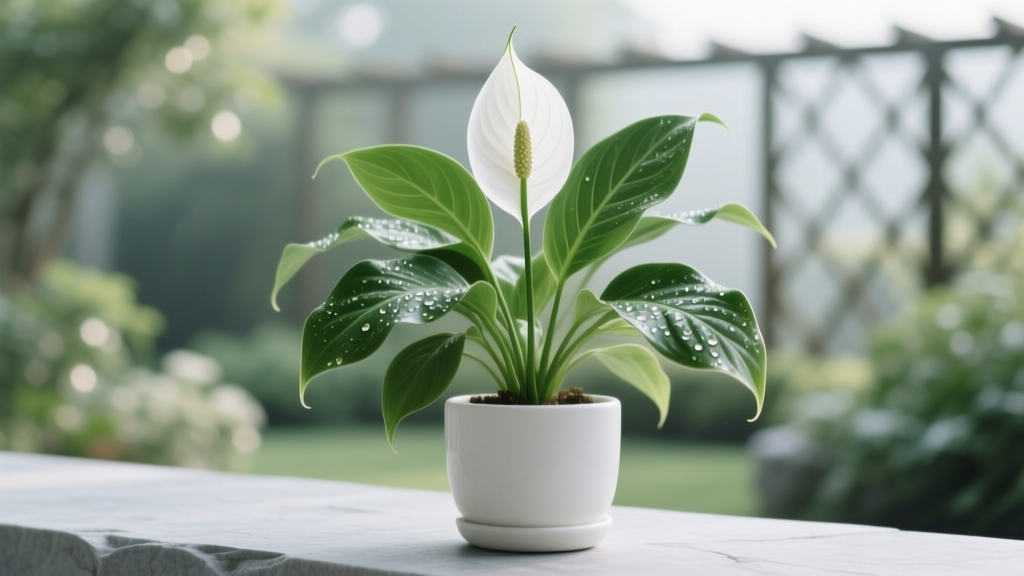
Spring Pruning Guide for Peace Lilies
Every spring I get the same message from friends and readers: “My peace lily looks tired. It bloomed last year, but now it’s a mess—yellow leaves, floppy stems, maybe a few brown tips. Should I cut it back or leave it alone?” Here’s the surprising part: peace lilies don’t need “pruning” in the way a shrub does, but they absolutely benefit from spring cleanup—and doing it at the wrong spot (or the wrong time) is one of the fastest ways to end up with a sad, stalled plant for months.
Spring is the sweet spot because days are getting longer, indoor temperatures stabilize, and your plant is ready to push new growth. Done right, pruning is less about shaping and more about removing the stuff that’s stealing energy: spent flower stalks, yellowing leaves, damaged tissue, and crowded growth. Done wrong, you can invite rot, stress the roots, or remove too much leaf area for the plant to photosynthesize well.
What “spring pruning” actually means for a peace lily
Peace lilies (Spathiphyllum) grow from a clump of stems emerging from the crown. Each leaf has its own petiole (leaf stem) rising from the base. Flowers come on separate stalks (peduncles). So spring pruning is really three tasks: flower stalk removal, leaf removal, and clump management. You’re not shortening stems to force branching the way you would with many houseplants.
When to prune (timing you can use)
Aim for early to mid-spring, when your indoor light levels noticeably improve—often March through May in the Northern Hemisphere. If you want a tighter window, I like to prune when:
- Night temps indoors stay above 65°F (18°C) and daytime is around 70–80°F (21–27°C).
- The plant is starting to make new spears of leaves (even 1–2 new emerging leaves is a good sign).
- You can give it a stable recovery period of at least 4–6 weeks without moving it around.
Tools and prep (don’t skip this)
Use sharp scissors, pruning snips, or a thin-bladed knife. Dull blades crush tissue, and crushed tissue rots faster. Before you start:
- Wipe blades with 70% isopropyl alcohol or wash with hot soapy water, then dry.
- Have a clean trash bag or bin next to you—old leaves and stalks shouldn’t sit on the soil surface.
- If your plant is very crowded, water it the day before pruning (not the same day) so it’s hydrated but the pot isn’t dripping wet.
“Removing senescent (aging) leaves improves light penetration and reduces habitats for pests and pathogens—sanitation is a major part of indoor plant success.” — University of Florida IFAS Extension publication on interior plant care (2021)
Step-by-step: how to prune a peace lily in spring
Here’s the method I use in real homes, with real low light, real heating vents, and real pets/kids brushing past the plant.
1) Remove spent flowers the right way
Once a spathe (the white “flower”) turns green, brown, or collapses, it’s living off the plant instead of contributing much. Cut the flower stalk:
- Follow the stalk all the way down into the clump.
- Cut it as close to the base as you can without gouging the crown—usually within 1/4 inch (6 mm) of the soil line.
- Don’t leave a tall stub. Stubs decay slowly and can attract fungus gnats.
2) Remove yellow or badly damaged leaves (base cut, not halfway)
If a leaf is more than half yellow, it won’t “green back up.” Remove it cleanly:
- Trace the leaf stem (petiole) down into the crown.
- Cut low, again around 1/4 inch (6 mm) from the base.
- If only the tip is brown, don’t remove the whole leaf—trim the tip (details below).
3) Trim brown tips without making the plant look hacked
Brown tips usually come from water quality, inconsistent watering, or dry air—more on that later. To tidy them:
- Use clean scissors.
- Cut at an angle that mimics the natural leaf shape.
- Leave a hairline of brown (1–2 mm) rather than cutting into green tissue, which can trigger a new brown edge.
4) Thin overcrowding (only if the clump is choking itself)
If your peace lily has become a dense mound where air can’t move and the inner leaves are yellowing, you can remove a few of the weakest stems at the base. This is conservative “thinning,” not a haircut.
- Pick the smallest, most bent, or most yellow stems.
- Remove no more than 15–20% of total leaves in one session.
- If you think it needs more, wait 2–3 weeks, then reassess.
Watering after spring pruning (and how watering affects what you should cut)
Pruning changes the plant’s water demand. Fewer leaves means less transpiration, so the pot dries more slowly for a while. This is where people accidentally overwater after “helping” the plant.
A practical watering rule that works in most homes
After pruning, water when the top 1 inch (2.5 cm) of soil is dry. Don’t water on a calendar. Check with your finger or a wooden skewer.
- If the pot is 6–8 inches wide, a peace lily often needs water every 7–10 days in spring indoors, but your light and temperature can push it faster or slower.
- Water thoroughly until 10–20% drains out the bottom, then empty the saucer.
Water quality: a big reason for brown tips
Peace lilies can be sensitive to salts/fluoride in tap water. If you consistently see brown tips even when watering correctly:
- Switch to rainwater, distilled, or filtered water for 30 days and watch new growth.
- Flush the pot monthly: run water through the soil for 2–3 minutes to wash salts out, then drain well.
Salt buildup is a known indoor plant issue, especially when fertilizing. University of Florida IFAS notes soluble salts can accumulate in containers and damage roots and leaf margins if not managed (UF/IFAS Extension, 2021).
Soil and potting: pruning is the perfect moment to check the roots
Spring pruning pairs naturally with a root check—because if the roots are struggling, pruning alone won’t fix the plant.
What good peace lily soil feels like
You want soil that holds moisture but doesn’t stay swampy. A reliable mix:
- 2 parts peat-based or coco-coir houseplant mix
- 1 part perlite or pumice
- Optional: 1/2 part fine orchid bark for airflow
Aim for a pot with drainage holes. If your plant is in a decorative cachepot, keep it in a nursery pot inside so you can drain it completely.
Repot or not? Use these measurements
Repot in spring if any of the following are true:
- Roots are circling the pot heavily and you see a dense root mat.
- Water runs straight through in under 10 seconds (hydrophobic or root-bound).
- The plant dries out in under 3 days repeatedly despite moderate light.
When you repot, go up only 1–2 inches (2.5–5 cm) in pot diameter. Oversizing leads to soggy soil and root rot.
Light: the pruning-to-bloom connection most people miss
Many peace lilies survive in low light, but blooming and strong regrowth after pruning need brighter conditions than most living rooms provide. A common spring scenario: you prune, the plant looks neat, but then it sits—no flowers for months. That’s usually a light issue, not a pruning issue.
What “bright indirect light” looks like in a real house
- Near an east window is ideal.
- Near a north window can work if unobstructed.
- Near a south/west window is fine if filtered (sheer curtain) and not baking in sun.
Keep it out of harsh direct sun that heats the leaves. Leaf scorch often shows up as bleached patches and crispy edges within 24–72 hours after moving into stronger sun.
Grow light option with actual numbers
If your peace lily never blooms, a small LED grow light can be a game changer. Aim for:
- 10–12 hours per day
- Light positioned about 12–18 inches (30–45 cm) above the foliage (follow your specific fixture guidance)
More isn’t always better; too much light can stress the plant and dry it out faster.
Feeding: spring fertilizer timing (and how it affects pruning decisions)
Feeding and pruning go hand in hand. If you prune and immediately fertilize a stressed plant, you can burn tender roots. If you never feed, the plant may keep producing small, pale leaves.
A simple feeding schedule
- Wait 7–14 days after pruning before fertilizing (especially if you removed many leaves).
- Use a balanced liquid fertilizer at 1/4 to 1/2 strength.
- Feed every 4 weeks from spring through early fall if the plant is in decent light.
Too much fertilizer is a classic cause of brown tips and leaf margin burn—especially in smaller pots where salts concentrate quickly.
Comparison: hard prune vs gentle cleanup (what actually happens)
| Approach | How much you remove | Typical recovery time | Watering impact | Best for |
|---|---|---|---|---|
| Gentle spring cleanup | Spent blooms + yellow leaves (usually 5–15% of foliage) | 1–3 weeks to look fuller | Slightly slower drying; monitor top 1 inch of soil | Healthy plants, minor cosmetic issues |
| Heavy cutback/thinning | 20–40% foliage removed (not recommended for most homes) | 4–8 weeks or longer indoors | Pot stays wet longer; higher rot risk if you water “as usual” | Severely damaged plants, pest cleanup, severe overcrowding |
If you’re tempted to do a heavy cutback because the plant looks bad, pause and check roots and watering habits first. Many “ugly” peace lilies are actually waterlogged or salt-stressed, and a big cut just reduces the plant’s ability to recover.
Common spring pruning problems (symptoms and fixes)
This is where the real-world headaches show up. Below are the issues I see most often right after spring pruning—plus exactly what to do next.
Symptom: Leaves droop hard 24 hours after pruning
- Likely causes: Underwatering, root damage from repotting, or sudden light/temperature change.
- What to do:
- Check soil moisture at 2 inches (5 cm) deep. If dry, water thoroughly until drainage appears.
- If wet and drooping, stop watering and improve airflow; move away from cold windows or vents.
- Keep temps steady around 70–75°F (21–24°C) for recovery.
Symptom: Cut bases turn mushy or smell bad
- Likely causes: Overwatering + poor airflow; dirty tool; stubs left behind.
- What to do:
- Remove any mushy tissue back to firm, clean material.
- Let the top of the soil dry out more between waterings (top 1–2 inches).
- Ensure the pot drains fully—no standing water in the saucer.
Symptom: New leaves emerge smaller and pale
- Likely causes: Low light, depleted soil, or root-bound plant.
- What to do:
- Increase light one level (closer to a window or add 10–12 hours of grow light).
- Start feeding at 1/4 strength after 7–14 days.
- If root-bound, repot up 1–2 inches in diameter.
Symptom: Brown tips keep returning even after trimming
- Likely causes: Tap water salts/fluoride, fertilizer buildup, inconsistent watering, or very dry air.
- What to do:
- Switch water source for 30 days (filtered/distilled/rainwater).
- Flush the pot for 2–3 minutes monthly.
- Keep humidity moderate; if your home sits near 30% in late winter/spring, a small humidifier can help. Don’t mist as your main strategy—it’s brief and can spot leaves.
Three real-world spring scenarios (and what I’d do in each case)
Peace lilies don’t live in textbooks; they live next to radiators, in dark corners, and in pots that haven’t been changed since the last apartment. Here are common cases and the approach that works.
Scenario 1: The “hotel lobby” peace lily in a dim corner (no blooms, long stems)
You’ve got lots of leaves, few or no flowers, and stems stretching toward light. In spring, do a light cleanup only:
- Remove spent stalks and fully yellow leaves at the base.
- Do not thin heavily—those leaves are your energy factory.
- Move it to brighter indirect light or add a grow light 10–12 hours daily.
- Feed at 1/4–1/2 strength monthly once it’s stable.
Most of these plants bloom again within 6–10 weeks of improved light and consistent watering.
Scenario 2: The overwatered peace lily (yellowing, droop that doesn’t perk up)
This one tricks people because peace lilies droop when dry—but they also droop when roots are stressed from too much water. If the soil is wet and the plant looks limp, don’t prune aggressively.
- Remove only the worst yellow leaves and any mushy flower stalks.
- Check drainage holes; if none, repot into a pot with drainage immediately.
- Use an airier mix (add perlite) and let the top 1–2 inches dry before watering.
Oregon State University Extension notes that overwatering and poor drainage are leading causes of houseplant decline, especially root rot issues (OSU Extension, 2020).
Scenario 3: The root-bound “bursting pot” peace lily (wilts fast, lots of brown tips)
If your plant wilts again only 2–3 days after watering and roots are circling, spring is repot season. Here’s what works:
- Prune spent blooms and yellow leaves first so you can see the clump clearly.
- Slide the plant out and gently loosen the outer roots (don’t shred them).
- Repot into a container 1–2 inches wider with fresh mix.
- Water in thoroughly, then wait until the top 1 inch dries before watering again.
After repotting, skip fertilizer for 2 weeks. Let the roots settle first.
Pests and disease: what to watch for during spring cleanup
Pruning time is inspection time. You’re already handling the plant—use that moment to catch problems early.
Fungus gnats (tiny flies near soil)
- Cause: Consistently wet soil, decaying plant matter on the surface.
- Fix: Remove leaf debris, let the top 1–2 inches dry, and use yellow sticky traps. If persistent, a BTi drench can help.
Spider mites (fine webbing, stippled leaves)
- Cause: Dry air + stressed plant.
- Fix: Rinse leaves (especially undersides) in the shower, then repeat weekly for 3 weeks. Increase humidity and avoid letting the plant dry to a crisp.
Mealybugs (white cottony clusters at leaf bases)
- Fix: Dab with alcohol on a cotton swab and isolate the plant. Remove heavily infested leaves at the base.
Aftercare: how to help your peace lily rebound fast
The week after pruning is where plants either bounce back or stall. Keep things steady.
- Keep it stable: Don’t move it daily. One good spot beats five “better” spots.
- Hold off on extras: No leaf shine products. They can clog leaf pores and attract dust.
- Rotate gently: Turn the pot 1/4 turn once a week to keep growth even.
- Watch new growth: New leaves should emerge clean and upright within 2–4 weeks in decent light.
If you take nothing else from spring pruning season, remember this: peace lilies recover best from small, clean cuts paired with better light and smarter watering. The goal isn’t to strip the plant down—it’s to remove what’s failing so the healthy parts can do their job. By the time late spring light really kicks in, a well-pruned peace lily doesn’t just look tidier; it’s usually stronger, greener, and much more willing to bloom when it’s ready.
Sources: University of Florida IFAS Extension (2021) interior plant care guidance on soluble salts and container management; Oregon State University Extension (2020) houseplant care publications emphasizing drainage and overwatering as common causes of decline.