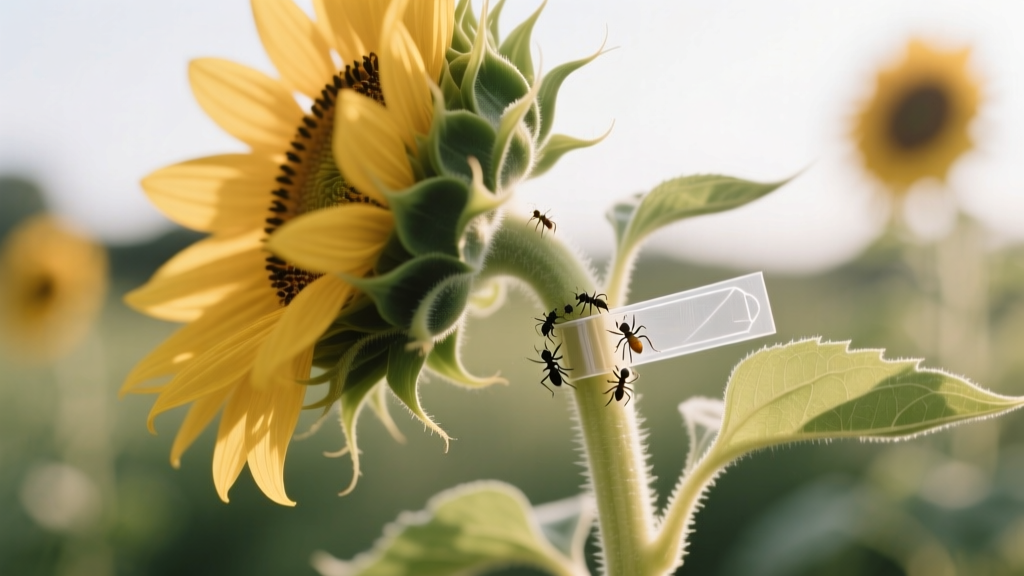
Sticky Trap Strategy for Sunflowers Pests
The first time you notice it, it feels like sunflower betrayal: buds that should be swelling and standing proud suddenly look puckered, leaves curl like little green fists, and the stems feel tacky. You run your fingers along the underside of a leaf and come away with a shine—honeydew. A day later, ants are marching up the stalk like they own the place. That’s the moment sticky traps stop being a “nice idea” and become a real tool in your pest strategy—if you use them correctly and at the right time.
Sticky traps are simple, but sunflowers are not. They’re tall, fast-growing, and they attract a whole crowd—aphids, leafhoppers, whiteflies, thrips, fungus gnats (especially in seed-starting areas), and also the beneficial insects you want to keep. The trick is to use sticky traps as scouting and pressure-reduction—not as a one-size-fits-all cure.
This guide lays out a master-gardener style sticky trap strategy built around the basics that keep sunflowers resilient: watering, soil, light, and feeding—plus the practical pest work that makes the difference when things go sideways.
What Sticky Traps Actually Do (and What They Don’t)
Sticky traps are colored cards (usually yellow or blue) coated in adhesive. Flying insects land and get stuck. That’s it—no magic. Their best use is:
- Early detection: catching the first wave before it becomes a full infestation.
- Monitoring pressure: a quick way to measure if your other steps (sprays, sanitation, watering adjustments) are working.
- Reducing adult populations: especially for whiteflies, leafhoppers, and thrips—small flyers that drive repeated reinfestations.
What they don’t do well:
- Control pests that mostly crawl (cutworms, caterpillars, sunflower beetle larvae) unless you’re using trunk barriers and placement tricks.
- Fix plant stress—and stressed sunflowers are pest magnets.
- Replace hands-on inspection (especially under leaves and inside buds).
“Yellow sticky cards are most valuable as a monitoring tool—place them early, check them weekly, and use the counts to guide decisions rather than reacting after damage is visible.” — University of Minnesota Extension (2022)
That “place them early” is the part most gardeners miss. Once your sunflower is already dripping honeydew, you’re late. Not doomed—just late.
Watering: The Pest Pressure You Create (or Prevent)
Sunflowers can handle heat, but inconsistent moisture is a classic trigger for aphids and leafhoppers. When the plant alternates between drought stress and sudden soaking, it pushes soft, nitrogen-rich growth—exactly what sap-suckers prefer.
How much to water (real numbers that work)
For in-ground sunflowers, aim for 1 to 1.5 inches of water per week from rain + irrigation during active growth. In hot spells above 90°F, a tall sunflower can use noticeably more—don’t guess, check the soil.
- Deep watering schedule: 1–2 deep waterings per week is better than daily sprinkles.
- Soil check: water when the top 2 inches are dry, but moisture is still present at 6 inches.
- Container sunflowers: often need water every 1–2 days in summer; containers dry fast and invite spider mites when stressed.
Watering method that supports sticky trap results
If you want sticky traps to be meaningful, keep watering consistent so your trap counts reflect pest pressure—not plant stress. Use:
- Soaker hose or drip at the base (keeps foliage dry and reduces disease).
- Mulch 2–3 inches deep (straw, shredded leaves, or untreated grass clippings) to smooth moisture swings.
- Morning watering so stems and lower foliage dry quickly.
Soil: Strong Roots, Fewer Emergencies
Sunflowers aren’t fussy, but they’re big drinkers and heavy lifters. Loose soil and steady nutrition help them outgrow minor pest damage.
Ideal soil conditions
- Drainage: avoid soggy sites; root stress invites fungus gnats (near seedlings) and weak growth that pests exploit.
- Texture: loam is ideal, but amended clay or sandy soil can work well.
- pH target: roughly 6.0–7.5 is a comfortable range for nutrient uptake.
Before planting, mix in 1–2 inches of compost into the top 6–8 inches of soil. Compost doesn’t just feed—healthy soil biology supports steady growth that shrugs off light pest feeding.
Soil hygiene that reduces pest buildup
Sanitation matters because sticky traps catch flyers, but many sunflower pests have multiple stages in the soil or on plant debris.
- Remove and trash (don’t compost) heavily infested leaves coated in honeydew/sooty mold.
- At season’s end, remove stalks and spent plants if pest pressure was high.
- Rotate sunflower locations yearly when possible to reduce carryover of pest and disease cycles.
Light and Spacing: The Overlooked Pest Control
Sunflowers need sun to build thick stems and tough leaves. Weak, shaded sunflowers are slow, sappy, and more attractive to pests.
- Light: at least 6–8 hours of direct sun daily.
- Spacing: generally 12–24 inches between plants depending on variety; crowded plants trap humidity and make scouting hard.
Spacing also affects sticky trap placement. If plants are packed tight, traps get stuck in leaves and lose their “signal.” Give yourself room to hang cards freely.
Feeding: Don’t Over-Nitrogen Your Way Into Aphids
Here’s the hard truth: many sunflower aphid outbreaks are homegrown—caused by rich fertilizer and fast, tender growth. Sunflowers like fertility, but they don’t need to be babied.
Practical feeding plan
- At planting: compost + a balanced slow-release fertilizer if your soil is poor (follow label rates).
- Mid-season: if growth is pale or stunted, side-dress with compost or apply a gentle feed once. Avoid repeated high-nitrogen applications.
If you’re using a liquid fertilizer, a common home-garden approach is a diluted feed every 3–4 weeks during active growth—only if the plant shows need (pale leaves, slow growth) rather than feeding on autopilot.
Texas A&M AgriLife Extension notes that excess nitrogen can push lush growth that attracts sap-feeding pests, and recommends fertilizing based on soil needs rather than routine heavy applications (Texas A&M AgriLife Extension Publication, 2020).
The Sticky Trap Playbook (Placement, Timing, and Counts)
Sticky traps work best when you treat them like a garden “dashboard,” not a single emergency lever.
Yellow vs blue: what to use on sunflowers
Yellow is the general workhorse: aphids (winged), whiteflies, leafhoppers, fungus gnats. Blue is more targeted for thrips.
| Trap Color | Best Targets | Where to Use | Typical Check Interval |
|---|---|---|---|
| Yellow sticky cards | Whiteflies, leafhoppers, winged aphids, fungus gnats | Near upper foliage; also near seedlings indoors/greenhouse | Every 7 days (every 3–4 days during outbreaks) |
| Blue sticky cards | Thrips | Near buds/flowers where thrips feed | Every 7 days |
| Sticky bands/barriers (wrapped) | Ants (indirect aphid support), some crawling pests | Around lower stalk (not tight against tissue) | Inspect weekly; replace when dusty |
How many traps and where to put them (numbers that matter)
For a home garden bed, a practical starting point:
- 1 trap per 10–20 square feet of sunflower planting, or one trap every 6–10 feet along a row.
- Hang cards so the sticky surface is just above or level with the foliage—usually 12–24 inches above the soil early, then raised as plants grow.
- Keep traps from sticking to leaves: leave at least 2–3 inches of clearance around the card.
Timing: Put traps out when plants are 6–12 inches tall, or immediately after transplanting. Waiting until flowering is like putting a smoke alarm in after the kitchen fire.
How to read trap counts without overreacting
Counts aren’t universal, but trends are gold. Use a simple notebook:
- Date, weather note (hot week, windy week, rain).
- Trap location.
- Rough count by pest type (leafhoppers vs gnats vs “tiny whiteflies”).
If your counts double week to week and you also see symptoms on leaves, it’s time to intervene. If trap counts rise but plants look fine, you may only need to keep monitoring and protect beneficials.
Sticky cards also catch beneficial insects. To reduce collateral damage, place traps inside the canopy rather than high above the flowers where pollinators cruise. Michigan State University Extension emphasizes sticky traps as monitoring tools and warns to use them thoughtfully to avoid capturing non-target insects (MSU Extension Bulletin, 2021).
Common Sunflower Pests: Symptoms, Trap Clues, and What to Do
Here’s where sticky traps shine: they tell you which pest is arriving before the plant looks miserable.
Aphids (especially on new growth and buds)
- Symptoms: curled leaves, sticky honeydew, ants, distorted buds.
- Trap clue: winged aphids show up on yellow cards as small, pear-shaped insects with clear wings.
- First response: blast colonies off with a firm stream of water early in the day, 2–3 times per week for a week.
- Support move: control ants (they “farm” aphids). Use sticky barrier bands on the stalk on a separate wrap (like paper tape) so adhesive doesn’t touch the plant.
Leafhoppers
- Symptoms: stippling, leaf edges yellowing, leaf curl; plants look tired even when watered.
- Trap clue: wedge-shaped, quick little insects on yellow cards—often more numerous after hot, dry weather.
- Response: increase trap density temporarily (double it for 2 weeks), remove heavily damaged lower leaves, and keep plants evenly watered to reduce stress.
Thrips (especially around buds/flowers)
- Symptoms: silvery streaking, distorted petals, “dirty” pollen-looking specks (frass).
- Trap clue: thin, sliver-like insects; more reliably caught on blue cards near buds.
- Response: blue traps near buds + targeted sprays only if damage escalates (see scenarios below).
Whiteflies (more common in warm, sheltered spots)
- Symptoms: clouds of tiny white insects when leaves are disturbed; honeydew and sooty mold.
- Trap clue: small white moth-like adults on yellow cards.
- Response: add traps, remove heavily infested leaves, and avoid nitrogen spikes.
Troubleshooting: Symptom → Likely Cause → Fix
Problem: Leaves are sticky, shiny, and ants are climbing the stalk
- Likely cause: aphids or whiteflies producing honeydew; ants protecting them.
- Fix:
- Inspect undersides of leaves and buds (morning is best).
- Hose off colonies every 2–3 days for 1 week.
- Install a sticky barrier band around the stalk (on a protective wrap), and prune away leaf bridges that let ants bypass it.
- Place 1–2 yellow traps within the canopy to monitor winged adults.
Problem: New leaves look puckered, but traps are nearly empty
- Likely cause: non-flying pests (like aphids that haven’t produced winged adults yet), herbicide drift, or watering stress.
- Fix:
- Check the newest growth and undersides—don’t rely on traps alone.
- Correct watering: keep moisture steady; aim for 1–1.5 inches/week.
- If no insects are found, consider drift: distortion often shows as twisted, strap-like growth across multiple plants.
Problem: Buds look deformed and petals emerge ragged or streaked
- Likely cause: thrips feeding inside buds.
- Fix:
- Hang blue sticky cards at bud height, 1 card per 10–20 sq ft.
- Tap buds over white paper to confirm thrips presence.
- Remove the most damaged blooms if infestation is heavy—this reduces breeding sites.
Three Real-World Sticky Trap Scenarios (What I’d Do in Each)
Scenario 1: The “Ant Highway” Sunflowers Along a Fence
You’ve got sunflowers in a warm strip along a fence—great heat, but low airflow. You notice ants moving up and down daily, and the leaves feel tacky by mid-July.
What works here: sticky traps plus ant interruption.
- Wrap the stalk (loosely) with a band of painter’s tape or a paper collar, then apply a sticky barrier product to the wrap—not directly to the sunflower.
- Place two yellow traps per 10 feet of fence line, slightly inside the foliage (not above the blooms).
- Water deeply once or twice weekly so the plant doesn’t push stressed, sugary growth.
- Hose off aphids every 2–3 days for a week. The combination often breaks the cycle without any sprays.
Scenario 2: Seedlings Started Indoors—Fungus Gnats Everywhere
Sunflower starts in cells can turn into a fungus gnat nursery fast. The adult gnats are annoying, but the larvae can chew fine roots and stall seedlings.
What works here: sticky traps as monitoring + moisture control.
- Use yellow sticky cards stuck into trays at canopy height (1–2 cards per standard 1020 tray).
- Let the surface dry between waterings; bottom-water if possible.
- Add a thin top dressing of coarse sand or fine gravel (about 1/4 inch) to reduce egg-laying.
In this scenario, trap counts should drop within 7–10 days if you’ve corrected the moisture issue. If traps keep filling, you’re still too wet.
Scenario 3: Tall, Outdoor Sunflowers in a Heat Wave—Leafhoppers Spike
When daytime temps push past 90°F and nights stay warm, leafhopper pressure can jump fast—especially if the garden edges are weedy.
What works here: adjust trap height and reduce reinfestation sources.
- Raise yellow sticky cards as plants grow—keep them at mid-to-upper canopy height.
- Temporarily increase density to 1 trap per 10 sq ft for two weeks.
- Weed the border areas (leafhoppers love weedy hosts).
- Keep watering steady—deep soak, then let the top 2 inches dry before repeating.
Watch your weekly counts. If numbers drop after sanitation and consistent watering, you’ve turned the corner.
Sticky Traps vs Other Controls: A Practical Comparison With Data
Sticky traps are best as part of a layered plan. Here’s how they compare to two common home-garden tactics using realistic, measurable factors.
| Method | Best For | Speed of Results | Cost (Typical Home Use) | Non-Target Risk | Notes |
|---|---|---|---|---|---|
| Sticky traps (yellow/blue cards) | Monitoring; reducing flying adults (whiteflies, leafhoppers, thrips) | Visible captures in 24 hours; population shift in 7–14 days | $8–$20 for 10–20 cards | Moderate (can catch beneficials if placed near blooms) | Best when set out early; adjust height as sunflowers grow |
| Water spray (hose-off) | Aphids and light infestations on leaves/buds | Immediate knockdown | $0 if you have a hose | Low | Repeat every 2–3 days; works best before leaves curl tightly |
| Insecticidal soap (spot treatment) | Aphids, whiteflies, some thrips (contact only) | 24–72 hours | $10–$18 per bottle concentrate/RTU | Low to moderate (can harm soft-bodied beneficials on contact) | Spray in evening; coverage on undersides matters; avoid heat-stress spraying |
If you want one “comparison takeaway” that matches real gardens: sticky traps give you trend data and help reduce re-infestation from flying adults, while water sprays and soaps handle what’s already on the plant. Use both roles intelligently and you’ll do far less spraying overall.
Common Problems Beyond Insects (Because Sticky Traps Won’t Fix These)
Powdery mildew and leaf spot
Sticky traps won’t touch fungal problems, but overcrowding and overhead watering can make disease look like pest damage from a distance.
- Symptoms: white powdery coating, or brown/black spots that expand.
- Fix: water at the base, space plants, remove the worst leaves, and avoid soaking foliage late in the day.
Wilting in the heat (even with wet soil)
Big sunflowers can droop in afternoon heat and recover by evening. If they don’t recover, you may have root stress (waterlogging, damage, or rot).
- Check: dig a small inspection hole 6 inches deep—if it’s soggy and smells sour, drainage is the issue.
- Fix: improve drainage, reduce watering frequency, and avoid mulching too thickly against the stem.
Weekly Routine: Keep It Simple, Keep It Working
If you want sticky traps to be worth the effort, pair them with a quick, repeatable routine. Here’s one I’ve used in teaching gardens where sunflowers are pest magnets.
- Once a week (10 minutes): check traps, note counts, raise trap height if foliage has grown, replace dusty cards.
- Twice a week (2 minutes): flip a few leaves and inspect buds—especially the newest growth.
- After storms or heat waves: do one extra check. Pest populations can shift fast after weather swings.
Replace traps when they’re covered with debris or insects—most home gardeners find a 2–4 week replacement rhythm works, faster in dusty or pollen-heavy areas.
Over time, you’ll get a feel for your “normal” trap catch. That’s the goal. The best sticky trap strategy isn’t about catching everything—it’s about catching the story early enough to change the ending.
When your sunflowers are growing in steady moisture, full sun, and not overdosed on nitrogen, sticky traps become a sharp little early-warning system rather than a desperate last stand. And once you’ve had one season where you spot the first leafhoppers on a yellow card and prevent the late-summer leaf collapse—well, you don’t garden without traps after that.