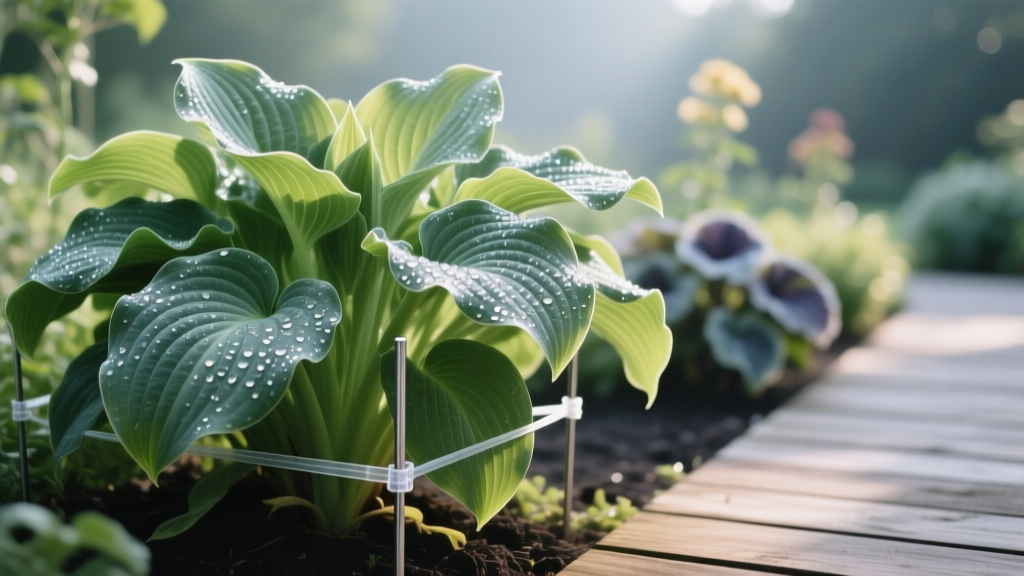
Staking Hostas to Prevent Breakage
You wake up after a night of hard rain and wind, coffee in hand, and there it is: your favorite hosta looks like it got body-slammed. Leaves are creased, a few petioles snapped clean off at the crown, and the flower scapes are leaning like a row of toppled streetlights. Hostas are tough plants, but their big, juicy leaves are basically sails. Once they’re wet, heavy, and pushed by wind—or flattened by a Labrador doing a victory lap—breakage happens fast.
The good news: staking hostas is simple, discreet, and (when done right) it doesn’t look like you “caged” your garden. The better news: staking is only half the fix. Watering habits, soil structure, light levels, and even fertilizer timing can make hosta tissue more or less prone to snapping. This article lays out a practical, field-tested approach to keeping hostas upright through storms, pets, foot traffic, and their own lush growth.
When staking hostas actually matters (and when it doesn’t)
I don’t stake every hosta. Many cultivars stay naturally tidy, especially smaller varieties or those planted in sheltered shade. Staking becomes worthwhile when you see predictable triggers:
- Large-leaved cultivars (big, cupped or thin leaves) that collect water and sag.
- Flower scapes that flop during bloom—common on tall varieties.
- Exposed sites with wind corridors between buildings or along open edges.
- High-traffic gardens where kids, pets, or a wheelbarrow clip the plant.
- Soft growth caused by too much nitrogen or too much shade with too much water.
Timing matters. Most staking is best done in spring when hostas are 6–10 inches tall, before the plant fully leafs out. Waiting until the plant is huge usually means you’ll wrestle leaves, crease them, or end up with visible supports.
Real-world scenarios: what causes breakage in home gardens
Here are three common cases I see (and have lived through):
Scenario 1: The “storm pancake”
A thunderstorm drops 1–2 inches of rain overnight and gusts hit 25–35 mph. A big hosta in a slightly open spot ends up flattened. This is usually a combination of heavy water-laden leaves plus wind torque. A low, wide support ring installed early prevents the leaves from ever folding sharply at the base.
Scenario 2: The “dog runway”
Your hosta is beside a path or patio edge. Pets cut the corner and shoulder-check the plant daily. You’ll see repeated creases in the same few outer leaves. A simple three-stake corral and a gentle twine loop buys you time—and it subtly trains traffic away from the clump.
Scenario 3: The “too lush to stand” fertilizer problem
A hosta is fed heavily in spring with a high-nitrogen lawn fertilizer drift or a rich manure compost. Growth comes in big and fast, but tissue is softer and more breakable. Staking helps, but dialing back nitrogen and improving light and airflow is the longer-term fix.
Staking methods compared (with real numbers)
Most gardeners use one of three approaches: a peony-style ring, individual stakes with twine, or a low cage/grid support. Here’s how they stack up in cost, setup time, and performance in wind.
| Method | Best for | Typical height used | Setup time (per plant) | Wind/rain performance | Visibility | Typical cost (USD) |
|---|---|---|---|---|---|---|
| Peony ring (single hoop with legs) | Large hostas, storm-prone spots | 18–24 in ring | 3–5 minutes | High (supports from beneath) | Low once leaves expand | $8–$20 |
| 3–5 bamboo stakes + soft twine loop | Irregular clumps, budget setups | 24–36 in stakes | 5–10 minutes | Medium (depends on knot/spacing) | Medium (stakes can show) | $2–$8 |
| Low wire grid/cage (tomato cage cut down or grid panel) | Very large clumps, pet traffic | 12–18 in | 8–12 minutes | Very high (multi-point support) | Low–medium | $10–$25 |
Comparison analysis in plain terms: in wind, a ring support typically reduces leaf fold-over because it props leaves from below across a broad radius. A twine loop can still allow a heavy leaf to kink at the base if the loop sits too high or too tight. For the same hosta in a windy exposure, a ring at 18–24 inches usually outperforms a single twine loop by keeping the whole plant’s “skirt” lifted, not just cinched.
Step-by-step: staking hostas so it looks natural
The goal is support without strangling. Hostas expand outward as they leaf out, so anything tight in May can become damaging in June.
Option A: Peony ring support (my go-to for big clumps)
- Install early: When shoots are 6–10 inches tall, gently spread them just enough to slide the ring over the clump.
- Set the legs deep: Push legs 4–6 inches into the soil so the ring doesn’t wobble in wet ground.
- Match the ring size to the plant: The hoop should sit just outside the emerging shoots, not on top of them. For a mature clump 30 inches wide, a 18–24 inch ring is often right because leaves will drape and hide it.
- Adjust once: After two weeks, check that leaves are resting on the ring rather than being pinched under it.
Option B: Stake-and-loop for odd shapes or tight spaces
- Place 3–5 stakes evenly around the clump, 3–5 inches outside the crown.
- Use soft material: jute twine, stretchy garden tie, or cloth strips. Avoid thin wire.
- Make a loose loop at about 1/2 to 2/3 of the plant’s final height. For a hosta expected to reach 24 inches, tie at roughly 12–16 inches.
- Leave “give”: you should be able to slip two fingers between foliage and tie without force.
- If flower scapes flop, add a second loop higher up just for scapes, or stake scapes individually.
Option C: Low cage/grid for heavy traffic areas
- Use a short cage about 12–18 inches tall, or cut down a taller cage with bolt cutters.
- Anchor it with 2 landscape staples or short stakes if your soil is loose.
- Position it early so leaves grow up through it and hide it naturally.
“Structural support works best when it’s installed before plants flop—supports are meant to prevent, not repair.” — University of Illinois Extension guidance on staking and plant supports (2020)
Watering: how moisture affects breakage (and how to water smarter)
Hostas like consistent moisture, but breakage is often worse when watering patterns are extreme: very dry followed by a sudden soak, or frequent shallow watering that encourages weak, surface-level roots.
Practical watering targets
- Provide about 1 inch of water per week from rain plus irrigation during the growing season (adjust for heat and soil type).
- In hot spells above 85°F, large hostas in brighter shade may need 1.5 inches per week, split into two deep waterings.
- Water early in the day so foliage dries. Wet leaves are heavier and more likely to fold in wind.
Best method
Soaker hoses or drip irrigation keep leaves drier and reduce leaf weight before storms. If you must overhead water, do it early enough that leaves dry by afternoon.
Soil: stronger roots, sturdier plants
Staking helps above ground. Soil work helps below ground. Hostas anchor better and resist flopping when they’re in soil that holds moisture but drains well.
What hostas prefer
- Loamy soil rich in organic matter, not raw, soggy clay.
- Slightly acidic to neutral conditions are commonly recommended; if you’ve never tested, don’t guess—use a local soil test.
Simple soil improvements that pay off
- Top-dress with 1–2 inches of compost in spring, kept an inch away from the crown.
- Mulch with 2 inches of shredded bark or leaf mold to stabilize moisture and reduce soil splash (which can spread disease).
- If your soil stays wet for days after rain, consider raising the bed by 3–6 inches or amending with coarse organic matter. Constantly wet soil can weaken roots and make plants topple more easily.
Light: the overlooked reason some hostas snap
Most hostas are shade plants, but “deep shade” can create softer, elongated growth that flops. Meanwhile, too much sun can scorch leaves, and damaged leaves tear more easily in wind.
Actionable light guidance
- Give most green hostas 3–5 hours of morning sun or bright filtered light, then afternoon shade.
- Blue hostas generally hold color and leaf thickness better in more shade; too much sun can thin and stress leaves.
- Gold varieties often color best with a bit more light, but avoid harsh afternoon exposure.
If your hosta is in deep shade and always floppy, consider moving it (or thinning overhead branches) so it gets brighter light. A hosta that grows stockier needs less staking.
Feeding: avoid the “soft growth” trap
Feeding hostas is fine; overfeeding is where staking becomes a crutch. Excess nitrogen pushes fast, tender growth that breaks more easily.
A grounded feeding plan
- If you compost annually, you may not need granular fertilizer at all.
- If you do fertilize, apply a balanced slow-release in spring as shoots emerge, following label rates—don’t double it “for bigger leaves.”
- Avoid high-nitrogen lawn fertilizer drifting into hosta beds (a common cause of floppy, overstimulated growth).
Penn State Extension notes that over-fertilization can increase susceptibility to certain problems and reduce plant quality; steady, moderate fertility is the goal (Penn State Extension, 2023).
Common problems that lead to breakage (and what to do)
Not every broken leaf is weather. Sometimes the plant is being undermined by pests, disease, or simple mechanical issues.
Slugs and snails (hidden weakening)
Slug damage often looks cosmetic—holes and ragged edges—but heavy feeding can weaken leaf structure. When wind hits, those torn areas rip further.
- Symptoms: Holes, shredded edges, silvery trails, worse in wet weather.
- Fix: Hand-pick at dusk, use iron phosphate baits per label, and reduce hiding spots. Keep mulch from piling against crowns.
Crown rot / poor drainage
- Symptoms: Shoots collapse at the base, foul smell, mushy crown tissue.
- Fix: Improve drainage immediately; remove affected tissue and discard (don’t compost). In severe cases, lift the plant and replant in a raised, better-drained spot.
Hail and mechanical tears
- Symptoms: Clean tears, shredded leaf panels, bent petioles after storms.
- Fix: Trim badly damaged leaves at the base with clean pruners. Don’t try to tape leaves; they rarely heal neatly and can invite rot.
Troubleshooting: specific symptoms and fast solutions
If your hostas keep breaking despite support, use this like a quick diagnostic checklist.
Symptom: Leaves snap at the base after rain
- Likely cause: Support installed too late, leaves already heavy and folded; or overhead watering right before storms.
- Fix: Install ring supports at 6–10 inches tall next spring. Switch to drip/soaker watering. Thin nearby plants to reduce wind tunnel effects.
Symptom: Plant looks cinched, creased, or “girdled”
- Likely cause: Twine loop too tight or too low, cutting into expanding petioles.
- Fix: Retie with slack (two-finger rule). Use wider, soft ties. Move the tie up to 1/2–2/3 plant height.
Symptom: Flower stalks flop but leaves are fine
- Likely cause: Tall scapes + rain weight; sometimes shade elongation.
- Fix: Stake scapes individually with thin bamboo and soft ties, or add a second higher loop just for scapes. If you don’t care about blooms, remove scapes early and the plant will look tidier.
Symptom: Hostas repeatedly lean toward light
- Likely cause: Light imbalance (too dark on one side) or competition from shrubs/roots.
- Fix: Rotate the visual balance by dividing and replanting, or relocate to brighter filtered light. Staking alone won’t correct phototropic lean long-term.
Symptom: Leaves are huge but thin and floppy all season
- Likely cause: Too much nitrogen, too much water in deep shade, or cultivar naturally lax.
- Fix: Reduce nitrogen inputs, water deeply but less often, and use a ring support. Consider swapping to a sturdier cultivar in that spot.
Staking paired with smart pruning and cleanup
Staking prevents damage, but cleanup keeps small problems from becoming chronic.
- Remove broken petioles cleanly at the base. Jagged stubs can rot and attract pests.
- Don’t strip too much at once: If you remove more than about 1/3 of the foliage, the plant may struggle to recharge.
- Sanitize pruners if you suspect disease—especially when cutting mushy crown tissue.
Making supports disappear: small tricks that matter
No one wants a bed full of hardware. A few practical habits keep supports subtle:
- Color match: Green or dark supports vanish under foliage faster than shiny metal.
- Go wider, not tighter: A wider ring looks more natural than a tight cinch that bunches leaves.
- Install early: The plant will grow around the support and hide it. Late staking always looks like an add-on.
- Use the mulch line: Push legs through mulch into soil so the base doesn’t wobble.
Cold, heat, and seasonal timing: when to install and remove stakes
In most climates, install supports in spring as shoots emerge. If you wait until the plant is full size, you’re more likely to tear leaves while threading supports through.
- Install: Spring at 6–10 inches tall.
- Check: After 10–14 days for pinch points.
- Remove: After frost when foliage collapses, or leave rings in place if they won’t heave in winter and you prefer to work less in spring.
If you garden where winter freezes are strong, pulling supports after dieback can prevent soil heaving from shifting them. In milder zones, leaving rings in place is often fine—just make sure they’re not a tripping hazard once foliage is gone.
Sources worth trusting (and why I use them)
Good staking advice is practical, but it’s also backed up by general extension guidance on plant support and sound cultural practices. Two references I regularly lean on for home-garden best practices:
- University of Illinois Extension plant support/staking guidance (2020).
- Penn State Extension home gardening resources on fertility and general ornamental care practices (2023).
Extensions focus on methods that work for real gardeners—weather variability, imperfect soils, and the fact that most of us want solutions that don’t require constant fussing.
Once you stake hostas early, water in a way that builds deeper roots, and avoid pushing overly soft growth, you’ll be surprised how rarely you lose leaves to storms. You’ll still get the occasional snapped petiole—gardens are living, windy places—but you’ll stop waking up to that deflated, broken look after every heavy rain. And your hostas will keep doing what they do best: making shade look intentional and lush, all season long.