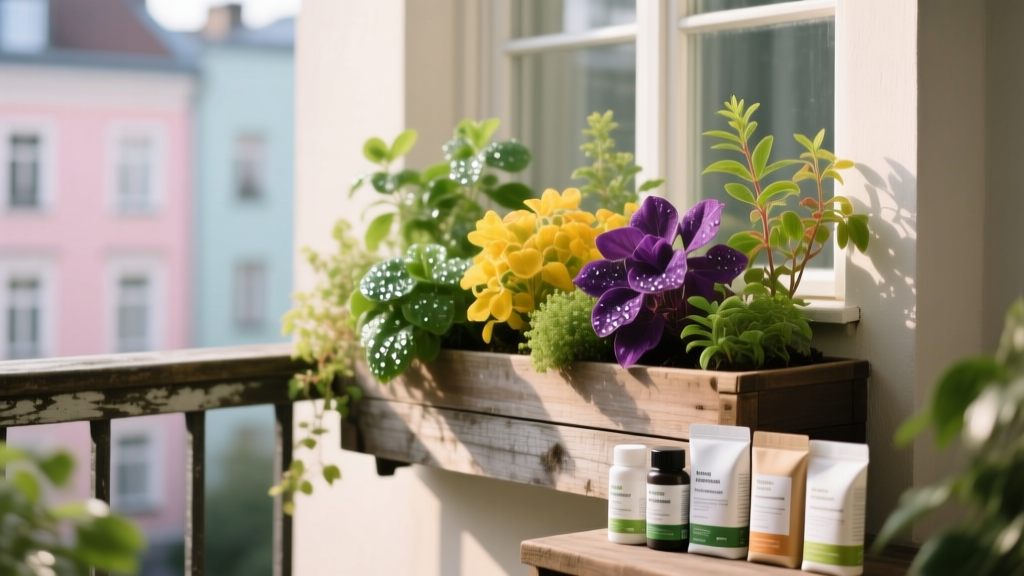
How to Choose the Right Fertilizer for Window Boxes
You plant a window box in May, and for the first two weeks it looks like a magazine cover. Then June heat hits, you water twice a day, and suddenly the petunias stall, the leaves go pale, and the whole box looks tired by mid-July. Most gardeners blame the sun or forget to feed—yet the real culprit is usually a mismatch between fertilizer type, timing, and the tiny amount of soil a window box gives you. In a container that might only hold 10–20 quarts of mix, nutrients wash out fast and roots hit the sides even faster. Fertilizer isn’t optional here—it’s steering.
This guide is how I decide what to use, how much, and when, based on what’s actually happening in the box: watering habits, potting mix, exposure, and what you’re growing. You’ll see numbers, schedules, and “if you see this, do that” troubleshooting—because window boxes are small, intense ecosystems.
Start with the three things that control fertilizer needs: watering, soil, and light
Watering: the faster you water through, the faster nutrients disappear
Window boxes dry out faster than patio pots because they’re shallow, exposed, and often in wind. Every time water runs out the drain holes, it carries dissolved nutrients with it (especially nitrogen). If you’re watering daily—or twice daily during hot spells—your feeding plan needs to be steady and low-dose, not occasional and heavy.
- High leaching situation: sun + wind + daily watering + lots of drainage holes
- Lower leaching situation: part shade + thicker box + watering every 2–3 days
Real numbers to keep you honest:
- When daytime highs are consistently 80–90°F, most window boxes shift into “high leaching mode.”
- If you water until it drains for more than 10–15 seconds every time, assume you’re flushing fertilizer.
- A window box with 12 quarts of mix has very little nutrient buffering compared to a 20–30 gallon patio pot.
Soil: potting mix is not “soil,” and it doesn’t feed for long
Most quality potting mixes include a starter charge of fertilizer, but it’s brief—often 2–6 weeks depending on brand and weather. After that, your plants are living on what you add. If your mix contains a lot of coir or bark, it drains well (good) but holds fewer nutrients (meaning you must feed more consistently).
If you want to be precise, check your potting mix label for “feeds up to X months.” Then cut that promise in half for window boxes in full sun. A box is a harsh place.
Light: more sun equals more growth equals more demand
A full-sun box (6+ hours) acts like a high-performance engine. Petunias, calibrachoa, lantana, geraniums, and herbs grow fast and flower hard—they need more frequent feeding than a shade box with begonias or impatiens.
One nuance: if your box gets morning sun and hot afternoon shade, you’ll often need less fertilizer than a box that bakes in reflected heat from brick all afternoon. Reflected heat can push leaf temperatures well above air temperature, stressing roots and reducing nutrient uptake even if fertilizer is present.
Feeding basics: what N-P-K really means for window boxes
N-P-K on the label stands for nitrogen (N), phosphorus (P), and potassium (K). Here’s how I interpret it in window boxes:
- N (nitrogen): drives leafy growth and overall vigor. Too much = lots of leaves, fewer flowers, and softer growth that attracts aphids.
- P (phosphorus): supports roots and flowering. Modern potting mixes often already have enough; many blooms don’t need high P.
- K (potassium): supports flowering, stress tolerance, and sturdy stems. Often overlooked, but crucial in heat.
Extension recommendations increasingly discourage “high-phosphorus” routine feeding unless a soil test indicates need. In containers, you’re not building long-term soil fertility—you’re managing a short season crop. Oregon State University Extension notes that excess phosphorus can contribute to water pollution and is often unnecessary for flowering in many garden situations (Oregon State University Extension, 2021).
“In most cases, phosphorus is not deficient in garden soils; adding more does not improve flowering and can contribute to runoff problems.” — Oregon State University Extension guidance on phosphorus use (2021)
Fertilizer forms: choose the delivery method that matches your life
There are three practical ways to fertilize window boxes. Each works—if you match it to your watering habits and attention span.
| Fertilizer method | How it’s applied | Typical rate (window box) | How fast it works | Best for | Common risk |
|---|---|---|---|---|---|
| Slow-release granules | Mixed into top 1–2 inches or incorporated at planting | About 1–2 Tbsp per 12-inch box section (follow label) | 3–7 days to notice change | Busy gardeners, steady feeding | Over-release in sustained heat if overapplied |
| Water-soluble (liquid/powder) | Dissolved in watering can | Commonly 1/4–1/2 tsp per gallon for weekly feeding (label varies) | 24–72 hours | Fast corrections, heavy bloomers | Burn from mixing too strong; frequent leaching |
| Organic liquid (fish/seaweed blends) | Diluted and watered in | Often 1–2 Tbsp per gallon every 7–14 days (label varies) | 3–10 days | Herbs, mixed plantings, gentle feeding | Odor; slower response; can attract pets if spilled |
My master-gardener rule: pick one “base” method (usually slow-release) and one “steering” method (water-soluble) for midseason course corrections.
Comparison analysis with real numbers: slow-release vs weekly liquid feeding
Let’s compare two common strategies for a typical summer window box: a 24-inch box holding about 16 quarts of potting mix, planted with petunias and sweet potato vine in full sun.
Method A: Slow-release granules + plain water
- Upfront work: 1 application at planting, plus a midseason top-up
- Typical schedule: apply at planting, then reapply at 6–8 weeks if the product duration is 3–4 months and the box is in full sun
- Labor: 2 fertilizer events/season
- Performance: steady growth; fewer peaks and crashes
Method B: Weekly water-soluble feeding
- Upfront work: none at planting (optional)
- Typical schedule: feed every 7 days at 1/4–1/2 strength; in heavy heat and daily watering, some gardeners shift to every 5 days at weaker concentration
- Labor: 12–16 fertilizer events across a 12–16 week season
- Performance: fast response, but easier to overdo; can lead to feast/famine if you skip weeks
My take: Method A is the best “default” for most home gardeners because it prevents the midseason fade that happens when you forget. Method B is excellent if you’re already attentive and want maximum bloom—especially for calibrachoa, petunias, and other heavy feeders.
Colorado State University Extension emphasizes that container plants require more frequent fertilization because nutrients leach with watering, and recommends following label directions carefully to avoid overfertilizing (Colorado State University Extension, 2023).
Step-by-step: how I choose the right fertilizer for a specific window box
- Identify what you’re growing. Heavy feeders: petunias, calibrachoa, geraniums, coleus, sweet potato vine. Moderate: begonias, vinca, marigolds. Light: many Mediterranean herbs (rosemary, thyme) prefer less.
- Confirm exposure. Full sun (6+ hours) or part shade (3–5 hours) changes the feeding interval.
- Check potting mix. If it says “feeds up to 6 months,” still plan to start supplemental feeding at week 4–6 in full sun.
- Pick a base fertilizer. For mixed flowering annuals, a balanced or “bloom” fertilizer with moderate N and higher K tends to behave well (example ratios: 10-10-10, 12-4-8, 15-5-15).
- Decide your maintenance style. If you’re not consistent, use slow-release. If you love tinkering, use weekly liquid at low dose.
- Plan one midseason check-in. Put a reminder at 6 weeks: look for pale leaves, reduced bloom, and stalling growth.
Three real-world window box scenarios (and what I’d do)
Scenario 1: South-facing box in full sun, daily watering, petunias + calibrachoa
This is the classic “looks great, then crashes” setup. Petunias and calibrachoa are heavy feeders, and daily watering flushes nutrients fast.
- Base: slow-release granules at planting (top 1–2 inches), using the label rate for container volume
- Support: water-soluble feed at 1/4 strength every 7 days starting at week 3
- Extra: add iron/micronutrients if new growth turns yellow while veins stay green
Scenario 2: East-facing box, herbs (basil, parsley) + edible flowers
Edibles don’t need the same push as petunias. Too much nitrogen can make basil lush but less flavorful and more prone to soft growth.
- Base: a gentle organic fertilizer or a lower-N blend
- Schedule: feed every 14 days at label rate (or weekly at half-rate)
- Watch: avoid heavy phosphorus “bloom boosters” unless you’re specifically growing flowering ornamentals that need it
Scenario 3: Part-shade box under an eave (rain never reaches it), impatiens + begonias
Under-eave boxes are sneaky: they often dry unevenly because you water from above and the canopy sheds water. Fertilizer can accumulate as salts if you never water thoroughly.
- Base: slow-release at a modest label rate
- Routine: once every 3–4 weeks, water heavily until it drains for 10–20 seconds to flush excess salts
- Feeding: light supplemental liquid feed only if growth slows
Watering practices that make fertilizing work (instead of backfiring)
Fertilizer is only useful if roots can take it up. In window boxes, problems come from two extremes: chronic sogginess or chronic drought. Both reduce nutrient uptake and can mimic “deficiency.”
- Water early when possible. If you water at 6–9 a.m., plants go into heat with hydrated tissues.
- Water deeply but not constantly. Aim for thorough watering, then let the top 1 inch of mix dry slightly before watering again (shade boxes may take longer).
- Use saucers carefully. If a box sits in water for hours, roots lose oxygen and the plant can’t use fertilizer. Empty standing water after 30 minutes.
Soil tweaks that improve fertilizer efficiency
If you’re rebuilding a window box, small changes dramatically improve feeding results:
- Use fresh potting mix yearly for annual flower displays. Old mix compacts and holds salts.
- Add 10–20% compost (by volume) if you want more buffering, but don’t replace potting mix entirely—compost alone is too dense for most boxes.
- Check drainage holes. A clogged box causes root stress, which looks like nutrient deficiency even with plenty of fertilizer present.
Light and temperature: when fertilizer won’t fix the problem
When nights stay cool (below about 55°F), many warm-season annuals slow down. Feeding harder won’t force bloom; it can just build salts. Likewise, during extreme heat (sustained 90°F+), plants may pause flowering to survive. In that weather, shift your goal from “push growth” to “keep roots healthy.”
If the box bakes, prioritize:
- watering consistency
- mulching the soil surface with a thin layer (even 1/2 inch) of fine bark or compost
- using moderate fertilizer rather than high-nitrogen products
Common problems: symptoms, causes, and fixes you can do this week
Problem: Pale leaves and weak growth (overall yellowing)
Likely cause: nitrogen deficiency from leaching, especially in full sun with frequent watering.
- Fix: apply a water-soluble fertilizer at 1/2 strength, then reassess in 5–7 days.
- Prevention: add slow-release granules so you’re not chasing deficiencies weekly.
Problem: Yellow new leaves with green veins (interveinal chlorosis)
Likely cause: iron/manganese unavailability, often from high pH water or buildup of salts in the mix.
- Fix: use a micronutrient supplement labeled for containers (iron chelate works quickly), and flush the box by watering until steady drainage runs for 20–30 seconds.
- Check: if you’re using softened water, switch—softened water can add salts that worsen nutrient issues.
Problem: Big leaves, few flowers
Likely cause: too much nitrogen (especially from lawn fertilizer “leftovers”) or too much shade.
- Fix: stop feeding for 10–14 days, deadhead hard, and switch to a fertilizer with lower N and higher K.
- Also do: make sure the plants are getting at least 6 hours of sun if they’re sun-lovers like petunias and geraniums.
Problem: Leaf tips turn brown, white crust on soil, plants stall
Likely cause: fertilizer salt buildup (common under eaves or when you only water lightly).
- Fix (flush): water slowly and deeply until you see strong drainage for 30–60 seconds. Repeat again the next day.
- Reset: pause fertilizing for 1–2 weeks, then restart at 1/4–1/2 strength.
Problem: Sudden wilt even though the soil is wet
Likely cause: root stress (waterlogging, root rot, or heat-damaged roots). Fertilizer won’t help and can worsen it.
- Fix: improve drainage, reduce watering frequency, and provide afternoon shade temporarily if possible.
- Do not do: add more fertilizer “to perk it up.”
Feeding schedules that work (pick one and stick with it)
Schedule A: Slow-release + monthly check
- At planting: mix in slow-release fertilizer per label
- Week 4: inspect color and bloom; supplement with liquid feed only if fading
- Week 6–8: top-dress slow-release if the product duration is short or the box is a heavy feeder in full sun
Schedule B: Weekly “weakly” liquid feeding
This is an old greenhouse trick: feed more often, but at lower concentration.
- Start: week 2–3 after planting
- Mix: 1/4 to 1/2 the label rate
- Frequency: every 7 days (every 5 days in high heat with heavy leaching, but keep it weak)
- Once per month: plain-water flush until steady drainage runs for 20–30 seconds
Quick notes on “bloom boosters,” compost tea, and homemade mixes
Bloom boosters: Many are high in phosphorus (middle number). If your plants are healthy but not blooming, the problem is often light, deadheading, or heat stress—not phosphorus. Use them sparingly and only if you’ve already nailed sun and watering.
Compost tea: It can add a small nutrient trickle, but it’s not a reliable primary fertilizer for heavy-feeding annuals in a window box. If you enjoy it, use it as a supplement, not the engine.
Homemade mixes: Avoid sprinkling random kitchen powders into window boxes. In small volumes of potting mix, it’s easy to create odor, fungus gnats, and uneven nutrient pockets.
Common fertilizer mistakes I see (and how to avoid them)
- Using lawn fertilizer in window boxes: often too high in nitrogen; you get leaves instead of flowers.
- Doubling the dose “because it’s hot”: heat already stresses roots—overfertilizing adds salt stress on top.
- Feeding dry soil: always water lightly first, then feed, to reduce burn risk.
- Forgetting calcium and magnesium: some mixes and fertilizers are light on these; if you see weird tip burn or distortion, consider a Cal-Mag supplement or a fertilizer that includes them.
If you remember just one thing: window boxes are a high-leaching, fast-growth setup. Choose a fertilizer strategy that matches how often you water and how consistent you are. A steady, moderate feed beats heroic doses every few weeks.
Once you’ve run one full season with a simple schedule—slow-release as the base, a light liquid feed as needed—you’ll start to recognize the “hunger signals” early: slight paling, smaller leaves, fewer blooms. Catch it then, and your box will stay showy right up until frost instead of sputtering out halfway through summer.