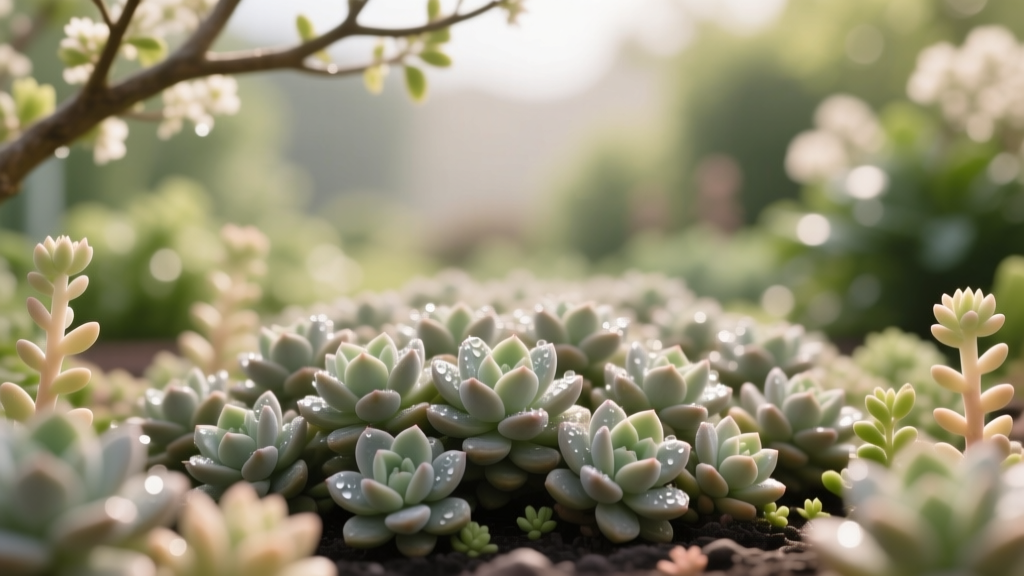
How to Prevent Bolting in Sedum
You plant sedum because it’s supposed to be the “set it and forget it” perennial—then one warm spell hits, and suddenly your tidy mound is shooting up leggy stems, flowering too early, or flopping open like it forgot the plan. If you’ve ever walked out in late spring thinking, “Why is my sedum racing upward when it should be staying compact?” you’ve met the home-gardener version of bolting: premature, stretchy, out-of-character growth that makes a plant look messy and short-lived in the landscape.
Here’s the grounded truth: sedum doesn’t bolt exactly like lettuce (which literally rushes to seed). But many sedums—especially the taller fall-blooming types (Hylotelephium, formerly Sedum) and some creeping sedums under stress—can behave similarly when conditions push them into fast, weak growth or early flowering. The good news is you can prevent most of it with a few practical moves: dialing in light, leaning out the soil, watering with intention, and using one well-timed haircut.
This guide is written the way I’d talk you through it at the edge of the bed, hand on the plant, looking at what it’s telling us.
What “bolting” looks like in sedum (and why it happens)
Before you fix it, name it. In sedum, “bolting” usually shows up as one (or more) of these:
- Stretchy, pale growth (internodes longer than normal), especially in spring.
- Early bud set or flowering before the plant has bulked up.
- Flopping by early summer—stems too weak to hold the top growth upright.
- Center splitting in clumping sedums: the plant opens up like a donut.
What causes it almost always comes down to a mismatch between light, nitrogen, moisture, and temperature swings. Sedum thrives on “lean living.” When we pamper it—rich compost, frequent watering, part shade—it responds with rapid, tender growth that can’t hold itself together.
“Excess nitrogen promotes lush vegetative growth that is more prone to lodging (falling over) and requires more frequent maintenance.” — University of Maryland Extension, Fertilizing Trees and Shrubs (updated 2023)
That principle applies beautifully to sedum: too much fertility and not enough sun equals soft growth and floppy stems—the gardener’s version of bolting.
Light: the #1 lever to stop stretchy growth
If I could only change one thing to prevent sedum from “bolting,” it would be light. Most sedums want full sun for compact growth.
How much sun is enough?
- Tall sedums (Hylotelephium): aim for 6–8 hours of direct sun.
- Creeping sedums (e.g., Sedum spurium, S. album): usually 6+ hours, though some tolerate light afternoon shade in hot climates.
Real-world scenario #1: A front-yard ‘Autumn Joy’ sedum gets 4 hours of sun, then bright shade from a maple. It looks fine in May, but by June it’s stretching, then splitting. Move it (or remove the shade) and it often fixes itself within one season. If moving isn’t possible, you can partially compensate with the “Chelsea chop” (more on that below), but shade will keep pushing leggy growth.
Quick light test you can do today
At three times—9 a.m., 12 p.m., and 3 p.m.—stand where the sedum is planted and note whether the plant is in direct sun, dappled sun, or shade. If it’s shaded at noon, you’re fighting physics.
Soil: lean, fast-draining, and not too rich
Sedum can tolerate rough soil, but it punishes rich, moisture-holding soil with lanky growth. The goal is drainage first, fertility second.
Ideal soil texture and drainage
- Best texture: sandy loam or gritty loam
- Drainage target: water should soak in quickly; puddles should disappear within 5–10 minutes
- pH: sedum is flexible, but many do well around pH 6.0–7.5
If your soil is heavy clay, don’t “fix” it with a little compost and hope. Compost helps structure, but it can also hold water—great for vegetables, not always great for sedum.
Gritty planting mix (in-ground or raised bed)
For problem areas, especially clay, I’ve had consistent results with this approach:
- Dig a planting area 12–15 inches wide and about 8–10 inches deep.
- Mix the native soil with 25–35% mineral material: pea gravel (small), pumice, or coarse sand (not play sand).
- If you add compost, keep it light: no more than 10–15% by volume.
Real-world scenario #2: A sedum in a newly built bed with “garden soil” (often mostly compost) grows huge and gorgeous… then flops hard by early July. Switching future plantings to a grittier mix and skipping fertilizer keeps stems shorter and sturdier.
Watering: less often, more deliberately
Overwatering doesn’t just rot sedum—it makes it soft. Soft growth is the fast track to flopping and early flowering behavior that gardeners describe as bolting.
Watering schedule by establishment stage
- First 2–3 weeks after planting: water deeply every 4–7 days if there’s no rain.
- After establishment (most garden settings): water only when the top 2 inches of soil are dry.
- Heat waves: if temps exceed 90°F (32°C) for several days, give a deep soak about once a week for tall sedums in full sun—especially in containers.
A “deep soak” means you’re wetting the root zone, not spritzing the surface. In many gardens, that’s roughly 0.5–1 inch of water applied slowly (rain or irrigation). The best indicator is soil feel, not the calendar.
Container sedum watering (where bolting-like stretch is common)
Containers dry fast, but they also get overwatered fast. Use this routine:
- Lift the pot. If it feels light and the top 1–2 inches are dry, water.
- Water until it runs out the bottom, then empty any saucer.
- Wait until the pot is light again before watering.
Real-world scenario #3: A patio pot of sedum gets daily “just a splash” watering. The plant responds with shallow roots and fast, weak growth—then leans toward the light and stretches. Switching to deep, less frequent watering plus full sun tightens it up.
Feeding: sedum wants a light hand (or none at all)
If sedum is bolting-like—stretching, flopping, or budding early—fertilizer is often the quiet culprit. Many sedums do best with no routine fertilizer in average garden soil.
Colorado State University Extension notes that many ornamentals only need fertilizer when soil tests show a deficiency, and over-fertilization can increase weak growth (Colorado State University Extension Fact Sheet 7.612, revised 2021). That’s not sedum-specific, but it’s exactly how sedum behaves.
When fertilizer makes sense
- In very poor, sandy soil where growth is stunted and leaves are small.
- In containers after the first season (nutrients leach out faster).
How to fertilize without triggering flop
- Choose a balanced, mild fertilizer (for example 5-5-5 or similar) or a low-nitrogen option.
- Apply once in spring when growth begins—don’t keep feeding.
- Use half the label rate the first time. With sedum, you can always add later, but you can’t take it back.
If you’ve been using high-nitrogen lawn fertilizer nearby, keep it away from sedum beds. Drift and runoff are enough to cause lanky growth.
The “Chelsea chop”: the best anti-flop technique for tall sedums
If your tall sedum reliably grows tall and then falls apart, this is the master-gardener trick that changes everything. The “Chelsea chop” is a planned cutback in late spring that creates shorter, bushier, sturdier plants with later, more controlled flowering.
Timing and how much to cut
- When: late May to early June in many climates, or when stems are about 8–12 inches tall.
- How much: cut back by 1/3 to 1/2.
Step-by-step
- Use clean pruners.
- Cut just above a leaf node (where leaves meet the stem).
- Either chop the whole plant evenly, or cut only the outer stems (this creates a natural “support ring”).
- Water once after cutting if the soil is dry, then return to normal “let it dry” watering.
This technique works because it slows the plant down and forces branching, which strengthens the structure. It also shifts bloom time later, which often looks better in mixed borders.
Comparison analysis: what works best to prevent bolting-like growth?
Here’s a practical comparison based on what home gardeners can realistically change in a season.
| Method | What you do | Expected effect on height/compactness | Flower timing | Best use case |
|---|---|---|---|---|
| A) Full sun + no fertilizer | Move or re-site to 6–8 hours sun; stop nitrogen feeding | Most compact, strongest stems | Normal | Plants in part shade or rich beds |
| B) Chelsea chop | Cut stems back 33–50% at 8–12 in tall | Shorter and bushier; less splitting | Delayed 2–4 weeks (typical) | Good sun but still flops every year |
| C) Extra watering in summer | Water more often “to help it” | Often worse: softer growth, more flop | Can push earlier bud set under stress swings | Only for containers in extreme heat |
| D) Staking | Add supports when stems are 10–14 in tall | Prevents collapse but doesn’t fix legginess | No change | Temporary fix; windy sites |
If you want the simplest “high return” plan: increase sun exposure and reduce nitrogen. If you want the most reliable structural improvement for tall sedums: add the Chelsea chop.
Temperature swings and seasonal timing: prevent stress-triggered weirdness
Sedum is tough, but erratic spring weather can cause fast growth spurts—especially if the plant is warm one week and cold the next. You can’t control the weather, but you can control how “amped up” the plant is going into those swings.
- Avoid early spring nitrogen if a warm spell is forecast. Rapid growth is the first thing a late frost ruins.
- Hold off on heavy mulch right up against the crown in cool, wet springs. Keep the crown dry to prevent rot and stress.
- Don’t baby it with extra water during cool periods. Cool + wet = soft growth.
For gardeners in very hot climates, some sedums appreciate afternoon shade when temperatures regularly exceed 95°F (35°C), but morning sun is still important for compact growth. If shade is necessary, compensate by keeping soil extra well-drained and avoiding fertilizer.
Common problems that mimic bolting (and what to do)
Sometimes what looks like bolting is actually a different issue. Here are the most common look-alikes.
Symptom: Tall, floppy stems by early summer
- Most likely causes: too little sun; too much nitrogen; rich, wet soil
- Fix:
- Move to 6–8 hours sun or thin overhead shade.
- Stop fertilizing; avoid lawn fertilizer drift.
- Do a Chelsea chop next spring at 8–12 inches.
Symptom: Sedum splits open in the center (“donut plant”)
- Most likely causes: rapid top growth, aging clumps, shade, or too much water
- Fix:
- In early spring, divide every 3–5 years to refresh vigor.
- Replant divisions in gritty soil; don’t bury crowns.
- Use the “outer-ring chop”: cut back only outer stems by 1/3 to create support.
Symptom: Pale leaves and stretched internodes
- Most likely causes: low light; too much water; too much nitrogen
- Fix: increase light first; then reduce irrigation frequency; stop feeding for the season.
Symptom: Early flowering with small plant size
- Most likely causes: stress (drying too hard in a pot), root restriction, or temperature swings
- Fix:
- Check pot size—move up by 1–2 inches in diameter if root-bound.
- Water deeply when dry; avoid daily splashes.
- Keep in full sun but protect from extreme late-day heat in very hot regions.
Symptom: Mushy base or stems collapsing at the soil line
- Most likely causes: crown rot from wet soil or mulch piled against the crown
- Fix:
- Pull mulch back so the crown has an air gap of 2–3 inches.
- Improve drainage with grit or move the plant to a mound.
- Take cuttings from healthy tips and re-root as insurance.
Pests and diseases that contribute to weak, rushed growth
Sedum is generally low-pest, but a few issues can weaken plants and push odd growth patterns.
Aphids on tender spring growth
- Signs: curled tips, sticky residue, clusters of small green/black insects
- What to do: blast off with water in the morning; repeat every 2–3 days for a week if needed. Avoid high nitrogen—aphids love it.
Powdery mildew (more common in crowded, shaded sites)
- Signs: white powder on leaves, reduced vigor
- What to do: increase airflow (space plants), increase sun, avoid overhead watering late in day. Remove heavily infected stems.
Root rot / crown rot
- Signs: blackened base, plant suddenly wilts despite moist soil
- What to do: improve drainage immediately; replant in a raised/gritty spot; propagate healthy cuttings.
For disease prevention fundamentals like air flow, sanitation, and matching irrigation to plant needs, university extension guidance is reliably consistent year to year (see University of Minnesota Extension, “Plant Disease Management,” 2022).
Three quick “rescue plans” for common garden setups
Case 1: Sedum in a rich border with perennials that get fertilized
- Stop feeding the bed broadly; spot-feed only heavy feeders.
- Top-dress sedum area with grit (fine gravel) instead of compost.
- Do the Chelsea chop when stems reach 10 inches.
Case 2: Sedum under partial shade from shrubs
- Prune shrubs to open sun from 10 a.m. to 4 p.m. if possible.
- If sun can’t be improved, treat it like a “managed plant”: Chelsea chop + discreet ring support early.
- Choose lower, sturdier sedum cultivars for that spot next season.
Case 3: Sedum in a container that keeps stretching and leaning
- Move the pot to the brightest location you have (aim 6+ hours direct sun).
- Repot into a gritty mix; avoid moisture-retentive compost-heavy blends.
- Water only when the top 1–2 inches are dry; no daily splashes.
- Rotate the pot 1/4 turn every week to prevent leaning.
A simple seasonal checklist to keep sedum compact
- Early spring: clean up old stems; check drainage; avoid fertilizer unless a soil test says you need it.
- Late spring (stems 8–12 inches): Chelsea chop by 33–50% for tall sedums that flop.
- Summer: water only when dry to 2 inches down; don’t “comfort water” during cool spells.
- Late summer/fall: enjoy blooms; resist the urge to feed to “boost flowering.”
- Every 3–5 years: divide crowded clumps to prevent splitting and weak centers.
If you take nothing else to the garden with you: sedum is at its best when it’s slightly challenged—bright sun, lean soil, and measured water. Give it those, plus one well-timed late-spring cutback for the tall types, and the plant stops trying to sprint through the season. It settles into the sturdy, tidy form you planted it for in the first place.