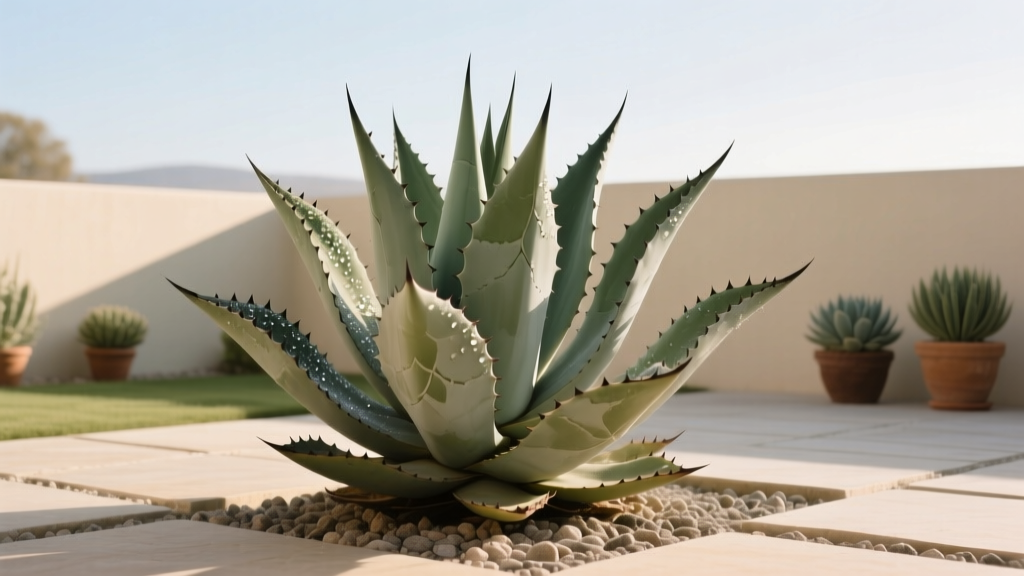
The Science of Watering Agave
You bring home a perfect agave—stiff blue leaves, sharp silhouette, “low water” label—and three weeks later the center turns to mush. Or it shrivels like a deflated balloon even though you swear you watered it. Agave failures are rarely about “not enough” or “too much” in a simple sense. They’re about timing, soil oxygen, and how long the roots stay damp after each drink. Once you understand that, agave becomes one of the most forgiving plants you can grow.
I’ve watched agaves thrive on neglect in a gravel driveway, and I’ve also watched them rot in a designer potting mix that held moisture just a day too long. Watering agave is less like watering a fern and more like managing a battery: charge it fully, then let it discharge almost completely before charging again. The science is simple enough for home gardeners—if you stick to a few measurable rules.
How agave actually uses water (and why “a splash now and then” backfires)
Most agaves use CAM photosynthesis (Crassulacean Acid Metabolism). In plain language, they open their stomata mostly at night to reduce water loss, then process that stored CO2 during the day. This is why agave can handle drought—but it doesn’t mean it never wants a real drink. It means it wants deep, infrequent watering and plenty of air around the roots.
“Succulents need a wet-dry cycle: water thoroughly, then allow the potting mix to dry before watering again.” — University of Maryland Extension (2023)
The “splash now and then” approach keeps the top inch damp while the deeper root zone stays dry. That encourages shallow roots and raises rot risk because the crown stays humid. A proper agave watering is a soak that reaches the full root zone, followed by a dry-down period long enough to restore oxygen in the soil.
Watering agave: practical rules that work
Rule 1: Water by soil dryness, not by the calendar
Agave care tags love to say “water once a week” or “water monthly.” Ignore that. Your schedule changes with pot size, soil, heat, wind, and light. Instead, use this test:
- In-ground: dig 3–4 inches down near (not against) the plant. If it’s cool and damp, wait. If it’s dry and crumbly, water.
- In pots: use a wooden skewer or chopstick pushed 4–6 inches deep. If it comes out cool/damp or with mix clinging, wait.
As a measurable benchmark, most potted agaves should be allowed to dry at least 75–100% of the pot depth before the next watering, unless you’re in extreme heat with very fast-draining mix.
Rule 2: Water deeply enough to matter
A “deep watering” has a clear goal: wet the root zone, then let excess drain away quickly.
- For potted agave: water until you see steady drainage, then keep going for 10–20 seconds to flush salts and fully moisten the mix.
- For in-ground agave: aim to moisten the top 8–12 inches of soil (where most feeder roots sit). A slow hose trickle for 20–40 minutes can do this in many soils, but verify with a trowel the next day.
If your pot has no drainage hole, don’t “water carefully.” Repot. Agaves can tolerate drought; they can’t tolerate stagnant, airless soil.
Rule 3: Match frequency to temperature and day length
Agaves slow down dramatically in cool weather. In many home gardens, winter watering is where plants are lost—especially when nights drop below 45°F (7°C) and the soil stays wet for days.
Use these starting points, then adjust based on the dryness test:
- Summer (90–105°F / 32–40°C, bright light): potted agaves often need water about every 10–21 days in gritty mix; in-ground often every 3–6 weeks depending on soil.
- Spring/Fall (60–85°F / 16–29°C): pots commonly every 2–4 weeks; in-ground every 4–8 weeks.
- Winter (below 60°F / 16°C, shorter days): pots commonly every 4–8+ weeks; in-ground may need little to none if rainfall occurs and the soil drains well.
One more measurable rule: if the mix takes longer than 4–5 days to feel mostly dry after watering (in a typical terracotta pot in mild weather), you likely need a grittier soil blend or a brighter/warmter location.
Rule 4: Keep water out of the crown (especially in cool weather)
Water sitting in the rosette can encourage rot, especially when nights are cool. It’s not that agaves can never get wet overhead—rain happens—but as a caregiver you can reduce risk.
- Water at the soil line, not into the center.
- If overhead watering happens, do it early in the day so the rosette dries before nightfall.
- In winter, avoid overhead watering entirely when nights are below 50°F (10°C).
Comparison analysis: soak-and-dry vs. frequent sips (with real-world outcomes)
Home gardeners commonly try one of two methods. Here’s how they compare in results I see most often, and why the numbers matter.
| Watering method | Typical frequency | Water amount per event | Soil oxygen between waterings | Common outcome | Best use case |
|---|---|---|---|---|---|
| Soak-and-dry | Every 10–28 days (season-dependent) | Water until full drainage + 10–20 seconds | High (soil dries fully) | Firm leaves, steady growth, low rot risk | Pots with gritty mix; in-ground agaves with good drainage |
| Frequent sips | 2–4 times per week | Small splash (top 1–2 inches wet) | Low (surface stays damp) | Shallow roots, fungus gnats in pots, crown issues, random collapse | Almost never ideal for agave; sometimes used briefly after transplanting in extreme heat |
If you like numbers: I’d rather see a potted agave get 1 thorough watering every 14 days in summer than 6 light waterings that never reach the lower roots. The first builds a deeper root system and better drought resilience; the second keeps the plant “hungry” for water while raising rot pressure at the crown.
Soil: the real engine behind “watering success”
Watering technique can’t compensate for a mix that holds moisture too long. Agaves want a soil that drains fast and still has enough structure to anchor roots. Think “crumbly mineral,” not “spongy compost.”
What “fast-draining” means in practice
Use a simple performance test after watering:
- Water the pot thoroughly until it drains.
- Lift the pot. It should feel heavy, obviously wet.
- Check again after 48 hours in warm weather (or 72 hours in mild). The top should be dry and the pot noticeably lighter.
If it still feels heavy and cool after 72 hours, adjust the mix.
A reliable agave potting mix (that prevents most watering problems)
- 50% pumice (or crushed lava rock)
- 25% coarse sand or decomposed granite
- 25% cactus soil or a low-peat potting soil
This blend drains quickly but still provides some fine particles for roots. For very humid climates, push the mineral portion up to 70–80%.
For in-ground planting in heavier soil, create a mound 4–8 inches high with a mineral-rich amendment rather than digging a “bathtub” hole that collects water.
Light: watering needs change with sun exposure
Light drives water use. A bright patio agave drinks faster than one on a shaded porch. Many agaves prefer full sun outdoors once established, but newly potted plants can scorch if moved abruptly.
- Full sun (6–8+ hours): more frequent deep watering during heat; faster dry-down; tighter growth.
- Bright shade / morning sun: less frequent watering; slower dry-down; slightly softer leaves.
- Indoors near a bright window: much less water; low airflow means soil stays wet longer.
A practical rule: if you reduce light (moving indoors, winter sun angles, shade cloth), reduce watering frequency by about 30–50% right away, then fine-tune with the dryness test.
Feeding: fertilizer affects watering (and rot risk)
Agaves are not heavy feeders. Over-fertilizing pushes soft, fast growth that’s more prone to rot and pests—and it increases water demand at the worst times.
- In pots, feed lightly during active growth: a diluted fertilizer at 1/4 strength every 6–8 weeks in spring and summer.
- Use a balanced fertilizer (for example, something close to 10-10-10) or a cactus/succulent formula.
- Skip feeding entirely when nights are consistently below 55°F (13°C).
Salt buildup from fertilizer is real in containers. If your water is hard or you fertilize, do a “flush watering” every 2–3 months: water until it drains freely for a full 60 seconds (in a pot with excellent drainage).
University of Arizona Cooperative Extension notes that many succulents perform best with minimal fertilizer and excellent drainage rather than rich soils (University of Arizona Cooperative Extension Publication, 2020).
Three real-world watering scenarios (and how to handle them)
Scenario 1: Patio pot in a heat wave
You’ve got an agave in a 12–16 inch pot on a south-facing patio. Temperatures hit 100°F (38°C) for a week, and the pot bakes.
- What happens: soil dries in days, leaf tips may brown, plant may slightly wrinkle.
- What to do: move the pot so it gets afternoon shade for the hottest stretch, and water deeply in the early morning. Check dryness every 5–7 days during extreme heat.
- What not to do: don’t start daily sips. If it’s drying too fast, the fix is often more root volume (a slightly larger pot) or a touch more fine material in the mix—not constant watering.
Scenario 2: Indoor agave near a window
Indoors, air is still, light is lower, and pots dry slowly—even if the room feels warm.
- What happens: leaves slowly soften, the base may discolor, fungus gnats appear.
- What to do: water only when the pot is dry nearly to the bottom (skewer test). Expect watering as infrequently as every 4–8 weeks in winter. Increase airflow (small fan), and use a terracotta pot if possible.
For indoor growers, the best “watering tool” is patience.
Scenario 3: In-ground agave in clay soil
Many gardeners plant agaves in native clay because “they’re drought tolerant.” Clay can work, but not if it stays wet.
- What happens: plant looks fine for months, then collapses after a rainy period; lower leaves yellow and detach easily.
- What to do: plant on a mound 6–12 inches high, mix in mineral material (pumice, expanded shale, crushed rock), and avoid summer watering until it’s established. Once established, irrigate deeply but rarely—often every 4–8 weeks in hot months, and not at all in cool, rainy periods.
Texas A&M AgriLife Extension emphasizes that good drainage is essential for succulents and that waterlogged soils commonly cause decline (Texas A&M AgriLife Extension, 2022).
Common problems: symptoms, causes, and fixes
Agaves don’t “talk” loudly until they’re in trouble. Here are the problems I see most, with specific actions you can take.
Problem: Mushy center (crown rot)
Symptoms: the core is soft, leaves loosen, bad smell, plant may suddenly lean.
Most likely causes:
- Soil stayed wet too long (poor drainage, oversized pot, heavy peat mix)
- Cold + wet (nights below 45–50°F / 7–10°C with damp soil)
- Water trapped in rosette
What to do now:
- Stop watering immediately.
- If potted, unpot and inspect. Trim black, mushy roots with a sterile blade.
- Let the plant dry in a shaded, airy spot for 3–7 days (longer if very wet).
- Repot into a gritty mix in a pot with drainage. Do not water for 7–10 days after repotting.
If the rot is in the core, the plant may not recover. Save any healthy pups by separating them and re-rooting in dry, gritty mix.
Problem: Wrinkled, deflated leaves
Symptoms: leaves look thinner, slightly collapsed, sometimes curling inward.
Most likely causes:
- True underwatering (bone-dry for too long during active growth)
- Root loss from rot (can’t take up water even if soil is moist)
- Root-bound in a small pot (water runs through too fast to hydrate)
What to do:
- Check soil moisture deep in the pot.
- If dry: water thoroughly, then reassess after 48 hours. Leaves should feel slightly firmer.
- If moist and still wrinkled: unpot and inspect roots. Healthy roots are light-colored and firm.
- If severely root-bound: step up pot size by 1–2 inches wider, not a huge jump.
Problem: Yellowing lower leaves
Symptoms: older bottom leaves yellow, then dry.
Most likely causes:
- Normal aging (especially if only the oldest leaves are affected)
- Overwatering (if yellow leaves feel soft or translucent)
- Low light indoors (stretching, paler color)
What to do:
- If leaves are dry and crispy: it may be normal—remove when fully dry.
- If leaves are soft: reduce watering frequency, increase light/airflow, and check soil drainage.
- If indoors and pale: move to a brighter window or add a grow light for 10–12 hours daily.
Problem: Brown leaf tips or edge scorch
Symptoms: brown tips, crispy margins, sometimes a “burn line.”
Most likely causes:
- Salt buildup from fertilizer or hard water
- Sudden move into stronger sun
- Hot, drying wind
What to do:
- Flush the pot with running water for 60 seconds (excellent drainage required).
- Acclimate to sun over 10–14 days (increase sun exposure gradually).
- Provide temporary wind protection during extreme conditions.
Problem: Agave weevil (serious, often fatal)
Symptoms: sudden collapse, holes near the base, oozing, plant pulls out easily; larvae may be present.
What to do:
- Remove and dispose of severely infested plants promptly (don’t compost).
- Inspect nearby agaves.
- In regions where agave snout weevil is common, talk with a local extension office about prevention options and timing.
Step-by-step: a watering routine you can trust
If you want a repeatable system, this is the one I use for most home situations.
- Check dryness at depth (skewer or finger test 4–6 inches down).
- Water early in the day so foliage dries and roots can use moisture while warm.
- Soak thoroughly until drainage runs steadily; continue 10–20 seconds.
- Empty saucers under pots within 10 minutes. Agave should never sit in water.
- Record the interval once: note how many days it took to become dry again in your conditions. That becomes your baseline for that season.
After a couple cycles, you’ll stop guessing. You’ll know, “This pot dries in 12 days in July, 25 days in October, and 45 days in January.” That’s the practical science—observation tied to measurable checks.
Small adjustments that prevent big failures
A few final habits make agave watering dramatically more reliable:
- Prefer terracotta if you tend to overwater. It breathes and speeds dry-down.
- Don’t oversize pots. A pot that’s 3–4 inches wider than the root ball stays wet too long.
- Keep the base visible. Don’t bury the crown; plant at the same depth it was growing before.
- Respect cool weather. When nights are below 45–50°F (7–10°C), err on the dry side.
If you take only one lesson from seasoned agave growers, let it be this: the goal isn’t “adding water.” The goal is managing the wet-to-dry rhythm so roots stay both hydrated and oxygenated. Get that rhythm right, and agave becomes the kind of plant you can leave alone for weeks—then water deeply with confidence, knowing you’re working with its biology instead of against it.