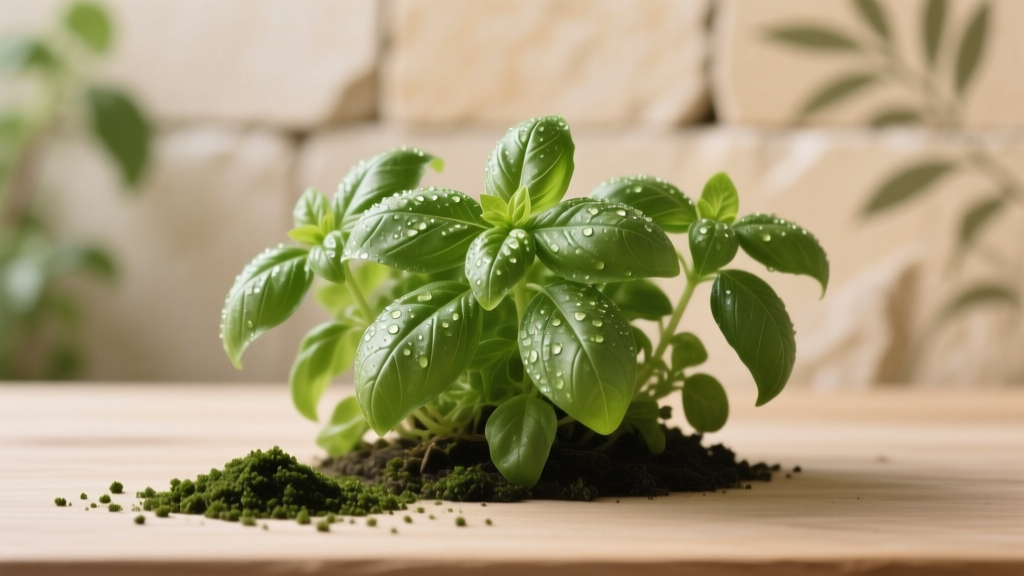
How to Use Seaweed Fertilizer on Basil
You know that moment when basil looks like it’s finally taking off—then it just… stalls? Leaves stay small, the plant gets a little pale, and no matter how faithfully you water, it never turns into that lush, pesto-making bush you pictured. Here’s the surprising part: a lot of “weak basil” isn’t hungry for more nitrogen. It’s stressed—by heat swings, uneven watering, transplant shock, or roots that aren’t thriving. That’s where seaweed fertilizer shines. It’s less of a brute-force feed and more of a plant “coach,” nudging basil to grow stronger roots and handle stress better.
I use seaweed on basil the same way I use compost tea on seedlings: light, consistent, and timed to real plant needs. Overdo it and you’ll still get problems (yes, even with seaweed). Use it strategically and you’ll get thicker stems, better leaf size, and faster rebound after harvest.
What seaweed fertilizer actually does for basil (and what it doesn’t)
Seaweed fertilizers (often kelp-based) are typically low in N-P-K compared with conventional fertilizers, but they’re rich in trace minerals and naturally occurring plant growth compounds. In plain gardener terms: it’s great for resilience and steady growth, not for forcing huge, soft, watery leaves overnight.
University research and extension publications often describe seaweed extracts as “biostimulants”—materials that enhance plant performance beyond basic nutrition. For example, a University of Maryland Extension publication (2023) explains that seaweed extracts can improve stress tolerance and root growth in many plants, even though they aren’t high-analysis fertilizers. Likewise, an Oregon State University Extension guide on fertilizers and soil health (2022) emphasizes matching inputs to plant need and avoiding over-fertilization that can harm flavor and plant balance.
“Seaweed extracts are generally considered biostimulants—used to enhance root growth and plant stress tolerance rather than as a primary nutrient source.” — University Extension publication on biostimulants (University of Maryland Extension, 2023)
What to expect: better recovery after cutting, steadier growth through heat, improved transplant establishment, and fewer “mystery stalls.”
What not to expect: seaweed alone fixing basil in depleted soil with no nitrogen, or rescuing basil that’s already flowering hard due to long days and heat.
Before you feed: get the basics right
Seaweed works best when the fundamentals are solid. Basil is fast-growing and forgiving, but it has a short fuse with cold soil, soggy roots, and shade.
Light: basil wants real sun, not bright shade
Aim for 6–8 hours of direct sun outdoors. In very hot climates, basil can appreciate afternoon shade—especially when temperatures push above 90°F (32°C) for days. Indoors, a sunny windowsill is often not enough unless it’s truly bright; a grow light kept 6–12 inches above the plant for 12–14 hours/day produces much better stems and leaf size.
Temperature: warm roots, warm air
Basil is a heat-lover. It slows down below 60°F (16°C) and can get damaged at 50°F (10°C). If you’re feeding basil with seaweed in cool weather, don’t expect miracles—the plant’s metabolism is simply idling. Wait until nights are reliably above 55–60°F outdoors, or keep indoor basil in a warm spot.
Soil: drainage first, then fertility
For garden beds: basil likes soil that stays evenly moist but drains well. For containers: use a quality potting mix (not garden soil). A container mix that’s too heavy stays wet, and wet basil roots don’t uptake nutrients well—seaweed included.
Quick container rule: use a pot with at least 8–10 inches of depth for one basil plant, and make sure drainage holes are open.
Watering basil so seaweed feeding actually pays off
Most feeding problems are really watering problems wearing a disguise. Basil that swings between bone-dry and soaked can look hungry, pale, or stunted. Seaweed helps with stress, but it won’t override chronic drought/soak cycles.
Outdoor beds
- Water deeply when the top 1–2 inches of soil feel dry.
- In hot weather, this may be every 2–3 days; in mild weather, every 4–7 days.
- Mulch with 1–2 inches of straw or shredded leaves to reduce water swings.
Containers
- Check daily in summer. Containers can go from “fine” to “crispy” fast.
- Water until you see steady drainage from the bottom, then let it settle.
- Empty saucers after 15–30 minutes so roots aren’t sitting in water.
Timing tip: If you’re applying liquid seaweed as a soil drench, water lightly first if the pot is very dry. Dry potting mix can repel water and send your expensive seaweed straight out the drainage holes.
Seaweed fertilizer options: liquid, soluble powder, and granular blends
Most home gardeners use one of these:
- Liquid kelp/seaweed extract (ready-to-use or concentrate): best for foliar sprays and gentle drenches.
- Soluble seaweed powder: economical; dissolves into a watering can for drenching or spraying.
- Granular kelp meal: slower-release; good mixed into soil, but not as fast-acting for a struggling plant.
Always check the label, because “seaweed fertilizer” can mean very different concentrations. A common dilution for concentrates is around 1–2 tablespoons per gallon of water, but some products use 1 teaspoon per gallon. The label wins.
How to apply seaweed fertilizer to basil (step-by-step)
I rotate two main methods: a soil drench for steady support and a foliar spray for fast response during stress. If you do just one, pick the drench—it’s simpler and less finicky.
Method 1: Soil drench (my default for home basil)
- Mix liquid seaweed according to the label (commonly 1 tablespoon per gallon for a maintenance drench).
- Water the basil first if soil is very dry (especially in containers).
- Apply enough solution to moisten the root zone: about 2 cups for a medium container basil plant, or 1–2 gallons per 10 square feet in a bed.
- Frequency: every 14 days during active growth. In peak summer or heavy harvesting periods, you can go to every 7–10 days at a lighter dilution.
What I watch for: deeper green within a week, faster leaf expansion, and quicker rebound after cutting.
Method 2: Foliar spray (best for heat stress or transplant shock)
Foliar feeding is useful, but you need good timing to avoid leaf spotting and wasted spray.
- Dilute at a gentler rate than drenches (often about half-strength; follow label guidance).
- Spray early morning or evening—avoid midday sun and temps over 85°F (29°C).
- Coat leaf tops and undersides lightly to the point of glisten, not drip.
- Repeat every 10–14 days during stress periods.
Important: If you’re already fighting fungal leaf spots, skip foliar sprays and stick to soil drenches to keep foliage dry.
Method 3: Kelp meal in soil (slow and steady)
This is the “build the system” approach—great at planting time.
- In containers: mix 1–2 tablespoons kelp meal into the top few inches of potting mix, then water in.
- In garden beds: sprinkle roughly 1/2 cup per 10 square feet and lightly incorporate.
Kelp meal won’t rescue a basil plant that’s already stalling this week, but it supports longer-term mineral balance and microbial activity.
Comparison: seaweed drench vs foliar spray vs fish fertilizer (with real numbers)
If your basil is pale and slow, you need to choose a method that fits your situation. Here’s how I decide in real gardens.
| Method | Typical dilution / rate | How fast you’ll notice changes | Best use case | Common mistakes |
|---|---|---|---|---|
| Seaweed soil drench | ~1 tbsp concentrate per 1 gal water (label varies) | 5–10 days | Steady growth, recovery after harvest, container basil | Applying to bone-dry soil; using it instead of real fertilizer in depleted soil |
| Seaweed foliar spray | Often 1/2-strength vs drench; spray under 85°F | 3–7 days | Heat stress, transplant shock, sudden stall | Spraying in sun/heat; spraying during disease pressure |
| Fish fertilizer (for comparison) | Often 1–2 tbsp per 1 gal water (varies by product) | 3–7 days | When basil is truly nitrogen-hungry (pale, slow, small leaves) | Overfeeding causing soft growth, reduced flavor, gnats in containers |
Plain-English analysis: Seaweed is the better “plant health” tool; fish fertilizer is the better “leaf production” tool. In many home gardens, a small amount of both—alternated—beats using either one aggressively.
Feeding schedule that works in real life (beds, pots, indoors)
The biggest mistake I see is feeding on a calendar instead of responding to growth. Basil grows in pulses. Use seaweed to support those pulses, especially after cutting.
Scenario 1: Outdoor basil in a raised bed (steady summer growth)
Goal: keep plants leafy, delay stress, and recover quickly after harvest.
- At planting: mix in compost (about 1–2 inches worked into the top layer).
- Week 2 after planting: seaweed drench at label rate.
- Then: seaweed drench every 14 days.
- If leaves turn pale: add a nitrogen-forward feed (like fish) once, then return to seaweed rhythm.
Scenario 2: Container basil on a hot patio (the “dries out too fast” problem)
Goal: stabilize the plant through water swings and heat.
- Water consistently; consider moving the pot where it gets morning sun and light afternoon shade when temps exceed 90°F.
- Use seaweed as a drench every 10–14 days.
- After a heat wave: one evening foliar spray (if leaves are healthy and dry).
Hard-won tip: If your pot is smaller than 10 inches wide, basil often struggles no matter what you feed it. Up-potting can do more than any bottle.
Scenario 3: Indoor basil under lights (leggy, slow, “tastes weak”)
Goal: build sturdier growth without pushing watery leaves.
- Keep the grow light 6–12 inches above the canopy and run it 12–14 hours/day.
- Use a light seaweed drench every 2 weeks.
- Pinch tips when plants are 6–8 inches tall to encourage branching.
Indoor basil often needs a bit more nitrogen than seaweed provides, but don’t jump straight to heavy feeding. If the plant is leggy, that’s usually a light problem first.
Soil and pH notes: keep basil’s roots in the “easy zone”
Basil prefers slightly acidic to neutral soil, roughly pH 6.0–7.0. Seaweed products are usually mild, but they won’t fix a pH problem by themselves. If basil is stunted and you’ve ruled out light and watering, a basic soil test is worth it—especially in older beds.
Texas A&M AgriLife Extension (2021) notes that herbs generally perform best in well-drained soil and benefit from moderate fertility rather than heavy fertilization, which can reduce essential oil concentration and flavor. That matches what many gardeners taste: basil pushed too hard can get big but bland.
Common problems seaweed can help with (and what to do)
Seaweed isn’t magic, but it’s genuinely useful in specific stress situations. Here are the ones I see most often.
Transplant shock
Symptoms: droopy plant even when soil is moist; growth pauses for 7–14 days; lower leaves yellow slightly.
What to do:
- Give morning sun and afternoon shade for 3–5 days after transplant.
- Apply a seaweed drench right after transplanting (label rate).
- Keep soil evenly moist, not saturated.
Heat stress (mid-summer sulking)
Symptoms: leaves curl slightly, growth slows, tips look dry, plant looks “tired” in afternoon but recovers at night.
What to do:
- Water early in the day; add 1–2 inches of mulch in beds.
- Move containers out of reflected heat (off hot concrete if possible).
- Use a foliar seaweed spray in the evening when temps drop below 85°F.
Post-harvest stall (after a big cutting)
Symptoms: you harvested a lot, and the plant doesn’t bounce back; new leaves come in tiny.
What to do:
- Harvest correctly: cut above a node, leaving at least 2–3 sets of leaves on each stem.
- Seaweed drench within 24–48 hours after harvest.
- If the plant is pale, alternate: seaweed one week, a mild nitrogen feed the next.
Troubleshooting: symptoms, likely causes, and fixes
This is where most basil care advice gets fuzzy. Let’s keep it practical.
Symptom: pale leaves, slow growth, but stems are not leggy
Likely cause: nitrogen deficiency or depleted potting mix (especially in containers after 4–6 weeks).
Fix:
- Apply seaweed drench (label rate) to support roots.
- Add one nitrogen-forward feeding (fish fertilizer at label rate) the following week.
- Then return to seaweed every 14 days and monitor color.
Symptom: dark green but floppy, very soft growth; aphids show up fast
Likely cause: too much nitrogen, too often (not a seaweed issue—more common with synthetics or heavy fish emulsion).
Fix:
- Stop nitrogen-heavy feeds for 2–3 weeks.
- Use seaweed only, at a light dilution, to support recovery.
- Increase light and airflow; avoid overwatering.
Symptom: leaf edges brown, tips crisp, pot dries constantly
Likely cause: inconsistent watering and heat exposure; sometimes salt buildup from frequent fertilizing in containers.
Fix:
- Water more consistently; shade the pot from hottest afternoon sun.
- Flush the container with plain water: run water through the pot for 2–3 minutes to leach salts, then resume a gentler feeding plan.
- Use seaweed every 14 days, not weekly, until the plant stabilizes.
Symptom: black spots or fuzzy growth on leaves
Likely cause: fungal disease encouraged by wet leaves, crowding, or poor airflow.
Fix:
- Do not foliar spray seaweed while disease is active.
- Remove affected leaves; avoid overhead watering.
- Water at soil level in the morning; thin plants for airflow.
- Use seaweed as a soil drench only, and focus on culture first.
Symptom: basil flowering early, leaves smaller and more bitter
Likely cause: heat + long days + maturity; stress accelerates bolting.
Fix:
- Pinch flower spikes as soon as you see them.
- Use seaweed to reduce stress, but don’t expect it to “un-bolt” a plant.
- If it’s mid-summer and the plant insists on flowering, start a fresh sowing every 3–4 weeks for continuous tender leaves.
Best practices: getting the most from seaweed without wasting it
Seaweed is forgiving, but it’s still possible to use it poorly. These are the habits that make it pay off.
- Feed when basil is actively growing: warm temps, good light, steady moisture.
- Use it after stress events: transplanting, hard harvest, heat wave.
- Don’t use it as your only nutrient source forever: especially in containers. Basil is fast, and potting mix nutrients run out.
- Keep it off leaves when disease pressure is high: drenches are safer.
- Store concentrates properly: sealed, out of sun, and above freezing; old product can smell fine but lose punch.
If you want one simple routine: drench with seaweed every 2 weeks, harvest weekly (lightly), and only add a nitrogen-forward fertilizer when the plant tells you it’s hungry—pale color, slower leaf expansion, and smaller new growth.
Basil rewards the gardener who stays observant. Use seaweed like you’d use a good mulch or a smart pruning cut: not flashy, but it quietly stacks the odds in your favor. After a month of steady applications, you’ll usually notice the difference where it matters—roots, regrowth speed, and that healthy “snap” in the stems when you pinch a tip for tonight’s pasta.
Sources: University of Maryland Extension publication on plant biostimulants and seaweed extracts (2023); Oregon State University Extension fertilizer and soil management guidance (2022); Texas A&M AgriLife Extension herb growing recommendations (2021).