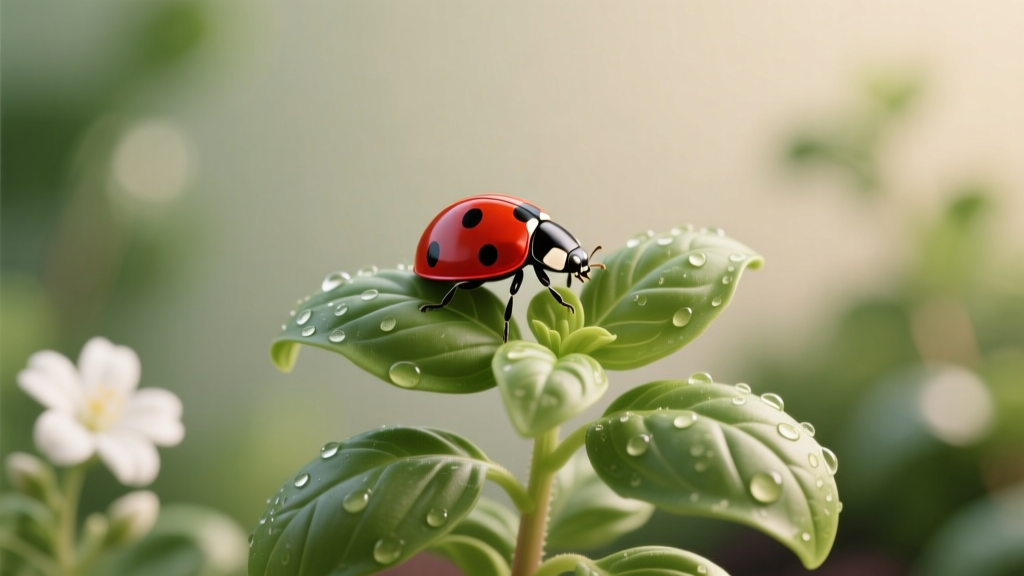
Ladybugs for Aphid Control on Basil
You go out to snip basil for dinner and the newest leaves look puckered and sticky. Flip a stem over and—there they are—clusters of pale green aphids packed tight on the tender growth. By the next morning, the plant looks worse, and a trail of ants is marching up the pot like they own it. If you’ve ever tried releasing ladybugs in this moment, you already know the surprise: sometimes they fix the problem fast… and sometimes they vanish by sunrise.
Ladybugs (lady beetles) can absolutely help on basil, but only if you set the table for them. Basil is a soft, fast-growing plant with juicy tips—aphid heaven. Your job is to knock the aphids down enough that the plant can breathe again, then keep enough “good habitat” around that the ladybugs don’t just fly to your neighbor’s roses.
This guide walks you through basil care (watering, soil, light, feeding) because stressed basil is aphid-magnet basil—and then gets very practical about using ladybugs as an aphid tool, including timing, release method, and what to do when the results are disappointing.
What’s Really Happening When Basil Gets Aphids
Aphids feed by piercing plant tissue and sucking sap, concentrating heavily on new growth. On basil, you’ll usually see them on the tips, the undersides of young leaves, and where stems branch. They reproduce quickly in warm weather, and a small patch can become a full infestation in a week.
Also: ants “farm” aphids for honeydew (the sticky sugar aphids excrete). If you see ants, plan to address them too—ladybugs can eat aphids all day, but ants will protect aphids like guard dogs.
“Biological control works best when pests are detected early and natural enemies are supported with habitat and careful pesticide choices.” — UC Statewide IPM Program, University of California (updated guidance, 2023)
Ladybugs help most when you catch aphids early, release at the right time of day, and keep the basil plant vigorous.
Basil Care That Makes Aphid Control Easier
If basil is struggling—too dry, too shaded, overfed with nitrogen, or root-bound—aphids often hit harder and the plant can’t outgrow damage. Tighten up the basics first. You’ll get faster recovery and fewer repeat outbreaks.
Watering: Keep Basil Steady, Not Swinging
Basil likes consistent moisture. Big dry spells followed by drenching encourage soft, sappy growth and stress—two things aphids love.
- In-ground basil: Aim for about 1 inch of water per week total (rain + irrigation), adjusted for heat and soil type.
- Container basil: In summer, expect watering every 1–2 days. In mild weather, every 2–4 days may be enough.
- Best check: Stick a finger 2 inches into the soil. If it’s dry at that depth, water.
Practical tip: Water early in the day so leaves dry quickly. Wet, crowded basil can invite fungal issues, and then you’re fighting two battles.
Soil: Rich, Draining, and Not Too “Hot”
Basil grows best in soil that holds moisture but drains well. Heavy clay that stays soggy can stunt roots; overly sandy soil dries too fast and stresses plants.
- Target pH: roughly 6.0–7.0.
- Container mix: Use a quality potting mix with added compost (about 20–30% compost by volume). Avoid straight garden soil in pots—it compacts.
- Pot size: For one mature basil plant, use at least a 10–12 inch diameter pot for steady moisture and growth.
Light: The Fastest Way to Stronger, Less Aphid-Prone Basil
Basil wants sun. In low light it stretches, makes weaker tissue, and becomes a pest target.
- Outdoors: Provide 6–8 hours of direct sun.
- Indoors: A bright window often isn’t enough; aim for 12–14 hours under a grow light.
- Heat note: Basil growth slows below about 50°F (10°C). In cool nights, plants stall—aphids don’t always get the memo.
Feeding: Don’t Overdo Nitrogen (It’s Aphid Candy)
Overfertilized basil grows lush and tender—exactly what aphids prefer. You want steady growth, not a nitrogen sprint.
- In-ground: Work in compost at planting. If needed, side-dress with compost mid-season.
- Containers: Use a balanced fertilizer at 1/2 strength every 3–4 weeks, or a slow-release product according to the label.
Rule of thumb: If leaves are huge, very soft, and pale-green, cut back feeding and improve light. That combo often reduces aphid pressure within 7–10 days.
Ladybugs 101: What They Do Well (and What They Don’t)
Ladybugs (adult lady beetles) and their alligator-looking larvae both eat aphids. Larvae are especially efficient because they can’t fly away, and they feed constantly as they grow.
Here’s the catch: many purchased ladybugs are wild-collected and ready to disperse. If you release them on a warm, dry afternoon, a big percentage may take off immediately. UC ANR notes that releasing adults often leads to dispersal unless conditions encourage them to stay (UC Agriculture and Natural Resources guidance, 2023).
That doesn’t mean “don’t use ladybugs.” It means use them with a strategy: lower aphid numbers first, release properly, and make your basil patch attractive enough for them to hunt.
Step-by-Step: How to Use Ladybugs on Basil Without Wasting Money
1) Knock Aphids Down Before Release (Yes, Even If You’re Going Organic)
If your basil is heavily infested, ladybugs can get overwhelmed. Reduce the population first so predators can catch up.
- Blast with water: Use a firm spray to knock aphids off stems and leaf undersides. Do it in the morning so plants dry quickly.
- Pinch and prune: Clip the worst tips (where aphids cluster) and bag them.
- Control ants: Use sticky barriers on pot rims or stakes, or a bait designed for ants. If ants can’t patrol, ladybugs and other predators work better.
Most home gardeners see an immediate reduction with a water spray—often 60–90% of visible aphids are dislodged in one session, especially on tender basil tips. That sets the stage for ladybugs to finish the job.
2) Release at the Right Time and Temperature
- Best time: Dusk or early morning.
- Ideal temperature: roughly 55–75°F (13–24°C). In hot weather (above 85°F/29°C) adults are more likely to fly.
- Light: Low light reduces immediate dispersal.
3) Prep the Basil So Ladybugs Stay
Right before release:
- Mist the basil lightly so leaves are damp (not dripping).
- Water the soil if it’s dry; thirsty plants and dry air don’t help.
- Provide shelter: Dense nearby plants, a small herb border, or even a low “canopy” of foliage gives ladybugs a reason to linger.
4) Release Method That Works in Real Gardens
- Refrigerate briefly if instructions allow—20–30 minutes can slow them down (don’t freeze).
- Release directly onto infested stems, not into the air.
- Cover for the first night if practical: a lightweight mesh, a laundry basket, or row cover tented over the plant keeps them from bolting immediately. Remove the next morning.
If you only do one thing differently, do this: release at dusk onto damp basil, and cover overnight. That’s the difference between “they all left” and “I actually saw them hunting.”
Ladybugs vs Other Aphid Controls: Data-Based Comparison
No single method is perfect. Here’s how common approaches compare for basil aphids in home gardens.
| Method | Typical visible knockdown | Speed | Risk to beneficials | Notes for basil |
|---|---|---|---|---|
| Water spray (hose nozzle) | Often 60–90% per session | Immediate | Low | Repeat every 1–3 days for a week if needed. |
| Ladybugs (adult releases) | Variable; 20–80% within 3–7 days depending on retention | Moderate | Low | Most effective after knockdown + dusk release + moisture. |
| Insecticidal soap | 70–90% on contact | Hours | Moderate (contact can harm soft-bodied beneficials) | Must hit aphids directly; rinse edible leaves later. |
| Neem oil (azadirachtin products) | 40–70% (varies widely) | Days | Moderate | Avoid spraying in heat; can affect taste/aroma on herbs. |
Practical take: For basil, I lean on water spray + pruning first, then add ladybugs (or encourage local beneficials) when aphids keep returning.
Three Real-World Scenarios (and Exactly What to Do)
Scenario 1: Potted Basil on a Sunny Patio, Aphids Appear Overnight
This is common when a flush of tender growth meets warm nights. The pot is basically an island: beneficial insects may not visit often.
- Day 1 (morning): Spray aphids off with water; prune the worst tips.
- Day 1 (evening): Mist basil, release ladybugs onto stems, cover with mesh overnight.
- Day 2–3: Check undersides of new leaves. If aphids reappear, repeat water spray. Don’t fertilize this week.
Watch for ants on container rims. A sticky barrier around the pot (or on the legs of a plant stand) can make a big difference in predator success.
Scenario 2: Garden Bed Basil Next to Peppers and Kale, Ants Everywhere
In mixed beds, aphids may be coming from nearby plants, and ants can move them around. Ladybugs can help, but ants can sabotage them.
- Stop ant traffic: Use ant bait stations near trails (placed safely away from kids/pets) and sticky barriers on stems/stakes.
- Reduce aphids: Spray water every 2 days for a week.
- Support beneficials: Let a small patch of dill, alyssum, or cilantro flower nearby—nectar helps adults stick around.
In beds like this, I see better results by attracting local ladybugs and lacewings than relying solely on purchased adult releases. Nebraska Extension notes that conserving existing natural enemies often outperforms repeated releases in home landscapes (Nebraska Extension, 2022).
Scenario 3: Indoor Basil Under Lights, Sticky Leaves, Aphids Won’t Quit
Indoors, ladybugs are usually a poor fit. They fly to windows, hide, and die. Also, you probably don’t want beetles in the kitchen.
Better plan:
- Isolate the plant.
- Rinse stems and leaf undersides in the sink.
- Use insecticidal soap if needed, applied carefully and repeated every 4–7 days for 2–3 rounds.
- Increase airflow with a small fan and keep lights at 12–14 hours.
Indoors, consistency beats predators. If you want biological control inside, consider commercially available beneficials like aphid parasitoids (Aphidius) rather than ladybugs—more targeted, less likely to end up in your light fixture.
Common Basil Problems That Get Confused With Aphid Damage
Leaf Curling: Aphids vs Heat/Water Stress
- Aphids: You’ll see insects on new growth, sticky honeydew, maybe ants.
- Heat stress: Leaves cup upward in afternoon sun, but no insects; plant perks up at night.
- Water swings: Curling plus droop; soil alternates bone-dry and soggy.
Fix: Confirm aphids by checking undersides and tips. If no aphids, stabilize watering and add light afternoon shade during heat spikes above 95°F (35°C).
Sticky Leaves and Sooty Mold
Honeydew can lead to black, dusty-looking sooty mold. It doesn’t infect plant tissue deeply, but it blocks light and looks awful on an herb you want to eat.
Fix:
- Remove aphids (water spray + predators/soap).
- Rinse leaves gently after aphids are under control.
- Harvest heavily—basil rebounds fast when growing conditions are good.
Troubleshooting Ladybugs on Basil (Symptoms and Solutions)
Problem: “I released ladybugs and they all disappeared.”
- Likely causes: Released midday; plant was dry; no shelter; adults were ready to disperse.
- Do this next time: Release at dusk, mist plants, water soil, and cover overnight with mesh. Release smaller batches over 2–3 nights instead of all at once.
Problem: “Ladybugs are there, but aphids are still building.”
- Likely causes: Aphid population too high; ants protecting aphids; basil is overfertilized and pushing tender growth.
- Fix: Water-spray every 1–2 days for a week, prune hot spots, stop nitrogen feeding for 2–3 weeks, and break ant trails with barriers or bait.
Problem: “My basil looks worse after I sprayed something, and now ladybugs aren’t helping.”
- Likely causes: Broad-spectrum insecticide residue (even some ‘garden’ sprays) killing beneficials; oil/soap applied in heat causing leaf burn.
- Fix: Rinse foliage, avoid spraying when temperatures are above 85°F (29°C), and stick to water spray + targeted products only when necessary. Give beneficials time to return.
How to Keep Aphids Off Basil Long-Term (So You Don’t Have to Keep Buying Ladybugs)
Ladybugs are a tool, not a subscription. The best long-term control is a garden that doesn’t roll out the red carpet for aphids.
Harvesting and Pruning Strategy
- Harvest basil tips weekly (or even twice weekly in peak growth). Pinching encourages branching and reduces the “one perfect aphid nursery tip.”
- Don’t let basil flower if your goal is leaf production—flowering changes leaf flavor and shifts growth patterns. (Let a sacrificial plant flower nearby if you want beneficial-insect nectar.)
Planting for Beneficial Insects
Adult lady beetles and other beneficials often need nectar/pollen when prey is scarce. Add small-flowered plants near basil:
- Sweet alyssum
- Dill
- Cilantro (let some bolt)
- Yarrow
These are the “rest stops” that keep predators in your yard so they show up early—before aphids explode.
Be Thoughtful With Sprays
If you routinely spray broad-spectrum products, you’ll often get a rebound: aphids return faster than predators. University of Minnesota Extension emphasizes integrated approaches—sanitation, water sprays, and conserving natural enemies—before escalating to pesticides (University of Minnesota Extension, 2021).
When you do need a product, apply in the evening, target the aphid clusters, and re-check in 48 hours rather than re-spraying automatically.
When Ladybugs Are a Great Choice (and When They’re Not)
Ladybugs can be a good fit when:
- Aphids are present but not completely out of control.
- You can release at dusk and keep plants moist.
- Your basil is outdoors with some nearby habitat.
Skip ladybugs and choose another approach when:
- Basil is indoors.
- Ants are actively farming aphids and you can’t control the ants.
- The infestation is severe and you need immediate knockdown for harvest (use water spray and pruning first).
If you remember nothing else: keep basil growing steadily (sun, steady watering, modest feeding), knock aphids back with water, and treat ladybugs like living helpers that need the right conditions to do their job. Do that, and you’ll usually be back to clean, fragrant basil tips within 7–14 days—without reaching for harsh sprays right before dinner.