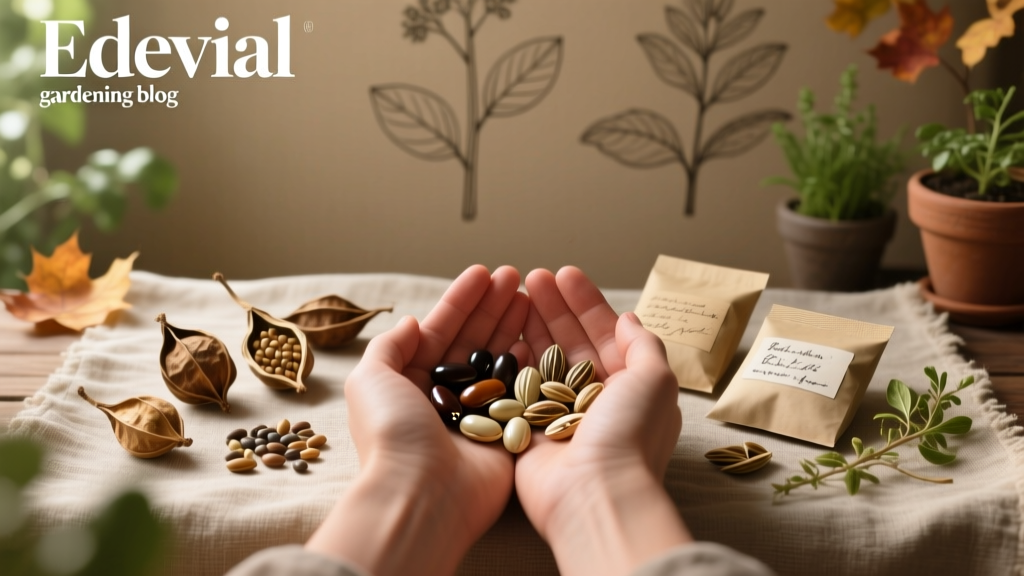
Fall Garden: Collecting and Saving Heirloom Seeds
Fall is your narrow window to lock in next year’s garden—before the first hard frost turns seed heads to mush, before rain triggers sprouting on the stem, and before birds and rodents harvest your best genetics for you. If you grow heirlooms, seed saving isn’t just thrift: it’s selection. The next 4–8 weeks are when you choose which plants become your future harvest.
Use your average first frost date as your master deadline. Many gardens need seed collections finished 2–3 weeks before the first hard freeze (28°F/-2°C), and dry seed crops should be safely indoors before a soaking rain or several nights below 40°F (4°C). This guide is organized by what matters most right now: what to plant (to keep producing into fall or overwinter), what to prune (and what not to), what to protect (seed crops, roots, and stored harvest), and what to prepare (cleaning, drying, labeling, and storing seed so it stays viable).
Priority #1: What to plant (so you can still harvest—and set seed—before cold shuts you down)
Seed saving works best when you keep plants healthy through the finish line. Fall planting also supports overwintered seed projects (like biennials) and gives you clean, vigorous plants to select from next season.
Plant now for late fall eating (and to free space for seed work)
As soon as seed crops are removed, plant fast fall crops. Aim for a 6–8 week runway before your first frost for most leafy greens, and use row cover when nights dip below 35–38°F (1.5–3°C).
- Spinach: Sow when soil is 45–75°F (7–24°C); for overwintering in Zones 5–7, sow 4–6 weeks before first frost so plants are established.
- Arugula, mustard greens, Asian greens: Most are ready in 25–45 days, giving you quick turnover after seed crops finish.
- Radishes: Quick gaps filler; many mature in 25–35 days, ideal when you’re cleaning beds for seed sanitation.
- Garlic (for next year): Plant when soil cools to about 50°F (10°C), typically 2–4 weeks after first light frost but before ground freezes (Zones 3–7).
Start or maintain biennials for next year’s seed
Heirloom seed savers often forget fall is when many biennials are made or broken. Carrots, beets, cabbage family crops, onions, and some lettuces need overwintering or vernalization to flower next year.
- Carrots & beets for seed: In Zones 7–10, you can often overwinter in ground with mulch; in Zones 3–6, plan to lift and store roots (“stecklings”) before sustained freezes.
- Brassicas (kale, collards, cabbage): In Zones 7–9, many overwinter in the garden; in colder zones, overwinter under heavy mulch and low tunnels, or grow for eating and save seed next season from a separate planting.
Priority #2: What to prune (and what to leave alone for seed maturity)
In fall, pruning can either push tender growth (bad) or improve airflow and disease control (good). The trick is knowing which plants are still finishing seed and which should be cleaned up.
Do prune for airflow and disease suppression around seed crops
- Tomatoes and peppers: Remove diseased leaves and any foliage touching soil to reduce splash-borne disease. Don’t strip plants bare; keep enough leaf area to finish ripening fruit for seed.
- Beans and peas (dry seed): Remove mildewed or heavily diseased vines once pods are fully dry; if pods are still curing, keep plants intact under cover to finish drying.
- Squash vines: Clip only dead or diseased leaves; avoid heavy pruning that exposes fruit to sunscald on warm fall days.
Do not deadhead these if you want seeds
Stop deadheading immediately on flowers you want to save. Leave the best plants standing until seed heads are fully mature.
- Zinnias, marigolds, cosmos: Let blooms dry on the plant; collect after several dry days.
- Basil, dill, cilantro: Allow flowering and seed set; harvest when seed heads turn brown and seeds rub free.
- Lettuce: Allow bolting plants to form fluffy seed heads; harvest in batches as soon as you see white “dandelion” pappus.
Priority #3: What to protect (your best seed plants, and the seed itself)
Most fall seed failures come from three things: moisture, early frost, and pests. Protecting seed crops is often more important than protecting eating crops because a single wet week can ruin a season’s genetics.
Know your critical thresholds
- 28°F (-2°C): Hard freeze—many seed heads and fleshy fruits are damaged; seed may survive inside fruit, but rot risk climbs.
- 32°F (0°C): Light freeze—covers can often save late tomatoes/peppers long enough to fully ripen seed fruit.
- 40°F (4°C): Below this, drying slows dramatically outdoors; move seed heads inside to finish curing.
- 50°F (10°C): Great benchmark for garlic planting and for slowing many summer diseases, but it can also increase dew time—watch for mildew on seed crops.
- First frost date: Set a calendar reminder for 6 weeks before (final chance to start some fall crops) and 2 weeks before (final push to bring seed indoors).
Use simple structures to keep seed dry
- Row cover (frost cloth): Adds a few degrees of protection; use when forecasts dip to 32°F.
- Low tunnel with plastic: Best for keeping seed heads dry during rainy stretches; vent on warm days to prevent condensation.
- Paper bags or organza bags: Bag maturing seed heads (lettuce, calendula, dill) to prevent shattering and bird loss.
Fall pest and disease prevention for seed saving
Seed saving magnifies the stakes: you can accidentally save disease with your seed or carry pests into storage.
- Powdery mildew (common on squash, zinnias, cucurbits): Increase airflow, avoid overhead watering late day, and harvest mature seed fruit promptly. If vines collapse early, bring mature fruit indoors to finish curing.
- Botrytis (gray mold) on drying flowers/seed heads: Harvest on dry afternoons; avoid stacking damp heads. Use screens or single layers for drying.
- Aphids and whiteflies: They can vector viruses. Don’t save seed from virus-suspect plants (mosaic, leaf distortion, stunting).
- Rodents: They love sunflower heads, corn, beans, and squash. Use mesh barriers, harvest promptly, and store seed in rodent-proof containers.
- Seed weevils (beans/peas) and pantry pests: Freeze thoroughly dried seed for 72 hours to kill eggs/larvae, then return to room temp sealed to prevent condensation.
“For most species, seed quality is highest when seeds are allowed to reach full maturity on the mother plant and are then dried quickly under cool, dry, well-ventilated conditions.”
—Principle summarized in university seed handling guidance and postharvest research on seed maturity and drying
Priority #4: What to prepare (the actual seed-saving workflow you can do this week)
Seed saving succeeds when you treat it like a harvest with steps: select → collect → clean → dry → label → store. Fall weather can swing from 80°F days to freezing nights, so work in short, decisive batches.
First: select your “keeper” plants
Don’t collect from every plant. Pick plants that reflect what you want next year: flavor, earliness, disease tolerance, and true-to-type shape.
- Tag 5–20 plants (depending on crop) with flagging tape.
- Skip plants that were the first to get disease or produced off-type fruit.
- For genetic diversity, save from multiple plants—especially for outcrossing crops.
Know what stays true: self-pollinated vs. cross-pollinated
This determines whether your heirloom stays an heirloom. Tomatoes, peas, beans, and lettuce are mostly self-pollinating; squash, cucumbers, corn, many brassicas, and many flowers cross readily.
- Self-pollinated (simpler): tomato, pepper (mostly), bean, pea, lettuce. You can often save seed with minimal isolation.
- Cross-pollinated (needs planning): squash, cucumber, melon, corn, brassicas, onions, many herbs/flowers. If you grew multiple varieties of the same species, assume crossing unless you isolated or hand-pollinated.
For a fall reality check: if you grew three zucchini varieties side-by-side and didn’t hand-pollinate and tape flowers, save those seeds only if you’re okay with surprises next year.
Monthly schedule table (adjust to your frost date)
| Timing (relative to first frost) | Outdoor tasks | Indoor/processing tasks | Key numbers to watch |
|---|---|---|---|
| 6–8 weeks before | Sow greens/radish; tag best seed plants; stop deadheading seed flowers | Set up drying area (screens, fans); gather bags, labels, silica packs | Soil 45–75°F for spinach; count days to maturity |
| 4–6 weeks before | Bag seed heads; cover seed crops before heavy rain; rogue diseased plants | Start dry seed harvest in batches (dill, basil, early beans) | Night temps trending <40°F slows drying |
| 2–3 weeks before | Harvest mature seed heads before storms; bring tender seed fruit in if frost risk | Ferment tomato seed; clean and spread to dry; label immediately | Prepare for 32°F nights; aim to finish outdoor drying |
| Frost week | Pull remaining seed crops; mulch biennials; plant garlic when soil ~50°F | Final drying; moisture check; freeze dry seeds 72 hours if needed | 28°F hard freeze ends most seed crops |
Crop-by-crop: the fastest, most reliable fall methods
Use these as your “this afternoon” instructions.
Tomatoes (wet processing with fermentation)
Tomatoes are a classic heirloom seed because they often come true. Choose fully ripe fruit from healthy plants (avoid virus-suspect plants). For best viability, use fruit that ripened on the vine or finished ripening indoors after picking at blush stage.
- Scoop seeds and gel into a jar; add a splash of water.
- Ferment at 65–80°F for 2–4 days until a film forms.
- Rinse well; good seeds sink.
- Dry on a plate or screen in a single layer for 7–14 days (stir daily).
- Label with variety, year, and notes (flavor, disease, earliest fruit).
Research-backed note: fermentation helps remove germination inhibitors and reduces some seed-borne pathogens. Extension services commonly recommend this process for tomato seed handling (e.g., university extension seed-saving publications).
Beans and peas (dry on plant, then finish indoors)
For dry seed, pods should be tan/brown and seeds hard. If fall rain threatens, pull whole plants when most pods are mature and hang upside down under cover.
- Harvest when pods rattle and seeds resist denting with a fingernail.
- Shell into a tray; remove cracked or spotted seed.
- Dry indoors until seeds shatter, not mash, when struck with a hammer (a practical dryness test).
Lettuce (daily harvest to prevent shattering)
Lettuce seed matures unevenly. Once you see white fluff, start collecting every 1–3 days in dry weather.
- Shake seed heads into a paper bag.
- Dry 1 week; then rub and winnow to remove chaff.
- Store cool and dry; lettuce seed generally stores well if kept dry.
Squash and pumpkins (seed from fully mature, cured fruit)
For Cucurbita crops, you must know your species and isolation. If you intentionally hand-pollinated, label fruit at pollination time and save seed only from those.
- Harvest when rind is hard and stem corky; cure fruit 10–20 days around 70–80°F if possible.
- Scoop seeds, rinse, and dry on screens for 2–3 weeks until they snap rather than bend.
Herbs and flowers (bag, cut, and dry)
Dill, basil, calendula, marigold, cosmos, and zinnia are ideal fall seed projects. The biggest issue is humidity.
- Cut on a dry afternoon after dew evaporates.
- Bag seed heads before cutting to catch shatter.
- Dry in bundles (herbs) or screens (flowers) with airflow; avoid direct sun.
Regional scenarios: what “fall seed saving” means where you garden
Use these scenarios to adjust timing and tactics without guessing.
Scenario 1: Short fall, early freezes (USDA Zones 3–5; e.g., Upper Midwest, interior New England)
If your first frost often arrives in late September to early October, you’re racing the calendar. Your best move is to bring seed indoors earlier rather than trying to finish outdoors.
- Start covering tender seed crops when nights are forecast at 34–36°F.
- Pull bean plants to finish drying under cover ahead of prolonged rain.
- For biennials (carrot, beet): plan to lift roots before the ground freezes hard; store at 32–40°F in moist sand/peat in a root cellar or fridge drawer.
Scenario 2: Long, mild fall with wet spells (USDA Zones 6–7; Mid-Atlantic, Ohio Valley, parts of Pacific Northwest)
You’ll often have time, but humidity is your enemy. The priority is preventing mold and pre-sprouting.
- Cover seed heads during rainy weeks; vent covers to reduce condensation.
- Harvest seed heads slightly early and finish drying indoors once nights drop below 45°F.
- Watch for powdery mildew rebounds during cool, dewy stretches.
Scenario 3: Warm fall into winter (USDA Zones 8–10; South, Gulf Coast, coastal California)
You may not have a meaningful frost until December or later. That’s an opportunity to let seed fully mature—but pests stay active longer.
- Bag seed heads to prevent insect and bird losses.
- Rogue (remove) off-type plants aggressively; long seasons increase cross-pollination opportunities.
- Plan isolation distances and staggered flowering for crossers like squash, corn, and brassicas.
Timing checkpoints: a fall seed-saving timeline you can follow
Use this as your weekly rhythm once nights start cooling.
This week (next 7 days)
- Walk the garden with tape and a marker; tag your best plants for seed.
- Stop deadheading chosen flowers; bag the first drying seed heads.
- Check weather: if a 32°F night is forecast within 10 days, plan to pick and finish ripening tomato/pepper seed fruit indoors.
- Set up drying space: screens, paper plates, fan on low, and a “no mixing” labeling station.
Weeks 2–3
- Process wet seeds (tomato) in small batches; label immediately.
- Harvest dry seeds before storms; pull whole plants for beans if rain is persistent.
- Start cleaning beds around seed crops to reduce disease carryover (remove infected debris, don’t compost if disease is severe).
Weeks 4–6 (or when nights stay below 40°F)
- Move all drying operations indoors; finish curing seed with airflow.
- Do a germination spot-check on last year’s seed to decide what to replace.
- Prepare storage containers and desiccant; consolidate labeled packets.
Storage that preserves heirloom viability (and avoids rookie mistakes)
The rule is simple: cool, dark, dry. A practical standard is to keep seeds at stable household temperatures and very low humidity. If your home is humid in fall, add desiccant and use airtight containers.
- Dry seeds thoroughly before sealing. Trapping moisture is the fastest route to mold.
- Store in paper envelopes inside a jar with desiccant for double protection.
- Label with variety, species, year, source bed, and notes (taste, plant habit, disease resistance).
- If pests are common, freeze dry seeds for 72 hours after they are fully dry, then store airtight.
Extension-backed guidance commonly emphasizes that seed moisture and storage temperature drive longevity. For example, Oregon State University Extension notes that cool, dry conditions extend seed life and recommends airtight storage with a desiccant for home savers (OSU Extension, 2019). Iowa State University Extension similarly highlights dry, cool storage as key for maintaining viability in saved seed (Iowa State University Extension, 2021).
Seed sanitation and disease carryover: fall cleanup that protects next year’s genetics
Saving heirloom seed doesn’t mean saving problems. Fall is when you prevent disease carryover that can affect next season’s seed crops.
- Remove and trash (do not compost) plants with clear bacterial/viral symptoms (mosaic, severe spotting, systemic wilting).
- Clean tools after working diseased beds—especially when processing tomatoes and peppers.
- Rotate seed crops: Don’t plant tomatoes (and other solanaceous crops) in the same spot next year if you had heavy blight pressure this year.
- Control volunteers: Pull volunteer squash/tomatoes next year if you’re trying to keep lines pure.
Quick checklists: keep this practical
Seed harvest “go bag”
- Paper bags + small envelopes
- Sharpie marker (writes on damp paper)
- Flagging tape / plant tags
- Pruners + gloves
- Screen or tray for the car/porch (to keep harvest separated)
Don’t skip these labeling details
- Variety name (full)
- Species (especially for squash: C. pepo, C. maxima, C. moschata)
- Year harvested
- Any isolation method used (bagged, hand-pollinated, distance)
- Notes: earliest fruit, best flavor plant, disease survivor
If you do nothing else this fall, do these three actions: harvest mature seed before prolonged wet weather, dry it with active airflow once nights drop below 40°F, and label immediately so you don’t end up with a jar of “mystery heirloom.” The best time to save seed is when you’re already out there picking the last beans and watching the forecast—because once that first hard freeze hits 28°F, the season’s choices are over.