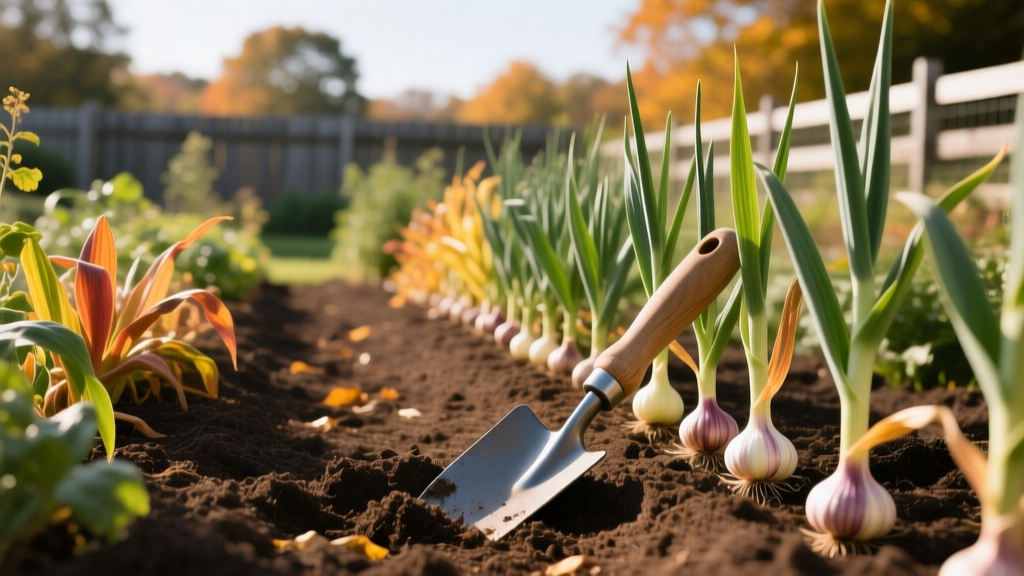
Fall Garden: Planting Garlic Varieties for Your Climate
If there’s one fall task that pays you back all next summer, it’s planting garlic on time. Miss the window and cloves may sprout too late to root, winter heave can push them out of the soil, or bulbs may size up poorly. Hit the window—when soil is still workable but cooling—and you’ll get strong root growth before freeze-up and vigorous spring growth that builds big, well-wrapped heads.
Use this guide like a seasonal almanac: start with what to plant right now, then move to pruning, protection, and prep. The timing below is built around a simple target: plant garlic 2–4 weeks before the ground freezes, often after first light frosts but before deep winter sets in.
Priority 1: What to plant right now (garlic, and a few smart companions)
Timing targets you can actually use (dates, soil temps, frost math)
Garlic’s fall schedule is about rooting before hard freezes. Use whichever of these is easiest for you to track:
- Plant 2–4 weeks before the ground freezes solid (in many regions this’s mid-October to mid-November).
- Plant 1–3 weeks after first fall frost (when nighttime lows begin dipping below 32°F), but before prolonged hard freezes.
- Soil temperature target: aim for 45–55°F at 4" depth. In many gardens, that’s when you’re wearing a jacket in the morning and shirtsleeves at midday.
- Clove depth: plant cloves 2–3 inches deep (measured from the top of the clove to soil surface), and 4–6 inches apart.
- Mulch timing: mulch after planting once soil cools toward 40°F and hard frosts are near—typically within 7–21 days of planting.
Extension guidance aligns with this timing approach: the University of Minnesota Extension recommends planting garlic in the fall so cloves root before winter and resume growth early in spring (University of Minnesota Extension, 2020). The University of Vermont Extension similarly emphasizes fall planting and mulching to protect over winter (University of Vermont Extension, 2019).
“Fall-planted garlic develops roots before winter, then grows rapidly in early spring for larger bulbs than spring plantings.” (University of Minnesota Extension, 2020)
Choose garlic varieties by climate: hardneck vs. softneck (and what “works” where)
Garlic success starts with matching the type to your winter and spring pattern. The two big categories behave differently:
| Garlic type | Best for | Cold needs | Harvest window | Storage | Notes |
|---|---|---|---|---|---|
| Hardneck (e.g., Rocambole, Porcelain, Purple Stripe) | Cold-winter climates (often USDA Zones 2–6) | Strong winter chill; thrives with consistent freezing | Often late June–July | Good (typically 4–6 months) | Makes scapes; usually bigger cloves; excellent flavor |
| Softneck (e.g., Artichoke, Silverskin) | Mild-winter climates (often USDA Zones 7–10) | Less chill required; tolerates warmer winters | Often May–June in warm areas | Excellent (often 8–12 months) | Best for braiding; smaller cloves on average |
Practical pick: If your winters are reliably cold (weeks below 32°F), start with hardneck. If your winters are erratic—warm spells followed by cold snaps—or you rarely see sustained freezes, lean softneck (especially Silverskins and Artichokes) for consistent bulbing.
Three real-world climate scenarios (so you plant the right thing, at the right moment)
Scenario A: Upper Midwest / Northern New England (USDA Zones 3–5; early freezes)
If your first frost often lands around September 20–October 10 and soil can freeze by late October, your window is tight. Plant hardneck garlic (Porcelain or Purple Stripe types are reliable) from roughly September 25–October 20. Mulch soon after planting—don’t wait for snow cover to do the job.
Scenario B: Mid-Atlantic / Lower Midwest (USDA Zones 6–7; long fall, variable winter)
If first frost is typically October 15–November 10, you can plant from mid-October through mid-November. Hardneck still performs, but softneck can also do well. If you want long storage and braids, dedicate at least one bed to softneck.
Scenario C: Coastal South / Warm winter regions (USDA Zones 8–10; inconsistent chill)
When nighttime lows hover in the 40s–50s°F deep into fall and true freezes are brief, prioritize softneck (Silverskin, Artichoke). Plant later—often late November through January depending on your area—aiming for soil temps near 50–65°F. In very mild areas, consider pre-chilling seed garlic in the refrigerator for 2–4 weeks (kept dry and ventilated) to improve uniformity, especially if your winter rarely dips below 40°F.
Planting steps that prevent common failures
Garlic is simple, but it punishes sloppy setup. Follow this sequence:
- Start with seed garlic, not grocery store bulbs. Grocery garlic may be treated to inhibit sprouting and can carry disease.
- Split bulbs into cloves no more than 24–48 hours before planting. Keep skins intact.
- Site: full sun; avoid low spots where water sits in winter.
- Soil: loose and well-drained. If you can’t push a trowel in easily, loosen soil to 8–10".
- Fertility: incorporate compost; avoid heavy fresh manure in fall (it can drive lush growth and increase rot risk).
- Plant orientation: pointy end up, root plate down.
- Spacing: 4–6" between cloves; 8–12" between rows.
- Water: water deeply once after planting if the soil is dry; then back off. Garlic hates wet feet going into winter.
Quick checklist: your “plant this weekend” garlic kit
- Seed garlic matched to your USDA zone (hardneck Zones 2–6; softneck Zones 7–10 as a starting point)
- Compost (or a balanced organic fertilizer) and a soil knife/trowel
- Mulch: clean straw, shredded leaves, or pine needles (avoid hay full of seeds)
- Labels (variety + date planted) and row markers
- Rodent deterrence plan (see protection section)
Optional fall add-ons that pair well with garlic beds
If you have space, fall is also a good time to plant:
- Cover crops next to garlic beds (not in them): winter rye or oats to reduce erosion and nutrient loss.
- Overwintering onions/shallots where winters are moderate (Zones 6–8) and drainage is excellent.
- Pollinator habitat borders (perennials or fall-sown annuals) to support beneficials next season—keep these out of the garlic rotation area.
Priority 2: What to prune (and what not to touch yet)
Garlic itself doesn’t need pruning in fall, but your fall pruning choices can make or break disease pressure next year—especially if you’re rotating beds among onions, leeks, and garlic.
Remove diseased allium debris; leave healthy perennials alone
- Do remove: any onion/leek/garlic leaves or bulbs showing rot, mold, or soft spots. Bag and trash; don’t compost questionable allium debris.
- Do not cut back: garlic shoots if they appear in late fall. A little green is normal in mild falls; the plant is still rooting.
- Do cut back: diseased tomato and cucurbit vines near the garlic area. This isn’t because garlic catches those diseases, but because you want clean working space and fewer overwintering pests.
Rotation rule you can act on now: keep garlic and alliums out of the same bed for 3–4 years if you’ve had any history of white rot or persistent allium disease. If you only have one good garlic bed, at least rotate within that space and never replant obvious “problem corners.”
Priority 3: What to protect (winter survival + pest and disease prevention)
Mulch for winter stability (and avoid the two classic mistakes)
Mulch prevents winter heaving and temperature whiplash. Apply 3–6 inches of loose mulch (straw or shredded leaves) after planting as temperatures trend downward and you’re approaching repeated frosts. In very cold, windy sites, go closer to 6 inches.
Mistake #1: mulching too early in warm weather (creates cozy habitat for rodents and can keep soil too warm).
Mistake #2: mulching too late (soil freezes and cloves heave out).
Rodents: protect the bed before voles move in
Fall is when vole and mouse tunnels expand. Garlic itself isn’t always their favorite, but thick mulch is prime cover. If you’ve had vole damage before, act now:
- Keep mulch fluffy, not matted; avoid piling mulch against boards where tunnels start.
- Stamp down tunnels around beds weekly after the first frosts.
- Use snap traps in covered runs near (not in) beds if activity is high.
- Clear tall grass and weeds within 3 feet of garlic beds to reduce shelter.
Disease prevention you handle in fall (before you ever see symptoms)
Many garlic problems are set up by fall conditions—especially wet soil and contaminated planting stock.
- White rot (Sclerotium cepivorum): avoid planting alliums in any bed with a known history. The pathogen can persist for years. Prioritize rotation and clean seed garlic.
- Basal plate rot / Fusarium: prevent with drainage, gentle handling (don’t bruise cloves), and avoiding overly wet fall beds.
- Nematodes: buy reputable seed garlic; don’t replant bulbs from a patch that had stunting or distorted cloves.
If you want one high-impact habit: only plant the largest, healthiest cloves. Small cloves reliably produce smaller bulbs, and stressed planting stock is more likely to rot.
Weather swings: how to handle early cold snaps and warm falls
If an early hard freeze is forecast (night lows below 25°F before you’ve planted): plant anyway as soon as soil is workable, then mulch promptly. Garlic can root in cool soil; it just needs time.
If fall stays warm and soil remains above 60°F into late October: wait. Planting too early can trigger excessive top growth that gets winter-killed. Use the soil temperature target (45–55°F) to time planting rather than the calendar alone.
Priority 4: What to prepare (bed setup, fertility, and a month-by-month timeline)
Build a garlic bed that drains in winter and feeds in spring
Great garlic beds are slightly raised, richly amended, and not overloaded with fresh nitrogen in fall.
- Drainage first: if your soil puddles for more than 24 hours after rain, raise the bed 3–6" or plant on a gentle ridge.
- Soil pH target: roughly 6.0–7.0. If you suspect very acidic soil, plan a soil test now so you can correct with lime per recommendations.
- Fall feeding: mix in compost. Save fast-release nitrogen for spring green-up (when shoots are 4–6" tall).
Monthly schedule: fall through early summer (adjust by your frost date)
| Month | What you do | Timing trigger | What you’re aiming for |
|---|---|---|---|
| September | Order seed garlic; prep bed; remove weeds; soil test if needed | 6–8 weeks before expected ground freeze | Have varieties in hand; bed ready before weather turns |
| October | Plant in colder zones; water in if dry; mark rows | Soil ~45–55°F; first frosts (32°F) begin | Root growth before winter; minimal top growth |
| November | Plant in moderate zones; mulch 3–6" | Approaching repeated hard frosts; soil trending toward 40°F | Prevent heaving and winter injury |
| December–January | Plant in warm zones (softneck); monitor mulch and drainage | Soil workable; nights commonly 35–45°F in mild climates | Establish roots without rot |
| February–March | Pull mulch back slightly if soil is slow to warm; weed early | New shoots emerge; daytime highs consistently above 45–50°F | Fast spring growth without smothering |
| April–May | Side-dress nitrogen; keep weed-free; irrigate during dry spells | Shoots 4–6" tall; spring rains taper | Leaf growth (more leaves = bigger bulbs) |
| June–July | Remove scapes (hardneck); harvest when leaves yellow; cure | Scapes curl; lower 2–3 leaves brown | Max bulb size; good wrappers for storage |
Fall timeline checklist (printable-style)
6–8 weeks before typical ground freeze
- Order seed garlic (hardneck or softneck matched to USDA zone)
- Choose a bed not used for alliums in the last 3–4 years
- Pull weeds; improve drainage; add compost
2–4 weeks before ground freeze
- Split bulbs into cloves (within 24–48 hours of planting)
- Plant 2–3" deep, 4–6" apart
- Water once if soil is dry; label rows
After planting through first hard freezes
- Mulch 3–6" when temps trend colder (toward 40°F soil)
- Watch for standing water after rains; open channels if needed
- Reduce rodent habitat: weed edges, flatten tunnels
Regional notes that save you from common “my garlic failed” problems
Heavy clay gardens (common in Zones 5–7): prioritize drainage over fertility
If your soil is clay-heavy, the main risk is winter and spring saturation causing clove rot. Build a slightly raised bed, keep mulch airy, and avoid overwatering after planting. Compost helps structure, but drainage is the real fix.
High-altitude gardens (short season, intense sun): plant earlier and mulch deeper
Mountain and high-desert gardeners often have early temperature drops even with sunny days. Plant hardneck garlic on the early side (often late September to early October) and mulch closer to 6 inches to buffer sharp swings.
Wet Pacific Northwest falls (mild but soggy): choose tolerant types and manage moisture
In regions with steady fall rains and mild winters (often Zones 8–9), softneck can be more consistent, but hardneck may still perform in well-drained beds. Plant on ridges or raised beds, and avoid trapping moisture with overly fine mulch. If rainfall is persistent, hold off on watering entirely after planting.
Fall pest watch: what shows up now and what you prevent for spring
Garlic is relatively pest-resilient, but fall is when you set the stage for a cleaner spring.
- Weeds: the #1 “pest” for garlic. Pull them now; garlic competes poorly in spring. A weed-free bed going into winter makes spring maintenance easy.
- Onion maggot: risk increases where alliums are grown repeatedly. Rotation and sanitation are your best tools; don’t leave cull onions nearby.
- Thrips: usually a summer issue, but reducing nearby weedy hosts and volunteer onions in fall helps lower pressure next season.
For research-backed, practical best practices, land-grant extensions consistently stress using clean planting stock, rotating out of alliums, and planting at the correct time for overwinter rooting (University of Minnesota Extension, 2020; University of Vermont Extension, 2019).
Make your planting plan: pick varieties, then pick a planting week
If you want a simple decision tree you can act on today:
- USDA Zones 2–6: start with hardneck. Plant about 2–4 weeks before your soil typically freezes (often late September through October).
- USDA Zone 7: you can grow both. Plant hardneck and softneck side-by-side this year and record performance; plant window often mid-October through mid-November.
- USDA Zones 8–10: start with softneck. Plant later (often late November–January), focusing on drainage and avoiding overly early planting in warm soils.
Then choose your week: look up your average first frost date and count forward 1–3 weeks, or look up your typical ground-freeze period and count backward 2–4 weeks. If your forecast shows a stable cooling trend and your soil is near 45–55°F, plant.
Plant carefully, mulch at the right moment, keep the bed clean, and you’ll head into winter knowing your garlic is already working underground—rooting quietly, setting up the leaves that build next summer’s bulbs.