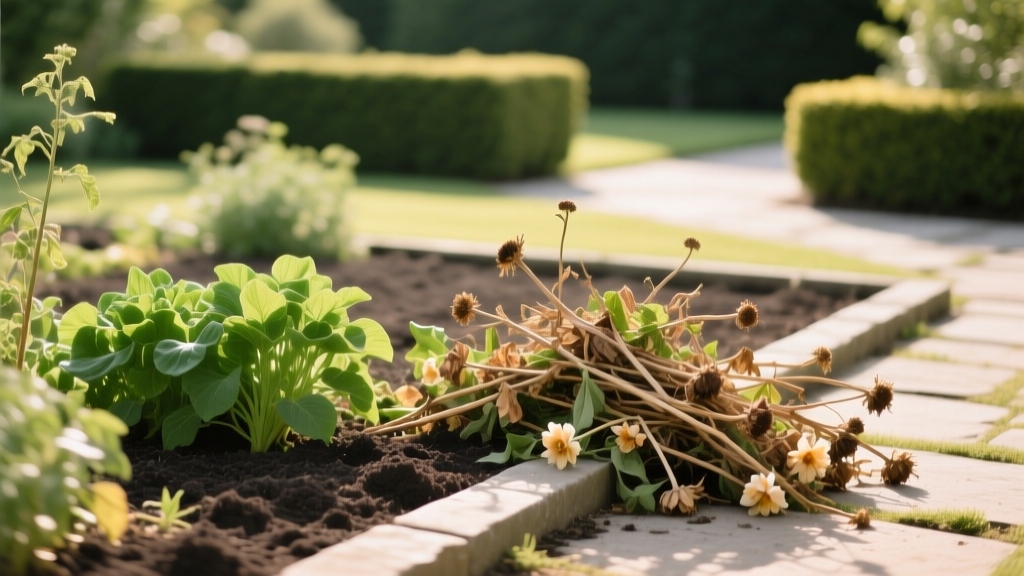
Summer Garden Cleanup: Removing Spent Plants
By mid-to-late summer, your garden is either about to stall or about to surge—depending on what you remove right now. Spent spring crops, bolting greens, disease-prone foliage, and exhausted annuals quietly drain water, light, and nutrients from anything still producing. Clearing them promptly opens space for succession sowing, improves airflow (a big deal when nights stay above 65°F), and interrupts pest and disease cycles before they explode in late summer.
This is a “do it this week” job. A heatwave, a rainy stretch, or a single overlooked diseased plant can turn a tidy bed into a powdery mildew factory. Use the priorities below to decide what to pull, what to cut back, what to replant, and what to protect—based on your region, your frost date, and what’s actually happening in your beds.
Priority 1: Pull and Clear—Remove Spent Plants Before They Seed or Spread Problems
Start with anything that is finished producing, bolting, collapsing, or showing persistent disease. Every day a spent plant sits, it shades soil you could be replanting and provides habitat for pests. Work early in the day when plants are dry; cleaning wet foliage spreads pathogens.
What “spent” looks like (and what to do)
Spring salad crops: Lettuce, arugula, spinach, cilantro, and bok choy that have bolted should be removed at the base. If you want a little seed for next year, bag one plant’s seed stalk and remove the rest. Bolted greens attract aphids and become a disease bridge to late-summer crops.
Peas: When pea vines yellow and pods stop sizing up, cut vines at soil level rather than yanking them out. This leaves nitrogen-rich roots to decompose in place. Compost the tops only if they’re healthy; discard if they show powdery mildew or virus-like mottling.
Garlic and onions: Once harvested, clean the bed of remaining leaves and weeds. If you left a few “volunteer” garlic scapes or onion stalks, remove them now so the bed can be replanted. Cure bulbs where temperatures hold around 75–85°F with good airflow.
Strawberries after harvest (June-bearers): Renovation timing matters. Many university extension programs recommend renovating soon after harvest to encourage new leaves and runner set. In northern climates, that typically means within 1–2 weeks after harvest ends, while plants still have time to regrow before fall.
Annual flowers that have peaked: If marigolds, calendula, or snapdragons are leggy and fading, either hard-cut them back by one-third or pull and replace with heat-tolerant replacements. If they’re riddled with spider mites, don’t try to “nurse” them—remove and trash them.
Compost vs. trash: a quick disease rule
Compost only clean, disease-free plant material. If you see powdery mildew, downy mildew, blight lesions, or virus-like distortion, remove and dispose of it in the trash. Many home compost piles don’t reliably reach temperatures that kill pathogens. University of Minnesota Extension notes that hot composting requires maintaining about 131°F or higher for effective pathogen reduction (University of Minnesota Extension, 2020).
“Many plant pathogens survive from season to season on infected plant debris.” — Cornell Cooperative Extension (plant disease management guidance, 2019)
Fast cleanup checklist (do this first)
- Pull bolted greens and any plants that are done producing.
- Cut pea vines and beans at the base (leave roots if healthy).
- Remove any plant with spreading leaf spots, blight, or virus-like symptoms; trash it.
- Bag and remove fallen fruit under tomatoes, squash, and stone fruits to reduce pests and rot.
- Weed immediately after removal to prevent newly exposed soil from becoming a weed nursery.
Priority 2: What to Plant Next—Use the Space You Just Opened
Cleanup is only half the win. The other half is filling the gap quickly so weeds don’t claim it and you don’t lose growing time. Your replanting choices hinge on your first fall frost date and soil temperature. Many fall crops germinate best when soil is 60–85°F, while some (like spinach) struggle once soil stays above 85°F.
Use frost-date math (with real numbers)
Find your local average first frost date, then count backward:
- 8–10 weeks before frost: sow carrots, beets, and chard for fall harvest.
- 6–8 weeks before frost: plant bush beans, cucumbers (in warm regions), and quick summer squash if pests are manageable.
- 4–6 weeks before frost: sow radishes, turnips, and Asian greens for cool weather.
- 2–4 weeks before frost: sow fast baby greens where nights cool down.
Concrete example timing:
- If your first frost is October 15 (common in parts of USDA Zone 6), target carrots by August 10–20, and radishes around September 1–15.
- If your first frost is November 15 (parts of Zone 8), you can sow carrots into early September and still get a fall harvest.
- If you’re coastal or frost-free into December (Zone 9–10), you can treat late summer as your “spring” for cool-season crops—just manage heat for germination.
Best succession plantings after removing spent plants
After peas or spring lettuce: Plant bush beans, basil, dill, or a short-cycle cucumber. If nights remain above 65°F, beans will move fast; if nights drop into the 50s°F, switch to greens and roots.
After garlic/onions: This is prime real estate. Plant carrots, beets, fall brassicas (transplants), or a cover crop. If your frost is under 8 weeks away, use quick options: radish, arugula, and salad turnips.
After early potatoes: Plant a fall crop, but don’t follow with tomatoes or peppers in the same bed if you can avoid it—rotate away from solanaceous crops to reduce disease buildup.
Monthly schedule table (adjust by USDA zone and frost date)
| Timing | Cleanup Focus | Replant/Next Step | Temperature / Date Targets |
|---|---|---|---|
| Late June–Early July | Remove bolted greens; cut back fading annuals | Sow basil, beans, cucumbers; mulch open soil | Mulch before heat spikes above 90°F |
| Mid–Late July | Pull spent peas; remove diseased lower leaves on tomatoes | Start fall brassicas indoors or buy transplants | Start brassicas 6–8 weeks before transplanting |
| Early–Mid August | Clear harvested garlic beds; remove powdery mildew hosts | Sow carrots/beets; transplant broccoli/kale | Count back 8–10 weeks from frost (ex: Oct 15) |
| Late August–September | Thin overcrowded cucurbits; remove exhausted squash vines | Sow radishes/turnips; plant cover crops where beds are done | Target sowing when highs drop below 85°F |
Priority 3: What to Prune and Cut Back—Clean Cuts, Better Airflow, Fewer Problems
Pruning in summer is less about shaping and more about sanitation and airflow. Dense canopies trap humidity, and summer pathogens love leaf-wetness periods after storms or overhead irrigation.
Tomatoes: remove the disease ladder
Tomato plants often look “spent” at the bottom first. Remove lower leaves that touch the soil or show spotting. Keep foliage off the ground by pruning up to the first fruit cluster (or higher if needed for airflow), but don’t strip the plant bare during extreme heat—fruit can sunscald when exposed during 95°F+ stretches.
If you see early blight-like spotting or yellowing, remove affected leaves and sanitize pruners between plants. Cornell Cooperative Extension emphasizes sanitation and removing infected debris to reduce disease carryover (Cornell Cooperative Extension, 2019).
Cucurbits (squash, cucumbers, melons): manage mildew and vines
Once powdery mildew arrives, it rarely disappears. The practical move is to slow it down and decide whether the plant is worth the space. Remove the worst leaves (not all at once), improve airflow by guiding vines, and harvest aggressively. If the plant is no longer setting quality fruit, pull it and replant with something that fits your remaining season.
Perennials and shrubs: don’t overdo summer pruning
For woody ornamentals, avoid heavy pruning during peak heat, especially in drought. Focus on removing dead, diseased, or broken growth. Save structural pruning for dormancy unless you’re dealing with storm damage or a clear hazard.
Pruning checklist (15-minute pass)
- Remove tomato leaves touching soil; discard if spotted.
- Pinch off dead flower heads on annuals unless you want seed.
- Cut out broken stems after storms—clean cuts, no tearing.
- Sanitize pruners between diseased plants (70% alcohol works quickly).
Priority 4: What to Protect—Heat, Pests, and Disease After Cleanup
Cleanup exposes soil and changes the garden’s microclimate. That can be good (more airflow) but it can also stress remaining plants if you suddenly remove shade. Protect what’s still productive with water discipline, mulch, and targeted pest prevention.
Mulch immediately to stop weed rebound and conserve water
After you remove spent plants, cover bare soil within 24–48 hours. Use shredded leaves, clean straw, or compost. Aim for 2–3 inches around vegetables (keep mulch a couple inches away from stems). Mulch reduces soil splash onto leaves—a key disease pathway—and steadies soil moisture during hot spells.
Watering targets during summer cleanup season
After replanting, keep the top inch of soil consistently moist until germination. In heat, that may mean a light watering morning and late afternoon for the first week. Once established, shift to deeper watering less often to encourage roots to chase moisture.
If you’re hitting a run of 90–100°F days, use shade cloth (30–40%) over new seedlings and fall transplants for 7–10 days. This can be the difference between crisp broccoli transplants and stunted, bitter plants.
Pest and disease prevention tied to cleanup
Squash vine borer & cucumber beetles: If your summer squash is collapsing and you’re in regions where borers are common, remove and trash vines—don’t compost. Replanting squash late often fails in short-season areas; replace with beans or greens instead. Clean debris eliminates hiding spots and reduces egg-laying sites.
Tomato hornworms: Cleanup around tomatoes helps you spot frass (droppings) and stripped stems early. Hand-pick at dusk. If you find hornworms with white rice-like cocoons (parasitic wasps), leave those individuals in place; they’re doing pest control for you.
Fungal leaf spots and blights: Remove infected leaves and keep irrigation off foliage. North Carolina State Extension notes that many foliar diseases spread readily with water splash and extended leaf wetness; improving airflow and avoiding overhead watering reduces pressure (NC State Extension, 2021).
Weeds as pest reservoirs: Pigweed, lambsquarters, and nightshade relatives can host pests and diseases. When you pull spent crops, don’t leave weeds standing “for later.” This is the moment to reset the bed cleanly.
What to Prepare—Set Up the Next 6–10 Weeks While You’re Already Working
Once spent plants are out, you can see what your garden actually needs: soil amendments, bed repairs, trellises, and a plan for fall. Preparation now prevents the common late-summer scramble where you miss the ideal planting window by two weeks.
Soil refresh: fast, not fussy
Don’t over-till in summer heat. Instead:
- Top-dress with 1–2 inches of finished compost after removing spent plants.
- Rake smooth, water lightly, and plant immediately.
- If a bed had heavy feeders (corn, brassicas), consider a balanced organic fertilizer at label rate before replanting.
If you suspect nutrient issues, take a soil test now so you’re not guessing next spring. Many extension services recommend soil testing every 2–3 years for home gardens, and more often if you’re correcting pH or salinity problems.
Cover crops for beds you’re done with
If you know a bed won’t be replanted within the next two weeks, cover it. In warmer zones (USDA 8–10), cowpeas or buckwheat can act as a summer cover. In cooler zones, you may be transitioning toward fall cover crops by late August or September depending on frost timing.
Tools and sanitation: small steps that prevent big setbacks
- Wash pots, trays, and stakes used near diseased plants.
- Label empty spaces with planting dates (it matters when you’re counting to frost).
- Sharpen pruners—ragged cuts invite disease and slow healing.
Regional Reality Checks: 3 Scenarios to Help You Decide What to Pull vs. Push
Summer cleanup decisions are local. Use these scenarios to match your conditions.
Scenario 1: Short-season gardens (USDA Zones 3–5) with early frosts
If your first frost can hit around September 15–30, you can’t afford to baby failing plants. Pull spent peas, bolted greens, and exhausted squash as soon as production slows. Replant with fast finishers: radishes, salad turnips, baby greens, and transplants of kale. Aim to have fall brassicas transplanted by mid-August in many Zone 4–5 areas so they size up before nights regularly drop into the 40s°F.
In these zones, late replanting of cucumbers and squash after mid-July often disappoints due to cooling nights and disease pressure. Use the space for roots and greens instead.
Scenario 2: Hot-summer gardens (USDA Zones 7–9) where plants stall in heat
If you’re in a region where daytime highs routinely exceed 95°F, some “spent” plants are really just heat-stressed. Okra, peppers, eggplant, and sweet potatoes may look rough but rebound when nights cool slightly. In this case, focus cleanup on true dead weight: bolted greens, diseased cucurbits, and anything attracting pests.
Plan your fall restart window: in many Zone 8 areas, the best fall garden push begins when highs consistently fall below 90°F—often late August to mid-September. Use shade cloth and frequent light irrigation to get carrots and lettuce to germinate despite warm soil.
Scenario 3: Humid/rainy regions where fungal issues peak mid-summer
In humid climates (and in summers with frequent thunderstorms), airflow and sanitation are your main tools. Prioritize removing lower leaves, thinning crowded plantings, and eliminating leaf litter. Mulch helps reduce soil splash that spreads spores. If tomatoes and squash are consistently diseased by late July, it’s often smarter to pull them and replant with more disease-tolerant fall crops than to fight a losing battle.
Time cleanup around weather: remove and bag diseased foliage ahead of a rain event when possible. Wet weeks are when problems spread fastest.
Timed “Right Now” Plan: A 2-Week Summer Cleanup Timeline
Use this as a working schedule. Shift it earlier if you’re north (Zones 3–5) and later if you’re south (Zones 8–10).
Days 1–3: Remove and reset
- Pull all clearly spent crops (bolted greens, finished peas, dead annuals).
- Remove diseased foliage and fallen fruit; trash it.
- Weed thoroughly while soil is exposed.
- Top-dress with compost and mulch bare areas.
Days 4–7: Replant and protect seedlings
- Sow succession crops based on your frost countdown (roots/greens/beans).
- Install shade cloth if highs exceed 90°F during germination.
- Switch to drip or soaker irrigation if possible to keep leaves dry.
Days 8–14: Prune for airflow and scout pests
- Prune tomato lower leaves; stake or tie plants to lift foliage.
- Thin cucurbits; remove the most mildew-covered leaves gradually.
- Scout twice weekly for aphids, mites, hornworms, and cucumber beetles.
- Record what you removed and what you replanted (dates matter for fall timing).
Common Cleanup Mistakes That Cost You the Rest of Summer
Waiting until the bed is a jungle. If you can’t see soil, you can’t spot problems early. Summer cleanup is about staying ahead, not catching up.
Composting disease. If you’re not running hot compost at sustained high temperatures (around 131°F), assume pathogens may survive (University of Minnesota Extension, 2020). When in doubt, throw it out.
Leaving bare soil. Bare soil in summer is an open invitation to weeds and moisture loss. Mulch or plant the same day whenever possible.
Replanting without checking the calendar. Know your first frost date and count backward. Missing a planting window by 10–14 days is often the difference between a harvest and a bed of leafy frustration.
Quick Reference: What to Remove vs. What to Rejuvenate
If you’re staring at a tired bed and unsure what’s worth saving, use this rule: rejuvenate plants that will produce again in the next 2–3 weeks; remove plants that are done or are actively spreading pests/disease.
- Remove: bolted greens, finished peas, blight-prone foliage, collapsing squash, anything heavily infested with mites.
- Rejuvenate: basil (pinch), peppers/eggplant (steady water + light feeding), perennial herbs (light trim), repeat-blooming flowers (deadhead and water).
- Replace: exhausted annual flowers and short-lived greens with heat-tolerant flowers or fall vegetables timed to frost.
Once you do a decisive summer cleanup, the garden looks briefly bare—and then it starts acting like a garden again. Beds dry more evenly, harvesting gets easier, and pests have fewer hiding places. Most importantly, you buy yourself time: time for fall carrots to size up, time for kale to sweeten after cool nights, and time to enjoy a second peak instead of limping to frost.