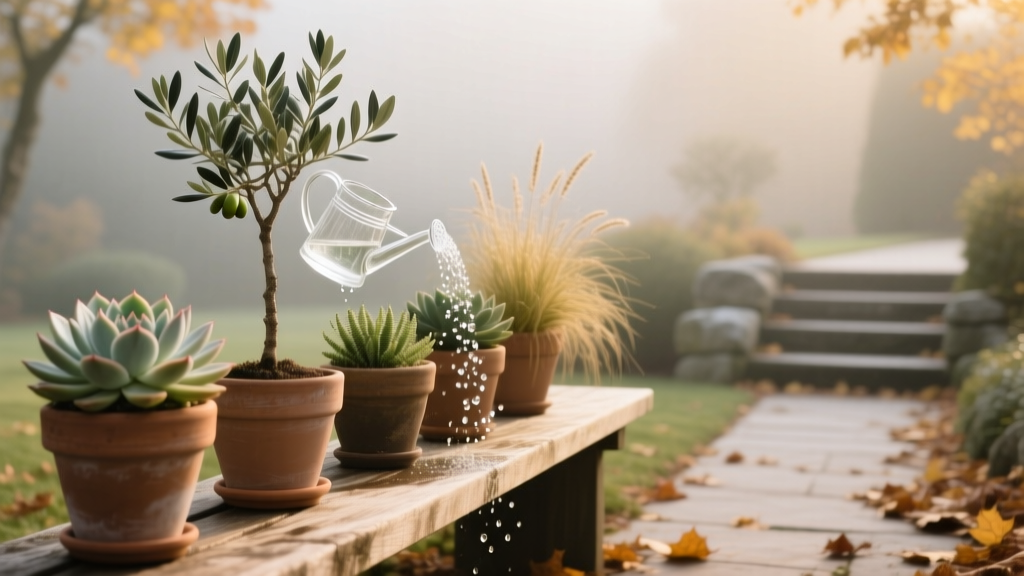
Fall Watering: Preparing Plants for Dormancy
The next 4–8 weeks can make or break next spring. As nights cool and the sun angle drops, plants slow down aboveground—but roots often keep growing until soil temperatures dip into the low 40s°F. If you let gardens go dry now, you’re setting up winter burn, weak root systems, and stressed evergreens. If you water smartly, you’ll head into freeze-up with hydrated tissues, insulated roots, and fewer pest problems waiting to flare in spring.
This is not the season for “a little sprinkle when you remember.” Fall watering is a targeted job: build deep soil moisture, time irrigation around frost, and avoid soggy conditions that invite rot. Use the priorities below to decide what to do first, and when.
Priority #1: Water for winter survival (start this week)
Know the fall watering targets (and the numbers to watch)
Use these thresholds to guide your timing and intensity:
- First frost date: plan your “last deep soak” 7–14 days before your typical first hard freeze.
- Hard freeze: when nighttime lows reach 28°F (-2°C) or colder, irrigation windows shrink—water only when daytime temps rise above freezing and hoses won’t ice.
- Soil temperature: roots slow dramatically as soil drops below about 45°F (7°C); keep soil evenly moist above that point, then taper.
- Weekly needs: most established landscapes do best with about 1 inch of water per week (rain + irrigation) during active growth; in fall, aim for 0.5–1 inch depending on rain and temps.
- Watering window: irrigate in the morning when air temps are 40–70°F to reduce leaf wetness duration and disease pressure.
Extension guidance consistently emphasizes fall moisture for woody plants—especially evergreens—because they keep losing water through needles/leaves on sunny, windy winter days. North Dakota State University Extension notes that evergreens are prone to winter burn when they enter winter under-watered (NDSU Extension, 2019). Likewise, the University of Minnesota Extension highlights that adequate soil moisture going into winter reduces desiccation injury (University of Minnesota Extension, 2020).
Deep watering: how to do it correctly (no guessing)
Deep watering means wetting the root zone, not the mulch surface. Use one of these methods:
- Soaker hose: run it long enough to moisten soil 6–8 inches deep for perennials, 8–12 inches for shrubs, and 12–18 inches for trees (in sandy soils, you may need longer but less frequently).
- Drip irrigation: check emitters for clogs now; fall is when uneven distribution shows up as dry pockets.
- Hose-end sprinkler: place a rain gauge or straight-sided can nearby; run until you collect 0.5 inch, then move. Repeat 2–3 times across the root zone.
Quick check: 12–24 hours after watering, use a trowel to see if moisture reached depth. Soil should be damp like a wrung-out sponge—not muddy.
What needs water most in fall (triage list)
If you only have time to water a few things, prioritize in this order:
- New plantings (trees/shrubs/perennials planted this year): most vulnerable to freeze-thaw heaving and winter desiccation.
- Evergreens (arborvitae, boxwood, holly, rhododendron, conifers): keep watering until the ground freezes.
- Broadleaf shrubs prone to winter dieback (hydrangea macrophylla, roses, lavender): consistent moisture supports healthier canes/crowns.
- Strawberries and fall-seeded lawns: shallow roots dry quickly in autumn winds.
- Containers: potting mix sheds water when dry; roots are more exposed to freezing.
“Evergreens can lose water from their needles all winter, especially on sunny and windy days. Entering winter with moist soil helps reduce winter burn.” — NDSU Extension (2019)
Regional reality checks: adjust watering to your fall pattern
Scenario 1: Northern Plains / Upper Midwest (USDA Zones 3–4, early hard freezes)
In many Zone 3–4 areas, first frost can hit by mid-September to early October, and soil can freeze solid by late October or November. Your window is short: water deeply after leaf drop but before consistent nights below 28°F. Aim for 1–2 deep soakings for trees and shrubs during that window, especially if September rainfall is under 1 inch.
Scenario 2: Intermountain West (USDA Zones 4–7, dry air, big temperature swings)
Low humidity and wind create winter desiccation even when snow is present. Continue watering evergreens and newly planted trees until the ground freezes, often late November in milder valleys. Water on warm spells when daytime highs reach 45–55°F and soil is not frozen.
Scenario 3: Pacific Northwest / Coastal (USDA Zones 7–9, wet fall)
Your risk often flips: excess water and root disease. If rainfall is steady (for example, 1–2 inches per week), turn off irrigation and focus on drainage—clear downspouts, keep mulch off trunks, and avoid watering on top of saturated soils. Evergreens still benefit from moisture, but in wet climates “more” is not better; oxygen at the roots matters.
Fall watering checklist (this weekend)
- Check soil moisture at 6 inches deep in 5–10 spots.
- Prioritize new plantings and evergreens for a deep soak.
- Inspect hoses, timers, and drip lines; fix leaks before the last watering push.
- Stop overhead watering late in the day (reduce foliar disease risk).
- Mark the date of your typical first hard freeze and schedule your last deep watering 7–14 days before it.
Priority #2: Plant what still benefits from fall moisture
What to plant now (and how watering changes)
Fall is prime time for root establishment—if you keep moisture steady.
- Spring-blooming bulbs: plant when soil cools to about 50–60°F (often 2–6 weeks before the ground freezes). Water thoroughly after planting to settle soil and trigger rooting, then keep slightly moist if rainfall is light.
- Cool-season lawn seed: in many regions, seed 4–6 weeks before your average first hard frost. Keep the top 1 inch of soil consistently moist until germination, then shift to deeper, less frequent watering.
- Trees and shrubs (Zones 3–8): plant early enough to get 6 weeks of root growth before the ground freezes. Water deeply at planting, then weekly if rain is under 1 inch.
- Garlic: plant cloves 2–4 weeks before the ground freezes. Water after planting, then let rainfall handle it unless conditions are unusually dry.
For woody plants, the goal is not pushing lush top growth; it’s steady root moisture. Avoid high-nitrogen fertilizer now—tender new growth is more likely to be damaged by early freezes.
Simple planting timeline by month
| Month | Planting opportunities | Watering focus | Red flags |
|---|---|---|---|
| September | Cool-season lawn seed; early bulbs; trees/shrubs in many Zones 3–7 | Deep weekly watering if rain < 1 inch; keep seedbed moist | Hot spells drying new roots; grub damage in lawns |
| October | Peak bulb planting; garlic; late tree/shrub planting in mild climates | One deep soak after planting; maintain even moisture until freezes | Overwatering in cool soils; leaf spot/fungal issues with overhead irrigation |
| November | Last bulbs in warm Zones 7–9; container rearranging for shelter | Water evergreens on warm days until ground freezes | Frozen hoses; saturated soils causing root rot |
Priority #3: Prune with restraint (and only when it helps)
What to prune now (and what to leave alone)
Fall pruning is often overdone. Pruning stimulates growth and can reduce winter hardiness if timed poorly. Use these rules:
- Do prune now: dead, diseased, or broken branches any time you see them; remove storm damage; cut out cankered stems well below symptoms.
- Wait to prune: spring-flowering shrubs (lilac, forsythia, azalea) until after bloom; fall pruning removes next year’s flower buds.
- Roses: in cold Zones 3–5, lightly shorten very tall canes after a few frosts to prevent wind rock, but save major pruning for spring.
- Hydrangeas: identify type before cutting; bigleaf hydrangeas (H. macrophylla) bloom on old wood—avoid fall pruning.
If you prune, water afterward if conditions are dry. Plants recover better from any stress when their root zone moisture is steady (not saturated).
Pruning checklist
- Sanitize pruners between diseased plants (70% alcohol works).
- Remove branches rubbing or likely to snap under snow loads.
- Don’t “shear everything into shape”—it increases winter injury on broadleaf evergreens.
Priority #4: Protect roots, crowns, and evergreens (before the first hard freeze)
Mulch: use it to hold moisture, not smother stems
Mulch is your fall moisture manager. Apply after a few light frosts or when the soil begins cooling steadily—too early can keep soil warm and delay dormancy. Aim for:
- 2–4 inches of shredded bark or leaf mulch around perennials and shrubs.
- Keep mulch 2–3 inches away from trunks and crowns to prevent rot and rodent damage.
In windy, open sites, mulch also reduces freeze-thaw cycles that heave shallow-rooted plants out of the ground.
Evergreen winter burn prevention (Zones 3–7 especially)
Evergreens are the classic fall-watering “regret” plant. They transpire whenever needles warm in the sun, even if roots can’t pull water from frozen soil. What works:
- Water deeply through fall until the ground freezes (watch for 28°F nights).
- Add a windbreak (burlap screen on stakes) on the windward side for exposed sites.
- Avoid late-season heavy pruning; it increases exposure.
Containers and raised beds: manage the fast-freeze zones
Potting mix and raised beds freeze faster than in-ground soil. That means roots can dehydrate even when you think “it’s cold, so it must be fine.”
- Water containers until freeze-up, then check moisture during warm spells.
- Group pots together and move them to a sheltered north/east exposure.
- For borderline-hardy shrubs in containers, insulate pots or heel them into the ground.
Priority #5: Prepare systems and soil for dormancy (so you don’t scramble later)
Shut down irrigation at the right time
Don’t shut off irrigation just because leaves fall. Instead, stop when you’re consistently seeing frozen mornings and soil is no longer accepting water. A practical guideline:
- Keep watering woody plants until soil is near-freezing and daytime highs are mostly under 45°F.
- Blow out irrigation lines before a forecast of 25°F nights, especially if you can’t drain low spots.
In climates with late fall droughts, you may be watering into November. In wet climates, you may shut down in October and focus on drainage.
Leaf management for pest and disease prevention
Fallen leaves are either a resource or a disease reservoir. Your job is to sort them.
- Remove leaves with known disease problems (apple scab, rose black spot, powdery mildew on heavily infected plants). Many fungal diseases overwinter in leaf litter. Bag or hot-compost them.
- Use healthy leaves as mulch: shred with a mower and apply in thin layers, or add to compost.
- Keep leaves off crowns of perennials to prevent rot and slug habitat.
University extension programs commonly recommend sanitation—removing infected debris—to reduce next year’s disease pressure (for example, rose black spot and fruit tree scab management guidance across multiple extension publications). The practical takeaway: if it was diseased this year, don’t mulch it right back onto the same plant.
Soil prep that improves fall watering results
Water penetrates better and roots grow better in soil that isn’t compacted.
- Aerate compacted lawns in early fall; then water deeply to encourage root growth before winter.
- Top-dress thin beds with compost (0.5–1 inch). It improves moisture retention in sandy soil and improves drainage in heavy clay over time.
- Check mulch depth and refresh where bare soil is exposed to drying winds.
Timing guide: a 6-week fall watering timeline
Use this as a working schedule and adjust to your frost date and USDA zone.
Weeks 1–2 (now): stabilize moisture
- Deep water new plantings and evergreens.
- Measure rainfall—don’t guess. If you’re below 1 inch for the week, supplement.
- Inspect drip emitters and fix dry zones.
Weeks 3–4: pre-freeze deep soak and mulch timing
- Apply mulch once nights regularly dip into the 30s°F.
- Plan your “last deep soak” for woody plants 7–14 days before expected hard freeze.
- Remove diseased leaf litter; shred and reuse clean leaves.
Weeks 5–6: freeze-up readiness
- Water only on warmer days if soil is still accepting moisture (daytime above 40°F).
- Drain hoses; winterize irrigation before 25°F nights.
- Install burlap screens for exposed evergreens if you’ve had winter burn before.
What to watch for: fall pests and diseases tied to watering
Root rots and crown rots (too wet, too long)
Cool soils hold water longer. Overwatering in fall is a real problem in clay soils and shaded beds.
- Avoid frequent light watering; it keeps the surface wet and oxygen-poor.
- Water early in the day, and only when the top few inches are drying.
- Keep mulch off crowns (especially lavender, sedum crowns, and many alpine plants).
Powdery mildew and leaf spots (leaf wetness + poor airflow)
Overhead watering late in the day is a common driver. Switch to drip/soaker hoses, and remove heavily infected foliage. If you grow roses, peonies, or phlox, sanitation now reduces overwintering inoculum.
Rodents (mulch and cozy cover)
As temperatures drop, voles and mice look for shelter. Thick mulch piled against trunks is an invitation.
- Maintain a mulch-free ring around tree trunks.
- Use hardware cloth guards on young trees before snow.
- Keep ornamental grasses cut back or tied up where vole pressure is high.
Three common “right now” fall watering dilemmas (and what to do)
Dilemma: “It’s cool out—do I still need to water?”
Yes, if soil is drying and the ground isn’t frozen. Cool air reduces evaporation, but wind and low humidity can still pull moisture fast—especially from evergreens and newly planted shrubs. Check soil at 6 inches deep; water when it’s dry at that depth.
Dilemma: “We’ve had rain. How do I avoid overwatering?”
Measure rainfall and check soil. If you’re getting consistent weekly rain near 1 inch, turn irrigation off. In heavy soils, wait for the top few inches to dry before any supplemental watering. If puddles linger longer than 24 hours, focus on drainage, not irrigation.
Dilemma: “A freeze is coming tonight—can I water today?”
If the daytime temperature is above 40°F and soil is not frozen, water in the morning so the surface can dry before evening. Avoid watering late afternoon before a hard freeze (28°F or lower) to reduce icing on walkways and reduce stress from saturated, rapidly freezing soil near crowns.
Extension-backed notes to keep you on track
Two points that experienced gardeners lean on every fall:
- Evergreens need fall moisture. NDSU Extension (2019) emphasizes watering evergreens into fall to reduce winter burn risk.
- Moist (not soggy) soil going into winter helps prevent desiccation injury. University of Minnesota Extension (2020) notes adequate fall watering is a key factor in limiting winter injury for trees and shrubs.
Put simply: dry going into winter is a preventable stress. Your best tool is a consistent, deep watering routine calibrated to your soil and your forecast.
Grab-this-and-go: fall watering master checklist
- This week: deep water evergreens and new plantings; verify moisture at 6–8 inches.
- Within 2 weeks: plant bulbs/garlic as soil cools toward 50–60°F; water in thoroughly.
- Before first hard freeze (28°F): schedule last deep soak 7–14 days ahead of time.
- After light frosts: mulch 2–4 inches (keep off trunks/crowns).
- Before 25°F nights: winterize irrigation; drain hoses; protect exposed spigots.
- Ongoing: remove diseased leaves; avoid overhead watering late day; watch for soggy soil in shade.
Finish fall with a garden that’s evenly moist, mulched, and cleaned up—not saturated and not bone dry. When winter wind arrives and the ground locks up, you want roots insulated, evergreens hydrated, and irrigation safely put away. That’s the quiet work that shows up later as fewer losses, less dieback, and a stronger spring flush.