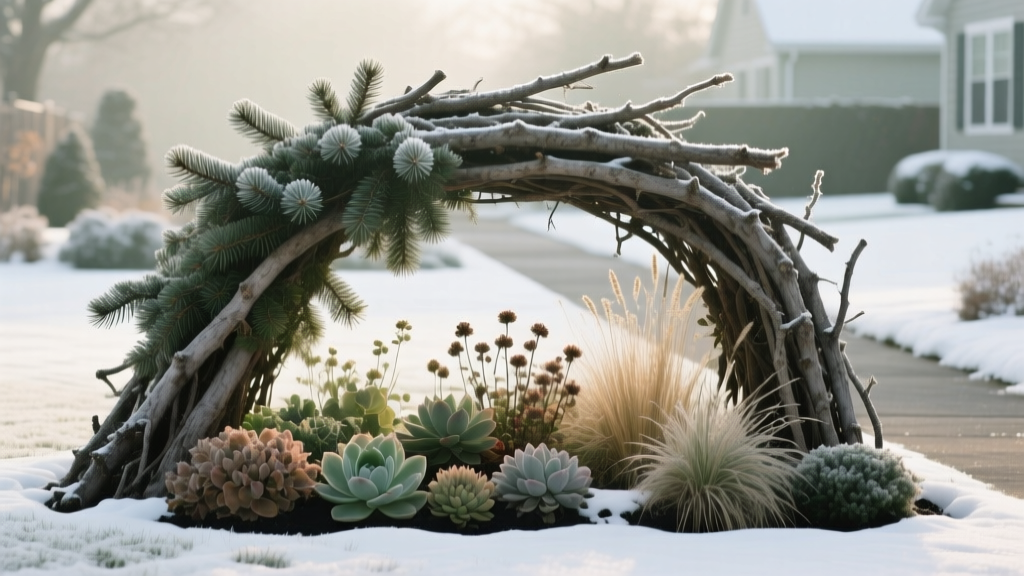
Winter Flower Bed Protection with Boughs
The first hard freezes don’t kill most perennials outright—they kill them slowly by heaving crowns out of the soil, drying them with wind, and snapping stems under ice. If your forecast is calling for nights at 28°F (-2°C) or colder within the next 7–14 days, this is the window to protect flower beds with evergreen boughs. Done at the right moment (after the ground begins to firm up), boughs act like a breathable blanket: they buffer temperature swings, reduce winter sunscald, and keep mulch in place during wind events.
This guide is organized by priority, starting with what needs doing immediately. It’s written for gardeners who want clear actions, timing, and thresholds—plus regional adjustments, pest prevention, and a tight checklist you can work through this week.
Priority 1: What to Protect Right Now (Before the Deep Freeze)
Use boughs when the soil is cold—after dormancy, before deep snow/ice
Timing matters more than technique. Put boughs on too early and you can trap warmth that encourages rot, slugs, or late-season growth. Put them on too late and you’ve missed the first rounds of freeze-thaw heaving.
- Target window: after 2–3 nights at or below 25–28°F (-4 to -2°C) and after the top 1–2 inches of soil begins to firm.
- Typical calendar ranges (adjust to your frost date):
- USDA Zone 3–4: often Oct 15–Nov 10
- USDA Zone 5–6: often Nov 1–Dec 5
- USDA Zone 7: often Dec 1–Jan 5
- Remove/loosen in spring: when nights stay mostly above 25–30°F (-4 to -1°C) and you see consistent thawing—often 2–4 weeks before your last frost date.
Freeze-thaw heaving is the big threat for shallow-rooted perennials and anything newly planted. Many extension services emphasize that winter injury often comes from temperature fluctuation and desiccation, not just absolute cold. The University of Minnesota Extension notes that fluctuating winter temperatures contribute to perennial damage and recommends protective mulches applied after the ground freezes to reduce heaving (University of Minnesota Extension, 2020).
“Apply winter mulch after the ground freezes to prevent heaving and to keep plants dormant longer in spring.” — University of Minnesota Extension (2020)
Best candidates for bough protection (and what it prevents)
Focus your boughs where they prevent the most common winter losses:
- Newly planted perennials (planted within the last 8–10 weeks): reduces heaving and root exposure.
- Shallow crowns: coral bells (Heuchera), chrysanthemums, Shasta daisy, some campanulas.
- Marginally hardy plants in your zone: e.g., Zone 6 plants grown in Zone 5 microclimates.
- Evergreen/semievergreen perennials: hellebores, some dianthus—prevents winter burn and wind desiccation.
- Roses: boughs help hold mounded soil/mulch in place and reduce cane drying.
- Bulb beds in exposed sites: boughs reduce soil temperature swings and deter squirrels when combined with hardware cloth.
How to apply boughs (fast method that actually stays put)
Use boughs as a windbreak lattice, not a dense mat. You want air movement, but less wind at the crown level.
- Prep the bed: remove diseased foliage (see pest/disease section), then water if soil is dry and temps are above freezing. Aim for deep moisture going into dormancy.
- Mulch first (optional but effective): apply 2–3 inches of shredded leaves or clean straw after the soil is cold. Avoid packing mulch against crowns.
- Lay boughs like shingles: place butt ends toward prevailing wind, tips overlapping. For windy sites, crisscross two layers.
- Anchor: use U-shaped landscape staples, small branches pushed into soil, or a light layer of coarse mulch over stems. In snowbelt areas, anchoring matters less; in wind-prone plains, it’s essential.
- Depth guideline: bough layer should be airy—generally 4–8 inches thick when fluffed.
Where to source boughs: use disease-free prunings from spruce, pine, fir, or cedar. Holiday greenery is fine if it wasn’t treated with anti-desiccant sprays or glitter. Avoid boughs with visible cankers, pitch flow, or heavy needle drop.
Comparison: boughs vs. straw vs. leaf mulch
| Material | Best for | Strengths | Watch-outs |
|---|---|---|---|
| Evergreen boughs | Windy beds, crowns prone to heaving, roses, hellebores | Buffers wind, holds other mulch, breathes, discourages critters from digging | Can shade spring growth if left on too long |
| Clean straw | Large beds, vegetable/perennial edges | Good insulation, lightweight, easy to spread | Can harbor rodents; may blow without netting or bough cover |
| Shredded leaves | Perennial borders, woodland beds | Excellent insulation and soil building | Whole leaves mat and shed water; shred to prevent smothering |
| Pine needles | Acid-tolerant beds, slopes | Resists compaction, stays put well | Harder to source in volume; can tangle into crowns if packed |
Priority 2: What to Prune (and What Not to Touch Yet)
Leave most perennials standing; remove disease sources
Winter protection works best when you’re not creating fresh wounds or inviting rot. A common mistake is cutting everything down “to tidy,” then burying the crowns under mulch and boughs. Instead:
- Do not hard-prune woody ornamentals after they’ve gone dormant if it’s likely to trigger dieback (especially in Zones 3–6). Save structural pruning for late winter/early spring in many cases.
- Do remove only foliage that is diseased, pest-infested, or likely to turn to slime under cover.
- Do cut back perennials that collapse into crowns and hold moisture (e.g., peonies with botrytis history), but leave 2–4 inches of stem as a “marker” for spring.
Penn State Extension emphasizes sanitation—removing diseased plant debris to reduce overwintering inoculum and pest carryover (Penn State Extension, 2019). That’s especially relevant when you’re about to cover beds for months.
Quick pruning rules by plant group
Hydrangeas: Bigleaf (macrophylla) and oakleaf set many buds on old wood—avoid pruning now in Zones 5–7; use bough wind protection instead. Panicle and smooth types can wait until late winter.
Roses: In Zones 4–6, don’t do heavy pruning in fall. Shorten only very tall canes that whip in wind. After a few freezes (below 28°F), mound soil or compost 8–12 inches over the crown, then apply boughs to hold the mound and reduce drying winds.
Lavender, rosemary, marginal herbs: Avoid fall pruning; it can encourage tender growth. Use boughs as a windbreak on the north and west sides, and keep crowns dry with well-drained mulch.
Priority 3: What to Plant (Only If You’re Still in the Window)
Bulbs: finish planting before the ground is workable-hard
If your soil is still diggable, you still have time in many regions—especially Zones 6–8. Most spring bulbs establish roots when soil temperatures are cool but not frozen. Practical thresholds:
- Plant bulbs while soil temps are roughly 40–50°F (4–10°C) and before the ground freezes solid.
- If your first hard freeze (28°F) has passed but the soil isn’t frozen, you can still plant—just work fast and water in.
- After planting, apply a light mulch, then add boughs once the ground firms up to reduce heaving.
Bulb bed tip: In squirrel-heavy neighborhoods, lay hardware cloth over the bed surface after planting, then cover with mulch and boughs. Remove the cloth in early spring when shoots are a few inches tall.
Perennials: only container plants with strong root balls (late fall exception)
Late planting is risky in Zones 3–6 unless you can water and protect thoroughly. If you must plant:
- Plant only healthy container perennials with dense roots (not rootbound, not loose).
- Water deeply at planting and again before soil freezes if rainfall is low.
- Apply mulch and boughs after the first few freezes to prevent heaving.
Cool-season annuals in mild winters (Zone 8–10 scenario)
In Zones 8–10 or coastal Zone 7, bough protection is less about deep cold and more about radiational frost and wind. You may still be planting:
- Violas, calendula, snapdragons, dusty miller, and sweet alyssum in fall/winter windows.
- Use boughs as temporary frost cover when forecasts dip to 32°F (0°C) or slightly below—remove during daytime to prevent excess humidity.
Priority 4: What to Prepare (So Winter Protection Actually Works)
Weekly timeline: the 4-step sequence that prevents rot and heaving
Use this as a practical cadence. Adjust dates based on your average first frost and your current forecast.
| When | Trigger | What to do in the flower bed |
|---|---|---|
| Week 0 (now) | Forecast shows lows near 32°F within 7 days | Sanitation: remove diseased foliage; stake floppy plants; check drainage and redirect downspouts away from beds. |
| Week 1 | 2–3 nights below 28°F | Stop fertilizing; water deeply if soil is dry; finish bulb planting if soil is workable. |
| Week 2 | Soil surface begins to firm; daytime highs often below 45°F | Apply 2–3 inches of mulch (shredded leaves/straw) away from crowns. |
| Week 3 | Repeated lows 25–28°F; freeze-thaw begins | Lay evergreen boughs in overlapping layers; anchor in windy sites; protect exposed crowns and rose mounds. |
Checklist: walk the beds once and you’ll catch 80% of winter problems
- Pick up and trash (don’t compost) any leaves with obvious fungal spotting from roses, peonies, or phlox.
- Cut and remove stems with borer holes or sawdust-like frass (common on some perennials and shrubs).
- Mark tender crowns and slow starters (butterfly weed, hardy hibiscus, ornamental grasses you don’t want to slice in spring).
- Check edging and soil level: fill low spots so meltwater doesn’t pool and refreeze around crowns.
- Set mouse/vole guards where needed (see below), before you bury access points under boughs.
Pest and Disease Prevention That Matters in Winter-Covered Beds
Voles and mice: boughs can shelter them—use smart barriers
Evergreen cover can create cozy runways. If you’ve had vole damage before (girdled perennials, chewed crowns, missing tulips), take prevention seriously:
- Keep mulch back 2–3 inches from the base of woody crowns and small shrubs.
- Use 1/4-inch hardware cloth cylinders around vulnerable plants (young shrubs, roses). Sink 1–2 inches into soil.
- Avoid thick, matted leaf layers under boughs in vole-prone areas; use a lighter mulch plus bough lattice.
- Reduce nearby tall grass and dense weeds before snow cover sets in.
Botrytis, powdery mildew, and leaf spot: sanitation beats spraying
Once beds are covered, airflow is reduced. The best winter strategy is removing infected debris now.
- Peonies with botrytis history: cut stems down and remove all leaf litter; don’t bury infected material under boughs.
- Phlox and bee balm: remove heavily mildewed stems and leaves; leave clean stems if you want winter structure.
- Roses with black spot: collect fallen leaves. Black spot can overwinter on debris, so cleanup reduces spring pressure (Penn State Extension, 2019).
Slugs: avoid early covering in wet climates
In maritime or rainy fall climates (Pacific Northwest, coastal Northeast), covering warm, wet soil too early can shelter slugs and sowbugs. Wait until the soil cools and surface activity drops—typically after repeated lows below 28–30°F or sustained daytime highs under 50°F.
Regional Scenarios: Adjust the Bough Strategy to Your Winter
Scenario 1: Snowbelt gardens (Great Lakes, northern New England, higher elevations)
If you reliably get insulating snow cover, boughs are about managing shoulder seasons—that early winter before snow accumulates and the late winter thaw cycles.
- Apply boughs earlier in the protection window (often by Nov 1–15 in Zones 4–5), because bare soil plus wind is when heaving starts.
- Use boughs to trap the first snow and hold it in place over crowns.
- In late winter (often Feb–Mar), keep boughs on longer to shade crowns and slow premature thawing during warm spells.
Scenario 2: Windy, low-snow winters (Plains, interior West, exposed suburban sites)
Where snow cover is inconsistent, winter injury often shows up as dried-out crowns and cracked stems rather than outright freezing.
- Prioritize boughs as windbreaks on the west/north sides of beds.
- Anchor aggressively: staples, small logs, or interwoven branches to prevent blow-off during 30–50 mph gust events.
- Water deeply before the ground freezes if you’ve been dry for 2+ weeks. Desiccation is a major killer in open winters.
Scenario 3: Freeze-thaw and midwinter warmups (Mid-Atlantic, lower Midwest, Zone 6–7 transition areas)
These regions can swing from 60°F daytime highs to hard freezes within days. Boughs help keep plants dormant and reduce heaving.
- Apply boughs after the first real cold snap (several nights under 28°F), not after the first light frost.
- Use boughs over shredded leaves to keep the mulch from matting and to shed ice.
- In late winter, vent early: lift boughs slightly during warm stretches to reduce crown rot, then reset before the next freeze.
Scenario 4: Mild-winter gardens (Zones 8–10, coastal influence)
In mild zones, boughs are less of a “season-long blanket” and more of a temporary frost tool.
- Keep bough bundles ready for radiational frost nights near 32°F.
- Cover tender perennials (salvias, young citrus in ornamental beds, subtropical accents) overnight, then remove in the morning to prevent fungal issues.
- Focus on drainage and crown dryness; winter rot is often a bigger problem than cold.
Step-by-Step: Protecting a Mixed Flower Bed with Boughs
Use this workflow for a typical mixed border with coneflowers, daylilies, heuchera, roses, spring bulbs, and a few borderline perennials.
1) Two weeks before consistent freezes
Walk the bed with pruners and a bucket. Remove black-spotted rose leaves, peony debris with botrytis history, and any mushy stems. Top up soil where crowns are exposed—heuchera especially tends to “rise.” Water if rainfall is low and soil isn’t frozen.
2) After the first hard freeze (around 28°F)
Stop deadheading and fertilizing. You’re done pushing growth. If you have tall roses or perennials that whip in wind, shorten only what’s necessary to prevent breakage.
3) After the ground begins to firm
Apply mulch: 2–3 inches of shredded leaves or clean straw, keeping it off the crown center. In beds with vole history, keep the mulch lighter and rely more on bough lattice for protection.
4) Install boughs
Lay boughs shingle-style with tips overlapping. Cover the most exposed crowns first: edges of beds, slope crests, and anything newly planted this fall. Use extra boughs around rose mounds to reduce wind scouring.
5) Midwinter check (one warm day per month)
On a mild day above 35–40°F, check that boughs haven’t shifted and that crowns aren’t sitting in ice. If an ice dam forms, gently break and remove the slab so it doesn’t suffocate plants for weeks.
Spring Removal: Don’t Rip It Off in One Day
The most common spring mistake is stripping boughs during the first sunny week, then watching plants get burned by wind or nailed by a cold snap. Instead, treat boughs like adjustable shade cloth.
- Start venting when daytime highs are regularly above 40–45°F and snow cover is receding.
- Pull back gradually over 7–14 days: lift boughs on the south side first, leave north-side protection longer.
- Fully remove when the soil is thawing consistently and you see new basal growth on perennials—but keep a few boughs nearby if late frosts are common.
If you’re tracking frost dates, many gardeners begin staged removal about 3–4 weeks before the average last frost and finish about 1–2 weeks before that date—adjusting based on actual forecasts.
Quick Reference: This Week’s “Do It Now” Checklist
- Check the 10-day forecast: flag any nights at or below 28°F.
- Sanitize: remove diseased leaves and stems; trash heavily infected debris.
- Water if dry (especially in windy, low-snow climates) before the ground freezes.
- Apply mulch only after soil cools; keep mulch off crowns.
- Install boughs after 2–3 freezes and firming soil; anchor in windy sites.
- Add vole guards where pressure is known.
Evergreen boughs are one of the rare winter tools that are both forgiving and high-impact: they protect without smothering, and they’re easy to adjust as weather changes. If you time them to cold soil (not warm fall ground) and pair them with sanitation, you’ll come out of winter with tighter crowns, fewer losses from heaving, and far less cleanup in spring.
Sources: University of Minnesota Extension (2020), guidance on winter mulching timing to reduce heaving and winter injury; Penn State Extension (2019), sanitation practices to reduce overwintering diseases and pest issues in ornamental plantings.