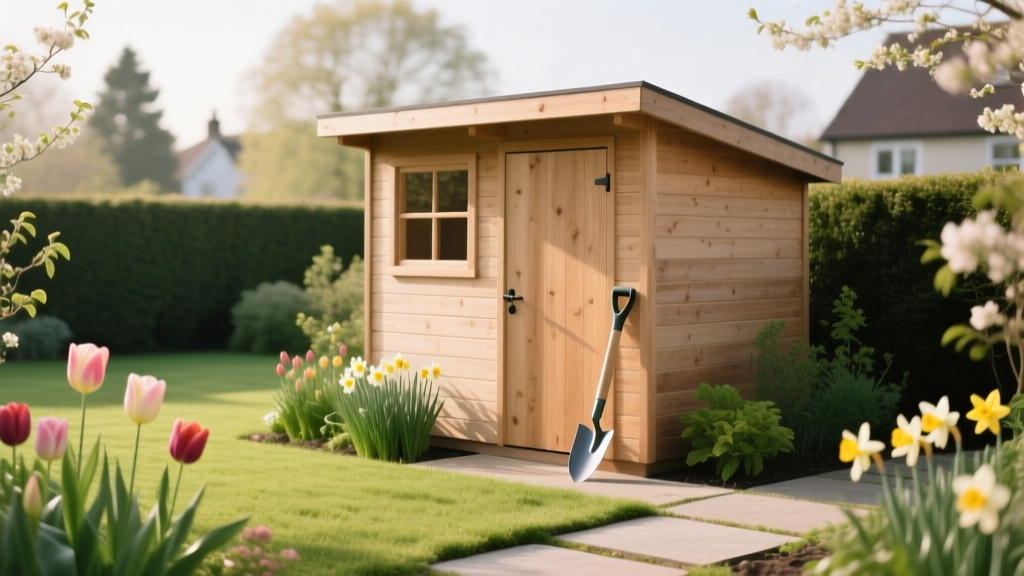
Spring Garden: Building a Simple Garden Shed
Spring is when your garden shifts from planning to doing—fast. Beds need compost, seedlings need hardening off, tools need to be reachable, and every hour you spend hunting for twine or a trowel is an hour you’re not planting before the next cold front. A simple shed built now (before the soil turns into a muddy job site and before summer heat hits) will pay you back all season: cleaner workflow, safer tool storage, and fewer pest and disease problems from clutter piled along fences and house walls.
Use this spring window to pair “garden must-dos” with a practical shed build. Think of it like a seasonal almanac: what to plant, what to prune, what to protect, what to prepare—then build a small shed that supports all of it.
Priority 1: What to prepare (so you can plant on time)
Pick the shed site with spring drainage in mind
In most regions, the best shed site is the one that stays firm in March/April rain and doesn’t funnel roof runoff into your beds. Walk your yard after a 1-inch rain and flag puddling zones. Put the shed on high ground or create it with a compacted gravel pad.
- Distance: Keep the shed 3–5 ft from fences for airflow and maintenance access (check local codes; many require setbacks).
- Orientation: Place doors facing the path you use most. In windy areas, avoid a door facing prevailing winds.
- Drainage: Aim for at least a 2% slope (about 1/4 inch per foot) away from the shed to prevent water pooling.
Timing cue: As soon as daytime highs hold above 50°F for a week and your soil is no longer saturated, you can excavate and level without destroying soil structure in nearby beds.
Build a simple foundation you can finish in a weekend
For gardeners, the sweet spot is a gravel pad with deck blocks or skids—fast, forgiving, and easy to keep dry.
- Gravel pad: Excavate 4–6 inches, lay landscape fabric, then add compacted crushed stone (3/4" minus is ideal).
- Skids: Two pressure-treated 4x4 skids let you keep the floor framing off the ground and simplify leveling.
- Floor height: Keep the shed floor at least 6 inches above surrounding soil to reduce splashback and rot risk.
“Most wood decay problems begin when wood stays wet for long periods; keeping wood dry is the single most important step in preventing decay.” — USDA Forest Products Laboratory, Wood Handbook (2010)
Right-size the shed for spring workflow (not for “stuff”)
A shed that’s too small becomes a pile. A shed that’s too big becomes a storage magnet. For most home gardens, a 6x8 ft or 8x10 ft shed is the practical zone: enough room for long-handled tools, a small potting bench, and a mower, while still easy to build.
- Door width: If you store a wheelbarrow, aim for a 36-inch door.
- Roof overhang: A 6–12 inch overhang reduces splash and keeps the doorway drier.
- Ventilation: Include vents high on opposite walls to reduce humidity and rust.
Spring checklist: shed planning (do this before you buy lumber)
- Confirm local setback rules and permit requirements (often triggered around 120 sq ft, but varies).
- Call utility locating service before digging.
- Sketch interior zones: “dirty” (shovels, rakes), “clean” (seed starting supplies), “chemicals” (locked), “irrigation parts.”
- Plan a mud-control entry: gravel at the threshold, boot tray, and a broom hook.
Priority 2: What to plant (and how the shed helps you do it right now)
Planting window targets: use your frost date and soil temperature
Spring planting is less about the calendar and more about thresholds. Use your average last frost date and soil temps to decide what goes in now versus later.
- Peas, spinach, radish: sow when soil is around 40–45°F.
- Potatoes: plant when soil hits about 45°F and is workable.
- Lettuce, kale, onions: transplant/sow as soon as nights are reliably above 28–30°F with protection available.
- Tomatoes, basil, peppers: wait until after last frost and when nights stay above 50°F for best growth (especially peppers).
Shed tie-in: A small potting bench and organized seed storage prevents the common spring failure: losing labels, mixing varieties, and leaving seedlings outside unprotected. Keep seed packets in a sealed bin with desiccant, and store row cover, hoops, and clamps together so cold snaps don’t catch you unprepared.
Monthly planting + shed tasks schedule (adjust to your zone)
| Month | USDA Zones 3–5 (colder) | USDA Zones 6–7 (mid) | USDA Zones 8–10 (warmer) |
|---|---|---|---|
| March | Start onions/greens indoors; prep shed site once thawed | Direct sow peas/spinach; build gravel pad and skids | Plant warm-season annuals; focus on ventilation, shade options for shed |
| April | Direct sow peas/radish; frame shed floor/walls on dry weekends | Plant potatoes; install shed roof before heavy spring rains | Transition to pest-proof storage; avoid storing fertilizer in heat |
| May | Transplant brassicas; set up row cover station in shed | After last frost (often mid-month), plant tomatoes/beans | Mulch heavily; store irrigation fittings and spare emitters neatly |
Regional scenario #1: Short spring, late frosts (Upper Midwest, Interior Northeast; Zones 3–5)
In cold zones, you often get a teasing warm spell followed by a hard freeze. If your average last frost is around May 15–June 5, treat April as infrastructure month: build the shed, tune irrigation, and get cold crops going under cover.
- Keep frost cloth accessible; protect seedlings when forecasts dip below 32°F.
- Store hoops, clamps, and a thermometer in a labeled tote by the shed door.
- Stage seed-starting hardening trays on the shed’s sunny side during days above 55°F, pull back inside at night.
Regional scenario #2: Temperamental spring storms (Mid-Atlantic, Ohio Valley; Zones 6–7)
These regions often swing between warm humidity and cold rain. Prioritize a roofed, dry storage spot for seed-starting supplies and bagged amendments. Build the roof early in the project so spring downpours don’t soak framing and subfloor.
- Once soil temps reach 50°F, you can push more sowings, but keep row cover ready for cold rain and wind.
- Install gutters on the shed right away to move roof runoff away from beds and pathways.
Regional scenario #3: Early heat and high pest pressure (South, Gulf Coast, Southwest; Zones 8–10)
In warm zones, spring is your main growing season before intense heat. Your shed should emphasize ventilation, shade, and pest-proofing.
- Add screened vents to reduce humidity and mildew on stored tools.
- Store bird seed and pet food elsewhere; rodents will investigate shed corners fast as temperatures rise above 70–80°F.
- Keep irrigation repair parts (washers, emitters, timers) in a sealed organizer—heat makes plastic brittle over time.
Priority 3: What to prune (before growth surges)
Prune with the calendar and bud stage—not just “spring”
Spring pruning is about timing cuts so you don’t remove flower buds or invite disease. As a general rule: prune summer-blooming shrubs before they leaf out heavily; prune spring-bloomers right after flowering.
- Fruit trees (apple/pear): Finish structural pruning in late winter to early spring before bud break, ideally when temps are above 20°F during the day to reduce brittle wood issues.
- Spring-flowering shrubs (lilac, forsythia): prune within 2–3 weeks after bloom to avoid removing next year’s buds.
- Roses: prune after the worst freezes pass; in many Zone 6–7 gardens this aligns with mid-March to mid-April, but follow local phenology (when buds swell).
Shed tie-in: A shed isn’t just storage—it’s a sanitation station. Keep pruners cleaned, sharp, and dry so you’re not spreading canker or blight from plant to plant.
Tool sanitation protocol (fast enough to actually do)
- Hang pruners and loppers on hooks; never leave them wet on the ground.
- Keep a spray bottle of disinfectant labeled for tools.
- Wipe blades between suspect plants; do a full clean at day’s end.
Extension guidance consistently emphasizes sanitation to limit disease spread. For example, Purdue Extension notes that disinfecting pruning tools can help reduce pathogen movement during pruning operations (Purdue Extension, 2019).
Priority 4: What to protect (seedlings, perennials, and your new shed)
Frost and wind protection: stage it like emergency gear
If you can’t grab protection supplies in under 60 seconds, you’ll skip it—and lose plants. Set up a “cold snap kit” inside the shed:
- Row cover/frost cloth (not plastic sheeting directly on plants)
- Hoops or conduit
- Clamps or clothespins
- Stakes and twine
- A min/max thermometer
Temperature trigger: Cover tender seedlings when forecasts call for 34°F or lower; uncovered plants can be damaged even slightly above freezing if wind is strong and tissues are tender.
Spring pest prevention: stop problems before they move in
Spring is when pests expand territory. A tidy shed reduces hiding places and cuts down on disease-friendly clutter.
Rodents
- Store grass seed, bulbs, and bird seed in sealed metal containers.
- Keep the shed perimeter weed-free for 18–24 inches to reduce cover.
- Install a door sweep; mice can enter gaps around 1/4 inch.
Slugs and snails
- Keep boards, pots, and bags off the ground on shelves or pallets.
- Remove damp hiding spots near seedling areas; check under trays each morning.
Fungal diseases (damping-off, mildew, blights)
- Do not store wet pots nested together—dry them first to reduce spore buildup.
- Ventilate the shed; stagnant humidity encourages mold on stored tools and supplies.
For seedlings, damping-off is strongly linked to excess moisture and poor airflow. Managing moisture and sanitation is a standard prevention strategy recommended by extension services (University of Minnesota Extension, 2020).
Protecting lumber and materials during a wet spring build
Spring rains can undo good work. If you’re building over multiple weekends, keep materials dry and elevated.
- Stack lumber on 2x4 runners, not directly on soil.
- Cover with a tarp but leave ends open for airflow (fully wrapped stacks trap moisture).
- Prime/paint exposed trim quickly once installed; wet-dry cycling causes cracks.
Build timeline: a practical 3-week spring plan (adjust for weekends)
Week 1 (2–4 hours weekday evenings + 1 weekend day): Site + base
- Mark footprint and check diagonals for square.
- Excavate 4–6 inches, install fabric, add gravel, compact in layers.
- Set skids or blocks level.
Week 2 (one solid weekend): Floor + walls
- Build floor frame, install decking (treated or exterior-rated).
- Frame and raise walls; brace corners.
- Install sheathing and house wrap if used.
Week 3 (one weekend + a short evening): Roof + door + weatherproofing
- Frame roof, install roofing underlayment and shingles/metal.
- Hang door, install latch/lock.
- Add vents and basic shelving; seal gaps where rodents enter.
Weather rule: Try to schedule roof installation during a 48-hour dry window. If your forecast is unreliable, install at least the underlayment the same day you sheath the roof.
Shed layout that supports spring tasks (planting, pruning, protecting)
Set up four zones inside
Organize the shed the way spring actually works—fast transitions between planting, pruning, and protection.
- Planting zone: sealed seed bin, labels/marker, dibber, soil knife, transplant trays.
- Pruning zone: hooks for pruners/loppers/saw, sharpening stone, disinfectant.
- Protection zone: row cover tote, hoops, clamps, slug/snail supplies, spare netting.
- Prep zone: compost/fertilizer storage (dry, sealed), spreader, measuring scoop, notebook.
Keep chemicals safe and spring-appropriate
If you store herbicides, pesticides, or concentrated fertilizers, use a locked box on a high shelf. Avoid temperature extremes and moisture. Never store chemicals next to seeds or animal feed.
Also remember: spring is when you’re most likely to apply “something” in a hurry. Make it hard to do the wrong thing—label clearly, keep measuring tools separate, and store PPE (gloves, eye protection) right next to the chemical box.
Spring garden task list (printable-style checklist)
This week (as soon as soil is workable)
- Identify shed site after rain; confirm drainage direction.
- Direct sow peas/spinach/radish if soil is 40–45°F.
- Prune fruit trees before bud break (if applicable).
- Assemble cold snap kit; be ready for 34°F nights.
Next 2 weeks
- Build and level gravel base; get floor off ground by 6 inches.
- Plant potatoes around 45°F soil temperature.
- Clean and sharpen pruners; set up sanitation station.
- Weed-trim a 18–24 inch perimeter around shed site to reduce rodent cover.
By your last frost date
- Finish roof and door so spring rains don’t soak stored supplies.
- Organize row cover, hoops, and clamps for rapid deployment.
- Stage hardening-off area near the shed for quick in/out during cold nights.
Common spring mistakes (and the fixes)
Mistake: Building the shed where it’s “convenient” but constantly wet
Fix: Choose drainage over convenience. If you must build in a lower area, commit to a raised gravel pad and consider a shallow swale to redirect runoff.
Mistake: Storing potting mix and amendments directly on the shed floor
Fix: Put them on a pallet or shelf. Bagged materials wick moisture in spring and become heavy, moldy, and pest-attractive.
Mistake: Planting warm-season crops because a week feels like summer
Fix: Use numbers, not feelings. Wait until after the last frost date and aim for nights above 50°F for peppers and basil. Keep covers ready for surprise cold snaps.
Spring rewards speed, but it punishes disorganization. A simple shed—dry, ventilated, and laid out around the way you garden—turns frantic weekends into efficient ones. Get the base in as soon as the ground firms up, get the roof on before the next storm cycle, and set up interior zones so planting, pruning, and protection tools are always one step away. By the time your tomatoes are ready to go out after frost risk passes, you’ll be planting on schedule instead of searching for supplies.
Sources: USDA Forest Products Laboratory, Wood Handbook: Wood as an Engineering Material (2010); Purdue Extension (2019) guidance on disinfecting pruning tools to limit disease spread; University of Minnesota Extension (2020) recommendations on damping-off prevention through sanitation, airflow, and moisture management.