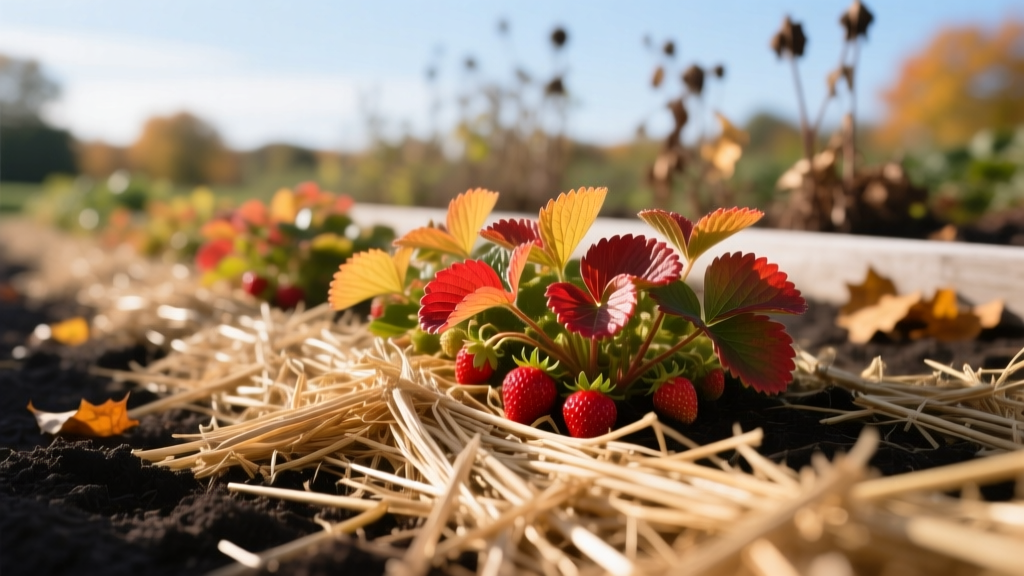
Fall Garden: Mulching Strawberries for Winter
The window to mulch strawberries is short and it matters: mulch too early and you can smother crowns, trap warmth, and invite rot; mulch too late and a hard freeze can heave plants right out of the soil. If you’re seeing nighttime lows dip into the 20s°F and your strawberry leaves are flattening, you’re in the moment when winter protection decides next spring’s yield. Use this guide like a seasonal almanac—prioritized tasks, temperature triggers, and region-by-region adjustments—so you can act this week, not “sometime before winter.”
Most home gardens hit the sweet spot for mulching strawberries after several light freezes have slowed growth but before the soil stays frozen solid. For many regions, that’s roughly 2–4 weeks after the first fall frost date, when nighttime lows commonly reach 20–25°F (-6 to -4°C) for a few nights in a row.
Priority 1: Protect — Mulch strawberries at the right time (not the earliest time)
Mulch is primarily winter insurance against freeze-thaw cycles, not just cold. The biggest enemy is repeated thawing and refreezing that causes soil heaving and crown injury. The goal is to keep plants cold and consistently dormant, not warm.
Timing triggers you can use this week
- After 3–5 nights in a row at 20–25°F.
- When top growth looks “tucked down” and no longer pushing new leaves.
- When the top ½–1 inch of soil is starting to firm up (but before the ground is locked solid).
- Often 2–4 weeks after first frost (example frost dates: Oct 10 in colder inland areas, Oct 25 in many mid-latitude suburbs, Nov 10 in milder/coastal zones).
University guidance consistently emphasizes waiting until plants are dormant and temperatures are cold enough to hold dormancy. For example, Minnesota Extension advises mulching after the ground begins to freeze (to prevent smothering and rodent issues) and focusing on consistent winter protection (University of Minnesota Extension, 2020).
“The goal of winter mulch is to keep strawberry plants dormant and prevent winter injury from fluctuating temperatures and heaving.” — Extension guidance summarized from cold-climate strawberry recommendations (University of Minnesota Extension, 2020)
How thick? Use a measured depth, not a guess
For most garden beds, apply 3–6 inches of loose, clean straw over the plants once dormant. In the coldest areas or exposed sites, aim closer to 6 inches. You should still be able to see a little texture of the bed—avoid compressing the layer into a mat.
- 3 inches: Milder winters (many USDA Zones 7–8), sheltered beds, or where drainage is excellent.
- 4–5 inches: Typical cold winters (Zones 5–6), open garden exposure.
- 6 inches: Colder, windier locations (Zones 3–4) and beds prone to heaving.
Colorado State University Extension notes that strawberries benefit from winter mulch in many climates to reduce temperature swings and protect crowns (Colorado State University Extension, 2019). The consistent theme: mulch is about stability.
Best mulch choices (and what to avoid)
Clean wheat or oat straw is the standard because it insulates well and lifts off easily in spring. Pine needles are also workable where straw is hard to find, especially for smaller plantings. Avoid anything that compacts into a wet blanket.
- Use: Weed-free straw, pine needles, coarse chopped leaves mixed with straw (only if they stay fluffy).
- Avoid: Fresh grass clippings (mat/heat), heavy whole leaves alone (mats), hay (seed-filled), manure-based mulches (salt/rot risk).
Windproofing without smothering
Straw blows. Plan for it before the first real windstorm. Use one of these approaches:
- Row cover “netting” method: Lay a light, breathable row cover or bird netting over straw and pin with landscape staples every 2–3 feet.
- Brush layer method: Add a few twiggy branches (pruned raspberry canes, small brush) on top—enough to hold straw, not shade it into a mat.
- Low hoops: Set wire hoops and drape netting over the bed; keep airflow.
Fall pest prevention tied to mulching
Mulch changes the habitat. Get ahead of problems now so you aren’t troubleshooting mystery losses in April.
- Slugs: Pull weeds and reduce dense groundcover around the bed. If slugs were an issue this summer, set a few boards as traps for a week before mulching and remove captured slugs daily.
- Rodents (voles/mice): Mow/trim nearby tall grass and remove thick weeds within 3–6 feet of beds. Avoid mulching too early (warm, cozy tunnel season). Consider snap traps in protective boxes along edges if vole pressure is high.
- Botrytis (gray mold) carryover: Remove old fruit and rotten berries; don’t bury piles of infected debris under straw.
Priority 2: Prepare — Clean up beds and set plants up for dormancy
Fall prep determines how well mulch works. A bed full of weeds, old berries, and crowded plants is more likely to trap moisture, harbor disease, and invite rodents.
Right-now cleanup checklist (30–60 minutes per bed)
- Remove all fallen fruit and mushy berries.
- Pull weeds, especially grasses that create vole runways.
- Clip off dead/diseased leaves and discard (don’t compost if moldy).
- Lightly fluff soil surface where heaving is common; fix raised roots by firming crowns back to soil level (crowns should not be buried).
- Check irrigation: shut off and drain hoses when nights approach 28°F to prevent bursts.
Fertilizing in fall: do less than you think
Avoid high-nitrogen fertilizing late in the season; pushing tender growth right before freezes increases winter injury. If your plants are weak and your soil test supports it, apply a modest, balanced amendment 6–8 weeks before your expected hard freezes. Past that point, focus on mulch timing and moisture management.
If you don’t have a soil test, this is a good year to get one done. Many extension services recommend soil testing every 3–5 years for home gardens to target fertilizer correctly and reduce disease-prone overgrowth.
Priority 3: Prune — Renovation depends on strawberry type and your calendar
Not all strawberries get the same fall treatment. The biggest mistake is heavy pruning at the wrong time. Identify your type:
- June-bearing: Big early summer crop, then runners. Typical renovation happens after harvest (summer), not late fall.
- Day-neutral / everbearing: Produce through summer into fall. They’re often grown more like annuals or lightly managed perennials depending on zone.
June-bearing: don’t do a late-fall “haircut”
By fall, June-bearing plants have already set flower buds for next year. Aggressive leaf removal late in the season can reduce vigor and expose crowns. In fall, keep pruning minimal: remove only clearly diseased leaves and any runners that are out of bounds and won’t root before dormancy.
Day-neutral and everbearing: end-of-season tidying
If you’re in USDA Zone 7–9 and plants are still fruiting into October/November, your fall job is to keep fruit off wet soil and remove rotten berries to prevent Botrytis. Once nights regularly hit 25–28°F, production slows. At that point, shift to cleanup and winter protection.
Priority 4: Plant — Fall is still planting time in some regions (and not in others)
Planting strawberries in fall can work in mild climates, but it’s risky where winters arrive fast. Use your frost date and zone as the decision tool, not the calendar alone.
When fall planting is realistic
Fall planting is most realistic in USDA Zones 7–9, where plants have time to root before hard freezes. Aim to plant 6–8 weeks before expected sustained freezes so roots establish. If your average first frost is Nov 10, planting by mid-September to early October can work.
When to skip fall planting
In Zones 3–5, fall planting is often a losing bet unless you can provide protected culture (low tunnels, very early planting, excellent drainage). If your first frost is Oct 10–Oct 20 and hard freezes follow quickly, spring planting is usually safer.
Mulch timing by region: three real-world scenarios
Use these scenarios to adjust the “mulch after dormancy” rule to what your garden is actually doing.
Scenario 1: Upper Midwest / Northern Plains (USDA Zones 3–4)
What’s happening now: Sharp temperature drops, windy exposure, and frequent freeze-thaw in early winter. Heaving is common on lighter soils and raised beds.
- Target timing: Often late October to mid-November, or when you’ve had 3–5 nights at 20–25°F and the soil surface is starting to freeze.
- Mulch depth: 5–6 inches of straw in exposed sites.
- Extra step: Use netting/pins because wind can strip beds bare overnight.
Scenario 2: Mid-Atlantic / Ohio Valley (USDA Zones 5–7)
What’s happening now: Long fall, unpredictable warm spells in November, then sudden cold snaps. The risk here is mulching too early and keeping crowns too warm.
- Target timing: Typically 2–4 weeks after first frost, often mid-November to early December, once nights consistently reach 25°F.
- Mulch depth: 4–5 inches.
- Extra step: Remove any leftover ripe fruit promptly—warm spells plus mulch equals Botrytis pressure.
Scenario 3: Pacific Northwest / Coastal mild winter (USDA Zones 7–9)
What’s happening now: Less extreme cold, but lots of wet. Crowns can rot if mulch holds moisture against them for months.
- Target timing: Later and lighter—often after a few colder nights (near 28°F) and once plants clearly slow down.
- Mulch depth: 2–4 inches, kept airy.
- Extra step: Focus on drainage and airflow. Consider pine needles or a thinner straw layer rather than deep straw that stays wet.
Fall-to-winter schedule you can follow (adjust to your frost date)
If you want a simple rhythm, follow this schedule and shift it earlier or later based on your average first frost date and current forecast.
| Time window | What you’ll see | Action | Numbers to watch |
|---|---|---|---|
| 2–3 weeks before first frost | Plants still growing; weeds active | Weed thoroughly; remove old fruit; tidy runners | Forecast nights near 32°F |
| First frost week | Leaf edges nipped; growth slows | Final cleanup; mow/trim nearby grass; set wind plan | First frost date examples: Oct 10, Oct 25, Nov 10 |
| 2–4 weeks after first frost | Plants flatten; less new growth | Prepare mulch materials; stage straw bales; pin supplies | Multiple nights below 28°F |
| When nights hit 20–25°F for 3–5 nights | Dormancy set in; soil surface firming | Apply straw mulch 3–6 inches | 20–25°F threshold |
| Midwinter thaws | Snow melts; straw may shift | Reposition blown mulch on a calm day | Watch for bare crowns after wind events |
| Spring: after hard freeze risk eases | New green tips | Pull mulch off crowns, leave between rows | Begin when nights are mostly above 28–32°F |
How to mulch strawberries step-by-step (fast, repeatable, and measurable)
Plan to mulch on a dry day when straw is fluffy and the bed surface isn’t muddy.
Step-by-step
- Confirm dormancy: Check that growth has slowed and you’ve had several cold nights (aim for 20–25°F).
- Clean the bed: Remove fruit, obvious disease, and weeds that will poke through mulch.
- Fluff crowns into position: Crowns should be at soil surface—not buried, not perched on exposed roots.
- Spread straw evenly: Shake out flakes; aim for 3–6 inches loose depth over plants.
- Wind-secure: Pin netting every 2–3 feet or add light brush to hold straw in place.
- Mark the bed: Add stakes so you don’t step on plants under snow.
Quick “done-right” checklist
- Mulch applied after dormancy (not during warm fall growth)
- Straw is clean and fluffy (not matted, not hay)
- Depth is measured (at least 3 inches)
- Crowns are protected but not buried under heavy, wet material
- Edges are secured against wind
Spring removal plan (make it now so you don’t guess later)
Mulch timing doesn’t end in fall. Spring handling affects disease and yields.
As temperatures moderate, pull mulch off the crowns when you see new growth and the worst hard freezes are passing. In many gardens that’s around when nights are mostly above 28–32°F. Don’t remove all mulch from the bed—leave straw between rows to keep berries clean and reduce soil splash (a major disease-spread pathway).
If a late freeze threatens bloom (common in Zones 5–7), you can temporarily pull straw back over plants overnight, then uncover again in the morning. This is one of the practical payoffs of straw: it’s movable insulation.
Fall disease and pest prevention: what matters specifically now
Fall is when you reduce the “starting population” of problems that explode next year. Focus on sanitation and habitat.
Botrytis (gray mold) and fruit rots
Any rotten fruit left in the bed is inoculum. Remove it now. In wet regions, keep mulch airy and avoid packing straw down. If you struggled with gray mold last season, widen spacing when renovating next summer and avoid late-day overhead irrigation.
Leaf spot and general foliar disease carryover
Do not aggressively defoliate in late fall, but do remove leaves that are clearly diseased and lying against the soil. Dispose of them rather than burying under mulch.
Voles and mice
Rodents are a real-world strawberry killer under winter mulch. The best prevention is habitat control: remove tall grass around beds and avoid mulching early. If you have heavy vole pressure, consider using a slightly thinner straw layer combined with netting and frequent winter checks for tunnels after thaws.
Common timing mistakes (and what to do instead)
Mistake: Mulching right after the first frost.
Do instead: Wait until dormancy is established and nights are repeatedly 20–25°F.
Mistake: Using hay because it’s easy to find.
Do instead: Use weed-free straw. Hay introduces seeds that become a spring weed carpet.
Mistake: Smothering plants under a heavy, wet mat.
Do instead: Keep mulch fluffy; avoid whole leaves alone; don’t compress straw.
Mistake: Forgetting spring steps.
Do instead: Plan now to pull straw off crowns when new growth starts and nights trend above 28–32°F, leaving mulch between rows.
Extension-backed notes you can trust (for your timing and technique)
For gardeners who like recommendations grounded in research and extension practice: winter mulching strawberries is widely recommended in colder climates to reduce winter injury from temperature fluctuations and heaving. University of Minnesota Extension discusses winter protection timing and the purpose of mulch in cold regions (University of Minnesota Extension, 2020). Colorado State University Extension also describes mulching as a tool to protect crowns and stabilize conditions during winter (Colorado State University Extension, 2019).
If your fall has been unusually warm, trust the plant and the nighttime lows more than the calendar. The best mulch date is the one that follows dormancy cues and precedes the first prolonged deep freeze.
Two-week action plan (start this weekend)
If you want a simple timeline, here’s a practical two-week sprint that fits most gardens as temperatures drop.
Week 1
- Clean beds: remove fruit, weeds, and diseased leaves.
- Trim grass and weeds around beds within 3–6 feet.
- Buy or stage straw (estimate: one standard bale often covers roughly 40–60 sq ft at 3–4 inches, depending on fluffiness).
- Gather pins/netting or brush for wind control.
Week 2
- Watch the forecast for a run of lows at 20–25°F.
- Mulch on a dry day; apply 3–6 inches.
- Secure straw against wind; mark bed edges with stakes.
- After the first windy event, do a quick perimeter check for bare spots.
Once straw is down and secured, you’ve done the biggest fall job for strawberry success. The rest of winter is mostly monitoring: after thaws or windstorms, look for exposed crowns and cover them back up on the next calm day. Come spring, you’ll be ready to pull straw off the crowns and leave a clean layer between rows—setting up healthier plants and cleaner fruit when the first blossoms arrive.