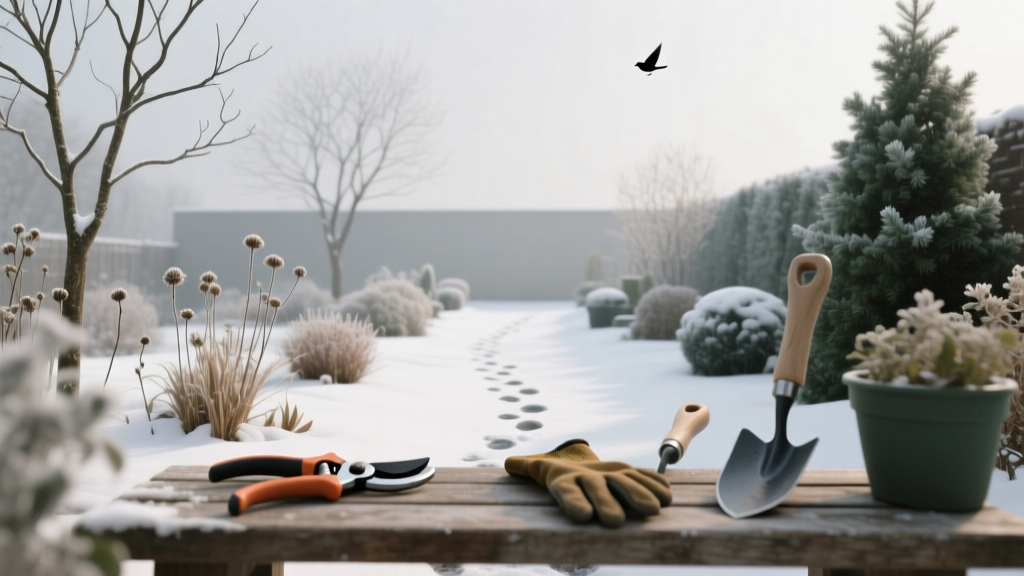
Winter Garden Checklist: Dormant Season Tasks
Winter isn’t a pause button—it’s your best window to prevent spring problems and set up fast, healthy growth before the first warm spell. The dormant season gives you clear sightlines (bare branches), fewer pests in motion, and soil that can still be workable on mild days. Miss the timing now and you’ll be pruning too late, planting too shallow, or fighting disease that overwintered on leaves you could have removed in 20 minutes.
Use this checklist like an almanac: prioritize safety and plant health first, then long-range preparation. Keep a simple rule in mind: do high-impact tasks on days above 40°F (4°C) when tools, hands, and plants handle stress better—and save desk work (seed orders, maps, inventory) for the coldest stretches.
Priority 1: Protect (freeze, wind, wildlife, and water)
1) Water smart before hard freezes
Winter injury often starts as drought. Evergreen leaves keep transpiring on sunny, windy days—even when the ground is cold. Water when soils are unfrozen and daytime temperatures are above 40°F. For most temperate climates, aim for a deep watering every 3–4 weeks during dry spells.
- New plantings (first 1–2 years): prioritize evergreens, broadleaf evergreens (rhododendron, holly), and fall-planted trees/shrubs.
- Before a cold snap: if a hard freeze is forecast within 48 hours and soil is workable, water in the morning so roots can hydrate before temperatures plunge.
- Avoid ice problems: don’t water when nighttime lows will drop below 25°F unless soil is still absorbing—standing water can create hazardous ice and suffocate roots in heavy soil.
2) Mulch for temperature stability (not heat)
Refresh mulch after the ground begins to cool but before deep freezes set in. In many regions that’s late November through December; in milder zones it can be January. Target 2–4 inches of mulch for perennials and shrub beds; keep mulch pulled back 2–3 inches from trunks and crowns to reduce rot and vole damage.
If you’re in colder USDA zones (3–6), consider an extra insulating layer over tender perennials after the ground freezes (straw, chopped leaves). This reduces freeze-thaw heaving.
3) Wrap and shield vulnerable trees
Sunscald and southwest injury happen when bright winter sun warms bark by day, followed by rapid freezing at night. Thin-barked trees (young maple, crabapple, linden, fruit trees) are prime targets.
- Tree wrap timing: apply in late fall/early winter and remove in early spring (often around March in zones 5–7; April in zones 3–4).
- Windbreaks: burlap screens help broadleaf evergreens in exposed sites, especially in zones 4–6. Set screens on the windward side, not touching foliage.
- Rodent guards: use hardware cloth cylinders around trunks where voles/rabbits are active; bury the edge 1–2 inches into soil.
4) Snow and ice triage
Heavy snow can split shrubs. Gently brush snow off evergreen boughs with a broom, pushing upward (so you don’t snap branches). Skip shaking frozen branches—cold wood breaks easily. For ice, wait: forcing removal usually causes more damage than the ice itself.
Winter protection checklist (do this first)
- Water evergreens and new plantings during dry winter stretches (above 40°F).
- Refresh mulch to 2–4 inches; keep it off crowns and trunks.
- Install trunk guards/wrap on young, thin-barked trees.
- Set burlap wind screens for broadleaf evergreens in exposed sites.
- Monitor snow load; brush off gently, don’t yank ice.
Priority 2: Prune (dormant structure, safety, and disease prevention)
1) Do the “safety cuts” immediately
Remove broken, hanging, or storm-damaged limbs any time you can do so safely. Clean cuts reduce entry points for decay. If a limb threatens a roof, power line, or walkway, bring in a certified arborist.
2) Dormant pruning: best targets and timing
Dormant pruning is about structure: remove crossing branches, open canopies, and improve airflow—before spring growth begins. In many regions, the sweet spot is late January through early March (zones 5–7), or February through April in colder zones where deep winter persists.
- Apples and pears: prune in late winter while fully dormant for strong structure and light penetration.
- Grapes: prune late winter; in cold areas wait until the worst cold passes (to reduce dieback) but before buds swell.
- Summer-flowering shrubs (on new wood): panicle hydrangea (H. paniculata), smooth hydrangea (H. arborescens), butterfly bush—prune late winter.
3) What NOT to prune now
Hold off on plants that bloom on old wood unless you’re willing to sacrifice flowers. That includes lilac, forsythia, mockorange, many bigleaf hydrangeas (H. macrophylla), and spring-blooming spireas—prune those right after flowering.
Also avoid pruning oaks and elms in regions where oak wilt or Dutch elm disease is a concern. Many university extension programs advise avoiding pruning during higher-risk periods when insect vectors are active; schedule structural work in the recommended dormant window for your area and seal only if your local extension advises it.
4) Disease prevention while pruning
Sanitation is winter’s quiet superpower. Remove dead, diseased, or cankered wood and discard it (don’t compost if disease is suspected). Clean tools between infected plants with an appropriate disinfectant.
Research and extension guidance consistently emphasizes that winter sanitation—removing diseased twigs, mummified fruit, and fallen leaves—reduces spring inoculum and lowers disease pressure before buds ever break.
One high-value example: rake and dispose of apple leaves and fallen fruit to help reduce apple scab carryover. Cornell University’s fruit resources and multiple extension programs note that sanitation reduces overwintering sources of infection (Cornell, 2020).
Pruning checklist (choose a mild, dry day)
- Remove hazardous limbs first (storm damage, hangers).
- Prune apples/pears and summer-blooming shrubs in late winter.
- Skip spring-flowering shrubs until after bloom.
- Remove diseased wood; disinfect tools between plants.
- Collect and discard mummified fruit and diseased leaves.
Priority 3: Prepare (soil, tools, plans, and seed-starting runway)
1) Soil test and amend with intent
If your ground isn’t frozen and your extension office accepts samples, winter is an excellent time to test soil so amendments can be sourced before spring. Many labs return results in 1–3 weeks. Focus on pH first—nutrient adjustments matter less if pH is off.
University of Minnesota Extension recommends soil testing to guide fertilizer and pH decisions rather than guessing (University of Minnesota Extension, 2023). If lime is needed, applying in late fall or winter gives it more time to react before peak growth.
2) Clean, sharpen, and calibrate
Plan for one dedicated tool day when temperatures are above 45°F so oils spread well and you can work comfortably.
- Pruners/loppers: sharpen; replace springs; disinfect blades.
- Mower: sharpen blade; change oil (if applicable) and air filter; check fuel stabilizer use.
- Sprayers: inspect seals; label nozzles; do a water-only calibration so spring applications aren’t guesswork.
3) Map your spring: crop rotation and spacing
On paper (or in a notes app), mark where nightshades, cucurbits, brassicas, and legumes grew last year. Even a basic rotation helps reduce carryover diseases and pests. If you struggled with early blight, clubroot, or squash vine borers, your winter plan is where you start winning.
4) Start seedlings based on frost dates (use numbers, not vibes)
Count backward from your average last spring frost date. Here are concrete timing anchors most gardeners can use:
- Onions (from seed): start 10–12 weeks before last frost.
- Peppers: start 8–10 weeks before last frost; germinate best at 75–85°F.
- Tomatoes: start 6–8 weeks before last frost; transplant after nights stay above 50°F.
- Broccoli/cabbage: start 6–8 weeks before last frost; can handle cooler transplants.
Regional anchor dates to make this real:
- USDA zone 5 (Upper Midwest/Interior Northeast): many gardens see last frost around May 10–20; tomato starts often land mid-March to early April.
- USDA zone 7 (Mid-Atlantic): last frost often clusters around April 1–15; pepper seeding commonly starts late January to mid-February.
- USDA zone 9 (Gulf Coast/parts of California): last frost can be February 1–15 (or none in some microclimates); seed-starting shifts earlier and winter becomes prime outdoor growing time.
Priority 4: Plant (when winter planting is smart—and when it’s a trap)
1) Bare-root trees and shrubs (where winters are mild)
In USDA zones 7–9 and other regions with workable winter soils, dormant-season planting can be excellent. Roots grow whenever soil temps are above roughly 40°F, even if tops are asleep. This can give trees a head start before spring heat arrives.
- Plant on a day above 40°F when soil is not waterlogged.
- Water in deeply, then check moisture weekly for the first month if rainfall is scarce.
- Mulch immediately, keeping it off the trunk.
2) Garlic and late bulbs (only in specific windows)
If you missed fall garlic planting, you may still succeed in milder regions if you can get cloves into the ground 4–6 weeks before the soil warms significantly—aiming for root growth before strong top growth. In cold zones with frozen ground, save the cloves for spring planting as “green garlic” rather than full bulbs.
Late-planted tulips/daffodils sometimes work in zones 7–8 if planted by late December and the ground is workable. In colder zones, forcing bulbs indoors is a better use of late purchases.
3) Cover crops in mild climates
In zones 8–10, winter is cover-crop season. Sow legumes or grass mixes in open beds to protect soil and feed microbes. Terminate 3–4 weeks before planting spring crops so residue can settle and nitrogen dynamics stabilize.
Monthly dormant-season schedule (adjust for your zone)
| Month | Zones 3–5 (cold winter) | Zones 6–7 (moderate winter) | Zones 8–10 (mild winter) |
|---|---|---|---|
| December | Mulch after freeze; protect trunks; tool maintenance indoors | Finish mulching; wrap young trees; clean beds; plan seed orders | Plant trees/shrubs; sow cool-season greens; monitor irrigation |
| January | Brush heavy snow; prune only if temps moderate; check rodent damage | Dormant pruning begins late month; soil test planning | Peak planting window for dormant stock; citrus frost protection as needed |
| February | Late-winter pruning window opens; start onions indoors (10–12 wks before frost) | Prune fruit trees; start peppers late month (8–10 wks before frost) | Prune roses; spring bed prep; start warm-season seedlings for early transplant |
| March | Continue pruning before bud swell; start tomatoes (6–8 wks before frost) | Finish major pruning; prep beds when soil is workable | Transition season: pest scouting; direct-sow as soil warms |
Winter pest and disease prevention (do this now to reduce spring spraying)
1) Sanitation: remove overwintering sites
Many pests and pathogens coast through winter in leaf litter, mummified fruit, and stem cankers. A focused cleanup day can pay off all season.
- Fruit trees: pick off and discard mummified fruit; rake diseased leaves.
- Roses: remove fallen leaves to reduce black spot carryover.
- Vegetable beds: pull and trash (or hot-compost) disease-suspect residues; remove stakes/twines that held infected plants.
2) Dormant oil timing (only when conditions are right)
Horticultural dormant oils can reduce overwintering scale and mite eggs on many deciduous trees and shrubs. Apply only when label directions match your conditions, typically on a calm day above 40°F with no freeze expected for 24 hours. Avoid spraying drought-stressed evergreens or during temperature swings.
Washington State University Extension notes that dormant oils can be effective against certain overwintering insects when properly timed and applied (WSU Extension, 2019). Always confirm plant sensitivity and local recommendations.
3) Rodents and deer: winter is peak bark damage season
When snow covers food, rabbits and voles girdle trunks quickly—often unnoticed until spring. Keep grass trimmed short around young trees going into winter, maintain trunk guards, and don’t pile mulch against bark.
4) Prevent salt injury near roads and sidewalks
If you garden near pavement, winter de-icing salts can burn roots and buds. Use sand or calcium magnesium acetate where possible, shovel early, and consider a burlap barrier on the roadside edge of sensitive shrubs. In spring, flush affected areas with deep watering as soils thaw.
Regional scenarios: what to do right now where you live
Scenario 1: Cold, snowy zones (USDA 3–5)
Your winter wins come from preventing breakage and avoiding freeze-thaw damage.
- Right now: check mulch coverage after wind; re-seat burlap screens; brush snow loads after storms.
- When temps moderate (above 20–30°F) and it’s dry: prune apples and shade trees late winter, but stop when buds begin swelling.
- Seed timeline: plan onion starts 10–12 weeks before last frost; tomatoes 6–8 weeks before.
Scenario 2: Freeze-thaw winters (USDA 6–7, Mid-Atlantic/parts of Midwest)
This is the zone band where plants can break dormancy during warm spells and get nailed by sudden drops.
- Right now: prioritize watering evergreens during dry weeks; stabilize perennials with mulch to reduce heaving.
- Pruning window: target late January through early March for most dormant pruning, avoiding spring-bloomers.
- Storm prep: keep paths clear, but minimize salt near beds.
Scenario 3: Mild-winter climates (USDA 8–10, Gulf Coast/coastal West)
Winter is active gardening season. Your biggest risks are surprise frosts and fungal disease from cool, wet weather.
- Right now: plant dormant fruit trees and shrubs while soil is cool; sow cool-season vegetables; stay ahead of weeds.
- Frost readiness: keep frost cloth handy for nights forecast below 32°F; protect citrus at 28°F and below, especially young trees.
- Disease prevention: increase airflow, avoid overhead watering late in the day, and remove diseased leaves promptly.
Fast timelines: 30 minutes, 2 hours, one weekend
If you have 30 minutes
- Walk the garden: flag broken limbs, cracked branches, leaning stakes, and gnawed bark.
- Check mulch at crowns and trunks; pull it back if it’s touching.
- Brush heavy snow from shrubs (if present).
If you have 2 hours
- Rake up diseased leaves and mummified fruit; bag and dispose.
- Install or adjust trunk guards on young trees.
- Sharpen pruners and loppers; disinfect blades.
If you have one weekend
- Dormant prune fruit trees and summer-flowering shrubs (as appropriate to your zone and bud stage).
- Soil test and order amendments (lime/sulfur as recommended by results).
- Build or repair trellises, raised beds, and edging while plants are dormant and access is easy.
- Draft a seed-starting calendar based on your last frost date; order seeds before popular varieties sell out.
Cold-weather rules that prevent common winter mistakes
Don’t work saturated soil. If you can roll a handful into a sticky ribbon, stay off it. Compaction in winter lasts into summer.
Don’t “tidy” away all habitat. Leave some hollow stems or a brush pile in a back corner if you can—beneficial insects overwinter there. Just keep disease-prone debris (infected leaves, mummified fruit) out of beds and compost.
Don’t fertilize woody plants now. Nitrogen pushes tender growth at the wrong time. Save feeding for active growth, guided by soil tests and plant performance.
Do keep records. Note where disease was worst, which beds stayed soggy, and which varieties struggled. Winter notes turn into spring decisions that actually fix the problem.
Knock out the protection tasks first, prune with purpose on the next mild stretch, then use winter’s quieter weeks to sharpen tools, test soil, and lock in a seed-starting schedule tied to real dates. When the first warm week arrives, you’ll be planting on prepared ground instead of reacting to preventable damage.
Citations: University of Minnesota Extension (2023), soil testing guidance for home landscapes and gardens; Washington State University Extension (2019), dormant oil timing and use for overwintering insect management; Cornell University (2020), sanitation practices in home orchards to reduce disease carryover.