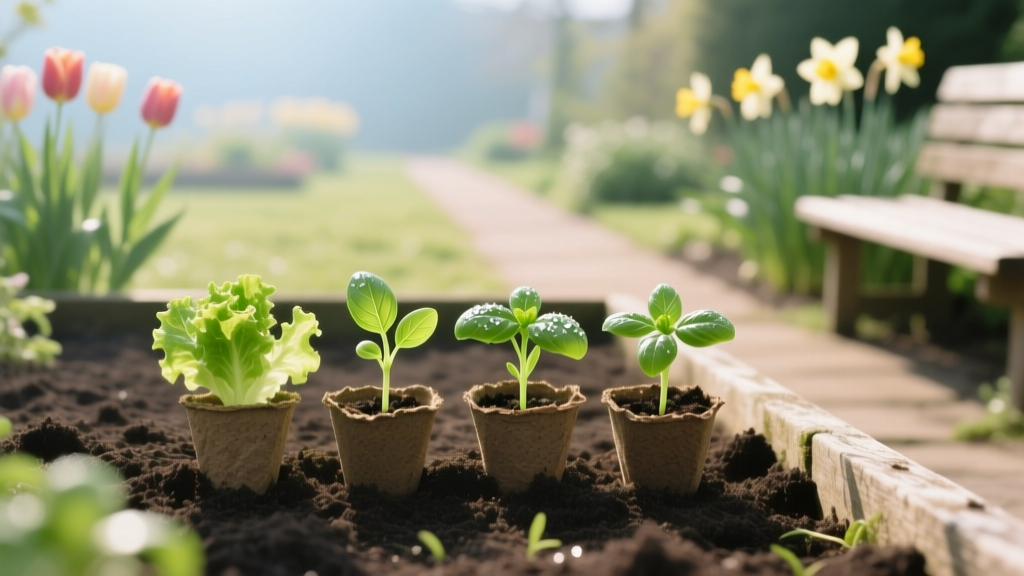
Spring Garden: First Outdoor Planting Timeline
Spring doesn’t “arrive” so much as it opens a narrow window: soil dries enough to work, temperatures hover above freezing, and every day you wait can push harvests back by weeks. The first outdoor planting is about timing and triage—put in what can handle cold, protect what can’t, and prep beds so you’re not scrambling when your frost date is suddenly two weeks away.
Use this timeline as a working plan you can act on today. Anchor everything to your average last spring frost date and your soil temperature. If you don’t know your frost date, look it up by ZIP code, then count backward and forward in weeks. If you don’t know soil temp, grab an inexpensive soil thermometer; it’s one of the most reliable spring tools you can buy.
Start Here: Your 10-minute spring readiness check
Before you plant anything, confirm three numbers that will drive every decision:
- Average last frost date: plan around it, but expect swings of 7–14 days year to year.
- Soil temperature at 2–4 inches deep: cold-tolerant crops germinate at 40–50°F; warm-season crops often need 60–70°F.
- 7-day forecast lows: if you see 28°F in the forecast, have frost protection ready even if your “last frost” has passed.
Concrete thresholds to keep in mind as you plan:
- Work soil only when it crumbles (not ribbons). Many gardeners use the “squeeze test”: if a squeezed handful forms a mud ball, wait.
- Direct-sow peas, spinach, and radishes when soil is consistently 40–45°F.
- Plant potatoes when soil is around 45°F and not waterlogged.
- Transplant brassicas (broccoli, cabbage) once nights are mostly above 30°F, protecting from hard freezes.
- Wait to set out tomatoes and peppers until nights stay above 50°F and soil is nearer 60°F.
Priority 1: What to plant first (cold-hardy and time-sensitive)
These crops tolerate frost and reward early planting. They’re the backbone of the first outdoor push because they either germinate in cool soil or mature best before summer heat hits.
Weeks 6–4 before your last frost date: sow the true cold starters
Target this window if your beds are workable and your soil is no longer saturated. In USDA Zones 3–5, this may be late March to April; in Zones 6–7, often March; in Zones 8–10, you may already be in this window in late winter.
- Peas: direct-sow as soon as soil hits ~40°F. In wet springs, choose raised rows to prevent seed rot.
- Spinach: germinates in cool soil; cover with row cover to speed early growth.
- Radishes: quick and reliable; sow every 7–10 days for steady harvest.
- Turnips & beets: beets prefer slightly warmer soil (often closer to 50°F), but can go early under cover.
- Onion sets and shallots: plant early; they tolerate cold and want long day length.
Timing tip: If spring is cold and slow, use floating row cover (lightweight fabric). It can add a few degrees of frost protection and noticeably speeds early growth.
Weeks 4–2 before your last frost date: potatoes and hardy transplants
This window is prime for crops that hate heat later but don’t mind chilly nights now.
- Potatoes: plant when soil is roughly 45°F. In colder zones, pre-sprout (“chit”) seed potatoes indoors for 2–3 weeks to shorten time in cold soil.
- Broccoli, cabbage, kale: transplant hardened-off seedlings outdoors. Protect if a hard freeze (below 28°F) threatens.
- Lettuce: direct-sow or transplant; it thrives in spring cool and bolts in heat.
“Cold, wet soils can delay emergence and increase seed and seedling diseases. Planting into soils that are too cold or too wet often results in poor stands.” — University of Minnesota Extension (research-based guidance), 2020
That’s why the first planting timeline is less about the calendar and more about soil condition. A week later into crumbly soil beats a week earlier into mud.
At your last frost date to 2 weeks after: stagger in moderately tender crops
- Carrots: can be sown earlier, but this window often gives faster, more uniform germination as soils warm into the 50s°F.
- Swiss chard: handles cool weather; great “bridge crop” into early summer.
- Herbs: cilantro and parsley thrive now; basil waits until warm nights (50°F+).
Priority 2: What to prune now (and what to leave alone)
Spring pruning is high-stakes: done at the right time it prevents disease and improves structure; done at the wrong time it removes flower buds or invites infection.
Prune now (late winter through early spring, before bud break)
- Apple and pear trees: prune while dormant for structure, light, and airflow. Remove crossing branches and water sprouts.
- Grapes: prune before sap flow ramps up. Late pruning can cause heavy “bleeding,” though it rarely harms the plant.
- Panicle hydrangea (Hydrangea paniculata) and smooth hydrangea (H. arborescens): bloom on new wood, so spring pruning is appropriate.
- Roses: in many regions, prune when buds swell and you can see winter dieback clearly.
Wait to prune (to avoid losing blooms or stressing plants)
- Spring-flowering shrubs: lilac, forsythia, quince, azalea—prune after they bloom or you’ll remove this year’s flowers.
- Oak trees in oak wilt regions: avoid pruning during high-risk periods; timing guidance varies by state. If you must prune, seal wounds immediately per local extension recommendations.
Sanitation matters: Disinfect pruning tools when moving between diseased plants. A simple approach is wiping blades with 70% isopropyl alcohol between plants.
Priority 3: What to protect (frost, wind, critters, and early-season disease)
Spring damage often happens on one or two nights—warm days followed by a sudden dip. Your job is to keep young plants alive through those predictable shocks.
Frost protection: use thresholds, not guesswork
- Row cover: keeps heat in and wind off. Use when lows dip below 32°F.
- Cloche or milk-jug covers: ideal for individual transplants; vent on sunny days to prevent overheating.
- Watering before a frost: moist soil holds more heat than dry soil. Water earlier in the day if a frost is forecast.
If a hard freeze (28°F or lower) is predicted, double up protection (row cover plus cloche) for any early transplants.
Protect seedlings from cutworms and slugs
Two classic spring pests show up before gardeners expect them: cutworms (which sever seedlings at soil level) and slugs (which shred tender leaves during damp spells).
- Cutworm prevention: place a collar (cardboard, paper cup ring, or plastic strip) 1–2 inches into the soil around each transplant.
- Slug prevention: reduce hiding places (boards, dense debris), water in the morning, and use iron phosphate bait if pressure is high.
For brassicas, add insect netting early to prevent cabbage moth egg-laying as soon as temperatures warm. Exclusion beats spraying in spring.
Disease prevention: stop problems before they start
Spring’s cool nights and damp leaves favor fungal issues. Focus on airflow and leaf-dryness.
- Water at soil level, not overhead, especially for seedlings and strawberries.
- Mulch pathways to reduce soil splash (a major way spores move onto leaves).
- Thin seedlings promptly. Crowding invites damping-off and mildew.
University extension guidance consistently emphasizes prevention through spacing, sanitation, and resistant varieties. The University of California Agriculture and Natural Resources notes that keeping foliage dry and improving airflow are key tactics for reducing many foliar diseases (UC ANR, 2019).
Priority 4: What to prepare (beds, soil, supports, and seed-start transitions)
If you do only one “prep” task, do this: make beds plant-ready before the weather turns perfect. When your warm-season window opens, you want to be planting—not building trellises.
Bed prep checklist (do this before major sowing)
- Clear winter debris, but leave some leaf litter in ornamental beds where beneficial insects overwinter—move it aside rather than discarding it all.
- Loosen compacted soil with a fork (avoid deep tillage in wet soil).
- Top-dress with 1–2 inches of finished compost.
- Apply balanced organic fertilizer only if needed; over-fertilizing early can create lush, pest-prone growth.
- Set up irrigation now (even a simple soaker hose layout).
Set supports early: peas, berries, and vining crops
- Pea trellis: install at planting so roots aren’t disturbed later.
- Raspberry/blackberry wires: tighten and repair before canes leaf out.
- Tomato cages/strings: stage them now; install at transplanting time.
Hardening off seedlings: the 7–10 day ramp
Indoor-started seedlings need a transition. Plan a 7–10 day hardening-off period:
- Day 1–2: 1–2 hours outside in bright shade, protected from wind.
- Day 3–5: increase to 3–6 hours, introduce gentle morning sun.
- Day 6–10: full days outside; bring in if nights drop below the crop’s tolerance (often 35–40°F for brassicas, 50°F for tomatoes/peppers).
Monthly outdoor planting schedule (adjust by your frost date)
Use this as a practical rhythm. If your last frost is late (Zones 3–5), your “April” might behave like “March” farther south. Shift the tasks by weeks relative to your last frost date.
| Time window | What to plant outdoors | What to do the same week | Critical thresholds |
|---|---|---|---|
| 6–4 weeks before last frost | Peas, spinach, radish, onion sets, arugula | Prep beds, add compost, install pea trellis, deploy row cover if windy | Soil workable; soil temp ~40–45°F for peas/spinach |
| 4–2 weeks before last frost | Potatoes, lettuce, kale, cabbage, broccoli (transplants), beets (if soil warms) | Cutworm collars, slug patrol, prune fruit trees before bud break | Soil temp ~45°F for potatoes; protect if forecast <32°F |
| Last frost week | Carrots, chard, more lettuce successions | Harden off warm-season seedlings, set up drip/soaker hoses | Be ready to cover if nights dip to 28–32°F |
| 1–2 weeks after last frost | First warm-tolerant transplants in protected spots; herbs like parsley; early beans if soil is warm | Mulch paths, start staking/trellising | Nights trending upward; soil often 50–60°F |
| 2–4 weeks after last frost | Tomatoes, peppers, basil, cucumbers, squash (depending on soil warmth) | Insect netting for brassicas, monitor for aphids, keep mulch off stems | Night lows >50°F; soil near 60°F+ |
Three real-world spring scenarios (and how the timeline changes)
Spring is regional. Use these scenarios to adjust without guesswork.
Scenario 1: Cold-climate, late frost (USDA Zones 3–5; last frost often mid-May)
If your last frost date is around May 15, your “first outdoor planting” may not start until April—unless you use protection and raised beds.
- Start peas/spinach under row cover as soon as soil is workable, often late April.
- Prioritize raised beds (they warm faster and drain better).
- Expect at least one late hard frost; keep covers ready until June 1.
Practical move: build a simple low tunnel with hoops and row cover. It can buy you 1–2 weeks on both ends of the season.
Scenario 2: Variable spring with false warm-ups (USDA Zones 6–7; last frost often early to mid-April)
These regions often get a tempting 75°F week in March, followed by a dip into the 20s. The trick is to plant cold-hardy crops early, but don’t rush warm-season transplants.
- Direct-sow cold crops on schedule (6–4 weeks before frost), but avoid planting tomatoes early “just because it’s warm.”
- If fruit trees bloom early, be prepared to protect blossoms on small trees with frost cloth when forecasts threaten 28°F.
- Hold mulch until soil has warmed a bit; heavy early mulching can keep soil cold and delay planting.
Extension recommendations emphasize that planting by soil conditions reduces losses. For example, Purdue Extension notes the importance of soil temperature and field conditions for successful establishment in spring planting windows (Purdue Extension, 2021).
Scenario 3: Mild-winter, early spring (USDA Zones 8–10; last frost often February to early March)
In warm zones, “spring” planting starts earlier, but heat arrives fast—meaning your spring crops can bolt quickly. Your urgency is reversed: plant cool-season crops early and transition to heat-tolerant varieties sooner.
- Sow and succession-sow lettuce, cilantro, peas (if your area supports them) from late winter into early spring.
- Use shade cloth earlier—often by April—to extend lettuce and spinach.
- Shift to warm-season planting as soil warms to 65–70°F, but watch for sudden cold snaps; frost is rare but not impossible in some inland microclimates.
Right-now checklists (pick the one that matches this week)
If you are 6–4 weeks before last frost
- Check soil moisture: don’t work beds if muddy.
- Direct-sow peas/spinach/radish.
- Plant onion sets/shallots.
- Install pea supports.
- Set row cover within reach for windy nights and cold snaps.
If you are 4–2 weeks before last frost
- Plant potatoes (soil ~45°F, not saturated).
- Transplant hardened-off brassicas.
- Place cutworm collars at planting.
- Begin slug monitoring in damp beds.
- Finish dormant pruning on fruit trees.
If you are at last frost week to 2 weeks after
- Sow carrots and successive lettuce rounds.
- Harden off warm-season seedlings daily.
- Prepare frost protection for surprise dips to 28–32°F.
- Mulch paths to reduce mud and soil splash.
- Check brassicas for early aphids; wash off with a strong water spray before colonies build.
Spring pest and disease prevention you’ll be glad you did early
Early prevention is cheaper than fixing an outbreak in May. Focus on the pests that predictably ramp up as temperatures climb.
Aphids on greens and brassicas
- Inspect the undersides of leaves weekly.
- Use a sharp stream of water to knock them off early.
- Avoid excess nitrogen fertilization; it encourages tender growth aphids love.
Flea beetles on arugula, radishes, and young brassicas
- Use insect netting/row cover immediately after sowing or transplanting.
- Keep plants growing steadily with consistent moisture—stressed seedlings get hit harder.
Damping-off and seedling losses in cool, wet soil
- Don’t overwater newly seeded beds; keep evenly moist, not saturated.
- Thin promptly for airflow.
- Use fresh seed-starting mix indoors and clean trays if you’re starting transplants.
Make your planting timeline personal: a simple frost-date formula
Write your average last frost date on a calendar and mark these targets:
- -6 weeks: first sowing of peas/spinach/radish if soil is workable.
- -4 weeks: onions, second sowing of greens; prep potato beds.
- -2 weeks: potatoes and brassica transplants with protection.
- 0 (frost date week): carrots, chard; harden off warm-season crops daily.
- +2 weeks: tomatoes/peppers only if nights are reliably >50°F.
Then reality-check with temperature: if soil is still 38–40°F and soggy, delay. If you’re at +2 weeks but nights are still dipping to 42°F, delay tomatoes and plant another round of lettuce instead. Spring rewards gardeners who pivot.
By the time your warm-season planting window opens, your garden should already be producing—greens in the ground, potatoes sprouting, brassicas established, and beds prepped for the fast shift into May and June. Keep row cover folded and ready near the garden gate; in spring, that single habit saves more plants than any fertilizer ever will.