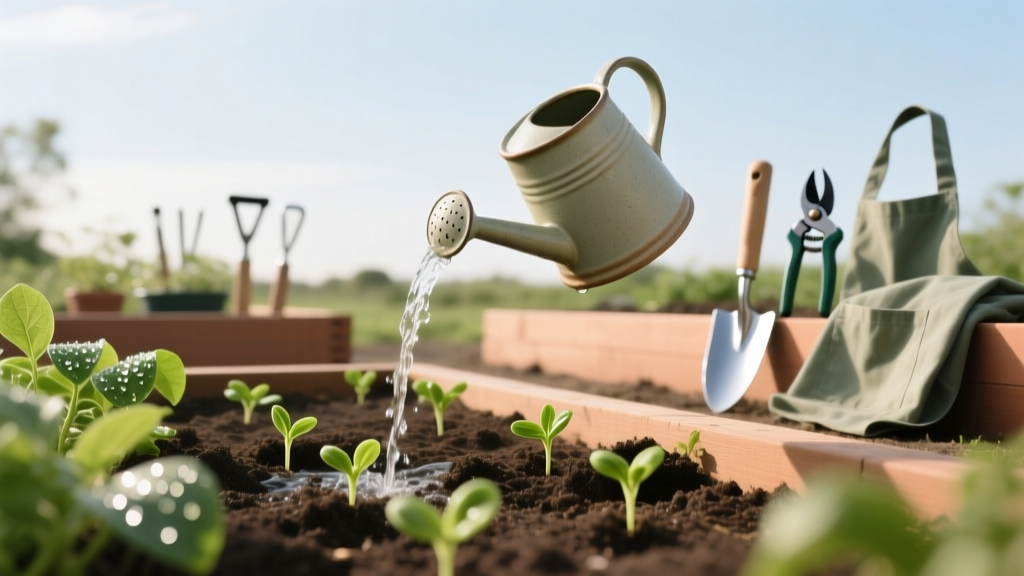
Spring Watering Schedule and Tips
Spring watering can make or break your garden before summer even arrives. One week you’re dealing with cold rain and soggy beds; the next you’re staring at wind-dried soil, leafy seedlings, and a forecast that jumps from 45°F to 78°F in three days. The opportunity is right now: steady moisture during spring root-building leads to sturdier plants, fewer pests, and better drought tolerance when heat arrives.
This guide is organized by priority—what to plant, prune, protect, and prepare—because watering decisions change depending on what you’re actively doing in the garden. Use it like a seasonal checklist, then adjust based on your soil, your weather, and your USDA hardiness zone.
Priority #1: Water the soil you have (before you water the plants you want)
Spring watering isn’t about “more water,” it’s about “right water at the right time.” The goal is evenly moist—not saturated—soil that encourages roots to grow downward. Most spring problems (damping-off, yellowing seedlings, root rot, fungus flare-ups) trace back to inconsistent moisture or watering at the wrong time of day.
Timing triggers you can use this week
Use these concrete cues to decide when to water in spring:
- Air temperature: When daytime highs are consistently above 60°F, evapotranspiration rises quickly—expect to water more often, especially in wind.
- Soil temperature: Many cool-season crops germinate reliably when soil is 45–50°F (peas, spinach), while warm-season seeds usually wait for 60–70°F soil (beans, squash). Watering frequency increases as soil warms because seedlings grow faster and use more moisture.
- Frost dates: Plan around your average last spring frost. In many Zone 6 areas it’s around April 15; Zone 5 around May 1; Zone 4 often May 15. If a late frost is predicted, water early in the day (wet soil holds heat better at night), but keep foliage dry by sunset.
- Rainfall benchmark: Many gardens do well with about 1 inch of water per week from rain + irrigation (more for sandy soil, less for heavy clay). Measure with a rain gauge rather than guessing.
- Container shortcut: If a 10–12 inch pot feels light when you lift it, it’s already behind. In spring wind, containers may need water every 1–3 days even when beds don’t.
“Most landscape plants perform best when irrigation is based on soil moisture, not the calendar.” — University of California Agriculture and Natural Resources (UC ANR), 2019
UC ANR emphasizes watering based on actual moisture conditions rather than routine scheduling; this approach is especially important in spring when rainfall is uneven and temperatures swing (UC ANR, 2019).
Priority #2: What to plant (and how to water it for fast rooting)
Planting season is also watering season. New seeds and transplants need consistent moisture near the surface, while established plants prefer deeper, less frequent watering that trains roots to chase moisture.
Cool-season vegetables and greens (Weeks 1–4 of spring work)
As soon as beds are workable (soil crumbles rather than smears), plant peas, spinach, lettuce, radish, kale, and onions. If your soil is still cold and wet, avoid “helpful” extra watering—cold, saturated soil causes seed rot and slow germination.
- Seeded rows: Keep the top 1 inch of soil evenly moist until germination, then shift to deeper watering every 4–7 days depending on rain.
- Transplants: Water in thoroughly at planting, then check moisture daily for the first 7–10 days—not to soak, but to prevent drying around the root ball.
Research-based guidance commonly points to ~1 inch/week as a baseline for many garden plants; extension resources emphasize adjusting for soil type and weather rather than adhering to fixed intervals (e.g., University of Minnesota Extension, 2021).
Warm-season crops (Hold until nights settle)
Tomatoes, peppers, cucumbers, squash, basil, and beans need warmer conditions. A reliable rule: wait until overnight lows are consistently above 50°F for tomatoes and peppers, and soil is near 60°F for beans and squash. Planting too early creates slow growth and waterlogging risk.
- After transplanting tomatoes/peppers: Water deeply, then allow the surface to dry slightly between waterings. This encourages roots to expand.
- Direct-seeded beans/squash: Water at planting, then water lightly as needed to keep seed zone damp—not soggy—until emergence.
Perennials, shrubs, and trees (The spring “root sprint”)
Spring is prime time to plant (or replant) many perennials and woody plants because roots grow as soils warm. The key is deep watering, not frequent splashing.
- New shrubs/trees: Provide a slow soak that moistens the root zone 8–12 inches deep. In typical spring weather, that’s often every 5–10 days—but always verify with a trowel or soil probe.
- Mulch immediately: Apply 2–3 inches of mulch, keeping it a few inches away from stems/trunks to prevent rot and rodent damage.
Priority #3: What to prune (and how pruning changes watering needs)
Pruning reduces leaf area and temporarily reduces water demand, but it can also stimulate new growth that’s tender and thirsty. Pair spring pruning with smart watering and disease prevention.
Prune timing rules that matter right now
- Roses: Prune when buds swell and you see new growth (often around the time forsythia blooms). Water at the base; avoid overhead watering to reduce black spot risk.
- Hydrangeas: Know your type. Bigleaf hydrangeas (H. macrophylla) often bloom on old wood—heavy spring pruning can remove blooms. Panicle and smooth hydrangeas bloom on new wood and can be pruned earlier.
- Fruit trees: Finish major pruning before bloom where possible; afterward, focus on removing dead/diseased wood. Keep irrigation consistent during flowering and fruit set, but don’t overwater cold soils.
Watering adjustment after pruning: If you remove 20–30% of canopy from a shrub, reduce irrigation slightly for a week, then resume based on soil moisture and new growth rate. Overwatering a newly pruned plant in cool spring soil can invite root problems.
Priority #4: What to protect (late frosts, wind, pests, and disease)
Spring protection is about preventing setbacks. Water plays a role in frost resilience, pest pressure, and fungal outbreaks.
Late frost strategy (use water correctly)
If a late frost is forecast, water the soil (not the leaves) earlier in the day—moist soil holds more heat than dry soil and can slightly buffer nighttime temperature dips. Aim to finish irrigation by late afternoon so foliage dries before temperatures fall.
- Critical thresholds: Many tender seedlings are damaged at 32°F, and even cool-season crops can be stressed by hard freezes below 28°F.
- Covers: Use frost cloth or row cover in the evening; remove or vent in the morning once temperatures rise above 40°F to prevent overheating.
Spring pests: prevent outbreaks with watering discipline
Overly lush, soft growth from frequent shallow watering and high nitrogen is an aphid magnet. Meanwhile, damp foliage and poor airflow invite fungal disease.
- Aphids on greens/roses: Avoid overwatering and excessive nitrogen early. If aphids appear, a strong morning spray of water can dislodge them; follow by watering at the soil line only.
- Slugs/snails: They thrive in consistently wet, mulched areas. Water in the morning, not evening, so surfaces dry by nightfall.
- Fungal diseases (powdery mildew, leaf spots): Water at the base, increase spacing/airflow, and avoid wetting leaves late in the day.
Extension recommendations repeatedly stress watering early and keeping foliage dry to reduce disease pressure. For example, many university IPM programs emphasize drip irrigation and morning watering to limit leaf wetness duration (various extension IPM publications).
Priority #5: What to prepare (systems that make spring watering easier)
If you set up watering systems in spring, summer becomes simpler. This is the moment to fix hoses, clean drip lines, refresh mulch, and calibrate how much water your garden actually receives.
Build a spring-ready watering setup in one afternoon
- Add a rain gauge: Track weekly rainfall so you don’t water on top of rain. Target roughly 1 inch/week total unless your soil or crops require more.
- Check soil moisture depth: Use a trowel to see how deep moisture penetrates after you water. If only the top 1–2 inches are wet, you’re training shallow roots.
- Use drip or soaker hoses: They reduce leaf wetness (disease prevention) and put water where roots are.
- Mulch after soil warms: In cold climates, mulching too early can slow soil warming. In Zones 3–5, consider waiting until soil is consistently above 50°F before heavy mulching around warm-season beds.
Spring watering schedule table (adjust by rain and soil type)
Use this as a starting point. Always override the calendar if the soil is already wet, or if wind and heat spike drying.
| Month | Typical conditions | In-ground beds (most soils) | New transplants | Containers |
|---|---|---|---|---|
| March | Cold soil, variable rain/snow, windy days | Water only if top 2–3 inches dry; often 0–1x/week | Check daily for 7 days; light water if root ball dries | Every 3–7 days depending on wind/sun |
| April | Growth accelerates; late frosts possible | Usually 1x/week deep soak if rainfall is low | 2–3x/week for first 2 weeks, then taper | Every 2–4 days |
| May | Warmer days; planting ramps up fast | 1–2x/week depending on heat and soil | Deep watering every 2–4 days during establishment | Daily to every 3 days during warm spells |
Regional scenarios: how spring watering changes where you live
“Spring” doesn’t mean the same thing everywhere. Use the scenario that matches your conditions, then fine-tune based on local forecasts and your USDA zone.
Scenario 1: Cool, wet springs (Upper Midwest, Northeast, Pacific Northwest; Zones 3–7)
If rain is frequent and soils are slow to warm, your main risk is overwatering. Focus on drainage and patience.
- Do now: Avoid working saturated soil (compaction). Water only containers and new transplants as needed.
- Watch for: Damping-off in seedlings, root rot, moss/algae on soil surface.
- Actionable fix: Start seeds in well-draining mix; bottom-water seedlings; increase airflow with a small fan.
Scenario 2: Windy, fast-drying springs (High Plains, Front Range, inland valleys; Zones 4–7)
Wind can dry out soil even when temperatures are mild. You may need to water earlier and more consistently than your neighbor in a sheltered area.
- Do now: Use windbreak fabric, temporary fencing, or strategically placed straw bales around new plantings.
- Best practice: Water deeply, then mulch—bare soil loses moisture rapidly in wind.
- Timing tip: Water early morning to reduce evaporation and prevent foliage from staying wet overnight.
Scenario 3: Warm springs with early heat spikes (Southeast, parts of Southwest, urban heat islands; Zones 7–10)
In warm zones, spring can behave like early summer. Plants leaf out fast, and pests ramp up earlier.
- Do now: Shift to consistent deep watering sooner (often starting in March or early April).
- Watch for: Spider mites during dry heat, fungal leaf spots when warm rain returns, and rapid bolting in lettuce/spinach if moisture fluctuates.
- Actionable fix: Keep greens evenly moist; use shade cloth when highs exceed 80°F; avoid overhead watering late day to reduce disease.
Week-by-week spring watering timeline (plug in your last frost date)
Use your local average last frost date as “Week 0.” For example, if your last frost is around May 1 (common in parts of Zone 5), then Week -4 is early April and Week +4 is late May.
Weeks -6 to -4 (6–4 weeks before last frost)
- Check hoses, timers, drip lines; repair leaks.
- Place a rain gauge; start tracking weekly totals.
- Water only when soil is dry 2–3 inches down (beds often don’t need irrigation yet).
- Start hardening off seedlings on mild days; protect from wind to prevent rapid drying.
Weeks -3 to -1 (3–1 weeks before last frost)
- Direct-sow cool-season crops; keep seed zone evenly moist.
- Set up soaker hoses before plants sprawl.
- Watch forecasts for dips to 32°F; water soil earlier in the day and cover tender plants at night.
Weeks 0 to +2 (last frost through two weeks after)
- Transplant hardy crops; water in deeply.
- Begin deeper, less frequent watering for established beds if rainfall drops below 1 inch/week.
- Scout weekly for aphids, slugs, and early fungal spots; correct watering timing (morning) and avoid wet foliage at night.
Weeks +3 to +6 (three to six weeks after last frost)
- Transition to warm-season planting when overnight lows hold above 50°F.
- Mulch warm-season beds once soil is reliably warm (often 50–60°F+ depending on crop).
- Increase watering frequency during heat spikes (highs near 80°F+) and in windy weather.
Spring watering checklists (printable-style)
Quick “today” checklist
- Check soil moisture 3–4 inches down in two spots (sun and shade).
- Water only if the soil is dry at that depth or plants show midday wilt that doesn’t recover by evening.
- Water early morning; keep leaves dry.
- Measure rain this week; subtract it from your irrigation target.
New planting checklist (first 14 days)
- Water in slowly at planting until root zone is thoroughly moist.
- Check daily for the first 7 days; water if the root ball is drying.
- Mulch 2–3 inches, keeping mulch off stems.
- Provide wind protection if gusty; wind desiccation is a common spring transplant killer.
Disease prevention checklist (spring-specific)
- Switch to drip/soaker irrigation where possible to reduce leaf wetness.
- Water in the morning so splashed soil and damp leaves dry quickly.
- Thin seedlings and prune for airflow; dense spring growth traps humidity.
- Clean up overwintered leaves around roses and fruit trees to reduce disease carryover.
Common spring watering mistakes (and direct fixes)
Mistake: Watering a little every day.
Fix: Water deeply, then wait until the top few inches begin to dry. This builds deeper roots and reduces fungus.
Mistake: Watering in the evening.
Fix: Water in the morning. Many foliar diseases spread more readily when leaves stay wet overnight.
Mistake: Trusting the sprinkler timer.
Fix: Adjust weekly based on rain gauge totals and soil feel. As UC ANR notes, irrigation should track conditions, not habit (UC ANR, 2019).
Mistake: Treating clay and sand the same.
Fix: Clay holds water longer—water less often but more slowly to prevent runoff. Sandy soil drains quickly—water more often and add compost/mulch to improve water retention.
Research-backed references (useful for dialing in your numbers)
When you want science to back your schedule, lean on extension guidance:
- University of California Agriculture and Natural Resources (UC ANR). 2019. Guidance on irrigation scheduling based on soil moisture and plant need.
- University of Minnesota Extension. 2021. Home garden watering principles and recommended weekly water targets adjusted for weather and soil.
Walk your garden this week with a trowel and a rain gauge, then set your schedule based on what the soil is actually doing. If you keep moisture steady through spring’s swings—cold snaps, wind events, sudden warm-ups—you’ll head into early summer with deeper roots, fewer pests, and plants that don’t panic the first time the forecast hits 85°F.