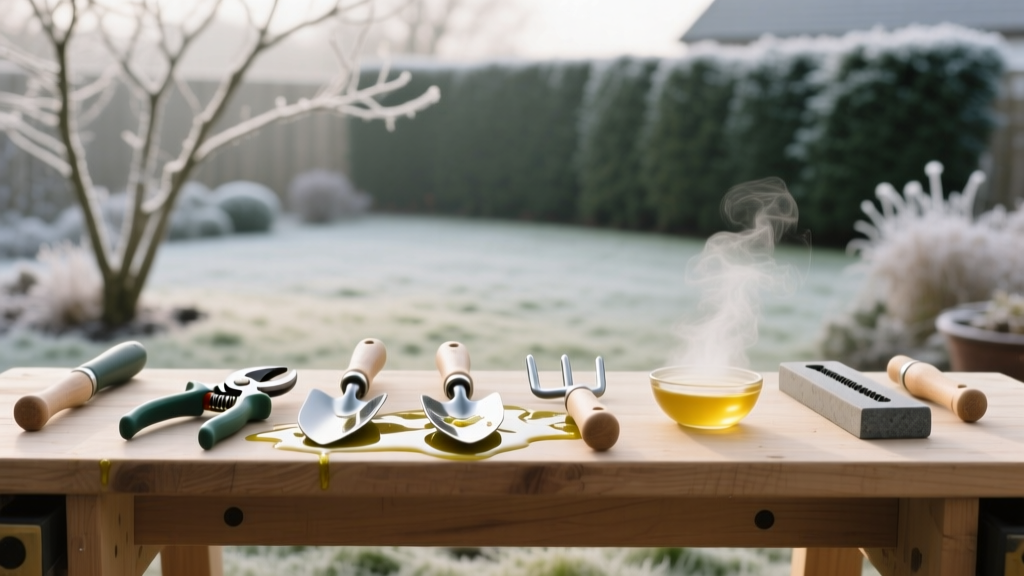
Winter Garden: Sharpening and Oiling Garden Tools
The fastest way to waste a perfect late-winter planting window is to reach for pruners that crush stems, a shovel that won’t slice into frozen crust, or a mower blade that tears grass into brown tips. Winter is your tool season: no weeds pulling your attention, fewer daylight hours to spend outdoors, and a clear runway to service, sharpen, oil, and replace parts before the first warm spell hits. If you start now, you’ll be ready for the two “surge weeks” that matter most—(1) the first thaw above 32°F that lets you work comfortably and (2) the 2–4 weeks before your average last spring frost date, when pruning, seed starting, and bed prep stack up quickly.
Use this guide like a seasonal almanac: prioritize what to do right now, use temperature and calendar triggers, and tailor your plan to your USDA zone and local winter patterns. The headline task is sharpening and oiling, but the best winter gardeners pair tool care with smart pruning, protection, and a few strategic plantings.
Priority 1: Prepare (Sharpen, Oil, and Restore Tools Before the First Warm Spell)
If you do nothing else this winter, do this: make every cutting edge clean and sharp, and make every moving surface protected from rust. Dull tools don’t just slow you down; they increase plant damage, invite disease, and strain your hands and shoulders.
Timing triggers (use these concrete thresholds)
Plan tool work around these reliable seasonal markers:
- When daytime highs regularly reach 35–45°F: You can comfortably work in a garage with the door cracked for ventilation (especially if using solvents).
- 6–8 weeks before your average last frost date: Tune pruners/loppers/saws for late-winter structural pruning.
- 4 weeks before last frost: Sharpen spades, hoes, and cultivating tools for bed prep.
- 2–3 weeks before last frost: Sharpen mower blades and service power equipment so you’re not waiting on parts during spring rush.
- On any day above 32°F with low humidity: Oil and store tools after cleaning to lock out moisture.
Winter tool care checklist (do this in one focused weekend)
- Gather supplies: mill file, diamond stone, stiff brush, bucket, mild detergent, rags, steel wool, penetrating oil, light machine oil, paste wax, sharpening puck for hoes, sharpening stone for pruners, gloves, eye protection.
- Set up a “clean-to-dirty” workflow: wash → remove rust → sharpen → disinfect (when needed) → oil → tighten/adjust → store.
- Sort tools into three piles: Cutting (pruners, loppers, shears, saws), Digging (shovels, spades, forks), Power (mower, trimmer, chainsaw).
Step-by-step: pruners and loppers (precision matters)
Bypass pruners (the most common) should be sharpened on the beveled cutting blade only. Avoid grinding the flat side; you’ll ruin the edge geometry and increase binding.
- Disassemble if the model allows (take a quick photo first so reassembly is easy).
- Clean: hot soapy water + brush; dry thoroughly.
- Remove sap: a small amount of rubbing alcohol on a rag works well. (Use in a ventilated space.)
- Sharpen: follow the existing bevel angle (often ~20–25°). Use a diamond stone or fine file, moving in one direction away from your body. Take 10–20 consistent strokes; check for a light burr on the backside.
- Knock off burr gently with a single light pass on the flat side (do not create a new bevel).
- Adjust: tighten pivot so blades meet cleanly without wobble.
- Oil: 1–2 drops of light machine oil at the pivot and a thin wipe on the blades.
“Sharpening tools makes cleaner cuts that heal faster and reduces the chance of disease entering through ragged wounds.” — Extension guidance echoed across multiple horticulture programs, including Purdue Extension (2019) recommendations on pruning hygiene and tool maintenance.
Step-by-step: shovels, spades, hoes, and forks (sharpen for slicing, not shaving)
You don’t need a razor edge on digging tools; you need a consistent bevel that slices roots and soil cleanly. A mill file is usually the best tool for this job.
- Clean and de-rust: scrub with a wire brush; use steel wool for stubborn rust. Dry completely.
- File the edge: clamp the tool if possible. File in long strokes along the original bevel. For hoes, maintain the factory angle rather than thinning the edge too much.
- Dress the back: a quick pass to remove burrs.
- Protect: wipe metal with a thin coat of oil or paste wax. Wax is less messy and stays put longer on shovel blades.
- Handle care: sand splinters and wipe wooden handles with boiled linseed oil (fully cure before storage; follow product safety directions).
Disinfecting tools: when and how (disease prevention in winter)
Disinfecting is most important if you pruned diseased wood last season or you’re about to prune fruit trees and roses late winter. Many extension programs recommend disinfecting between plants or at least between suspect cuts when managing disease pressure.
Use one of these approaches:
- 70% isopropyl alcohol wipes/spray: fast, no rinse required; effective for many pathogens.
- Bleach solution (only if you’ll rinse/dry promptly): can corrode metal if left on too long.
Research-based cleaning guidance is consistent that sanitation reduces pathogen spread during pruning. For example, University of California Agriculture and Natural Resources discusses tool sanitation as part of pruning disease management (UC ANR, 2021). Also, Washington State University Extension emphasizes cleaning and maintaining tools to reduce disease transmission in orchard and landscape pruning (WSU Extension, 2020).
Quick comparison: oil vs wax vs rust inhibitors
| Protectant | Best for | Pros | Cons | Winter tip |
|---|---|---|---|---|
| Light machine oil | Pruners, loppers, pivots | Penetrates, frees sticky joints | Can attract dust; needs reapplication | Apply when tools are fully dry and warm (above 32°F) to prevent trapping moisture |
| Paste wax | Shovels, spades, hoes, trowels | Clean, long-lasting barrier | Less effective for pivots | Wax tool heads after sharpening; buff for a slick soil-shedding finish |
| Penetrating oil | Rusty joints, seized bolts | Excellent for freeing parts | Not a long-term protectant alone | Use first, then follow with machine oil for protection |
Power tools and blades: schedule parts before you need them
Winter is when small engines and blades are easiest to service because repair shops are less slammed. Aim for 2–3 weeks before last frost or by March 1 in many temperate areas so parts can ship.
- Mower blades: sharpen and balance; torn grass tips brown and invite disease in spring lawns.
- Chainsaws: sharpen chain, clean bar groove, inspect sprocket; use fresh bar oil.
- Battery tools: store lithium-ion batteries above freezing (ideally 40–70°F) and recharge to mid-level for storage.
Priority 2: Prune (Use Late Winter Windows Without Inviting Disease)
Once tools are sharp, late winter pruning becomes faster and cleaner. The rule is simple: prune when plants are dormant and you can avoid extreme cold snaps, but don’t wait so long that buds are swelling rapidly (that can reduce bloom on some ornamentals).
Timing by plant type (with clear numbers)
- Fruit trees (apple/pear): often pruned in late winter, roughly 6–10 weeks before budbreak. Avoid pruning when temperatures are below 20°F to reduce brittleness and cracking.
- Stone fruit (peach/cherry/plum): in many regions, prune closer to bloom (often 4–6 weeks before bloom) to reduce disease risk; local extension guidance varies by disease pressure.
- Roses: prune when daytime highs stabilize around 40–50°F and buds begin to swell—commonly 2–4 weeks before last frost.
- Summer-blooming shrubs (e.g., butterfly bush): prune in late winter before growth starts.
- Spring-blooming shrubs (lilac, forsythia): wait until after flowering, or you’ll remove this year’s buds.
Winter pruning checklist (fast and safe)
- Sanitize blades before starting if you had disease issues last season (canker, fire blight, black spot).
- Remove dead, damaged, and diseased wood first; cut back to healthy tissue.
- Make cuts just outside the branch collar; avoid flush cuts.
- Collect and discard diseased prunings—don’t compost if the pathogen overwinters on debris.
Pest and disease prevention while pruning
Winter is when many pests and diseases are literally sitting still—overwintering eggs, spores, and cankers are easier to spot. Pruning is your removal step; sanitation and timing are your prevention step.
- Fire blight: if you suspect it on apple/pear, follow local extension guidance; sanitize tools and remove cankers well below visible symptoms.
- Black knot (plums/cherries): prune out knots during dormancy and destroy them.
- Scale insects: look for crusty bumps on stems; dormant oil applications are often timed for late winter/early spring when temperatures are above 40°F for a couple of days (verify product labels and local recommendations).
Priority 3: Protect (Prevent Winter Damage That Shows Up in Spring)
Tool maintenance is indoor work; protection is your outdoor insurance policy. A few targeted winter actions prevent the slow disasters: bark split, rodent girdling, desiccation, and heaving.
Temperature and weather triggers
- After a freeze-thaw cycle (days above 35°F, nights below 25°F): check for frost heaving around perennials and recently planted shrubs.
- When snow cover is absent and winds are persistent: evergreens and broadleaf evergreens are at higher risk of winter burn.
- Before a forecasted dip below 10°F: confirm mulch coverage and trunk protection on vulnerable plants.
Protection checklist
- Mulch check: keep 2–4 inches over root zones, but pull mulch back 2–3 inches from trunks to prevent rot and rodent sheltering.
- Rodent guards: install trunk guards on young fruit trees and thin-barked trees; ensure guards extend above expected snow line.
- Water on mild days: if soil is unfrozen and winter is dry, water evergreens when temps are above 40°F; hydrated plants resist desiccation.
- Clean up mummified fruit and leaf litter: removes overwintering sites for disease and insects.
Regional scenario #1: Upper Midwest / Northern Plains (USDA Zones 3–5, deep freezes)
If your winter includes long stretches below 0°F, prioritize prevention of tool rust and brittle-metal damage. Bring tools indoors after cleaning and oiling; avoid leaving sharpened edges in unheated, damp sheds where condensation forms during warm-ups. Outdoors, focus on rodent protection—vole girdling under snow is a common spring surprise. Plan pruning on calmer days when temperatures are above 20°F to keep wood from shattering.
Regional scenario #2: Pacific Northwest / Coastal (Zones 7–9, wet winters)
Your challenge is moisture, not extreme cold. Rust prevention is the main tool-care win: dry tools thoroughly, then wax or oil immediately. Schedule tool work during a dry stretch and store tools off concrete floors (concrete sweats). In the garden, sanitation is huge: remove diseased leaves and fruit, and avoid pruning when branches are wet to limit disease spread. Many gardeners can also take advantage of mild windows for bare-root planting and soil prep when ground isn’t waterlogged.
Regional scenario #3: Southeast / Gulf Coast (Zones 8–10, mild winter with sudden cold snaps)
You may be gardening actively, but sudden freezes still hit. Keep frost cloths accessible and repair hoops now. Tool sharpening is still worth your time because winter is when you prune ornamentals, manage citrus, and do ongoing harvesting. Watch for fungal disease pressure during warm, wet spells; disinfect tools more often if you’re cutting back actively growing plants.
Priority 4: Plant (Limited, Strategic Winter Planting and Indoor Starts)
This is not the season for broad outdoor planting in most zones, but winter does offer precise opportunities—especially for bare-root stock, dormant transplants, and indoor seed-starting. Use your frost date as the anchor.
What you can plant now (depending on zone and soil conditions)
- Bare-root fruit trees and berries: in milder regions (often Zones 7–9) when soil is workable and not waterlogged; aim for 8–12 weeks before last frost so roots settle before spring push.
- Garlic (in warm-winter areas): if you missed fall planting, some Zone 8–9 gardeners can still plant early winter; expect smaller bulbs than fall-planted.
- Indoor starts: begin onions, leeks, and slow-growing flowers 10–12 weeks before last frost; start tomatoes and peppers 6–8 weeks before last frost (adjust to your local conditions).
Seed-starting timeline (tie it to last frost)
Find your average last frost date, then count backward. Concrete examples:
- If your last frost is April 15, start peppers indoors around February 15–March 1 (6–8 weeks prior).
- If your last frost is May 15, start onions/leeks in late February (10–12 weeks prior).
Month-by-month schedule (use as your winter tool-and-garden punch list)
| Month | Tool Focus | Garden Focus | Timing Notes (numbers you can use) |
|---|---|---|---|
| December | Clean and de-rust hand tools; inventory broken parts | Check mulch depth; install trunk guards | Work in brief sessions when temps are above 32°F for drying and oiling |
| January | Sharpen pruners/loppers/saws; oil pivots | Prune only on mild days; remove diseased wood and debris | Avoid pruning when temps are below 20°F; plan 6–8 weeks before last frost |
| February | Sharpen shovels/hoes; service mower blades; order parts | Late winter pruning window; start long-season seeds indoors | Target 4 weeks before last frost for digging tools; indoor seeds at 10–12 weeks (onions/leeks) and 6–8 weeks (tomatoes/peppers) |
Sharpening and oiling: tool-by-tool quick reference
Use this as a fast decision chart when you’re standing at your workbench.
Hand pruners (bypass)
- Sharpen: beveled blade only, follow bevel; finish with light burr removal.
- Oil: pivot + spring + blade wipe.
- Replace: if blade is nicked deeply or pruner “chews” even after sharpening.
Loppers
- Sharpen: same as bypass pruners; use a file suited to the blade size.
- Oil: pivot bolt, shock absorbers (if present), and any sliding surfaces.
- Check: handle cracks and loose rivets—replace before heavy pruning season.
Hedge shears
- Sharpen: long, consistent file strokes; keep blades aligned.
- Oil: wipe with oily rag to prevent rust along the full blade length.
Pruning saws
- Sharpen: many modern pruning saws use impulse-hardened teeth and are not meant to be filed; replace the blade when dull.
- Oil: light wipe to prevent rust; don’t over-oil (it attracts debris).
Shovels and spades
- Sharpen: mill file to restore bevel; don’t over-thin.
- Protect: paste wax is excellent for soil release and rust prevention.
Tool storage and winter-proofing (stop rust before it starts)
Sharpening is only half the job. Storage is what keeps tools ready until the first spring weekend.
Fast storage upgrades
- Hang tools—don’t lean them on bare concrete.
- Keep a “maintenance rag”: an old cloth lightly oiled and stored in a sealed container; wipe metal after each use.
- Add a small dehumidifier or moisture absorber in damp sheds, especially in coastal/wet-winter regions.
- Store pruners slightly open and unlocked to reduce spring tension fatigue.
Winter safety notes (worth taking seriously)
- Wear eye protection while filing and wire-brushing.
- Clamp tools when possible—most sharpening injuries happen when the tool shifts.
- Ventilate if using solvents, sprays, or oils.
Right-now timeline: a two-week winter tool sprint
If you want a plan you can actually finish, follow this 14-day cadence. Adjust days based on weather, but keep the order.
Days 1–3: Inventory and triage
- List what you have and what’s missing: pruner springs, pivot bolts, mower blade, trimmer line, files.
- Flag tools that are unsafe: cracked handles, bent blades, loose heads.
Days 4–7: Clean and de-rust
- Wash, scrub, and dry everything.
- Remove rust; wipe clean; set aside for sharpening.
Days 8–11: Sharpen cutting tools
- Pruners → loppers → shears → saws.
- Disinfect if you’re heading into late-winter pruning of fruit trees and roses.
Days 12–14: Sharpen digging tools, oil, store, and stage
- Shovels/hoes/spades sharpened and waxed.
- Pivots oiled; bolts tightened.
- Tools hung and grouped near the door you’ll use in early spring.
When the next mild day hits—say a sunny afternoon at 45°F after a week of freezing nights—you’ll be able to prune cleanly, prep beds without fighting your shovel, and avoid the spring scramble at the hardware store. Winter doesn’t just maintain your tools; it sets the pace for the entire growing year.
Citations: University of California Agriculture and Natural Resources (UC ANR), pruning and sanitation guidance for disease management (2021). Washington State University Extension (WSU Extension), tool maintenance and sanitation recommendations for pruning and orchard management (2020). Purdue Extension, pruning/tool-care hygiene principles referenced in home landscape pruning resources (2019).