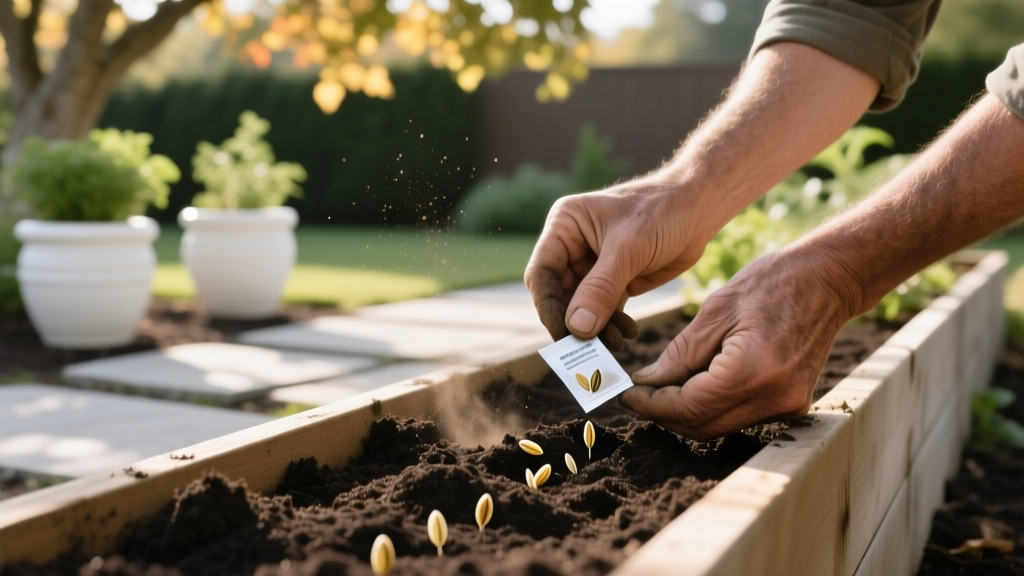
Starting Seeds for Fall Planting in Summer
Summer isn’t just harvest season—it’s your narrow window to seed the crops that taste best when nights cool down. If you wait until “the heat breaks,” you’ll run out of growing days fast. The practical goal right now: start the right seeds under controlled conditions in July and August, then transplant or direct-sow so plants size up before daylength drops and your first frost arrives.
Use this as a working playbook. It’s organized by what matters most this week: planting and seed-starting first, then pruning and clean-up to prevent late-summer disease, then protection (heat, pests, storms), then preparation for smooth fall transitions.
Priority 1: What to plant (seed-starting targets for fall)
Your fall calendar is built from two numbers: (1) your average first fall frost date and (2) the days to maturity for each crop. For most fall vegetables, you want plants established 6–8 weeks before first frost and steadily growing while soil is still warm.
Concrete timing anchors to use today:
- Start brassicas (broccoli, cabbage, kale) 8–10 weeks before your average first frost.
- Transplant brassicas 4–6 weeks before first frost (so they can size up in warm soil).
- Start lettuce indoors 4–6 weeks before your target transplant date; it bolts when daytime highs stay above ~80°F.
- Direct-sow carrots, beets, and turnips when soil temps are 50–85°F (germination varies by crop, but this is a workable field range for fall sowing).
- Plan to cover tender seedlings when nights dip to 32°F (frost) or when a surprise cold front drops temperatures 10–15°F below normal.
Start indoors (or in a shaded nursery bed) for transplanting
These are the best candidates to start from seed in summer because you can control moisture and temperature, then transplant once plants are sturdy:
- Broccoli (especially for fall heads): start in trays for uniform stands.
- Cabbage and cauliflower: stronger transplant performance than direct-sowing in heat.
- Kale and collards: very forgiving; quality improves after light frosts.
- Brussels sprouts: only if you have a long fall (common in zones 6–8); start early.
- Lettuce (heat-tolerant types first; romaine and some summer crisp do better than butterhead in heat).
- Asian greens (bok choy, mizuna, tatsoi): start now for quick fall harvests, but time them so they mature in cooler weather.
Many extension services recommend timing brassica transplants in mid-to-late summer to hit fall’s cooler finishing weather. For example, University of Minnesota Extension (2020) notes that cool-season crops can be planted for fall harvest by counting back from frost and using transplants to beat late-summer stress. Texas A&M AgriLife Extension (2019) similarly emphasizes that fall vegetables are scheduled by frost dates and that transplants help establish crops during hot periods.
“Planting dates for fall crops are based on the average date of first frost and the time it takes a crop to mature.” — University of Minnesota Extension (2020)
Direct-sow now (best in warm soil, quick maturation)
These crops usually germinate and grow well when directly seeded in summer, especially if you manage moisture carefully:
- Beets: reliable fall staple; thin early for best roots.
- Carrots: direct-sow only; keep seedbed consistently moist for 7–21 days.
- Turnips and rutabaga: quick, productive; good for first-time fall gardeners.
- Radishes: succession sow every 7–10 days as temperatures cool.
- Green onions (scallions): direct-sow or transplant clumps.
- Cilantro and dill: better when nights cool; start in late summer for fall leaf harvest.
Heat reality: if your afternoons are still pushing 90–100°F (common in zones 7–10 in July/August), direct-sowing can fail without shade cloth and daily watering. In those conditions, start seeds in trays where you can keep media evenly moist, then transplant at the first break in extreme heat.
Seed-starting method that actually works in summer heat
Summer seed-starting fails for two reasons: media dries out fast, and root zones overheat. Fix both, and your germination rate jumps.
Setup checklist (do this before you sow a single seed)
- Use clean trays/cell packs and fresh seed-starting mix (not heavy garden soil).
- Place trays where seedlings get bright light but avoid harsh afternoon sun: east-facing porch, under 30–50% shade cloth, or dappled tree shade.
- Keep root-zone temps mostly 65–75°F for cool-season crops; if your space runs hotter, move trays indoors under lights.
- Water with a fine rose or bottom-water; avoid blasting seeds out of cells.
- Label with crop + variety + sow date; summer sowings blur together quickly.
Step-by-step timeline (from sowing to transplant)
- Day 0: Sow seeds at recommended depth (typically 2–3x seed diameter). Mist the surface, then cover lightly.
- Days 1–7: Check moisture twice daily. In hot weather, trays can dry by afternoon even after morning watering.
- Days 7–14: Once most seeds emerge, increase light and airflow. Water early in the day to keep foliage dry by evening.
- Weeks 2–3: Begin light feeding (¼-strength) if your mix is unfertilized; avoid pushing lush growth in high heat.
- Week 4+: Harden off for 5–7 days before transplanting: gradually increase outdoor exposure and reduce watering slightly (don’t wilt them).
Transplant rule: transplant on a cloudy day or in the evening. Water the hole, set plants, firm gently, then water again. For the first week, shade transplants during the hottest part of the day if highs exceed 85°F.
Monthly schedule table (use it with your frost date)
Adjust the weeks based on your local first frost. If your average first frost is October 15 (typical for many zone 6 locations), the “early August” column lines up well for brassicas. If your frost is November 15 (common in parts of zones 7–8), shift the entire schedule 3–5 weeks later.
| Window | Start in trays (indoors/shade) | Direct-sow outdoors | Transplant targets |
|---|---|---|---|
| Late June–Mid July | Brussels sprouts, cabbage (long-season), fall broccoli (hot-climate varieties) | Beets (with shade), carrots (if you can keep moist), scallions | None unless you have an early frost & must rush |
| Late July–Early August | Broccoli, cabbage, kale, collards, cauliflower; heat-tolerant lettuce | Beets, turnips, rutabaga; herbs for fall (dill, cilantro later) | Transplant brassicas at 4–6 weeks before frost |
| Mid August–Early September | Lettuce, spinach (cooler regions), Asian greens | Radish successions; carrots (cooler nights help); cilantro as temps drop | Transplant lettuce/greens when highs settle below ~85°F |
| Mid September–Frost | Microgreens indoors; overwintering starts in mild climates | Late radishes; cover-crop sowing in open beds | Row cover as nights approach 32°F; protect young plantings |
Priority 2: What to prune (and what to stop pruning)
Summer pruning decisions affect fall performance. The goal is airflow and disease prevention without triggering a flush of tender growth right before cooling weather.
Vegetable garden pruning and clean-up
- Tomatoes: remove lower leaves touching soil and any yellowing foliage to reduce splash-borne disease. Stop heavy pruning once nights cool—plants need leaf area to finish ripening.
- Cucumbers/squash: remove leaves with obvious powdery mildew and dispose (don’t compost if heavily infected). Keep enough foliage to shade fruit from sunscald.
- Peppers/eggplants: minimal pruning—just remove damaged stems and open slightly for airflow.
- Herbs: cut back basil to encourage branching, but plan final big harvest before temperatures drop below 50°F at night (growth slows sharply).
Perennials and shrubs (summer caution)
In many USDA zones, late-summer pruning of woody plants can stimulate tender regrowth that winterkills. As a rule: avoid hard pruning of shrubs after mid-summer unless removing dead/diseased wood or safety hazards. If you must prune, keep it light and targeted.
Priority 3: What to protect (heat, pests, storms, and fall disease pressure)
Seedlings started for fall have an awkward childhood: they’re cool-season crops trying to get established in hot, pest-heavy weather. Protection is not optional.
Heat protection for germination and transplants
- Shade cloth: 30–50% shade over nursery beds or newly transplanted brassicas prevents wilting and reduces transplant shock.
- Mulch: apply 1–2 inches of clean straw or shredded leaves after seedlings are established (don’t bury tiny stems). Mulch moderates soil temperature and prevents crusting.
- Water timing: water early morning; in heat waves, a second lighter watering mid-afternoon keeps shallow-rooted seedlings alive.
Pest pressure spikes in late summer—plan for it now
Expect more insect activity now than in spring. Young brassicas are especially vulnerable.
- Flea beetles (arugula, mustard, young brassicas): use floating row cover immediately after transplanting; keep edges sealed.
- Cabbage worms/loopers: inspect undersides of leaves 2–3 times per week. Row covers prevent egg-laying. If needed, use Bacillus thuringiensis (Bt) on small larvae and reapply after rain.
- Aphids (kale, broccoli, collards): blast off with water; avoid excess nitrogen that creates soft growth. Encourage beneficials by leaving some flowering herbs nearby.
- Slugs/snails increase as nights cool: reduce hiding places, water in mornings, and use iron phosphate bait where necessary.
For integrated pest management basics and threshold-based control, extension services consistently recommend monitoring and targeted intervention rather than routine spraying. See UC ANR Integrated Pest Management (IPM) guidelines (2018) for crop-specific monitoring approaches and least-toxic control options.
Disease prevention: stop problems before cool nights arrive
Late summer often brings heavy dew, pop-up storms, and warm days—perfect for fungal and bacterial spread. Prevention is mostly cultural:
- Water at soil level to keep foliage dry; avoid evening irrigation.
- Increase spacing slightly for fall brassicas to improve airflow (tight spacing stays wet longer).
- Rotate crop families: don’t plant fall brassicas where spring brassicas grew if you had clubroot, black rot, or heavy pest issues.
- Sanitation: remove heavily diseased leaves; disinfect stakes/cages if plants were infected this year.
Priority 4: What to prepare (beds, soil, and timing math)
Fall crops grow fast when established, but they stall in compacted, dry, or nutrient-stripped beds. Prep now while you still have time to fix problems.
Bed turnover plan (fast and realistic)
- Harvest and clear: remove spent spring crops and weeds before they set seed.
- Loosen soil: broadfork or garden fork to relieve compaction without flipping layers.
- Compost: incorporate 1–2 inches of finished compost where you’ll transplant heavy feeders (broccoli/cabbage).
- Fertilize intentionally: brassicas often benefit from additional nitrogen; root crops prefer moderate fertility to avoid excessive tops and forked roots.
- Irrigation check: verify emitters/hoses work before you transplant. A single missed watering in August can wipe out a planting.
Do the frost-date math (simple, repeatable)
Pick your average first frost date (from a reliable local source), then count backward:
- Broccoli (transplants): aim to transplant 4–6 weeks before frost for heading, and start seed 8–10 weeks before frost.
- Kale/collards: transplant 4–8 weeks before frost (more flexible; can handle cold).
- Carrots/beets: direct-sow so they have enough days to size up before cold slows growth—often 10–12 weeks before frost for larger roots.
If you don’t know your frost date, use a working estimate by USDA zone as a starting point (then refine locally): many zone 5 gardens see first frosts around late September to early October, zone 6 around mid-October, zone 7 around late October, and zones 8–9 often November (local topography can shift this by weeks).
Regional scenarios (what changes where you garden)
Summer seed-starting for fall is the same concept everywhere—count back from frost—but the execution changes a lot by region. Use the scenario closest to you.
Scenario 1: Short-season North (USDA zones 3–5, early frosts)
If your first frost can land around September 20–October 5, your window is tight. Start brassicas indoors in mid-to-late July and transplant by mid-August. Prioritize faster crops: kale, kohlrabi, bush beans for late planting (if time allows), and salad greens under cover.
- Use row cover early to speed growth and block pests, then keep it ready for early frost nights near 32°F.
- Consider cold frames for late lettuce and spinach. Cool nights arrive earlier, which helps prevent bolting.
Scenario 2: Temperate Midwest/Northeast (USDA zones 5–7, humid late summers)
Here, disease pressure is often the limiting factor—tomato blights, powdery mildew, bacterial leaf spots. Fall seedlings do well if you keep foliage dry and airflow high.
- Start broccoli/cabbage in trays under shade to avoid stress during 85–95°F stretches.
- Transplant after a rain-free day when you can irrigate at the base.
- Rotate beds aggressively and sanitize supports; don’t carry summer disease problems into fall brassicas.
Scenario 3: Hot-summer South (USDA zones 7–10, long falls, intense pests)
If your highs are still 95–105°F and nights stay warm, fall gardening is less about frost and more about getting seedlings through heat and insects. You can grow a huge fall garden, but you often must start seeds indoors with AC or in a shaded, ventilated area.
- Delay direct-sowing lettuce/spinach until nights cool closer to 60–70°F.
- Use row cover early, but vent it to avoid overheating on hot days.
- Plan a second wave: brassicas now, then lettuce/greens later as temperatures moderate (often September).
Scenario 4: Coastal/marine climates (Pacific Northwest, coastal Northeast/California)
Cooler nights can make summer seed-starting easier, but slugs and damping-off can be bigger issues. Watering must be precise: moist, not saturated.
- Focus on succession sowing: small plantings every 10–14 days for steady fall harvest.
- Increase airflow around trays; use clean media to prevent damping-off.
Quick timelines you can use this week
If your first frost is around October 15 (common zone 6 example)
- Aug 1–10 (10–11 weeks before frost): start broccoli, cabbage, kale indoors/shade.
- Aug 20–Sep 1 (6–8 weeks before frost): transplant brassicas; direct-sow beets/turnips.
- Sep 1–15 (4–6 weeks before frost): start lettuce in trays; direct-sow radishes and cilantro.
- Late Sep–Oct: keep row cover ready for cold snaps; harvest roots as they size up.
If your first frost is around September 25 (zone 5 example)
- Mid July: start brassicas immediately.
- Early–Mid August: transplant brassicas; direct-sow beets and turnips.
- Late August: sow quick greens; prepare row cover/cold frame.
If your first frost is around November 15 (zone 8 example)
- Late August: start brassicas (or early September if your heat is extreme and you can protect seedlings).
- Mid–Late September: transplant brassicas; direct-sow carrots and beets as nights cool.
- October: lettuce/greens become easy; keep succession sowing every 2 weeks.
Summer seed-starting checklist (print-worthy)
- Know your date: write down your average first frost date and count back 6, 8, and 10 weeks.
- Choose varieties: heat-tolerant lettuce, fall-heading broccoli, bolt-resistant greens.
- Control heat: shade cloth or indoor lights; avoid baking trays on patios.
- Keep moisture steady: check trays twice daily during hot spells.
- Plan pest exclusion: have row cover ready before you transplant brassicas.
- Prep beds early: compost + irrigation check before seedlings are ready.
- Harden off: 5–7 days minimum; transplant evenings for best survival.
One last practical tip: start 10–20% more seedlings than you think you need. Summer losses happen—heat waves, missed watering, or a pest flare-up. Having extras lets you fill gaps quickly and keeps your fall planting on schedule.
When you start seeds for fall in the middle of summer, you’re buying time—time for roots to establish in warm soil and time for plants to mature before daylight and temperatures slide. Set up shade, keep moisture consistent, protect seedlings from insects early, and your fall garden will look like you planned it months ago.