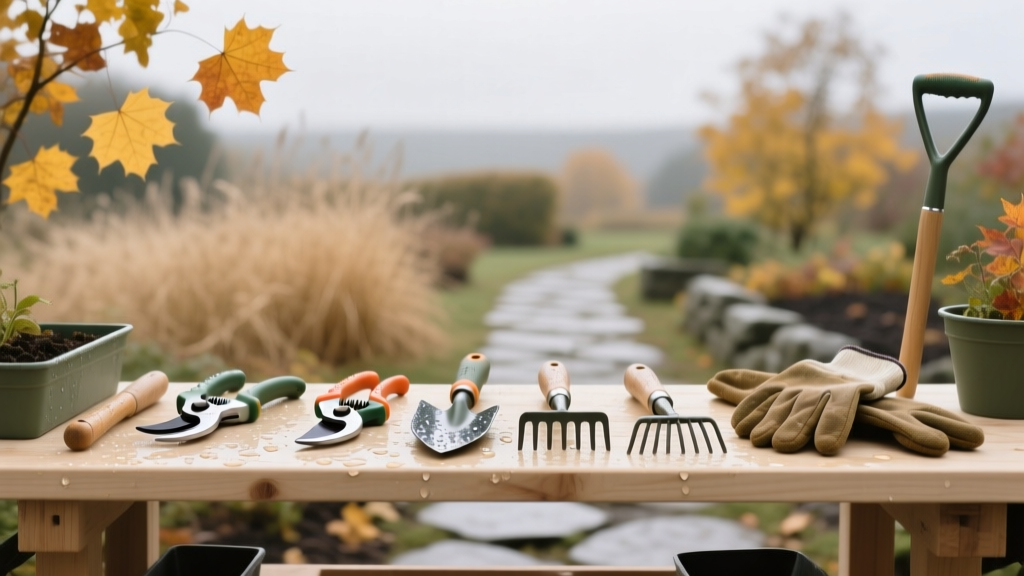
Fall Garden Tool Cleaning and Storage
The best time to clean and store garden tools is before the first hard freeze turns “I’ll do it tomorrow” into a rusty spring surprise. A single weekend of fall maintenance can prevent cracked hoses, dull pruners, and disease carryover—while making your first warm day in spring feel like you’ve already won. Aim to finish tool cleaning 2–3 weeks before your average first frost, or when nighttime lows start hovering near 35–40°F.
This guide is organized by priority—what to plant, prune, protect, and prepare—so you can tackle what matters most right now. If you only do one thing: disinfect cutting tools that touched diseased plants, then oil and store them dry.
Priority #1: What to Plant (before you put everything away)
Tool cleaning season overlaps with a short, valuable planting window. Knock out these quick plantings first, then clean tools while the soil is cooling and growth is slowing.
Plant garlic, shallots, and spring bulbs (timing by soil temperature)
Plant garlic when soil temperatures drop to about 50–55°F (often 2–4 weeks before first frost), so roots establish without triggering lots of top growth. In many areas that lands between late September and late October. Spring-flowering bulbs generally go in when soil is consistently below 60°F.
- USDA Zones 3–5: Plant garlic and bulbs in late September to mid-October.
- USDA Zones 6–7: Plant in October to early November.
- USDA Zones 8–10: Often November–December; pre-chill tulips if required for your cultivar.
Sow cover crops in empty beds
Cover crops reduce erosion, suppress winter weeds, and improve soil structure. If you want a fall sowing that actually establishes, seed before daylength and temperatures drop too far.
- Cold climates (Zones 3–5): Seed winter rye or oats 4–6 weeks before first frost. Oats will winter-kill; rye overwinters.
- Mid-Atlantic/Lower Midwest (Zones 6–7): Rye, crimson clover, or hairy vetch can be seeded mid-September through October depending on your first frost date.
- Warm-winter regions (Zones 8–10): Cover crops can be seeded later, but watch moisture—dry falls may require irrigation to germinate.
Timing numbers to anchor your plan: If your average first frost is October 10, start garlic around September 15–25. If it’s November 1, garlic often slots in around October 1–15. If you’re already seeing 28°F in the forecast, skip seeding and focus on tool storage and protection.
Priority #2: What to Prune (and what to leave alone)
Fall pruning is where gardeners do the most accidental harm. The rule is simple: prune for safety, sanitation, and structure—not for beauty.
Prune now: dead, damaged, diseased wood (DDD)
Remove branches that are broken, rubbing, clearly dead, or infected. This prevents winter storms from tearing wood and reduces disease inoculum. If you pruned fire blight, canker, or other active infections, disinfect tools between cuts.
“Pruning tools should be disinfected between plants, and between cuts on the same plant when disease is present, to reduce the chance of spreading pathogens.” — University of Minnesota Extension, 2020
Delay until late winter: most flowering shrubs and fruit trees
Many shrubs set next year’s flower buds soon after blooming; heavy fall pruning can reduce spring flowers and stimulate tender growth that gets zapped by early cold snaps. For apples and pears, structural pruning is often best during dormancy (late winter) when branch angles are easy to see and disease pressure is lower.
Perennials: cut back selectively
Cut back perennials with known disease issues (powdery mildew-riddled phlox, peony with botrytis, iris with leaf spot) and remove debris. Leave sturdy stems and seed heads (coneflower, sedum, ornamental grasses) if you want winter habitat and less soil exposure. If you leave standing stems, still clean tools—sap and soil are rust’s best friends.
Priority #3: What to Protect (tools, plants, and the storage environment)
Protection is about two things: freezing damage and disease/pest carryover. Both happen fast once nights consistently drop below 32°F.
Protect hoses, sprayers, and irrigation from freezing
If water freezes inside anything, it expands—cracking fittings and splitting hoses. When nighttime lows regularly hit 28–32°F, do the following:
- Disconnect hoses from spigots; drain fully and coil loosely.
- Drain timers, quick-connects, and wands; store indoors if possible.
- Empty backpack and hand sprayers; pump clean water through, then drain and dry.
- Blow out drip lines (or at minimum open ends to drain) in colder regions.
Protect stored tools from moisture and rodents
A damp shed can ruin tools even if you cleaned them. Ideal storage conditions are dry, ventilated, and off the floor. Rodents chew handles and nesting materials can trap moisture against metal.
- Hang tools on wall hooks; avoid leaning metal directly on concrete.
- Store seed, fertilizers, and soil amendments in sealed bins to reduce pests and humidity.
- Use a moisture absorber in tight sheds if you live in a wet-fall region (Pacific Northwest, Great Lakes snowbelt).
Fall pest and disease prevention tied to tool hygiene
Tool cleaning is not just aesthetics—it’s plant health. Many pathogens overwinter on debris and can hitchhike on blades. Fall is also when you’re likely cutting out late-season disease and composting spent plants.
- Tomato/pepper disease beds (early blight, septoria, bacterial spots): Bag and trash infected foliage; don’t compost unless your pile reliably heats. Disinfect pruners, cages, and stakes.
- Powdery mildew on cucurbits: Remove vines; clean trellises and cutting tools before storing.
- Fire blight history on pears/apples: Sterilize tools and avoid moving from infected trees to healthy ones without disinfecting.
Bleach solutions work but can corrode metal if tools aren’t rinsed and dried. Many extension services recommend alcohol-based disinfectants for convenience.
Citation: North Carolina State University Extension (2022) notes that a 70% alcohol solution is effective for disinfecting tools and is less corrosive than bleach when used properly.
Priority #4: What to Prepare (cleaning, sharpening, oiling, and storage systems)
This is the heart of fall tool care: remove soil, kill pathogens, restore edges, prevent rust, and set up storage so tools stay ready through winter.
The fall tool-cleaning timeline (pick a weekend and follow it)
Choose a target date based on your frost. If your average first frost is October 15, schedule cleaning by October 1. If your first frost is closer to November 10, aim for mid- to late October.
- Week 1 (2–3 weeks before frost): Clean and disinfect cutting tools after final pruning and harvest cleanup.
- Week 2 (1–2 weeks before frost): Sharpen, oil, replace handles/bolts, and organize storage.
- Freeze week (when 28–32°F nights arrive): Drain hoses, sprayers, irrigation; bring batteries indoors.
Quick-reference monthly schedule
| Month | Focus | Key temperature / date triggers | Tools to prioritize |
|---|---|---|---|
| September | Sanitation after peak harvest; prep for cool-season planting | Start when nights dip to 45–50°F | Pruners, harvest knives, hoes, tomato cages/stakes |
| October | Main cleaning + sharpening + oiling; storage setup | Finish 2–3 weeks before first frost (often Oct 1–25) | Pruners, loppers, shovels, rakes, wheelbarrow |
| November | Winterize water gear; final disinfecting after disease cleanup | Act before 32°F nights; urgent below 28°F | Hoses, sprayers, irrigation parts, pumps |
| December | Indoor maintenance and parts replacement | Good time when outdoor work pauses | Sharpening, handle repair, inventory, ordering parts |
Step-by-step: hand tools (shovels, hoes, rakes, trowels)
1) Knock off soil immediately. Use a stiff brush or putty knife. Soil holds moisture and salts that accelerate corrosion.
2) Wash and dry. A quick rinse is fine, but don’t soak wood handles. Dry thoroughly with a rag.
3) Remove rust. For light rust, use steel wool or a wire brush. For heavier rust, a vinegar soak can help—just rinse, dry, and oil right after.
4) Sharpen digging edges. Use a mill file for shovels and hoes. Maintain the original bevel; you’re restoring an edge, not making it razor-thin.
5) Oil metal and condition handles. Wipe metal with a thin coat of light machine oil. For wood handles, a rubdown with boiled linseed oil helps prevent drying and splintering (let it cure fully before storage).
Step-by-step: pruners, loppers, and shears (where disease spreads)
1) Disassemble if possible. Take a photo first so reassembly is quick.
2) Clean sap and residue. Use warm soapy water and a scrub pad. Sticky sap often responds to rubbing alcohol.
3) Disinfect. Use 70% isopropyl alcohol (spray or wipe) especially if you cut diseased plants. Let it air dry.
4) Sharpen. Sharpen the beveled cutting blade only, following the original angle. Remove burrs with a few light passes.
5) Oil pivot points. Add a drop of oil at the bolt/pivot, open and close several times, then wipe excess.
Citation: University of California Agriculture and Natural Resources (UC ANR), 2019, recommends cleaning and sanitizing pruning tools to reduce disease spread and maintaining sharp blades for proper cuts that heal faster.
Step-by-step: power equipment (mowers, trimmers, blowers)
Do this before you store equipment for more than 30 days.
- Mower deck: Scrape off grass buildup (it traps moisture and causes rust). Dry thoroughly.
- Blade: Sharpen or replace; a balanced blade reduces vibration and bearing wear.
- Fuel: For gas engines, either run the tank dry or add fuel stabilizer and run it long enough to reach the carburetor (follow your manufacturer’s manual).
- Batteries: Store lithium batteries indoors—ideally around 40–70°F—and don’t leave them in an unheated shed all winter.
Tool storage systems that actually prevent rust
After cleaning, storage is your rust-prevention plan. Choose one option and make it repeatable.
- Wall storage: Pegboard or horizontal racks keep edges from banging together and keep tools dry.
- Sand-and-oil bucket: A classic for shovels and hoes—plunge metal ends into sand lightly mixed with oil to leave a thin protective film.
- Edge guards: Use blade covers (or even split hose) on sharp edges to prevent accidental cuts and protect edges.
Tool-cleaning checklists (printable-style, do-it-now)
60-minute “good enough” checklist (if a freeze is coming)
- Scrape soil off all metal tools
- Disinfect pruners/loppers (70% alcohol)
- Dry everything thoroughly
- Oil pruner pivots and wipe metal with a light coat of oil
- Drain hoses and sprayers if lows are headed to 32°F or below
Half-day deep clean checklist (best for one weekend in October)
- Sort tools into: cutting, digging, watering, power equipment
- Wash + dry all tools; remove rust where needed
- Sharpen shovels/hoes and all cutting blades
- Disinfect cutting tools used on diseased plants
- Oil metal surfaces and moving parts
- Condition wood handles; tighten loose heads/bolts
- Hang tools; label bins for small parts (stakes, ties, drip fittings)
- Winterize hoses/sprayers/irrigation
- Record replacement needs (sprayer seals, pruner springs, mower blade)
Regional scenarios: how fall tool care changes where you live
Fall doesn’t behave the same everywhere. Use these scenarios to adjust your timing and priorities.
Scenario 1: Upper Midwest / Northern New England (Zones 3–5)
You may see first frost as early as September 20–October 5, and hard freezes soon after. Prioritize quick sanitation and winterizing water gear.
- Finish disinfecting and oiling cutting tools by late September.
- Drain hoses before the first 28°F night (not after).
- Store tools indoors if your shed stays damp and cold—freeze/thaw cycles accelerate rust when tools are dirty.
Scenario 2: Mid-Atlantic / Ohio Valley (Zones 6–7)
Longer falls mean you might be cleaning tools while still harvesting. Your key risk is disease spread during late-season pruning and cleanup (especially with lingering humidity).
- Disinfect pruners repeatedly when removing diseased tomato vines or fruit tree cankers.
- Plan a “clean-as-you-go” system: a spray bottle of 70% alcohol plus a rag in your garden tote.
- Do final sharpening and oiling by mid-October to early November, or 2–3 weeks before your frost.
Scenario 3: Pacific Northwest / Coastal climates (Zones 7–9)
Your fall may be mild but wet. Moisture is the enemy—tools rust in storage even if temperatures don’t plunge.
- Prioritize drying time: bring tools into a garage to dry fully before oiling and storing.
- Add ventilation or a moisture absorber in the shed.
- Clean and oil more frequently—mud season can last for months.
Scenario 4: Warm-winter South (Zones 8–10)
You may garden year-round, so “storage” often means “rotation.” The focus is removing disease, preventing corrosion from humidity, and keeping cutting tools sharp for continuous use.
- Schedule a tool reset every 4–6 weeks through fall and winter.
- Watch for fungal issues in humid periods; disinfect tools after working in infected beds.
- Store metal