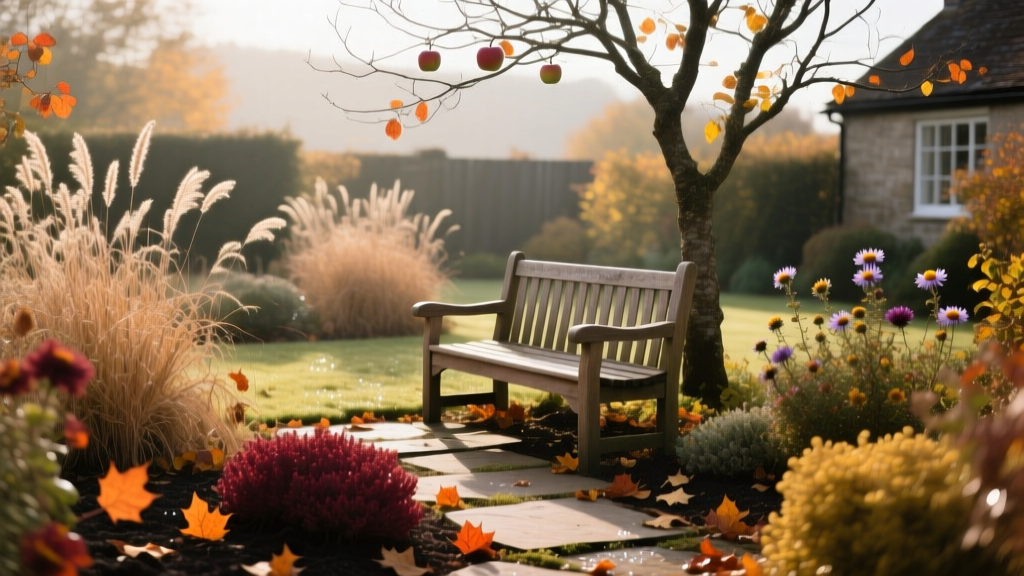
Late Fall Garden Tasks Before Dormancy
Late fall is the last window when your actions still change next spring’s outcome. Once soil temperatures slide toward the 40s°F and hard freezes become regular, roots stop growing, microbial activity slows, and many problems you could have prevented (frost cracks, vole damage, overwintering disease, drained irrigation lines) are locked in until thaw. The opportunity right now: a few targeted afternoons can protect perennials, improve soil structure, reduce pest pressure, and set up earlier blooms and stronger vegetables next year.
Use your local first frost date as the anchor. If you don’t know it, check your ZIP-code-based frost dates and then work backwards. Many tasks below are best done 2–4 weeks before your average first hard freeze (often defined around 28°F). Keep a thermometer handy: soil at 45–50°F is a key cutoff for fall planting and root establishment for many crops and ornamentals.
Priority 1 (This Week): What to Plant While Soil Still Works
Garlic: Plant 2–6 weeks before the ground freezes
If you want big bulbs, late fall is your moment. Plant garlic when nights are reliably cool but before the soil locks up—typically 2–6 weeks before soil freeze. In many zone 5–7 gardens this is often mid-October through mid-November; in zone 3–4, it may be late September into October; in zone 8–9, it can be November into December.
- Split bulbs into cloves right before planting (don’t peel).
- Plant cloves 2 inches deep (3 inches in sandy soil), point up, 4–6 inches apart, rows 10–12 inches apart.
- Mulch after planting once soil cools: 3–6 inches of clean straw or shredded leaves to buffer freeze/thaw.
Spring-blooming bulbs: Aim for soil temperatures around 40–50°F
Plant tulips, daffodils, alliums, crocus, and hyacinths after the heat breaks so they don’t sprout top growth, but while roots can still form. A practical target is when soil temps drop to ~50°F and trending down—often late September to November depending on region. In warm-winter areas (zones 8–10), you may need pre-chilled bulbs (often 10–14 weeks in a refrigerator, away from fruit).
Depth rule of thumb: plant bulbs at 2–3x the bulb’s height. Water in after planting even if rain is forecast; you’re settling soil and starting root growth.
Cool-season greens and cover crops: Plant by the “last reliable growth” window
If your daytime highs are still consistently above 50–55°F, you can still seed quick crops like spinach, arugula, and mustard greens—especially under row cover. For soil protection, sow cover crops:
- Cereal rye: hardy and reliable late (good for zones 3–7 into late fall).
- Hairy vetch: nitrogen-fixing but needs earlier establishment than rye in colder zones.
- Oats: winter-kills in many colder zones, leaving an easy spring mulch.
“Fall-planted cover crops protect the soil from erosion, capture residual nitrogen, and add organic matter when terminated in spring.” — USDA NRCS guidance on cover crops (commonly summarized across regional NRCS publications)
Perennials, shrubs, and trees: Plant early enough to root, not top-grow
Woody plants can establish well in fall if planted with enough lead time before the ground freezes. A reliable guideline is to plant at least 4–6 weeks before the soil freezes. Focus on root care, not fertilizer:
- Dig a wide hole (2–3x root ball width), don’t amend heavily.
- Keep the root flare at grade.
- Water deeply at planting and weekly until the ground freezes if rainfall is light.
- Skip nitrogen fertilizer now; it can encourage tender growth that’s more freeze-prone.
Priority 2 (Next 7–14 Days): What to Prune (and What Not to Touch)
Do prune: dead, damaged, diseased wood (any time you see it)
Late fall cleanup reduces overwintering disease inoculum and prevents storm damage. Remove:
- Broken branches and hanging limbs before snow and ice load.
- Blackened, cankered, or obviously diseased twigs (sanitize pruners between cuts).
- Raspberry/floricane canes that fruited (for summer-bearing types) once leaves drop.
Do NOT do heavy structural pruning on most shrubs and trees right before deep cold
Hold off on major pruning that stimulates regrowth or exposes tender tissue. Save heavy cuts for late winter/early spring for many species. Exceptions: safety pruning and known disease control timing (e.g., removing fire blight strikes promptly). If you’re in a mild-winter zone 8–10 and growth continues, keep pruning conservative until your coolest stretch arrives.
Roses: prioritize sanitation and protection over hard pruning
In zones 3–6, avoid cutting roses back hard in late fall; it can invite dieback. Instead:
- Remove diseased leaves and any dropped foliage around the base.
- After several frosts and when plants are going dormant, mound 8–12 inches of soil/compost around the crown of tender roses.
- In windy sites, you can lightly shorten very tall canes to prevent rocking.
Priority 3 (Before Night Lows Hit 32°F Repeatedly): What to Protect
Mulch strategically after the ground cools
Mulch is most valuable as a temperature stabilizer, not a blanket. Apply after several cool nights—often when daytime highs are 45–55°F and soil is cooling—so you don’t keep rodents cozy too early. Target plants that suffer from freeze/thaw heaving:
- Strawberries (especially in zones 3–6): mulch when temps are consistently in the 20s°F at night.
- Shallow-rooted perennials and fall plantings.
- Garlic beds after planting and cooling.
Protect trunks from sunscald and frost cracks
Young trees (especially thin-barked species like maple, cherry, apple) can split on bright winter days followed by hard freezes. In zones 3–6 and sunny, exposed sites, wrap trunks or use white tree guards in late fall and remove in spring.
Water before freeze-up: drought-stressed plants winter worse
Evergreens and newly planted shrubs need moisture going into winter. Plan a deep watering when:
- Rain has been scarce, and
- The ground is not yet frozen, and
- You’re within 1–2 weeks of sustained hard freezes.
A simple threshold: if your soil is dry 3–4 inches down, water. This matters most in windy sites, sandy soils, and for broadleaf evergreens (rhododendron, holly) that can desiccate in winter sun.
Frost protection for late crops: use covers with a temperature goal
If you’re trying to push greens or keep brassicas going, row covers and low tunnels buy time. Many greens tolerate light frost, but protection helps when forecasts approach 28°F or lower. Vent on warm days to prevent excess humidity (which feeds disease).
Priority 4 (Over the Next 2–4 Weeks): What to Prepare for a Cleaner, Easier Spring
Clean up disease-prone debris (but don’t sterilize your whole yard)
Late fall sanitation is about removing the material most likely to carry disease forward. Focus on:
- Apple/scab and fruit tree issues: remove and discard diseased leaves and mummified fruit.
- Tomatoes, peppers, squash: pull plants and remove from the garden if they had blight, mildews, or virus symptoms.
- Roses: remove black spot infected leaves and fallen debris.
Compost only healthy material. If disease was present, bag it or hot-compost correctly.
Extension guidance consistently emphasizes fall sanitation for disease reduction. For example, the University of Minnesota Extension (2019) notes that removing diseased leaves and fruit can reduce overwintering spores and pest habitat in home orchards and gardens. Similarly, Penn State Extension (2020) highlights cleanup and proper disposal of infected plant debris as a practical step to reduce next season’s disease pressure.
Soil care: test, amend lightly, and protect the surface
Late fall is an excellent time to pull a soil test so amendments can be planned ahead. Apply lime only if a test calls for it; lime takes time to react. Compost can be applied as a thin topdress (1–2 inches) on empty beds, then covered with shredded leaves or a cover crop.
- If you have heavy clay, avoid deep digging when wet—structure is easily damaged.
- If you have sandy soil, prioritize organic matter and mulching to reduce winter nutrient loss.
Leaf management: turn “waste” into winter protection
Shredded leaves are one of the best free resources in late fall. Run them through a mower and use them as:
- Mulch for garlic and perennial beds.
- Carbon for compost piles.
- Path cover to keep mud down.
Keep leaves off lawns in thick mats; smothering invites snow mold in some regions.
Tool, hose, and irrigation winterizing: do it before the first hard freeze (28°F)
When forecasts start showing 28°F overnight lows, it’s time to winterize:
- Drain hoses, disconnect from spigots, store out of sun.
- Shut off and drain irrigation lines; blow out if you can.
- Clean pruners and spades; oil metal to prevent rust.
- Empty and invert clay pots (wet freeze can crack them).
Timing You Can Actually Use: Late Fall Monthly Schedule
| When | Temperature / Frost Trigger | Top Tasks (Do These First) | Notes by USDA Zone |
|---|---|---|---|
| Late September–October | Nights regularly < 50°F; soil trending toward 50°F | Plant bulbs; seed cover crops; plant trees/shrubs early; start leaf shredding | Zones 3–5 often start here; zones 6–7 can be later depending on year |
| October–mid November | 2–6 weeks before ground freeze | Plant garlic; clean up diseased veg plants; wrap young tree trunks | Zone 5 often lands here; zone 3–4 may be earlier; zone 8–9 often later |
| After first light frosts | First frost near 32°F | Pull tender annuals; harvest remaining warm-season crops; start rose sanitation | In maritime climates, first frost may come later but rains increase disease risk |
| Before repeated hard freezes | Forecast lows near 28°F and dropping | Drain hoses/irrigation; deep water evergreens; add mulch after ground cools | Zones 3–6: act fast; zones 7–9: may be a slower ramp-down |
| When soil begins to freeze | Soil < 40°F; hard freeze cycles | Finish mulching strawberries/garlic; secure row covers; protect containers | In zones 8–10, soil may not freeze—focus on rain management and rot prevention |
Late Fall Pest & Disease Prevention That Pays Off
Rodents (voles, mice): don’t give them winter lodging
As temperatures drop, rodents move into thick groundcover and mulch. Reduce damage to young trees and perennials:
- Keep mulch pulled back 3–6 inches from trunks and crowns.
- Mow or trim tall grass around beds and orchard edges.
- Use hardware cloth guards around tree bases (especially in snowy zones).
Fungal diseases: reduce overwintering sites and winter humidity traps
Late fall is when spores and infected tissue settle in for next year. Target the “high-return” sanitation:
- Remove mildewed squash vines and tomato debris rather than tilling it in.
- Rake up heavily diseased rose leaves; don’t leave them under winter mulch.
- Dispose of fallen fruit (“mummies”) under apples and stone fruits.
If you use row covers, ventilate during warm spells; stagnant humid air invites Botrytis and mildews on overwintering greens.
Perennial weeds: cut them before they seed
Late fall is a last chance to stop seed rain. Remove seed heads from thistle, bindweed, and crabgrass remnants. For tough perennials, repeated cutting is better than turning the soil and spreading roots.
Regional Reality Checks: 4 Scenarios Gardeners Face Right Now
Scenario 1: Upper Midwest / Interior Northeast (USDA zones 3–5) with early hard freezes
If your average first hard freeze can arrive by mid-October, your late fall is compressed. Prioritize in this order:
- Garlic and bulbs (get them in while soil is workable).
- Drain hoses/irrigation before a 28°F forecast.
- Mulch strawberries after a few hard frosts (avoid mulching too early, which shelters voles).
- Wrap young tree trunks before bright winter sun becomes a problem.
Tip: In snowy regions, tree guards and vole protection matter as much as mulch depth.
Scenario 2: Pacific Northwest / Coastal climates (zones 7–9) with cool rain, later frost
Here, disease pressure can be the main late fall issue, not cold. You may not see a hard freeze until late November or December, but constant moisture drives mildew, leaf spot, and rot.
- Be aggressive with cleanup of diseased foliage.
- Improve drainage now: clear gutters that overflow into beds, open channels, raise containers off wet ground.
- Use mulch lightly—too thick and too early can keep crowns wet.
Planting window can be longer for shrubs and bulbs, but avoid waterlogged planting holes (roots suffocate in saturated soil).
Scenario 3: Mid-Atlantic / Lower Midwest (zones 6–7) with temperature whiplash
These regions often get warm spells after the first frost. That can trick plants into pushing growth if you prune or fertilize too much.
- Hold off on heavy pruning until late winter; stick to dead/damaged removal now.
- Mulch after soil cools, not after the first 32°F frost.
- Use frost cloth on tender fall crops during sudden drops below 28°F, then vent when highs rebound into the 60s°F.
Scenario 4: Warm-winter South (zones 8–10) where “late fall” is still planting season
In mild climates, dormancy is partial and timing shifts:
- Garlic and many bulbs can be planted later (often November–January depending on local chill).
- Focus on winter rain management and fungal prevention.
- Watch for pests that remain active longer (aphids on greens, slugs/snails in wet winters).
If you don’t get consistent chill, choose bulb varieties suited to low-chill areas or use pre-chilled bulbs.
Fast Late-Fall Checklists (Print-and-Go)
48-hour checklist (do before the next cold front)
- Check the 10-day forecast for 32°F and 28°F nights.
- Harvest remaining tomatoes/peppers/squash before a freeze; remove diseased plants.
- Drain and store hoses if 28°F is forecast.
- Move sensitive containers to shelter (unheated garage or against the house).
7–14 day checklist (highest payoff for spring)
- Plant garlic and any remaining bulbs while soil is workable.
- Shred leaves for mulch/compost; keep thick mats off lawns.
- Wrap young tree trunks or add guards (sunscald/rodents).
- Rake up diseased leaves/fruit under trees and roses; dispose properly.
Before the ground freezes checklist (finish strong)
- Deep water evergreens and new plantings if dry.
- Mulch strawberries and tender perennials after several frosts.
- Secure row covers/low tunnels; add weights and check ventilation.
- Clean, sharpen, and oil tools; store fertilizers and liquids safely.
A Simple Late-Fall Timeline (Count Back From Your Frost Dates)
Use this as your planning ruler. Replace the dates with your local averages.
- 6–8 weeks before your first hard freeze (~28°F): plant shrubs/trees early, seed cover crops, begin bulb planting as soil cools toward 50°F.
- 4–6 weeks before soil freeze: plant garlic, finish spring bulb planting, start trunk protection.
- 1–2 weeks before repeated hard freezes: deep water if dry, drain irrigation/hose systems, prep frost covers.
- After several frosts / when nights settle into the 20s°F: apply winter mulch to strawberries and vulnerable perennials; mound roses in cold zones.
If you only tackle three things before dormancy, make them these: (1) plant garlic/bulbs on time, (2) clean up diseased debris, and (3) winterize water systems before 28°F. Those three moves pay you back in spring with better yields, fewer problems, and a garden that wakes up ready instead of struggling.