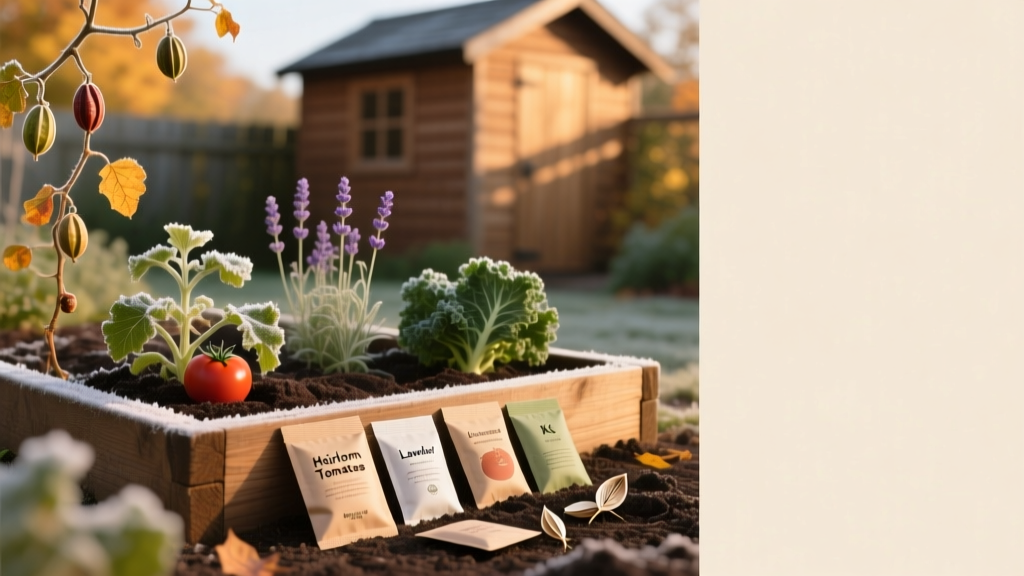
Fall Garden: Order Seeds and Plan Next Year Layout
The window between “still warm enough to work outside” and “ground too hard to dig” is your best planning season. Fall is when the garden slows down just enough for you to see what truly worked, what failed, and what space you actually have. It’s also when the best seed lots and the most reliable varieties start selling out. If you act in the next 2–6 weeks, you can lock in next year’s crops, fix layout problems while beds are visible, and head into winter with fewer pests and diseases waiting to ambush spring.
Use this guide as a prioritized set of right-now tasks: what to plant, what to prune, what to protect, and what to prepare. Timing is based on your average first fall frost date (FFD) and soil temperatures. If you don’t know your FFD, look it up by ZIP code, then work backward.
Priority 1: Do now (this week) — Order seeds and map next year while the garden is still “readable”
Order seeds early: 30–60 days before catalogs sell out
Fall is prime time to order because the most popular disease-resistant varieties can be scarce by late winter. Order now if you want specific onion cultivars, early sweet corn, or hard-to-find hybrids. Also order cover crop seed if you plan to sow before soil freezes.
Fast checklist (this week):
- Write down top 5 crops you must grow next year (and why): yield, flavor, storage, canning/freezing, fresh eating.
- Note what struggled this year (disease, pests, bolting, poor pollination).
- Pick varieties with resistance traits you actually need (e.g., tomato VFN packages, downy mildew resistance for cucurbits where common).
- Order long-lead crops first: onions/shallots, celery, artichoke, early tomatoes/peppers for short seasons.
- Buy extra of your best performers: keep a 10–20% buffer for re-sowing and sharing.
Concrete timing anchors: aim to order seeds by October 15–November 15 in most zones so you have everything on hand before holiday shipping crunch and winter sell-outs. If your first frost arrives early (FFD around September 15–October 1), order on the earlier side.
Sketch next year’s bed layout now (before frost wipes the slate clean)
Planning in fall is easier because you can still see where the shade falls, where water puddles, and which beds stayed weedy. Use a simple map: bed dimensions, paths, irrigation lines, and any permanent plants.
Layout rules that pay off next summer:
- Rotate by plant family to reduce disease carryover: nightshades (tomato/pepper/potato), brassicas, cucurbits, legumes, alliums.
- Group by irrigation needs (drought-tolerant herbs separate from thirsty greens).
- Keep tall crops north (in the Northern Hemisphere): corn, trellised beans, indeterminate tomatoes, sunflowers.
- Reserve an “early spring bed” near the house for quick access: peas, spinach, radish, lettuce.
- Plan access: 18–24 inch paths reduce compaction and make fall cleanup faster.
Blockquote to keep you honest:
“The best time to address many garden disease and insect problems is at the end of the season—sanitation and rotation reduce what overwinters to cause trouble next year.” — Extension sanitation guidance summarized from university integrated pest management recommendations
Priority 2: What to plant (next 1–4 weeks) — Use cooling soil to your advantage
Garlic and shallots: plant when soil cools, not when you “have time”
Garlic timing is about root growth before the ground freezes. A strong rule: plant 2–4 weeks before the ground freezes, often when soil temperatures drop to roughly 50–60°F. In many climates, that’s mid-October to early November.
- Plant cloves 2–3 inches deep (3–4 inches in colder zones), 6 inches apart.
- Mulch after planting once nights regularly hit 32°F to stabilize soil temperature.
- Choose hardneck garlic in colder regions (USDA Zones 3–6), softneck in milder Zones 7–10 for longer storage.
Cover crops: seed before soil drops below germination thresholds
Cover crops protect soil from erosion, reduce nutrient loss, and build organic matter. The key is seeding early enough for establishment. Many cool-season covers germinate reliably when soils are above about 45°F and growth slows significantly as day length shrinks.
Good fall cover crop choices by scenario:
- Cold winter (Zones 3–6): winter rye (very hardy), hairy vetch (nitrogen fixer; slower to establish), oats (winter-kills in colder areas).
- Mild winter (Zones 7–9): crimson clover, field peas, ryegrass blends.
- Small beds: consider a thick layer of shredded leaves as a “cover crop alternative” if you’re late.
Regional timing examples:
- Upper Midwest / Interior New England (Zones 3–5): seed rye by September 15–October 1 for decent fall growth.
- Mid-Atlantic (Zones 6–7): seed rye or clover by October 15.
- Pacific Northwest lowlands (Zones 7–9): you can often seed into late October, but rain can delay soil prep—seed before prolonged saturation.
Cool-season vegetables (only if you still have 4–8 weeks before hard freezes)
If your FFD is still ahead, you can squeeze in quick crops. Use actual weeks-to-maturity and buffer for slower fall growth.
- 4–6 weeks to first harvest: radishes, baby arugula, spinach (baby leaves), turnips (small), Asian greens.
- 6–10 weeks: carrots (small types), full-size spinach, kale (transplants), lettuce heads (in mild areas).
Watch temperature: many cool-season crops tolerate light frost, and some improve with it. For example, kale and carrots sweeten after frosts around 28–32°F.
Priority 3: What to prune (next 2–8 weeks) — Cut with purpose, not habit
Skip heavy pruning on many shrubs now; focus on safety and sanitation
Fall pruning can stimulate tender growth that gets winter-killed. In most regions, avoid heavy pruning of spring-blooming shrubs (like lilac and forsythia) and many ornamentals until late winter or right after bloom.
What you can prune now:
- Dead, damaged, diseased wood on trees and shrubs anytime you see it.
- Raspberry canes: remove spent floricane canes of summer-bearing types after harvest; for fall-bearing (primocane) raspberries, decide if you’ll mow all canes to the ground for one large fall crop next year.
- Perennials: cut back only those with known disease issues (powdery mildew-prone phlox, peony foliage after frost) to reduce overwintering inoculum.
Tree timing note: wait for dormancy for major cuts
For larger structural pruning on many deciduous trees, aim for late winter when trees are dormant and you can see branching clearly. If you must prune in fall, do it after leaf drop and before temperatures routinely fall below 25°F, when wood can be more brittle.
Priority 4: What to protect (right now through first hard freeze) — Prevent winter losses and next year’s outbreaks
Frost protection thresholds you can act on
Fall weather turns on a dime. Use these practical thresholds:
- 36–40°F forecast overnight: cover basil, tomatoes, peppers to extend the season.
- 32°F (frost): harvest tender crops before nightfall; protect fall greens with row cover.
- 28°F (hard frost for many plants): expect damage to many annuals; dig sweet potatoes; harvest winter squash if vines collapse.
- 25°F and below: drain hoses, shut off outdoor water, and protect exposed irrigation components.
Protect soil: don’t leave it bare
Bare soil over winter erodes and loses nutrients. If you don’t have time for a cover crop, use chopped leaves, straw, or compost as a blanket.
Leaf mulch method (fast and effective):
- Shred leaves with a mower.
- Apply 2–4 inches over empty beds.
- Keep mulch 2–3 inches away from crowns of overwintering perennials to reduce rot.
Protect perennials and small fruits from heaving and rodent damage
Freeze-thaw cycles can “heave” plants out of the ground, especially in Zones 4–6 with intermittent snow cover. Mulch after the ground begins to freeze lightly (often after a few nights around 25–32°F) so you don’t invite voles too early.
- Strawberries: mulch when plants are dormant and temps consistently below 20–25°F at night.
- Young fruit trees: use trunk guards to prevent rabbit/rodent girdling.
- Newly planted shrubs/trees: water deeply until the ground freezes; drought stress is a major winter-kill factor.
Fall pest and disease prevention that actually matters
Fall cleanup is not about being tidy; it’s about breaking pest and disease life cycles.
- Tomato/pepper/potato disease: remove and discard (don’t compost) plants with blight or virus symptoms. Many pathogens overwinter in debris and soil. Cornell University notes that late blight will not overwinter in most regions without living tissue such as infected tubers, emphasizing sanitation and removal of infected material (Cornell University, 2023).
- Squash bugs and cucumber beetles: remove old vines and boards/flat objects where adults hide. Clean edges where weeds shelter pests.
- Apple scab and many leaf-spot diseases: rake and remove infected leaves to reduce spring spore load. University extension programs consistently recommend fall leaf sanitation as a primary cultural control (e.g., University of Minnesota Extension, 2019).
- Powdery mildew: remove heavily infected plant material; avoid saving seed from severely affected plants unless you understand the disease biology for that crop.
Compost caution: only compost disease debris if your system reliably reaches hot-compost temperatures. Many home piles do not heat evenly, leaving viable spores and eggs.
Priority 5: What to prepare (next 2–10 weeks) — Build next year’s success with logistics and records
Soil testing and amendments: fall is the easiest time to correct pH
Soil changes take time. Fall applications of lime have months to react before planting. A soil test every 2–3 years is a practical cadence for most home gardens (more often if you are intensively cropping).
Michigan State University Extension notes that soil testing is the best way to determine lime and fertilizer needs rather than guessing (Michigan State University Extension, 2020). Take samples after beds are cleared, and mark results on your garden map.
- If pH is low, apply lime per soil test recommendations in fall.
- If phosphorus is high, don’t add more—focus on compost and nitrogen management.
- Top-dress compost now (1–2 inches) and let winter work it in, but avoid burying crowns of perennials.
Create a simple crop rotation plan (and stick to it)
Rotation is one of the highest-return planning tasks you can do in fall. Even small gardens can rotate by moving crop families between beds or alternating sides of a bed.
Practical minimum rotation: avoid planting tomatoes/peppers/eggplant/potatoes in the same spot for 3 years if you had disease pressure. Brassicas benefit from similar spacing if clubroot is a concern, especially in wet soils.
Monthly schedule: what to do when (adjust by your frost date)
| Timing | Top tasks | Numbers to watch | Notes |
|---|---|---|---|
| Early fall (6–8 weeks before FFD) | Order seeds; start layout map; sow cover crops in cold regions | Soil > 45°F for cover crop germination | Don’t wait for “end of season”—shipping delays happen |
| Mid fall (2–6 weeks before FFD) | Plant garlic; remove diseased crops; harvest curing crops | Soil 50–60°F for garlic planting | Finish sanitation before leaf drop buries problem areas |
| At first frost (32°F) | Cover sensitive crops; pull tomato vines; drain hoses after hard frost | 32°F frost threshold | Row cover can buy 1–3 weeks for greens |
| Late fall (after hard frost ~28°F) | Mulch empty beds; protect strawberries; clean tools; store irrigation | 28°F hard frost; nights trending 25–32°F | Mulch after pests are less active to reduce vole habitat |
| Early winter (ground near freezing) | Finalize next year’s rotation; inventory seeds; plan starts | Order deadline: Nov 15–Dec 15 (variety dependent) | Use notes to adjust spacing, succession timing, and varieties |
Tool, irrigation, and bed prep: the unglamorous tasks that prevent spring chaos
Do these on a dry day before repeated freezes:
- Drain hoses and store them; shut off and drain outdoor spigots where applicable.
- Clean pruners and stakes with soap and water; disinfect if disease was present (especially tomato supports).
- Sharpen pruners and loppers now, not on the first warm day in spring.
- Pull and label drip lines so you can reinstall quickly.
Regional reality checks: adjust the plan to your fall
Scenario 1: Short-season, early frost (USDA Zones 3–5; FFD often Sep 15–Oct 5)
Prioritize cover crops early and garlic right after your summer crops finish. Your fall is less about growing new vegetables and more about winter-proofing soil and perennials.
- Seed winter rye by September 15–October 1 for establishment.
- Plant garlic by mid-October in many areas, earlier if the ground freezes early.
- Mulch strawberries after dormancy, when temps dip consistently below 20–25°F.
Scenario 2: Temperate with a long fall (Zones 6–7; FFD often Oct 10–Nov 10)
You can do both: keep harvesting and plan ahead. Use row covers to extend greens and focus on sanitation to reduce spring disease pressure.
- Succession sow arugula/radish up to 4–6 weeks before hard freezes, using covers.
- Plant garlic typically late October to early November when soil cools to 50–60°F.
- Do a soil test in October and apply lime per results for winter reaction time.
Scenario 3: Mild-winter gardens (Zones 8–10; frost may be light or sporadic)
Your fall is a second spring. You may be starting your best greens season while still planning next year’s warm-season layout. The main risk is disease lingering due to longer shoulder seasons.
- Be aggressive about removing tired summer crops to cut pest carryover.
- Keep airflow in winter greens to reduce downy mildew and fungal leaf spots.
- Plan spring/summer crop rotation now; disease pressure can be higher with year-round growth.
Seed ordering with intent: match varieties to next year’s problems
Use this fall’s notes to choose disease resistance and maturity windows
Instead of ordering what looks good in a photo, order based on your pain points:
- If tomatoes cracked: choose crack-resistant varieties; improve consistent watering with drip next year.
- If cucumbers got downy mildew: pick resistant cultivars and plan earlier plantings plus trellising for airflow.
- If brassicas were riddled with caterpillars: plan for early season insect netting and staggered plantings.
- If squash vine borer was severe: plan for resistant types (some moschata squash), earlier sowing, and row covers at moth flight.
Inventory seeds you already have (and stop buying duplicates)
Before you hit “checkout,” do a 20-minute inventory. Check packet dates and storage conditions. Many seeds remain viable for years when kept cool and dry, but germination drops with time.
Quick inventory checklist:
- Sort by crop family and planting season (cool vs warm).
- Discard anything that got damp or hot (garage summers are rough).
- Run a simple germination test for old seed: 10 seeds on a damp paper towel, count sprouts after 7–10 days.
Timeline you can follow starting today
Next 7 days:
- Order seeds for long-lead crops and your top disease-resistant varieties.
- Sketch next year’s garden map and mark this year’s crop families.
- Remove and discard plants with obvious disease; clean stakes/cages that supported them.
Weeks 2–4:
- Plant garlic when soil cools to 50–60°F, typically 2–4 weeks before freeze-up.
- Sow cover crops while soils are still above 45°F.
- Start leaf collection and shredding for mulch; top-dress compost on cleared beds.
At first frost (32°F) and after:
- Cover greens and harvest tender crops before cold nights.
- Drain hoses after the first hard freeze (28°F) and store irrigation gear.
- Mulch perennials after a few cold nights (25–32°F) to reduce heaving.
Before consistent deep freezes:
- Take soil test samples and submit them; apply lime if recommended.
- Finalize your rotation plan and seed-starting calendar for late winter.
- Store fertilizers, amendments, and seed in a cool, dry spot away from rodents.
When you step outside now, you’re not just cleaning up the old season—you’re setting the conditions for next year’s germination, growth, and pest pressure. Order the seeds you know you’ll use, commit your layout to paper while you can still see the beds, and leave your soil protected. Spring will feel like it arrives faster than it should; your fall work is what makes that first warm week productive instead of frantic.
Sources: Cornell University (2023) late blight management guidance; Michigan State University Extension (2020) soil testing recommendations; University of Minnesota Extension (2019) sanitation practices for disease management in home landscapes.