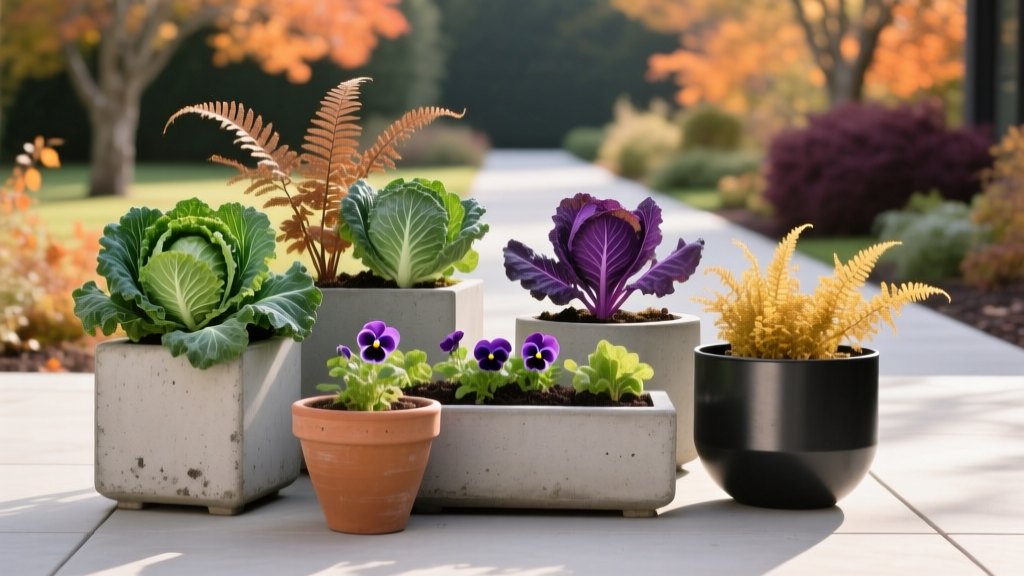
Fall Container Garden Transition to Cool-Season Plants
The window is tight: one warm spell can keep your summer pots limping along, but the next cold front can flatten tender plants overnight. Fall is when containers either become a mushy mess of tired annuals—or your most productive, best-looking garden feature through frost and into winter. If your nighttime lows are trending toward 45–50°F, it’s time to pivot. Most cool-season container plants establish fastest when days are mild and nights are cool, not when you’re already scraping ice off the rim.
This guide is organized by priority so you can act right now: what to plant first, what to prune and clean, what to protect as temperatures drop, and what to prepare for a longer cool-season run. Use your average first frost date as your anchor and count backward. For many gardens, the key transition happens 6–8 weeks before first frost, with a second wave 2–4 weeks before frost for extra-hardy plants.
Priority 1: What to Plant (Start with the pots you’ll see and use most)
Fall containers work best when you choose plants that like cooling soil and shorter days. Aim to plant when daytime highs are 55–75°F and nights are above 40°F. That usually corresponds to late August through October, depending on USDA zone and elevation.
Plant now (6–8 weeks before your average first frost)
These choices root quickly and handle cool nights without stalling. They also rebound after a light frost (28–32°F) if the potting mix doesn’t freeze solid.
- Leafy edibles: kale, Swiss chard, arugula, spinach, mustard greens, leaf lettuce (choose “cold-tolerant” mixes).
- Herbs that tolerate cool weather: parsley, cilantro, chives (in many zones), thyme (perennial in many regions).
- Classic fall ornamentals: pansies/violas, ornamental cabbage/kale, asters, heuchera (coral bells), small grasses (Carex, fescue).
- Bulbs for spring in fall containers (if you overwinter pots): dwarf daffodils, crocus, grape hyacinth (zone-dependent).
Timing numbers that matter: If your first frost averages Oct 15, target your main planting between Aug 20–Sep 5 (roughly 6–8 weeks ahead). If first frost is Nov 10, you can plant the main fall display in late September.
Plant in the second wave (2–4 weeks before first frost)
Use this wave to refresh color, tighten designs, and add plants that shrug off colder nights. Many gardeners wait too long—by the time nights are consistently < 38–40°F, some transplants slow down.
- Hardy ornamentals: mums (choose hardy types), ornamental peppers (may be damaged near 32°F), cyclamen (protect from hard frost), dusty miller (often survives light frosts).
- Fast salad crops: baby greens, radish (short varieties), green onions/scallions.
Best plant pairings for fall containers (recipes you can copy)
Use the thriller-filler-spiller approach, but select cool-season performers.
- Edible pot (12–16" wide): 1 kale (thriller) + 2 leaf lettuce (filler) + trailing thyme or nasturtium in early fall (spiller; note nasturtium hates hard frost).
- Color pot: 1 small ornamental grass + 3 violas + 1 heuchera + trailing ivy (ivy can overwinter in mild zones but can be invasive; keep contained).
- Frost-proof look: ornamental cabbage + pansies + dusty miller + sedum spiller.
“Cool-season vegetables grow best when temperatures are cool and days are shorter; many can tolerate light frosts and improve in flavor after cool weather.” (Extension guidance summarized from multiple state programs; see citations below.)
Soil and container reset: the step most people skip
Fall failures often come from summer potting mix that’s hydrophobic, salt-loaded, or root-bound. Before you plant, do a fast reset:
- Dump and inspect: If roots filled the pot and the mix is compacted, replace at least 2/3 of the media.
- Rehydrate: Dry peat-based mixes repel water. Soak the mix in a tub for 10–15 minutes, then drain.
- Refresh: Add compost (up to 20–30% by volume) and a slow-release fertilizer labeled for containers.
- Drainage check: Make sure holes aren’t blocked; fall rains + clogged drainage = root rot.
University extension guidance consistently emphasizes sanitation and good media management for container success; for example, the University of Minnesota Extension notes that container media structure and drainage are critical to avoid root problems, especially as conditions cool and drying slows (University of Minnesota Extension, 2020).
Priority 2: What to Prune, Remove, and Clean (Do this before cold nights lock in disease)
Fall is cleanup season for containers because pathogens and pests ride the transition. If you simply tuck new plants into old mess, you can carry over powdery mildew, botrytis, and aphids into a tighter, damper fall canopy.
Remove summer annuals strategically (don’t rip everything at once)
If days are still warm (highs in the 70s) and you want a gradual change, you can keep one or two heat-lovers as “late-season accents,” but remove anything that’s diseased or collapsing. Prioritize removal of:
- Plants with powdery mildew (zinnias, some salvias, cucurbits in pots).
- Plants with gray mold/botrytis (soft, fuzzy rot—common as nights cool).
- Any pot with fungus gnats breeding in soggy media (fix moisture and replace top layer).
Prune for airflow (fall humidity + cool nights = mildew pressure)
In early fall, prune to open the canopy and reduce leaf wetness duration. Target:
- Remove yellowing leaves at the base (they trap moisture).
- Thin crowded stems on asters/mums if packed tight.
- Pinch back legginess on pansies/violas after planting to encourage branching.
Sanitize pruners with 70% alcohol between pots when disease is present. It’s a small step that prevents a pot-by-pot outbreak.
End-of-season soil hygiene: what to compost vs. discard
Compost only healthy plant material. If you had persistent disease (powdery mildew, botrytis, leaf spot) or heavy pest infestations, bag and dispose. Many extension services advise not composting diseased material unless you manage a hot compost system that reliably reaches pathogen-killing temperatures (often cited around 131°F sustained) (e.g., UC ANR composting guidance; UC ANR, 2019).
Priority 3: What to Protect (Your fall containers will freeze faster than your beds)
Containers lose heat on all sides. A plant that survives 25°F in the ground may be damaged in a pot at 28–30°F because the root zone chills rapidly. Plan protection around temperature thresholds, not the calendar.
Know your frost thresholds (and what to do at each)
- 50°F nights: Begin transition planting; reduce feeding of summer bloomers.
- 40–45°F nights: Growth slows for heat-lovers; cool-season plants thrive. Watch for condensation-related disease.
- 32°F (frost): Protect tender plants; cool-season greens often tolerate light frost, especially if hardened off.
- 28°F (hard frost): Many ornamentals survive, but pots need insulation; remove tender annuals and peppers.
- 20–25°F: Root damage becomes likely in above-ground containers unless insulated or moved.
Protection methods that actually work for containers
- Move and cluster: Group pots against a south- or west-facing wall for radiant heat. A cluster can be 2–5°F warmer than isolated pots on open paving.
- Insulate the pot: Wrap with burlap + bubble wrap (bubble inward), or slide nursery pots into a larger decorative pot with mulch between walls.
- Cover plants on frost nights: Use frost cloth (not plastic touching leaves). Put it on before sunset, remove mid-morning when temps rise above 35–40°F.
- Raise pots off freezing surfaces: Pot feet or wood slats reduce conductive cold from concrete.
Overwintering perennials in containers (zone reality check)
A practical rule: a perennial that is hardy to your zone in-ground often needs one to two zones colder to overwinter reliably in a container because roots are more exposed. So if you’re in USDA Zone 6, aim for perennials rated to Zone 4–5 for best odds in pots.
Scenario: In Zone 7 (mid-Atlantic), heuchera and some sedums may overwinter in containers with wall placement and pot insulation. In Zone 4 (Upper Midwest), overwintering the same pot above ground is risky unless it’s moved into an unheated garage that stays around 25–40°F.
Priority 4: What to Prepare (Set up the next 8–12 weeks)
Once fall containers are planted, success comes from consistent moisture, smart feeding, and disease prevention. The goal is steady growth before cold weather slows everything down.
A monthly schedule you can follow (adjust by frost date)
| Timeframe | What to do | Targets & numbers |
|---|---|---|
| Late Aug–Early Sep | Refresh potting mix; plant first wave cool-season greens and violas | Plant ~6–8 weeks before first frost; nights trending 45–55°F |
| Mid–Late Sep | Second wave: mums/asters; reseed baby greens; prune for airflow | Best rooting when highs 55–75°F; avoid planting when nights < 40°F if possible |
| Early–Mid Oct | Begin frost-readiness: cluster pots, stage frost cloth, reduce watering frequency | Act when forecast shows first 32°F night within 7–10 days |
| Late Oct–Nov | Protect during hard freezes; harvest greens; remove mushy growth; consider overwinter moves | At 28°F protect; at 20–25°F move/insulate root zones |
Fall watering: less frequent, but not “forget it”
Cool air means slower evaporation, but containers still dry out—especially in wind. Water early in the day so foliage dries before nightfall. As a working pattern:
- During mild fall weather: check moisture every 2–3 days.
- After a cold front: check again even if it rained; pots under eaves can stay dry.
- Before a freeze: water if the mix is dry. Moist soil holds more heat than dry soil and reduces root stress.
Avoid keeping pots saturated. Cool roots + wet media increases root rot risk, particularly for pansies and cyclamen.
Fertilizing fall containers (feed the new roots, not the old foliage)
Use a light hand. If you refreshed mix with slow-release fertilizer, you may only need occasional liquid feeding.
- Edible greens: Half-strength balanced fertilizer every 10–14 days until growth slows (typically when nights sit below 40°F).
- Ornamental fall pots: One slow-release application at planting is often enough; too much nitrogen makes soft growth that’s more frost-sensitive.
Pest and disease prevention for fall containers (the seasonal hit list)
Fall pests and diseases are different from midsummer. Cooler weather shifts the balance: fewer mites, more slugs/snails, and more fungal issues in dense canopies.
Aphids on kale, pansies, and mums
Aphids often spike in early fall when new growth is tender. Control quickly:
- Blast with water in the morning.
- Use insecticidal soap or horticultural oil according to label directions; treat when temps are below 85°F and plants are not drought-stressed.
- Remove heavily infested tips and discard.
Slugs and snails (especially in rainy coastal and Pacific Northwest fall)
They hide under pot rims and saucers. Prevention:
- Remove saucers at night if practical; elevate pots on feet.
- Hand-pick at dusk for 3 consecutive nights to break the cycle.
- Use iron phosphate baits where appropriate, following label guidance—especially around edible containers.
Botrytis (gray mold) on crowded flowers
Botrytis loves cool, damp conditions and dead petals. Prevention is mostly cultural:
- Deadhead spent blooms weekly.
- Water at soil level; avoid evening watering.
- Space plants so air moves through the pot.
Powdery mildew on fall ornamentals
Powdery mildew can surge with warm days and cool nights. Keep leaves dry, avoid excess nitrogen, and remove infected leaves early. If you use fungicides, rotate modes of action and follow label instructions. Cornell and other extension programs emphasize early intervention and airflow for mildew management (Cornell Cooperative Extension, 2021).
Three real-world fall container scenarios (adjust your plan, not your expectations)
Scenario 1: Warm-fall regions (USDA Zones 8–10) where “fall” still hits 85°F
In long warm falls, cool-season plants can struggle if planted too early into hot containers. Shift timing later and manage heat:
- Plant when highs consistently drop below 80°F—often late September to October.
- Use light-colored pots or add a decorative outer pot to reduce root-zone heat.
- Choose heat-tolerant cool-season picks: Swiss chard, kale, parsley, and some violas.
Timeline: If your first frost is very late or nonexistent, use “cool-down dates” instead—plant when nighttime lows settle near 55–60°F.
Scenario 2: Early frost and high elevation (Zones 3–5, mountain valleys)
If your first frost can hit in September, you need speed and protection:
- Plant hardy greens 8 weeks before first frost; choose transplants over seed for pansies and kale.
- Use smaller plants that establish quickly; avoid oversized nursery mums that are root-bound.
- Prepare an unheated garage or shed space that stays between 25–40°F for emergency pot moves during early hard freezes.
Design tip: Build the pot around hard structure (ornamental cabbage, heuchera, grasses) so it still looks good after a 28°F night knocks back softer flowers.
Scenario 3: Wet fall climates (Pacific Northwest/coastal Northeast) with mildew and slugs
Your main challenge is not frost—it’s rot and chewing damage.
- Choose plants with tougher leaves: kale, heuchera, evergreen sedums, smaller-leaf violas.
- Increase drainage: add extra perlite/pumice; ensure pots aren’t sitting in standing water.
- Water sparingly; let the top 1 inch of mix dry before rewatering (unless the plant wilts).
Maintenance rhythm: A quick weekly “dry-out and deadhead” session prevents botrytis from taking over by mid-October.
Fast checklists you can use this week
48-hour fall container transition checklist
- Check your local average first frost date; mark it on the calendar.
- Walk pots and flag: diseased, collapsing, or root-bound containers.
- Buy/collect: fresh potting mix, compost, slow-release fertilizer, frost cloth.
- Remove diseased material and sanitize pruners between pots.
- Refresh media (replace at least 2/3 when compacted).
- Plant first wave: violas + greens + one structural plant per pot.
- Water deeply; confirm drainage is flowing freely.
Two-week refinement checklist
- Deadhead and thin crowded growth for airflow.
- Scout for aphids twice per week (look at tender tips and undersides).
- Add second-wave color (mums/asters) if nights remain above 40°F.
- Stage frost protection: cluster plan + cloth location.
- Topdress with compost or refresh mulch surface to reduce splash-borne disease.
Timing your transition by frost date (a simple backward count)
If you like direct rules you can apply instantly, use this backward plan:
- 8 weeks before first frost: replace tired summer pots with cool-season “foundation” plants (kale, heuchera, grasses).
- 6 weeks before first frost: plant leafy greens and violas; begin weekly deadheading.
- 4 weeks before first frost: add second-wave color; start clustering pots on cooler nights.
- 2 weeks before first frost: stop heavy feeding; focus on moisture management and pest scouting.
- Frost week (first 32°F forecast): cover, move, or accept loss of tender plants; keep hardy pots going.
For edible containers, you can keep harvesting well past first frost. Many greens hold quality through repeated light frosts, especially when protected with cloth on nights expected to drop below 30–32°F. Several extension programs note that cool temperatures can improve flavor in crops like kale after light frost exposure (e.g., University of Illinois Extension, 2022).
Make the transition once, then maintain it: clean, plant, protect, and adjust. When your neighbors’ pots go empty after the first cold snap, yours can still be producing salad greens and showing color—because you treated early fall like a deadline, not a suggestion.
Sources: University of Minnesota Extension (2020) container media/drainage guidance; UC Agriculture and Natural Resources (2019) composting best practices and pathogen temperature considerations; Cornell Cooperative Extension (2021) powdery mildew prevention principles; University of Illinois Extension (2022) cool-season crop performance and frost tolerance notes.