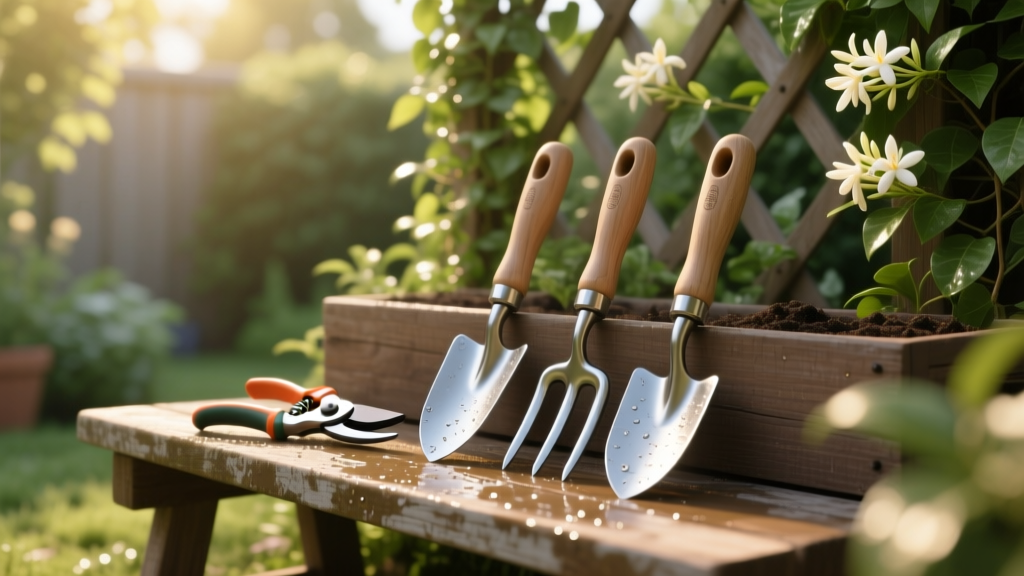
Summer Garden Tool Care in Humid Conditions
When humidity stays high for days, your garden tools can go from “fine” to “rusty, sticky, and spreading disease” faster than you think. The opportunity right now is simple: a 10–15 minute routine after each work session prevents corrosion, keeps pruners cutting cleanly, and reduces the chance you move pathogens from plant to plant. If your daytime highs are hovering near 85–95°F with nights above 70°F, or your tools live in a shed that smells damp by mid-July, treat this as peak-risk season—especially in USDA Zones 6–10 where long humid stretches are common.
This is a priority-based, do-it-this-week guide: what to plant (and how tool care affects it), what to prune (and how to disinfect in muggy weather), what to protect (from rust, pests, and disease spread), and what to prepare (for late summer and the fall push). Use the checklists and schedules to match your region.
Priority 1: What to protect (tools first, plants second)
In humid conditions, tool care is plant care. Sap, soil film, and plant juices hold moisture against metal—rust starts where grime stays. More importantly, contaminated blades can carry bacterial and fungal problems between plants. The goal is to keep tools clean, dry, lightly protected, and stored with airflow.
Right-now thresholds: when to switch to “high-humidity protocol”
- Relative humidity: If your local forecast is 80%+ for 3+ consecutive days, treat every cutting tool as high-risk for corrosion.
- Temperature: Sustained nights above 70°F often mean dew stays longer in the morning—tools left out overnight will wet-cycle daily.
- Rain pattern: If you’re in a summer storm cycle (afternoon downpours 3–5 days/week), assume your shed humidity is elevated even when it’s not raining.
- Seasonal timing: In many regions, the most tool-damaging stretch is roughly June 15–August 31, with a second spike during hurricane/tropical storm periods.
- Frost planning: If your first fall frost is around October 15 (common in parts of Zone 6), your late-summer pruning and planting window depends on clean, sharp tools now—don’t lose weeks to maintenance later.
After-each-use routine (10–15 minutes)
This is the routine that prevents 90% of summer tool problems:
- Knock off soil with a stiff brush (soil holds moisture and salts).
- Wash sap from blades using warm water + a drop of dish soap; for heavy resin, use mineral spirits on a rag (keep away from flames).
- Dry immediately with a towel—don’t air-dry in humidity.
- Disinfect if you cut living tissue (see disinfectant options below), especially after working on tomatoes, cucurbits, roses, fruit trees, or any plant with spots/cankers.
- Oil lightly (pivot points, springs, blade faces) using food-safe mineral oil for edibles or a light machine oil for general tools.
- Store off the floor with airflow—hang tools or place on a rack.
Disinfecting tools in summer: what works, what fails
In humid weather, disinfectants evaporate more slowly, which can help contact time—but residue and corrosion risks rise. Balance effectiveness with tool longevity.
Extension guidance consistently emphasizes disinfecting tools to reduce disease spread. For example, the University of Minnesota Extension recommends sanitizing pruning tools to prevent transmission of plant pathogens (University of Minnesota Extension, 2020). Likewise, UC ANR publications note that sanitizing tools can reduce the spread of certain plant diseases and emphasize appropriate disinfectants and contact time (University of California Agriculture and Natural Resources, 2018).
“Sanitation—cleaning and disinfecting tools between plants—can reduce the spread of disease-causing organisms during pruning and other maintenance.” — University of Minnesota Extension (2020)
Quick comparison: disinfectants for humid-season tool care
| Option | Typical use | Pros in humidity | Cons / cautions | Best for |
|---|---|---|---|---|
| 70% isopropyl alcohol | Wipe or dip blades | Fast, no rinse needed; less corrosive than bleach | Flammable; can dry out some grips | Pruners, snips, knives between plants |
| Diluted bleach (fresh mix) | Soak/wipe with contact time | Strong disinfectant | Corrosive; must rinse and dry; mix fresh daily | Occasional deep sanitation, non-coated metal parts |
| Disinfecting wipes | Wipe between plants | Convenient in the garden | Residue can attract grime; not ideal for heavy sap | Quick passes during tomato/rose work |
| Soap + water (cleaning, not disinfecting) | Wash and scrub | Removes grime that shelters pathogens | Doesn’t reliably disinfect on its own | First step before alcohol/bleach |
Rust control: stop it today, not “sometime later”
Surface rust in July becomes seized pivots by August. If you already see orange spots:
- Scrub with steel wool or a wire brush.
- Use a mild abrasive (baking soda paste) for light rust; for heavier rust, a rust remover product can help (follow label directions).
- Dry, then oil immediately. Oil is your humidity shield.
- Sharpen after rust removal—rust pits make blades tear plant tissue, increasing disease entry points.
Storage fixes for humid sheds (cheap upgrades that work)
If your tools “sweat” in storage, improve airflow and lower moisture where the metal lives:
- Hang tools so air moves around them (avoid stacking in buckets).
- Add a moisture absorber (desiccant tubs) or a small dehumidifier if power is available.
- Use a tool bucket with a dry base: keep a rag lightly oiled at the bottom; wipe blades before storage.
- Keep fertilizers and pool chemicals separate; corrosive fumes accelerate rust.
High-humidity tool-care checklist (printable)
- □ Brush off soil after every session
- □ Wash sap same day (don’t let it cure)
- □ Disinfect pruners when moving between plants
- □ Dry with towel (no air-drying)
- □ Oil pivots and blades lightly
- □ Store hanging/off concrete floors
- □ Inspect weekly for rust, loose bolts, dull edges
Priority 2: What to prune (and how to keep cuts clean in muggy weather)
Summer pruning is often necessary—deadheading, removing diseased foliage, managing vigorous growth—but humid conditions raise disease pressure. Your tool care directly affects healing and infection risk.
This week: prune with disease pressure in mind
- Prune on a dry day when leaves are not wet; aim for late morning after dew dries.
- Disinfect between plants when working on: tomatoes, peppers, cucumbers/squash, roses, fruit trees, hydrangeas with leaf spots, or any plant showing cankers or blackened stems.
- Make fewer, cleaner cuts with sharp blades to reduce wound area.
Timing targets (use these numbers)
- If daytime highs exceed 90°F for multiple days, limit pruning to removing disease/damage—avoid heavy shaping that stresses plants.
- Stop major pruning of many shrubs about 6–8 weeks before your first fall frost (for an Oct 15 frost date, that’s roughly late August).
- For indeterminate tomatoes, remove lower leaves that touch soil once plants are 18–24 inches tall to reduce splash-borne disease—sanitize snips as you go.
Pruning scenarios: three real-world variations
Scenario A: Gulf Coast / Deep South (USDA Zones 8–10)
Humidity is persistent, and fungal pressure is high. Prioritize sanitation: keep alcohol wipes in your pocket and oil tools nightly. Avoid pruning during extended rainy periods; if you must, disinfect after every plant and dry tools before returning to the shed.
Scenario B: Midwest with stormy summers (Zones 5–7)
Humidity arrives in waves. In those “sticky weeks” (often late June through early August), switch to high-humidity protocol. After storms, clean soil splash off shovels and hoes immediately—stormwater + soil acids accelerate corrosion.
Scenario C: Pacific Northwest coastal gardens (Zones 7–9) with cool mornings
Even when afternoons are mild (75–85°F), long dew periods keep tools damp. The fix is timing: prune later in the day and store tools indoors if your shed stays cool and clammy. Focus on drying and airflow more than heavy oils.
Priority 3: What to plant (late-summer sowing depends on clean tools)
Tool care matters when planting because contaminated trowels, dibbers, and knives can move damping-off fungi and bacterial issues. Also, sharp, clean tools make faster work in heat—less time stressing yourself and the plants.
Planting windows you can still hit
Use your first fall frost date as the anchor. Here are concrete timing numbers to act on:
- For many fall crops, sow 8–12 weeks before first frost. If your frost is around Oct 15, target late July through mid-August.
- Beans often need about 50–60 days to harvest—sow by mid-August in many Zone 6–7 areas if frost is mid-October.
- Fast greens (arugula, leaf lettuce) can be sown 30–45 days before first frost; in hot climates, provide shade cloth when highs exceed 88–90°F.
What to sow now (general guide by zone)
Zones 3–5: prioritize quick greens, radishes, turnips; start broccoli/cabbage transplants if you can protect from heat.
Zones 6–7: late beans, cucumbers (if disease pressure is manageable), basil succession, fall carrots where soil can be kept evenly moist.
Zones 8–10: okra and southern peas may still be active; plan for fall tomatoes/peppers where seasons allow, and start fall greens as nights begin to dip below 75°F.
Planting hygiene checklist (especially in humid beds)
- □ Clean trowels and transplant tools of soil clods (don’t carry pathogens bed-to-bed)
- □ Disinfect knives used for dividing or cutting plant material
- □ Avoid planting into waterlogged soil—compaction worsens root disease
- □ Mulch to reduce soil splash onto foliage (reduces disease spread)
Priority 4: What to prepare (maintenance that prevents mid-season failures)
Humid summer is when tools loosen, wooden handles swell, and cutting edges dull faster due to frequent use. Set a weekly and monthly cadence so you’re not stuck fixing gear during a heat wave.
Monthly schedule: June–September tool care in humid climates
| Month | Weekly tasks | One deeper task | What to watch for |
|---|---|---|---|
| June | Clean/dry/oil after use; inspect pivots | Sharpen pruners and shears | First rust spots, sticky sap buildup |
| July | Disinfect more often; wipe tools mid-session | Deep clean shovels/hoes; remove soil film | Storm cycles, high dew, mildew on handles |
| August | Check storage humidity; re-oil metal surfaces | Tighten bolts, replace worn springs | Dull edges tearing stems, rust at joints |
| September | Continue sanitation for fall planting/pruning | Prep for fall cleanup: sharpen loppers, saws | Tool fatigue; handle cracks from repeated wet-dry cycles |
Sharpening timeline (fast, realistic)
- Every 2–4 weeks in peak summer use: touch up pruners/snips (especially if cutting woody growth or lots of stems).
- Monthly: sharpen hoes and shovels if you’re edging or chopping roots.
- Immediately: sharpen after you hit rocks, wire, or hardened bamboo stakes—dings create tearing cuts and invite disease.
Handle care in humidity (wood and composite)
Wooden handles can swell and loosen heads; composite handles can get slick with mildew film.
- Wipe handles dry after use; don’t leave them resting in wet grass overnight.
- For wood, lightly sand rough spots and apply boiled linseed oil (allow to cure safely per label). This helps resist moisture cycling.
- Check for head wobble weekly; tighten or wedge as needed before a shovel head flies off mid-dig.
Tool care as pest and disease prevention (practical, not theoretical)
Humid weather increases foliar disease pressure: leaf spots, mildews, blights, and bacterial issues are more active when leaves stay wet longer. Your tools become a transport system if you don’t clean them.
Common summer disease-spread moments (and what to do)
- Tomatoes: When pruning suckers or removing spotted leaves, disinfect snips between plants. Bag diseased material—don’t compost if you suspect aggressive pathogens.
- Cucurbits (squash/cucumbers): Avoid moving from a powdery-mildew-heavy patch to a clean patch without wiping tools and washing hands.
- Roses and ornamentals: If you see black spot or cankers, sanitize between bushes and avoid pruning when foliage is wet.
Integrated prevention moves that pair with tool care
- Mulch 2–3 inches to reduce soil splash (a major pathway for leaf diseases).
- Water early so leaves dry; drip irrigation reduces leaf wetness duration.
- Space and trellis to improve airflow—less leaf wetness, less disease pressure, fewer “emergency prunes.”
Three “right now” regional playbooks
1) Heat + humidity + daily storms (Florida, Gulf Coast, parts of Zone 9–10)
Assume everything stays damp. Store tools indoors when possible or run a dehumidifier in the tool room. Keep two rags: one dry for wiping, one lightly oiled for final pass. If you’re pruning tropical ornamentals, disinfect frequently—bacterial issues move fast in warm, wet conditions.
2) Humid continental summers (Ohio Valley, Mid-Atlantic, Zones 6–7)
Work around storm timing. Prune and weed 24–48 hours after rain if possible, when foliage is dry but soil is workable. Keep a spray bottle of 70% isopropyl alcohol in the garden cart for quick blade sprays, then wipe dry to prevent residue and rust.
3) Monsoon-influenced Southwest or high-elevation storms (Zones 5–8 pockets)
Humidity spikes are sudden. Before the first monsoon week, do a full tool inspection: remove rust, sharpen, oil, and reorganize storage so you can dry tools fast after storm gardening. If temperatures swing from 95°F days to cooler nights, condensation in storage is common—airflow is the fix.
Two-week action plan (do this starting today)
Days 1–3: reset your tool baseline
- □ Deep-clean pruners, snips, loppers: remove sap, scrub, dry
- □ Remove rust from any visible spots; oil after
- □ Sharpen primary cutters you use weekly
- □ Set up a “humidity station”: brush, towel, alcohol, oil rag
Days 4–7: fix storage and workflow
- □ Hang tools or move them off the floor
- □ Add desiccant or dehumidifier if needed
- □ Create a clean/dirty separation (one bin for used tools until cleaned)
- □ Put disinfectant wipes/alcohol in your garden tote for between-plant sanitation
Week 2: maintain and monitor
- □ Do a 10-minute end-of-day wipe-down after each gardening session
- □ Inspect pivots, springs, and bolts midweek; tighten as needed
- □ If you’re sowing fall crops, clean and disinfect planting tools before moving bed-to-bed
Common humid-summer mistakes that cost you tools
Letting tools “air dry” in the shed: In high humidity, air drying is slow drying—often no drying at all. Towel dry.
Storing tools with soil on them: Soil holds moisture and salts against steel. Brush it off every time.
Using bleach without rinsing/drying: Bleach residue accelerates corrosion. If you use it, rinse, dry, and oil.
Skipping sharpening: Dull blades crush stems, leaving larger wounds that invite infection—especially when nights stay above 70°F.
Stay consistent through the sticky weeks and you’ll feel the payoff immediately: pruners that glide instead of chew, shovels that don’t bloom orange overnight, and fewer “mystery diseases” that show up after an afternoon of pruning. When late summer planting ramps up 8–12 weeks before frost, your tools will already be ready—clean, sharp, and not quietly rotting in a humid corner.
Citations: University of Minnesota Extension (2020), tool sanitation guidance for preventing disease spread during pruning; University of California Agriculture and Natural Resources (2018), publications discussing tool sanitation to reduce disease transmission and emphasizing appropriate disinfectants and practices.