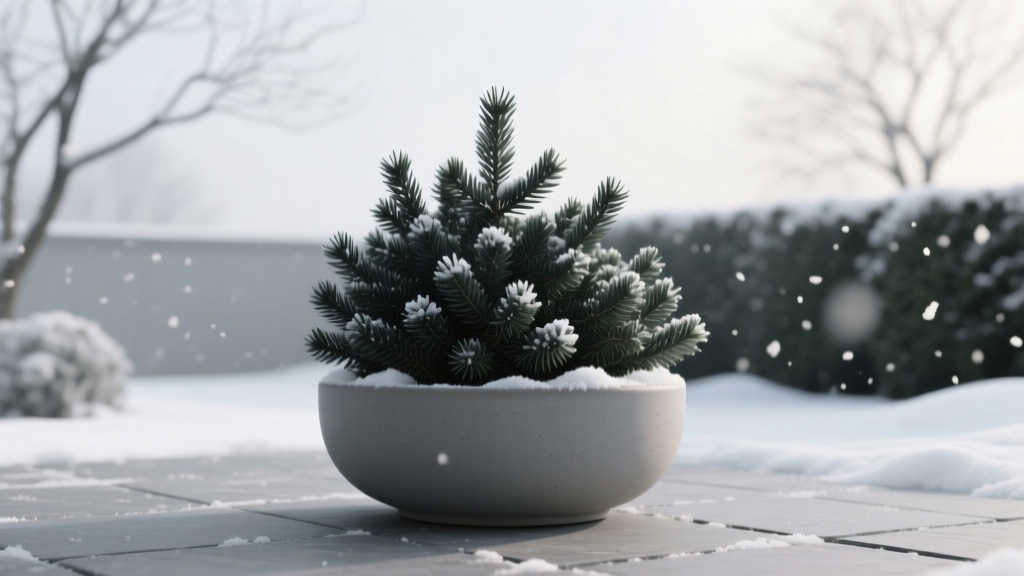
Winter Container Garden with Hardy Evergreens
The window for a reliable winter container display is shorter than most gardeners expect: once daytime highs hover under 45°F and nights regularly dip below 32°F, roots in pots cool fast and newly planted evergreens struggle to establish. The opportunity is right now—before repeated freeze/thaw cycles crack pots, desiccate foliage, and turn containers into ice blocks. If you act early, you can build containers that stay green, structured, and low-maintenance from first frost through late winter, with far fewer winterkill surprises.
This guide is organized by priority—what to plant first, what to prune (and what not to), what to protect as temperatures drop, and what to prepare for the late-winter handoff into spring.
Priority 1: What to Plant (and Pot Up) for a Winter Container That Holds Shape
Winter containers succeed when you design for roots (insulation and moisture), not just foliage. In most regions, aim to finish planting 2–4 weeks before your average first hard freeze (often the first night at 28°F or colder). That window gives roots time to settle and reduces heaving as the pot freezes and thaws.
Hardy evergreen “bones” (best performers in pots)
Choose compact evergreens that tolerate wind and winter sun. These are widely used and generally container-tough when matched to your zone and protected from wind:
- Dwarf conifers: dwarf Alberta spruce (Picea glauca ‘Conica’), mugo pine (Pinus mugo), dwarf Hinoki cypress (Chamaecyparis obtusa cultivars), compact junipers (Juniperus spp.).
- Broadleaf evergreens: boxwood (Buxus spp.), inkberry holly (Ilex glabra), wintercreeper euonymus (Euonymus fortunei), mountain laurel (Kalmia latifolia in milder zones), pieris (Pieris japonica where hardy).
- Cold-season accents: hardy heathers/heaths (Calluna/Erica), ornamental cabbage/kale (short-lived in deep cold but great until sustained freezes), creeping wintergreen (Gaultheria procumbens).
Zone rule for containers: because roots in pots are less insulated than in-ground roots, select plants hardy to at least 1–2 USDA zones colder than your location. For example, if you garden in USDA Zone 6, start with plants rated to Zone 4–5 for best odds in exposed containers.
Timing targets (use these numbers)
- Plant or refresh winter containers when soil temperatures fall to roughly 50°F and stay there (cool-season root activity slows but transplant shock is lower).
- Try to finish major planting before nights hit 25°F repeatedly (pots begin freezing solid more often).
- If you missed the window and it’s already hovering near 20°F at night, shift to “decorative inserts” (cut greens, branches, picks) rather than transplanting live shrubs.
- Water thoroughly any time the potting mix is dry and air temperatures are above 40°F.
- Plan to reassess in late winter around February 15–March 15 (many regions see the highest desiccation risk then, even if the calendar says “almost spring”).
Best container and soil setup (what actually prevents winterkill)
Use a container with insulation capacity and drainage you can trust:
- Material: fiberstone, thick resin, wood, or frost-rated ceramic. Avoid thin terracotta in cold-winter regions; it’s prone to cracking after repeated freeze/thaw.
- Size: bigger is safer. A minimum of 18–24 inches wide for a shrub-based evergreen mix; 24–30 inches is better for multi-year plantings.
- Drainage: never “cap” the bottom with rocks. Use a high-quality container mix; ensure unobstructed drainage holes.
Extension guidance consistently emphasizes that winter injury in evergreens is often about water balance (frozen roots, drying wind, sun). Purdue Extension notes that broadleaf evergreens commonly suffer winter desiccation when roots can’t replace water lost from leaves during cold, windy periods (Purdue Extension, 2020). That’s exactly what containers amplify.
Planting combinations that work (3 proven templates)
1) The “Conifer + skirt” (coldest, windiest patios)
One upright dwarf conifer (center), ringed with trailing euonymus or hardy heather, finished with pinecones and cut dogwood stems. Best for Zones 3–6 exposed sites.
2) The “Boxwood dome” (formal entry pot)
One or three boxwoods (clipped spheres), underplanted with wintergreen and tucked with cut greens. Best in Zones 5–8 where boxwood winter burn is manageable with wind protection.
3) The “Holly + berries” (bird-friendly)
Inkberry holly or a compact Ilex crenata, with wintergreen and decorative cut stems. Avoid over-fertilizing; you want steady, not pushy, growth going into cold.
Priority 2: What to Prune (and What to Leave Alone Until Spring)
Winter container pruning is about removing problems, not reshaping plants. Heavy pruning can stimulate tender growth that’s easily damaged, and it can increase moisture loss from broadleaf evergreens.
Do now (before deep cold or on mild days)
- Remove broken, rubbing, or diseased twigs immediately—clean cuts reduce entry points for cankers.
- Clip dead tips on heather/heath lightly (avoid cutting into old, bare wood).
- Pinch only obvious soft growth on mixed planters if it’s flopping into wind exposure.
Wait until late winter/early spring
- Don’t shear conifers in winter. Major shaping is best timed for late spring when growth begins.
- Limit boxwood pruning after early fall. Late pruning increases winter injury risk and can expose inner foliage to sunscald.
“Most winter injury on evergreens is not ‘cold’ so much as drying—wind and sun pull moisture from leaves when frozen soil prevents uptake.”
—Extension horticulture guidance summarized from winter desiccation recommendations (Purdue Extension, 2020)
When you do prune, sanitize pruners if you’re moving between plants that show spotting, cankers, or dieback. In winter, diseases spread more slowly, but you’re also more likely to miss early symptoms.
Priority 3: What to Protect (Roots First, Then Wind and Sun)
If you only do one protective step, insulate the pot and stabilize moisture. Winter container failures are typically rooted (literally) in frozen root balls, alternating thaw/refreeze, and desiccation.
Root and container protection checklist
- Move containers to a sheltered microclimate: against a house wall, out of prevailing winds, ideally on the east or north side to reduce afternoon winter sun exposure.
- Raise pots slightly so they can drain (pot feet or thin slats). Standing water plus freezing temperatures can crack containers and suffocate roots.
- Wrap containers with burlap, bubble wrap (covered so it’s not exposed to sun), or insulating blankets; then add a decorative outer wrap if desired.
- Mulch the surface of the potting mix with shredded bark or pine needles (1–2 inches) to moderate temperature swings.
- Group pots tightly together. A cluster buffers wind and reduces exposure on all sides.
For broadleaf evergreens (boxwood, holly relatives, pieris), wind is the enemy. University of Massachusetts Extension emphasizes that winter injury often involves desiccation and sunscald, especially when plants are exposed to drying winds and bright sun while roots are frozen (UMass Extension, 2019). Containers intensify that exposure because the entire root zone freezes faster than garden soil.
Watering rules that prevent winter burn
Evergreens transpire on warm winter days. If the pot is dry going into a freeze, foliage burn becomes likely. Use this simple protocol:
- Deep water before the first hard freeze (around the first forecast of 28°F or lower).
- Check moisture every 10–14 days in winter. On a mild day above 40°F, water if the top 2 inches are dry.
- Stop when the root ball is frozen solid (you can’t water ice). Resume during thaws.
Windbreaks and anti-desiccant sprays: when they help
Windbreaks: A simple burlap screen on stakes can cut wind dramatically. Leave airflow at the bottom to reduce mold. Place it on the windward side (often northwest).
Anti-desiccant sprays: These can help some broadleaf evergreens but are not magic, and coverage must be even. Apply on a day above 45–50°F when no rain is expected for 24 hours. Avoid spraying on dusty foliage or right before a hard freeze.
Snow and ice management
- Brush off heavy wet snow to prevent branch splaying, especially on dwarf spruce and upright junipers.
- Don’t chip ice off foliage—let it melt naturally to avoid tearing bark and buds.
- Keep de-icing salts away from containers near walkways. Salt spray can burn evergreen foliage and accumulate in potting mix.
Priority 4: What to Prepare (Now Through Late Winter)
Winter container gardening is partly gardening and partly logistics. A little preparation prevents mid-winter scrambling when it’s 18°F, windy, and you notice the pot is bone dry.
Monthly schedule: what to do and when
| Timeframe | What to do | Weather cues / thresholds | Notes |
|---|---|---|---|
| Late Oct–Nov | Plant/pot up hardy evergreens; refresh soil surface; deep water | Target completion 2–4 weeks before first hard freeze; nights approaching 32°F | Choose plants 1–2 zones hardier than your zone for containers |
| Early Dec | Wrap/insulate pots; cluster containers; install windbreak if exposed | When highs consistently below 45°F and freeze/thaw begins | Move to a sheltered wall; prioritize drainage |
| Jan | Moisture checks; brush snow; monitor for rodent damage | Water only during thaws above 40°F | Don’t fertilize; avoid heavy pruning |
| Feb–Mid Mar | Watch for sunscald/desiccation; reapply protection if needed | High-risk period when sun strengthens but nights still below 25–30°F | Consider temporary shading on south/west exposures |
| Late Mar–Apr | Gradually remove wraps; top-dress compost; plan spring pruning | After last hard freezes; near your local last frost date | Reacclimate plants slowly to full exposure |
Quick timeline (pin this to the potting bench)
- Within 7 days: Check drainage holes, add pot feet, source burlap/wrap, and buy potting mix.
- Within 14 days: Plant core evergreens and water deeply; add surface mulch.
- Before the first 28°F night: Move pots to shelter and wrap containers.
- Every 10–14 days all winter: Moisture check during mild weather; inspect foliage for burn and pests.
- Between Feb 15 and Mar 15: Add wind/sun protection if foliage is bronzing; water during thaws.
Regional and Real-World Scenarios (Adjust Your Strategy)
Winter container advice fails when it ignores microclimates. Use the scenario that matches your conditions.
Scenario 1: Cold interior climates (Upper Midwest, Northern Plains, Zones 3–5)
Your biggest problem is the pot freezing solid for long stretches, with occasional bright sun and wind. Treat live evergreen containers as “semi-permanent” plantings that may still need overwintering help.
- Best approach: Use extra-large containers (24–30 inches), pick conifers/junipers rated at least two zones hardier, and cluster pots tightly against a wall.
- Extra protection: After the pot freezes, you can bank leaves or straw bales around the base (not over foliage) as insulation.
- Plant choices: Juniper, mugo pine, spruce, heather. Be cautious with boxwood unless you can provide wind protection consistently.
Scenario 2: Freeze/thaw and wet winters (Mid-Atlantic, Pacific Northwest lowlands, Zones 7–8)
Your risk is less about deep cold and more about saturated potting mix, root rot, and sudden cold snaps. Drainage is everything.
- Best approach: Use a free-draining mix, elevate pots, and avoid saucers that hold water all winter.
- Temperature watch: Protect pots when a sudden dip below 25°F is forecast—especially after a wet spell.
- Plant choices: Boxwood, inkberry-type hollies, compact conifers, pieris (where hardy), euonymus.
Scenario 3: Sunny, windy high-desert or mountain fronts (Intermountain West, Zones 4–7 with intense sun)
Here, winter sun and wind can be harsher than the thermometer suggests. Desiccation shows up as bronzing, leaf scorch, and tip burn—often worst in late winter.
- Best approach: Prioritize windbreaks and afternoon shade (north/east placement). Water during warm spells.
- Key threshold: If you have a string of sunny days above 45°F with freezing nights, check moisture more often than every two weeks.
- Plant choices: Junipers and pines outperform many broadleaf evergreens under dry wind.
Scenario 4: Apartment balcony gardening (limited space, heat leakage, Zones vary)
Balconies are wind tunnels, and pots are exposed on all sides. But you also may have building heat that reduces extreme lows.
- Best approach: Use one or two large, heavy containers rather than many small pots. Add a wind screen, and secure tall center plants so they don’t topple.
- Safety note: Avoid loose wraps or tarps that can blow off. Use bungee cords or twine to secure insulation.
- Plant choices: Compact conifers, boxwood (if sheltered), trailing euonymus.
Pest and Disease Prevention in Winter Containers (What to Watch Now)
Winter is not pest-free; it’s just quieter. The goal is to prevent problems from building while plants are stressed.
Common winter issues and what to do
- Spider mites (especially on dwarf spruce and juniper): Indoor/outdoor transitions and sheltered, dry spots favor mites. On mild days above 45°F, rinse foliage with a strong spray of water. Avoid bringing infested plants indoors.
- Scale insects: Look for small bumps on stems and sticky honeydew. Mark the pot and plan a dormant oil application in late winter/early spring when temperatures are above label minimums (often 40°F) and before bud break.
- Root rot: Most common in wet regions or when saucers hold water. Keep drainage open, elevate the pot, and do not “water by schedule.”
- Boxwood blight concerns: Don’t handle wet boxwood foliage; sanitize tools; avoid crowding that reduces airflow. Remove fallen leaves from the soil surface.
- Rodents: Voles and mice may chew bark near the base, especially where pots are clustered with cozy insulation. Keep the area tidy and avoid thick mulch piled against stems.
Also watch for winter salt exposure near steps and driveways. Even a single season of salt spray can cause leaf browning and bud damage on broadleaf evergreens.
Action Checklists You Can Use This Week
Winter container build checklist
- Choose a frost-rated container (18–24+ inches wide) with open drainage.
- Use fresh container mix; don’t reuse last year’s compacted, salty soil without refreshing.
- Pick plants hardy to 1–2 zones colder than your USDA zone.
- Plant, firm in, and water deeply.
- Mulch the surface (1–2 inches) and label plants for spring care.
- Move to shelter and wrap the container before repeated freezes.
Mid-winter maintenance checklist (10-minute routine)
- Check moisture during a thaw (above 40°F).
- Inspect for bronzing, scorch, or windburn—especially on the sunward side.
- Brush heavy snow; don’t break ice off by hand.
- Look for rodent chewing at the base and any loose wraps.
Smart Late-Winter Moves That Save Plants (When Winter Isn’t Done Yet)
The toughest stretch for many evergreen containers is late winter: days get brighter, winds pick up, and pots can still be frozen. If you see bronzing or crisping in February or early March, don’t assume the plant is dead. Take action while buds are still viable.
- Add temporary shade on the south/west side (burlap or shade cloth) for 2–3 weeks during intense sun and wind.
- Water during thaws whenever the mix is workable and dry (above 40°F).
- Don’t fertilize yet. Fertilizer won’t fix winter burn and may push growth at the wrong time.
- Delay cosmetic pruning until you see spring bud swell. Many evergreens look rough in March and recover by May.
If you’re aiming to keep the shrubs long-term, plan a spring repot or root check every 2–3 years. Container-grown evergreens can become root-bound, which reduces winter resilience because a tight root ball dries faster and takes up less water.
When you time the planting window (2–4 weeks before hard freezes), use container-sized plants suited to your USDA zone, and protect roots from freeze/thaw, your winter containers stop being a gamble. They become a reliable seasonal fixture—green structure through the darkest months, with a straightforward checklist to keep them thriving until spring growth resumes.
Sources: Purdue Extension (2020), winter injury/desiccation guidance for evergreens; University of Massachusetts Extension (2019), evergreen winter injury (desiccation/sunscald) management recommendations.