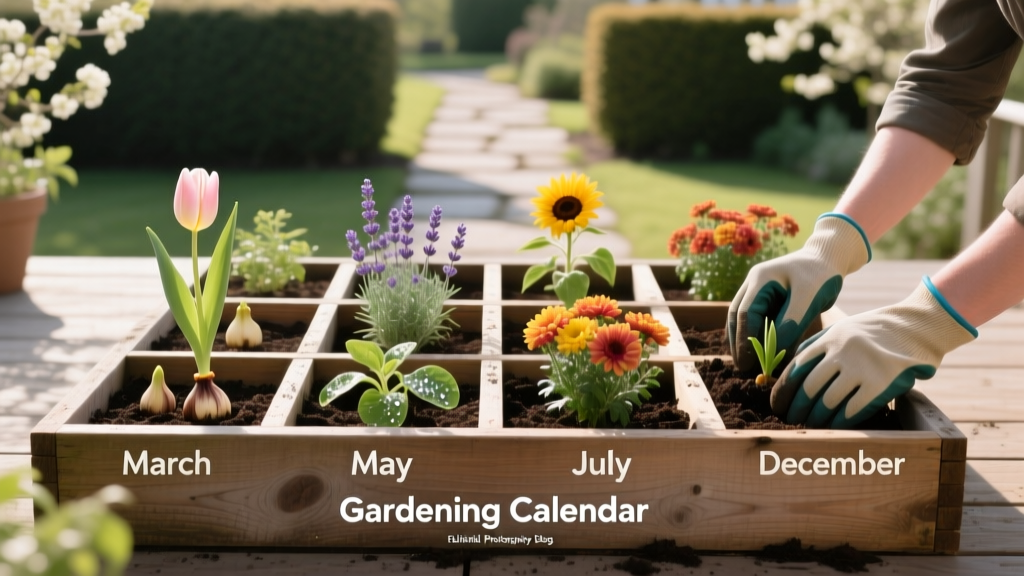
Spring Month-by-Month Gardening Calendar
Spring moves faster than most gardens can keep up with. One warm week can push buds to break; one late freeze can wipe out peach blossoms and blacken tender starts overnight. Your best advantage is timing: doing the right work in the right 10-day window. Use this month-by-month calendar to prioritize what matters now—planting, pruning, protecting, and preparing—based on soil temperature, frost dates, and what your plants are actually doing.
Before you start: Find your area’s average last spring frost date and USDA hardiness zone. Many tasks below reference “2 weeks before last frost” or “after last frost,” because spring varies widely across Zones 3–10. If you don’t know your date, check a local extension office or NOAA freeze/frost climatology.
Quick monthly schedule (printable at-a-glance)
| Month | Top priorities (do first) | Plant/seed now | Protect now | Prep now |
|---|---|---|---|---|
| March | Late-winter pruning; bed cleanup; soil test | Peas, spinach, radish (as soil can be worked) | Cover blossoms if < 28°F forecast | Mulch paths; sharpen tools; set up seed-starting |
| April | Weed prevention; cool-season planting; pest scouting | Potatoes, carrots, lettuce; set out brassicas | Row cover for flea beetles & cold snaps | Install drip irrigation; refresh compost |
| May | Warm-season planting; staking; mulch after soil warms | Tomatoes, beans, squash (after frost) | Harden off seedlings; watch for late frosts & wind | Set trellises; schedule mowing/edging to reduce ticks |
Concrete timing anchors to watch this spring: (1) Many cool-season seeds germinate well when soil is 40–45°F. (2) Warm-season crops typically want soil closer to 60°F. (3) A forecast of 28°F can kill open fruit blossoms. (4) Start hardening off seedlings 7–10 days before transplanting. (5) Plan frost protection for at least 2 weeks after your “average” last frost—because “average” is not “guaranteed.”
March: Triage, prune, and get cold-tolerant crops moving
March is when winter damage and spring momentum overlap. Your job is to remove what’s broken, prevent early pest/disease issues, and take advantage of any workable soil without compacting it. If your soil forms a shiny ball when squeezed, it’s still too wet—wait a few days.
What to plant (highest payoff now)
As soon as soil can be worked (not muddy), direct-seed: peas, spinach, arugula, radishes, turnips, and lettuce mixes. In many Zone 6–7 gardens, this is often 2–6 weeks before the average last frost depending on the year.
- Start indoors now (8–10 weeks before last frost): tomatoes (if you have strong light), peppers, eggplant, basil.
- Start indoors now (4–6 weeks before last frost): cucumbers, squash, melons (wait if your last frost is late).
- Set out hardy transplants (with protection): onions, shallots, cabbage family starts once daytime highs consistently reach the 50s°F.
Timing tip: Track soil temperature, not just air. Many cool-season seeds germinate reliably once soil is about 40°F. If you don’t have a soil thermometer, buy one—this is one of the few tools that directly improves timing.
What to prune (do before buds open)
Prune on a dry day when temperatures are above freezing. Focus on structure and sanitation, not “shaping.”
- Fruit trees (apple/pear): finish dormant pruning before green tip. Remove dead wood, crossing branches, and watersprouts.
- Summer-blooming shrubs: prune now (e.g., panicle hydrangea, rose-of-Sharon) because they bloom on new wood.
- Avoid pruning spring bloomers (lilac, forsythia, azalea) until after flowering, or you’ll remove buds.
Disease prevention note: Sanitize pruners between trees, especially if you’ve had fire blight or canker. A quick wipe with 70% alcohol reduces moving pathogens plant-to-plant.
What to protect (late freezes and rodents)
March is notorious for a warm week followed by a hard dip. Be ready to cover.
- Protect blossoms: If fruit trees are in bloom and a forecast hits 28°F or lower, cover small trees with frost cloth or use old sheets overnight (remove in the morning).
- Guard new seedlings: Use low hoops with row cover to buffer wind and cold; vent on sunny days to prevent overheating.
- Check bark damage: Rabbits and voles feed late winter into early spring. If you see girdling, install trunk guards now.
“Soil testing every 3–5 years is recommended for home lawns and gardens to guide lime and fertilizer applications.” — University of Minnesota Extension (2020)
What to prepare (set the season up right)
Do these once and you’ll save weeks later.
- Soil test: Send samples early so results arrive before heavy planting. Adjust pH with lime or sulfur based on recommendations, not guesswork.
- Compost strategy: Add 1–2 inches of finished compost to vegetable beds; avoid burying it deep—mix lightly into the top few inches.
- Weed prevention: If you battle crabgrass in lawns, plan preemergent timing for when soil reaches about 55°F for several days (local extension calendars often track this).
April: Plant hard, scout early, and stay flexible with frost
April is the busiest month in many regions because cool-season crops thrive, perennials wake up, and weeds start their sprint. It’s also the month when gardeners get tricked into planting warm-season crops too early. Keep protection materials within arm’s reach.
What to plant (cool-season workhorse window)
April is prime time for: carrots, beets, chard, lettuce, potatoes, and more peas. In Zones 5–7, many brassicas can be transplanted in early to mid-April with row cover insurance.
- Potatoes: plant when soil is workable and roughly 45–50°F. Hill as shoots reach 6–8 inches.
- Carrots: sow thinly; keep the seedbed evenly moist for germination (often 10–21 days depending on temperature).
- Herbs: parsley and cilantro can be direct-seeded now; basil waits for warmth.
Flower timing: Direct-sow hardy annuals like calendula, larkspur, and nigella in April (earlier in Zones 7–8; later in Zones 4–5). For dahlias and gladiolus, wait until soil warms and frost risk is minimal.
What to prune (spring cleanup without setting plants back)
April pruning is mostly corrective and cleanup-oriented.
- Roses: prune after buds swell and you can see winter dieback; remove dead canes and open the center for airflow.
- Perennials and grasses: cut back old stems before new growth tangles through. Leave some hollow stems if you manage for native bees.
- Do not “shear everything”: many beneficial insects overwinter in leaf litter and stems. Move leaves to bed edges rather than bagging.
What to protect (row cover, wind, and disease prevention)
April protection is about buffering extremes and preventing the first disease cycle from taking hold.
- Frost swings: Keep frost cloth handy until at least your last frost date passes—and longer in cold pockets.
- Flea beetles on brassicas: Use row cover immediately after transplanting; once leaves are peppered, plants stall.
- Apple scab and fungal issues: Rake and remove old leaves under apples if you had scab last year; sanitation reduces spring spore pressure.
Extension-backed reminder: The USDA notes that soil testing is the only way to know what nutrients are available and avoid over-fertilizing (USDA NRCS, 2011). Overdoing nitrogen in early spring pushes lush growth that attracts aphids and increases disease susceptibility.
What to prepare (mulch timing, supports, irrigation)
April prep work prevents May chaos.
- Install supports now: trellises for peas, cages for tomatoes (set them before planting), and stakes for delphiniums and tall perennials.
- Mulch, but don’t smother cold soil: apply mulch after soil begins warming; in many climates that’s mid-to-late April. Keep mulch 2–3 inches away from plant crowns.
- Drip irrigation: lay lines before beds fill in. Early installation prevents soil compaction later.
May: Warm-season planting, rapid growth, and the first big pest wave
May is when gardens can explode—if you don’t get ahead of spacing, staking, and pest prevention. The biggest mistake in May is planting warm-season crops in cold soil. The second biggest is planting everything at once with no plan for succession.
What to plant (after frost, after soil warms)
Use your local last frost date as a guide, then confirm with soil temperature.
- Tomatoes: transplant after nights are consistently above 50°F and soil is near 60°F. Bury stems deep for stronger rooting.
- Beans: direct-sow when soil is warm (often close to 60°F); cold soil invites rot.
- Squash/cucumbers: transplant or sow after frost; protect young plants with row cover until flowering (then remove for pollination).
- Succession sowing: plant a second round of lettuce and radishes in early May; shift to heat-tolerant greens by late May.
Hardening-off timeline (don’t skip): Start 7–10 days before transplanting. Day 1–2: 1–2 hours shade. Day 3–5: longer outdoors, some sun. Day 6–10: full day outside, protected from wind. Water consistently—wind dries trays fast.
What to prune (pinch, deadhead, and train)
May pruning is less about cutting big wood and more about directing growth.
- Pinch herbs: pinch basil and annual herbs early for branching.
- Train vines: tie in clematis and climbing roses before stems stiffen.
- Deadhead bulbs: remove spent tulip/daffodil flowers but leave foliage until it yellows naturally.
What to protect (pests, disease, and weather whiplash)
May is the start of serious scouting. Catching pests early prevents the mid-summer spiral.
- Aphids: check tender growth weekly. Blast off with water; avoid high-nitrogen feeding that worsens outbreaks.
- Powdery mildew prevention: thin overcrowded seedlings, water at the base in the morning, and keep airflow around cucurbits.
- Slugs: as nights stay damp, use iron phosphate bait as needed and remove boards/groundcover that provide daytime hiding.
- Cutworms: protect transplants with collars (cardboard or plastic) pressed 1 inch into soil.
Citation for spring pest timing: University of California Agriculture and Natural Resources emphasizes integrated pest management—monitoring and correct identification before treatment—to prevent unnecessary sprays (UC ANR, 2019).
What to prepare (mulch, mow strategy, and watering discipline)
May prep is about locking in moisture and reducing future disease.
- Mulch after warm-season planting: apply 2–3 inches of straw or shredded leaves around tomatoes and peppers once soil is warm; mulch too early can slow growth in cool climates.
- Watering rule: water deeply, less often. Frequent shallow watering trains shallow roots and increases stress during summer heat.
- Lawn edge and mow: keep grass from encroaching into beds; remove tall weeds along fences to reduce tick habitat near garden paths.
Priority checklists by task (use weekly)
These are ordered by what usually has the biggest impact on spring success. Re-check them every weekend through spring.
Planting checklist (highest priority)
- Check soil temperature before sowing warm-season seeds (aim near 60°F).
- Direct-seed cool-season crops as soon as soil is workable (often around 40–45°F).
- Start/refresh succession sowing every 10–14 days for lettuce, radishes, and greens.
- Label everything—especially carrot/parsnip rows that germinate slowly.
Pruning & training checklist
- Finish dormant pruning before bud break on apples/pears.
- Wait to prune spring bloomers until after flowering.
- Install stakes/trellises before plants flop (especially peonies and tall perennials).
- Disinfect pruners between trees when disease is known or suspected.
Protection checklist (frost, pests, disease)
- Keep frost cloth ready through your average last frost date, plus 2 weeks for safety in cold pockets.
- Row cover brassicas early to prevent flea beetle damage.
- Scout weekly: underside of leaves, growing tips, and soil line for cutworms.
- Water early in the day to reduce leaf wetness overnight (lower fungal risk).
Preparation checklist (soil and systems)
- Soil test every 3–5 years and adjust pH/nutrients from results (University of Minnesota Extension, 2020).
- Top-dress beds with compost (1–2 inches) and avoid excessive nitrogen.
- Set up irrigation before beds fill in; check emitters for clogs.
- Refresh mulch once soil is warming; keep away from stems/crowns.
Regional variations: adjust the calendar to your spring reality
“Spring” is not a single set of dates. Use these scenarios to adapt quickly based on what your weather actually does.
Scenario 1: Cold climate spring (USDA Zones 3–5; late frosts, slow soil warm-up)
If your last frost often falls in late May or even early June, your spring strategy is protection-first and soil-temperature driven.
- Prioritize low tunnels/row cover so you can sow greens earlier without losing them to wind and cold snaps.
- Delay tomatoes and peppers until nights stay above 50°F; cold nights can stall them for weeks.
- Start more indoors: onions/leeks, brassicas, and even some cucurbits if your season is short.
Scenario 2: Mild coastal or maritime spring (often Zones 7–9; cool nights, fewer hard freezes)
Your challenge is not frost as much as slow heat accumulation and fungal pressure.
- Focus on airflow: wider spacing, trellising, and morning watering to reduce leaf wetness.
- Watch for slugs/snails earlier and longer; use barriers and iron phosphate as needed.
- Warm-season crops may not thrive until soil truly warms; black plastic or landscape fabric can help raise soil temperature.
Scenario 3: Warm spring that flips to a late cold snap (common in interior Zones 5–8)
This is the spring that breaks hearts: early heat pushes growth, then a freeze hits. Your best tool is readiness.
- Keep frost cloth accessible until you’re clearly past frost risk, not just past the average date.
- Don’t rush to fertilize tender new growth before a cold snap; soft growth is more cold-sensitive.
- If fruit trees bloom early, protect blossoms when forecasts approach 28°F.
Spring pest and disease prevention that pays off all year
Spring prevention is mostly about interrupting the first generation or first infection cycle. Once pests and diseases are established, you’re reacting instead of steering.
Weekly spring scouting routine (10 minutes)
- Check 5 plants in each bed: look at new growth, leaf undersides, and soil line.
- Look for: aphids, flea beetle shot-holes, slug trails, and chewed stems (cutworms).
- Remove heavily infested leaves early; don’t compost diseased foliage unless your compost gets hot.
Simple spring sanitation steps
- Remove last year’s diseased leaves under roses and fruit trees to reduce spring inoculum.
- Rotate vegetable families where possible (especially tomatoes/peppers/eggplant and cucurbits).
- Keep mulch pulled back from stems to prevent rot and rodent hiding spots.
Spring timeline: what to do this week vs. next (flexible template)
If you want a workable rhythm, use this repeating two-week cycle through spring and plug in your frost date.
- Week A (now): sow one succession of greens; scout pests; prune what must be pruned before bud break; refresh compost and labels.
- Week B (next): transplant brassicas/onions (if conditions allow); install supports and irrigation; mulch paths; check forecasts for any < 32°F nights and stage covers.
Spring rewards the gardener who stays observant and adjusts quickly. Keep your soil thermometer and frost cloth close, sow in steady succession instead of in one burst, and treat pruning and sanitation as disease prevention—not just aesthetics. By the time summer arrives, the garden you set up in March and April is the one that can handle heat, pests, and busy weeks without falling apart.
Sources: University of Minnesota Extension (2020), soil testing guidance; USDA NRCS (2011), soil testing and nutrient management principles; University of California Agriculture and Natural Resources (2019), Integrated Pest Management framework and monitoring emphasis.