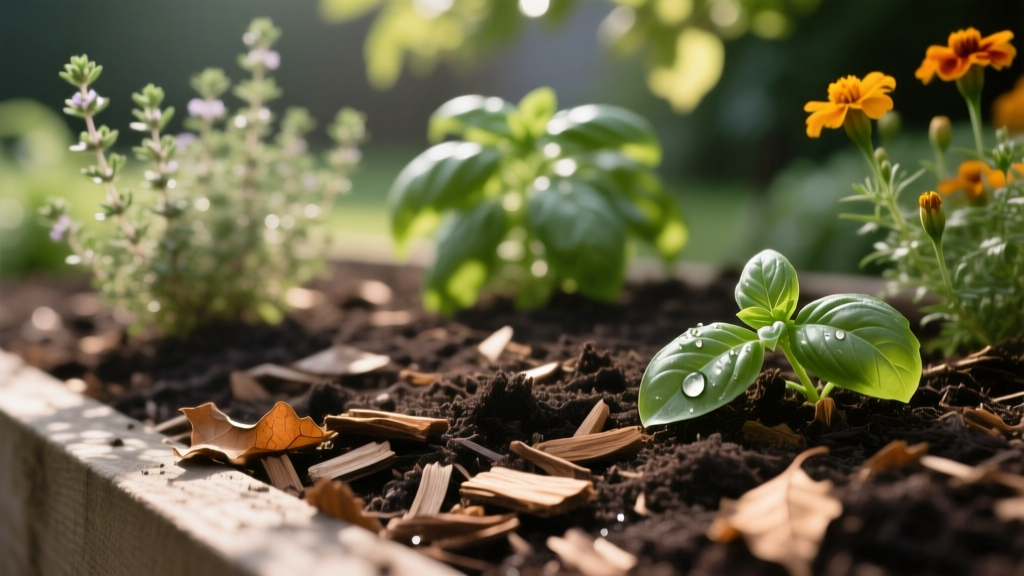
Summer Mulching to Retain Moisture
When daytime highs start holding above 85°F and you’re watering more often than you’re harvesting, your garden is sending a clear message: stop losing moisture to the air. Summer mulching is the fastest “right now” move that stabilizes soil temperature, reduces evaporation, blocks weeds that steal water, and keeps plant roots productive instead of stressed. The opportunity is immediate: if you mulch before the next heat wave (or before the next windy, low-humidity stretch), you can cut irrigation demand dramatically and prevent blossom end rot, bitter cucumbers, bolting greens, and heat-stressed transplants.
Use this as a seasonal checklist with expert timing, regional adjustments, and a practical workflow. The goal isn’t just to “add mulch”—it’s to apply the right material at the right depth at the right time, while avoiding summer pitfalls like stem rot, slugs, and nitrogen tie-up.
Top priority (this week): Mulch for moisture, but do it precisely
Timing triggers: when mulching pays off most
Act when any of these are true:
- Forecast shows 3+ days above 90°F (heat wave conditions).
- Overnight lows stay above 65°F (soil respiration rises; moisture loss accelerates).
- Your soil dries to 2 inches deep within 24–48 hours after watering.
- You’re within 2–4 weeks after transplanting tomatoes/peppers/eggplant and roots are expanding rapidly.
- Rain has been under 1 inch/week (a common benchmark for vegetable gardens).
In most of the U.S., this “mulch window” is strongest from mid-June through mid-August. In USDA Zones 8–10, it can start in May; in Zones 3–5, it often begins late June or early July depending on spring moisture and heat.
Do this first: water, then mulch
Mulch locks in whatever moisture level you start with. If the bed is dry, you can seal in drought stress. The ideal sequence:
- Deep-water in the morning, wetting soil to 6–8 inches (vegetables) or 10–12 inches (shrubs/young trees).
- Wait until the surface is no longer muddy but still damp (often 2–6 hours).
- Apply mulch to the correct depth (see table).
“Organic mulches…reduce evaporation from the soil surface and moderate soil temperature.” — University of California Agriculture and Natural Resources (UC ANR), “Mulch” (updated resource; commonly cited in home landscape guidance)
Choose mulch by bed type (and avoid summer mistakes)
Mulch isn’t one-size-fits-all. Summer is when depth and airflow matter most, because warm, moist mulch pressed against stems can trigger rot and invite pests.
| Area | Best summer mulch | Depth | Moisture impact | Watch-outs |
|---|---|---|---|---|
| Tomatoes/peppers/eggplant | Straw (seed-free), shredded leaves, compost + straw cap | 2–3 inches | Strong reduction in evaporation; steadier moisture helps prevent blossom end rot | Keep mulch 2–3 inches away from stems; monitor slugs where nights are cool |
| Cucumbers/squash/melons | Straw or coarse compost | 2–4 inches | Keeps shallow feeder roots cooler and productive | Too thick + constant wetness can increase mildew pressure; water at soil level |
| Carrots/beets/onions | Shredded leaves or fine straw | 1–2 inches | Prevents crusting and uneven moisture that causes splitting | Don’t bury seedlings; keep mulch light until tops are established |
| Perennials and shrubs | Wood chips (arborist chips), bark fines | 2–4 inches | Excellent long-term moisture buffering | Avoid “mulch volcanoes”; keep mulch off trunks to prevent decay |
| Containers | Compost top-dress + pine fines, or coco chips | 1 inch | Reduces surface evaporation; slows daily wilt cycles | Too thick can keep mix soggy; ensure drainage is clear |
Research-backed note: Washington State University Extension highlights that mulch can reduce evaporation and irrigation needs while moderating soil temperatures (WSU Extension publications, 2019). Similarly, Colorado State University Extension notes that organic mulches conserve water and reduce soil temperature extremes (CSU Extension, 2022). These are consistent findings across extension guidance.
Depth rules that prevent rot, weeds, and wasted water
Use these simple thresholds:
- Less than 1 inch: dries quickly; weeds break through; often not worth the effort in summer beds.
- 2–3 inches: the sweet spot for most vegetables in summer.
- 4+ inches: useful under shrubs/trees and on paths, but can stay too wet for stems in humid climates.
Keep mulch pulled back from plant crowns and stems by 2–3 inches. That small gap is a big disease-prevention step in July and August.
Fast checklist: summer mulching in 45 minutes per bed
- Weed first (don’t mulch over seed heads).
- Water deeply.
- Side-dress nutrients if needed (see “prepare” section).
- Lay mulch evenly; avoid piles against stems.
- Mark irrigation emitters/soaker lines so you can inspect them later.
Next priority: What to plant (yes, even in mulch season)
Mulch supports summer planting by preventing transplant shock and keeping germination zones from crusting. The key is timing around heat.
Plant now if you have 6–10 weeks before first frost
Count back from your average first frost date. Example benchmarks: October 15 (many Zone 6 areas), November 15 (parts of Zone 8), September 15 (higher elevations/Zone 4). If you’re 60–75 days out, you can still plant:
- Bush beans (50–60 days): mulch lightly after seedlings are 3–4 inches tall.
- Cucumbers (50–70 days): in hot regions, give afternoon shade for the first week.
- Summer squash (45–60 days): mulch after true leaves appear to avoid burying stems.
- Basil (fast): mulch around, not on, the crown; pinch early to keep it branching.
Hot-soil planting: use temperature thresholds
Some crops struggle when soil is too warm. If your soil at 2 inches is consistently above 90°F, direct-seeded lettuce, spinach, and cilantro tend to germinate poorly. In that case:
- Switch to transplants for basil and greens, or wait for a cool spell.
- Use lighter mulch (shredded leaves) and partial shade to cool the surface.
- Water before sowing and again lightly after, then keep the top 1/2 inch evenly moist until emergence.
Regional scenario #1: Humid East/Midwest (powdery mildew and fungal pressure)
If your nights are warm and damp (common in USDA Zones 6–8 east of the Mississippi), mulch is still beneficial—but manage airflow:
- Choose straw or shredded leaves over dense, wet compost layers.
- Keep mulch depth closer to 2 inches under cucurbits to avoid creating a constantly damp “mildew incubator.”
- Water at the base in the morning; avoid wetting foliage late day.
What to prune (and what not to prune) while mulching for moisture
Summer pruning is about reducing stress and improving airflow, not heavy shaping. Every cut can trigger regrowth that demands more water—exactly what you’re trying to conserve.
Prune tomatoes for airflow, then mulch to stabilize moisture
Indeterminate tomatoes benefit from selective pruning, especially in humid regions:
- Remove suckers below the first flower cluster if you’re training to 1–2 stems.
- Remove leaves touching the soil (a common splash-disease route).
- Do not strip plants bare in heat. Aim to keep fruit shaded when highs exceed 95°F to reduce sunscald.
After pruning, re-check mulch spacing around stems. Bare soil after pruning invites splash and evaporation.
Light deadheading and trimming: keep perennials blooming without extra thirst
- Deadhead spent flowers to reduce seed set and conserve plant energy.
- Cut back only what’s necessary for airflow or to remove disease.
- Avoid major pruning of spring-flowering shrubs late in summer if it risks removing next year’s buds.
Regional scenario #2: Arid West/high plains (wind and alkaline soils)
In dry, windy climates (common in Zones 4–7 in the interior West), evaporation is driven by wind as much as heat. Priorities shift:
- Use coarser mulch that resists blowing: arborist chips, chunky straw, or a compost base topped with chips.
- Target 3–4 inches depth on exposed beds, but keep the 2–3 inch stem gap.
- Prune lightly; wind already desiccates leaves. Preserve canopy where possible to shade soil.
What to protect: plants, soil, and irrigation from mid-summer threats
Mulch helps, but summer protection is a system: moisture + shade + pest hygiene + steady fertility.
Heat protection: shade strategically (not forever)
When daytime highs exceed 95°F for several days, even well-mulched gardens can stall. Use temporary shade:
- Install 30–50% shade cloth on hoops for peppers, lettuce, and young transplants.
- Shade from 2 p.m. to sunset if possible; morning sun is valuable for growth and drying leaves.
- Keep mulch in place; shade works best when soil evaporation is already reduced.
Pest prevention that pairs with mulching
Mulch changes the habitat at soil level. That’s good for moisture, but you need to manage side effects.
Slugs and pill bugs (especially in cool-summer or irrigated beds)
- Keep mulch pulled back from stems and crowns.
- Water in the morning so the surface dries by nightfall.
- Use boards or grapefruit halves as traps; remove pests at dawn.
Squash bugs and cucumber beetles
- Scout weekly—set a calendar reminder every 7 days.
- Remove egg clusters (bronze/copper colored) from leaf undersides.
- Use row cover on young plants until flowering, then remove for pollination.
Spider mites in hot, dry weather
- Mulch reduces drought stress that makes mite outbreaks worse.
- Check leaf undersides during hot spells above 90°F.
- Use a strong water spray early in the day to knock mites down if outbreaks start.
Disease prevention: mulch as a splash barrier
Mulch is one of the simplest tools to reduce soil splash onto leaves—important for early blight on tomatoes and other soilborne issues. Keep these rules tight:
- Keep lower leaves off the ground.
- Water at soil level (drip/soaker preferred).
- Don’t mulch over visibly diseased debris; remove it first.
Extension-backed practice: Multiple university extensions recommend mulching to reduce soil splash and conserve moisture; for example, Colorado State University Extension emphasizes organic mulches for water conservation and soil temperature moderation (2022), while Washington State University Extension outlines mulch’s role in reducing evaporation and irrigation demand (2019).
What to prepare: irrigation, fertility, and a mulch maintenance plan
Mulch is not “set and forget” in summer. It settles, shifts, and sometimes repels water if it dries out on top. Preparation now prevents the August crash.
Set a watering schedule based on mulch and weather
Aim for fewer, deeper waterings. Use these starting points, then adjust:
- Mulched vegetable beds: deep water every 3–5 days during 85–95°F weather.
- Unmulched beds: often every 1–3 days in the same conditions.
- During sustained heat above 95°F: check daily; you may still water every 2–3 days even with mulch, especially in sandy soil.
Use a trowel or soil probe: if it’s dry at 3–4 inches, it’s time to water for most vegetables.
Prevent nitrogen tie-up with high-carbon mulches
Fresh wood chips and sawdust can temporarily tie up nitrogen at the soil surface. In vegetable beds:
- Favor straw, leaf mold, or finished compost near annuals.
- If using woodier mulch on paths or around long-season crops, add a light nitrogen supplement (like composted manure or an organic granular fertilizer) before mulching.
Mulch maintenance timeline: June to September
| Month / timing | What to do | Depth target | Quick check |
|---|---|---|---|
| Late June (or when highs > 85°F) | Initial mulch application after deep watering; mark drip lines | 2–3 inches veg; 3–4 inches shrubs | Mulch pulled 2–3 inches from stems |
| Mid-July (2–3 weeks later) | Rake mulch back lightly, side-dress compost/fertilizer, re-spread | Restore to target depth | Soil moist at 3–4 inches the day after watering |
| Early August (heat wave watch) | Patch thin spots; add shade cloth if highs > 95°F for 3+ days | Don’t exceed 4 inches in veg beds | No soggy rings at stems; no fungus mats on top |
| Late August to September (as nights cool) | Reduce thickness slightly around crowns in humid areas; prep fall sowing strips | 1–2 inches where you’ll direct-seed | Surface not crusted; irrigation still reaching soil |
Prepare seed strips for late-summer planting
If you plan to direct-seed for fall (carrots, beets, greens), make “planting lanes” now:
- Pull mulch back in 6–12 inch wide strips.
- Moisten soil and sow.
- Keep lanes evenly damp until germination, then mulch lightly around seedlings once they’re established.
Regional scenario #3: Cool-summer coastal and mountain gardens
In coastal Zones 8–10 with cool nights, or mountain Zones 3–6, summer mulching is still valuable—but you’re balancing moisture retention with soil warming.
- Use lighter-colored mulch (straw, shredded leaves) to avoid chilling the soil too much.
- Hold off on heavy mulching until soil is reliably warm—often when nighttime lows are consistently above 55°F.
- If fungal disease is common, keep mulch thinner (1–2 inches) and focus on drip irrigation.
If your first frost is early (for example, around September 15 at higher elevations), mulch also buys you time by reducing stress—plants finish fruit more reliably when soil moisture stays even.
Quick problem-solving: what your mulch is telling you
If water beads and runs off the mulch: Your mulch surface is too dry/hydrophobic. Solution: water slowly (drip or sprinkler on low) long enough to re-wet the mulch layer, then resume deep watering. Consider adding a thinner, finer top layer (leaf mold) to help absorb water.
If you see mushrooms or white fungal threads: Usually normal decomposition in organic mulch. It’s not automatically harmful. Improve airflow by fluffing the mulch and keeping it off stems; avoid overwatering.
If plants look wilted even after watering: Check soil moisture under the mulch at 3–4 inches. If it’s wet, you may have root damage, heat shutdown, or irrigation distribution issues. If it’s dry, increase watering duration (not frequency) and confirm water is penetrating through mulch to soil.
Right-now field checklist (printable mindset)
Today (30–90 minutes)
- Weed and remove any diseased leaves at soil level.
- Deep-water beds before mulching.
- Mulch to 2–3 inches (veg) or 3–4 inches (shrubs), keeping a 2–3 inch stem gap.
This week
- Inspect irrigation lines/emitters; ensure water reaches soil beneath mulch.
- Scout pests once (flip leaves, check stems, look for eggs).
- Adjust mulch thickness where it’s thin, bare, or piled too high.
In 2–3 weeks
- Side-dress heavy feeders (tomatoes, corn, squash) and re-spread mulch.
- Prune tomato lower leaves for airflow; re-check mulch spacing.
- Create seed lanes if fall crops are on your calendar and you’re 60–75 days from first frost.
Mulching in summer is a practical trade: a small investment of time now for fewer emergency waterings later. When the next stretch of 90–100°F days arrives, you’ll feel the difference immediately—cooler soil, fewer weeds, steadier growth, and fruit that ripens without the stress signals that show up as cracking, bitterness, or blossom end rot.