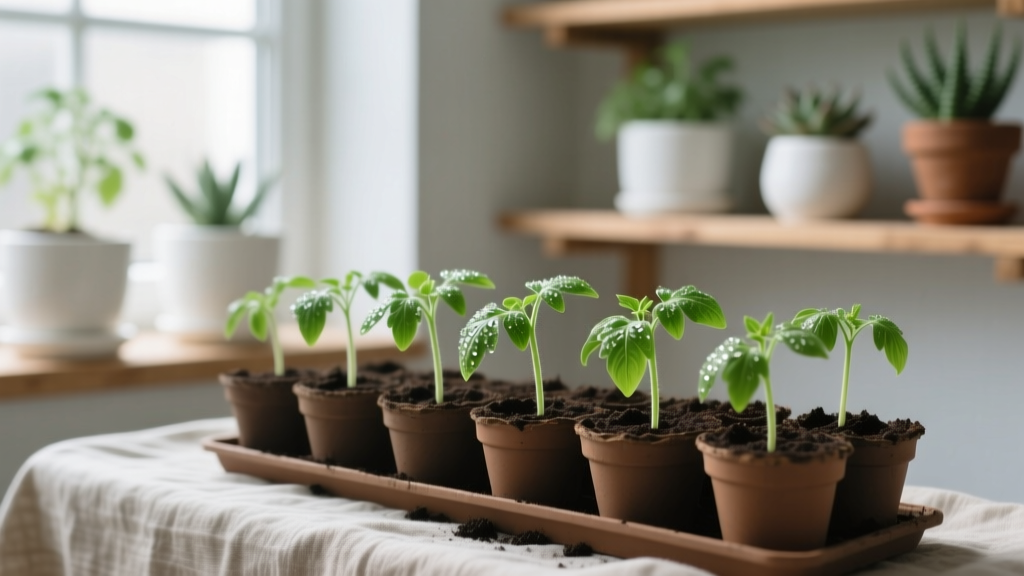
Spring Garden: Starting Tomato Seeds Indoors
The window for strong tomato seedlings is short—and it closes fast. If you start too early, plants get leggy, stressed, and stalled after transplanting. Start too late, and you’ll lose precious warm-season weeks, especially in cool-summer regions. Right now, your job is to align seed-starting with your average last frost date, indoor light intensity, and soil temperature so your seedlings are stocky and ready to run the moment nights reliably warm.
Tomatoes are warm-season plants that punish impatience outdoors but reward precision indoors. A clean setup, the right timing (measured in weeks), and consistent temperatures can mean the difference between a July trickle and an August glut.
Priority 1: What to plant right now (indoors)
Calculate your tomato seed-starting date (do this first)
Tomatoes are typically started indoors 6–8 weeks before your last expected spring frost. That timing is widely recommended by extension services because it produces seedlings at the right size without overgrowing pots. For many gardeners, that’s the sweet spot where roots fill the cell but don’t spiral, and stems stay thick.
- Target sowing date: Last frost date minus 6–8 weeks
- Target transplant date: 1–2 weeks after last frost (or when nights stay above a threshold—see below)
- Minimum outdoor soil temp for transplanting: aim for 60°F (15.5°C) or warmer for best growth
- Night air temperature target: sustained nights above 50–55°F (10–13°C) reduce cold stress
Extension guidance consistently emphasizes warm soil and frost avoidance for tomatoes. For example, University of Minnesota Extension notes tomatoes are sensitive to cold and should be planted after danger of frost when soils warm (University of Minnesota Extension, 2020). Pennsylvania State University Extension similarly stresses warm conditions and careful timing for transplants (Penn State Extension, 2021).
Choose varieties based on your season length (and your spring reality)
Right now is the moment to match tomato type to your climate. A seed packet that says “85 days” can behave very differently in a cool coastal spring versus a warm inland garden.
Use this rule: In areas with short or cool summers, prioritize earlier varieties (55–70 days) and determinate types; in long warm seasons, you can lean into large indeterminate slicers (75–90+ days) and specialty heirlooms.
| Tomato type | Best for | Typical days to maturity | Indoor start timing | Notes |
|---|---|---|---|---|
| Cherry (often indeterminate) | Cooler summers, containers, quick harvests | 55–70 | 6–8 weeks pre-frost | More forgiving of imperfect conditions; great “insurance” crop |
| Determinate paste (Roma types) | Short seasons, canning, compact beds | 60–80 | 6–8 weeks pre-frost | Concentrated set; stake or cage to prevent fruit rot |
| Large slicer (often indeterminate) | Long warm seasons, maximum yield | 75–95+ | 6–8 weeks pre-frost (don’t start earlier) | Needs stronger support and consistent feeding; more disease exposure over time |
Sow seeds with tight temperature control
Tomato germination is fast when warm and frustrating when cool. Aim for a soil temperature of 75–85°F (24–29°C) to get uniform sprouts, often within 5–10 days. Below 65°F (18°C), germination slows and the risk of damping-off rises because seedlings sit too long in wet mix.
Action steps today:
- Use a fresh, sterile seed-starting mix (not garden soil).
- Sow 1/4 inch deep; press mix gently to ensure contact.
- Water once to evenly moisten, then cover with a humidity dome until sprouting.
- Use a heat mat with a thermostat if your room is below 70°F.
“Warm soil temperatures speed germination and improve stand uniformity; cool, wet conditions are a common trigger for damping-off losses in seedlings.” (Extension and plant pathology guidance summarized from common university recommendations; see Penn State Extension 2021 and University of Minnesota Extension 2020 for tomato timing and cold sensitivity.)
Give seedlings enough light—starting the day they emerge
Most indoor tomato failures aren’t about seed quality; they’re about light. The moment sprouts break the surface, they need intense light close to the canopy. If you’re using LEDs or fluorescents, keep lights about 2–4 inches above seedlings (or per manufacturer guidance) and run them 14–16 hours per day. Window light alone is rarely sufficient in early spring at higher latitudes.
Quick checkpoint: A sturdy tomato seedling has a thick stem and tight spacing between leaves. If your seedlings are reaching, purple-tinged, or toppling, fix light and temperature before you fertilize.
Priority 2: What to prepare (so transplanting is effortless later)
Set up a simple seedling workflow: trays, airflow, labels, and sanitation
Right now, the goal is consistency. Seedlings grown in a clean, predictable environment are less likely to develop fungus and more likely to harden off smoothly.
- Sanitize reused trays and pots with soap and water, then a disinfecting rinse.
- Label immediately (variety + sow date). Spring gets busy; memory fails.
- Add airflow with a small fan on low for a few hours daily once seedlings are up. This reduces fungal pressure and helps stems thicken.
Plan your pot-up timing (don’t wait until they stall)
Tomatoes grow fast after the first true leaves appear. Expect to “pot up” from cell packs into 3–4 inch pots at about 2–3 weeks after germination, or when roots hold the plug together. Potting up too late can check growth and cause root binding.
Pot-up checklist:
- Move up when seedlings have 2–3 sets of true leaves.
- Bury stems deeper—tomatoes can root along buried stems, making sturdier plants.
- Switch to a quality potting mix with some nutrition (still well-drained).
Start a “transplant clock” tied to your frost date and soil temperature
Tomatoes aren’t calendar plants; they’re temperature plants. Use your last frost date as a planning anchor, then verify with real conditions.
| Week relative to last frost | What to do indoors | What to do outdoors | Key thresholds |
|---|---|---|---|
| -8 to -6 weeks | Sow tomato seeds; start heat mat; lights ready | Prep beds if workable; order cages/stakes | Germination mix at 75–85°F |
| -5 to -4 weeks | Thin to one per cell; begin gentle airflow | Test soil; add compost if beds are accessible | Seedlings need 14–16 hrs light |
| -3 to -2 weeks | Pot up; begin light feeding (half-strength) | Install supports if ground is workable | Avoid overwatering; let surface dry slightly |
| -1 to +1 week | Start hardening off on mild days | Monitor nights; protect from cold snaps | Nights ideally above 50–55°F |
| +1 to +3 weeks | Hold seedlings at steady growth (don’t let them flower) | Transplant when soil is warm | Soil near 60°F+ |
Priority 3: What to protect (seedlings, soil, and future tomatoes)
Prevent damping-off and fungus gnats before they start
Early spring indoor conditions—cool nights, wet mix, low airflow—favor seedling diseases. The best control is prevention.
- Water from below once seedlings are established to keep stems drier.
- Let the surface dry slightly between waterings; constantly wet mix feeds fungus gnat larvae.
- Improve airflow (fan, spacing, no stagnant domes after sprouting).
- Skip rich compost indoors—it can introduce gnats and microbes.
If fungus gnats appear, reduce moisture, use yellow sticky traps to catch adults, and consider a biological control labeled for indoor seed-starting. The earlier you respond, the easier it is to stop the cycle.
Protect seedlings from cold shock during hardening off
Hardening off is where good seedlings become tough transplants. Start 7–10 days before planting out, but only when daytime conditions are reasonable.
Hardening-off timeline:
- Day 1–2: 1–2 hours in bright shade; bring in before wind and chill.
- Day 3–5: Increase outdoor time; introduce morning sun.
- Day 6–7: Half day outdoors; avoid temperatures below 50°F.
- Day 8–10: Full day; short exposure to gentle wind; ready to transplant if nights cooperate.
If a cold snap threatens (nights dropping to 32°F or even 40°F), pause hardening off and protect seedlings indoors. Cold stress can set plants back for weeks.
Plan early-season disease prevention for the garden bed
Many tomato diseases are easier to prevent than to fix. Spring is the right time to set up the habits that reduce problems later.
- Rotation: Don’t plant tomatoes where tomatoes/peppers/eggplant/potatoes grew in the last 2–3 years.
- Support first: Install cages or stakes early to prevent stem damage later.
- Mulch after soil warms: Mulch helps prevent soil splash, a major pathway for disease spores onto lower leaves.
- Water at the base: Plan drip or soaker lines to keep foliage dry.
Cool, wet spring weather increases risk of soil splash and slow growth—conditions that favor early blight and other leaf spot issues once plants are outside. A clean mulch layer and bottom watering are practical, high-impact moves.
Priority 4: What to prune (lightly) and how to manage seedling growth
Thin seedlings early; don’t “save” weak extras
If you sowed two seeds per cell, keep the strongest seedling and snip the other at soil level once you can tell which is sturdier. Pulling can disturb roots of the keeper.
Don’t prune seedlings like mature plants—but do manage legginess
Avoid aggressive pruning indoors. Instead, correct the cause of legginess:
- Lower the light to keep it close to the canopy.
- Reduce excessive warmth if seedlings are stretching (aim for about 65–70°F days and slightly cooler nights if possible).
- Pot up and bury stems deeper if plants are already tall and thin.
Remove only yellowing cotyledons if they’re collapsing or getting moldy. Otherwise, let seedlings keep their leaf area to build energy.
Regional realities: adjust your plan to your spring
Tomato timing isn’t one-size-fits-all. Use USDA hardiness zones as a rough framework, but always confirm with your local last frost date and current forecast.
Scenario 1: Cold-nights, late frosts (USDA Zones 3–5; Upper Midwest, interior Northeast)
If your average last frost is around May 10–May 30, sowing often lands in late March to mid-April. Your biggest risk is starting too early, then babysitting overgrown plants while snow flurries threaten.
- Start seeds 6 weeks (not 10) before last frost to avoid oversized seedlings.
- Choose earlier varieties (55–70 days) plus at least one cold-tolerant cherry type for reliability.
- Be willing to transplant 2 weeks after last frost if nights are still below 50°F.
Scenario 2: Mild spring with surprise cold snaps (USDA Zones 6–7; Mid-Atlantic, lower Midwest)
In these zones, spring often tempts gardeners into early planting—then punishes them with a late cold front. If your last frost is around April 10–April 25, your seed-start time may fall in February to early March depending on your microclimate.
- Keep row cover or frost cloth ready even after last frost—late dips happen.
- Harden off gradually; wind is often more damaging than temperature.
- Hold transplants if soil is below 60°F; a week of waiting can beat a month of sulking plants.
Scenario 3: Warm spring, long season (USDA Zones 8–10; Gulf Coast, parts of CA/AZ)
Where last frost might be February 1–March 1 (or earlier), the indoor seed-start window comes quickly. The bigger challenge can be summer heat stress and disease pressure later, so aim for strong early growth and consider succession planting.
- Start seeds 6–7 weeks before last frost, then transplant promptly when conditions are ready.
- Consider a second sowing 4–6 weeks later for a fall crop if your autumn stays warm.
- Plan for airflow and spacing now; humid regions need extra disease prevention.
Scenario 4: Cool coastal summers (Pacific Northwest coast, maritime climates)
Even if frost ends relatively early, cool nights can linger. In these areas, soil may struggle to reach 60°F, and large beefsteaks can be slow to ripen.
- Prioritize early and midseason varieties; cherries and smaller slicers outperform giant types.
- Use black plastic or landscape fabric temporarily to warm soil before planting.
- Transplant into the warmest microclimate you have (south wall, reflected heat, sheltered bed).
Right-now checklists (printable mindset, fast execution)
Indoor seed-start checklist (today/tomorrow)
- Identify your average last frost date and count back 6–8 weeks.
- Gather sterile seed-start mix, trays, labels, and a heat mat (if needed).
- Set lights on a timer for 14–16 hours/day.
- Clean and disinfect reused pots and trays.
- Start a simple log: variety, sow date, germination date, pot-up date.
Seedling care checklist (weekly)
- Check moisture daily; water thoroughly, then let mix approach barely moist before watering again.
- Adjust light height every few days to stay close to the canopy.
- Rotate trays if light is uneven.
- Run a fan for airflow once seedlings have emerged.
- Inspect for fungus gnats and stem thinning; respond early.
Fertilizing and growth control: feed for sturdiness, not speed
Tomato seedlings don’t need fertilizer until they have true leaves. After that, use a half-strength liquid fertilizer about every 7–10 days (or follow label directions), adjusting based on color and growth rate. Dark green, overly lush growth can mean too much nitrogen—seedlings become tender and transplant shock worsens.
If seedlings are pale and slow even under good light, consider:
- Potting up sooner (roots may be constrained).
- Warmer root zone (aim for ~70–75°F for steady growth after germination).
- Gentle feeding at consistent intervals rather than big doses.
Transplant readiness: what “perfect timing” looks like
When the moment arrives, the best transplants are not the tallest—they’re the most balanced. Aim for plants that are 6–10 inches tall, with a sturdy stem, multiple sets of true leaves, and roots that hold the soil together without circling densely.
Hold off planting out if any of these are true:
- Nights are consistently below 50°F.
- Soil is cold and wet, hovering below 60°F.
- A cold rain stretch is forecast for the next 5–7 days (transplants hate sitting in cold mud).
When you do transplant, bury the stem deeper (remove the lowest leaves that would be underground), water in well, and protect from wind for the first few days. If your spring is bright but cold, temporary protection (cloche, low tunnel, or floating row cover) can help maintain growth momentum—just vent on warm days to prevent overheating.
Spring tomato success is built now: on a date calculated from your frost line, a warm germination setup, intense light, and disease-preventing habits that keep seedlings moving forward. Get those pieces right, and the rest of the season gets easier—because you’re transplanting vigorous plants that are ready to grow, not recover.
Sources: University of Minnesota Extension (2020), tomato planting guidance and cold sensitivity; Penn State Extension (2021), home garden tomato transplant timing and warm-season requirements. (Check your state’s extension service for local frost date tools and region-specific timing.)