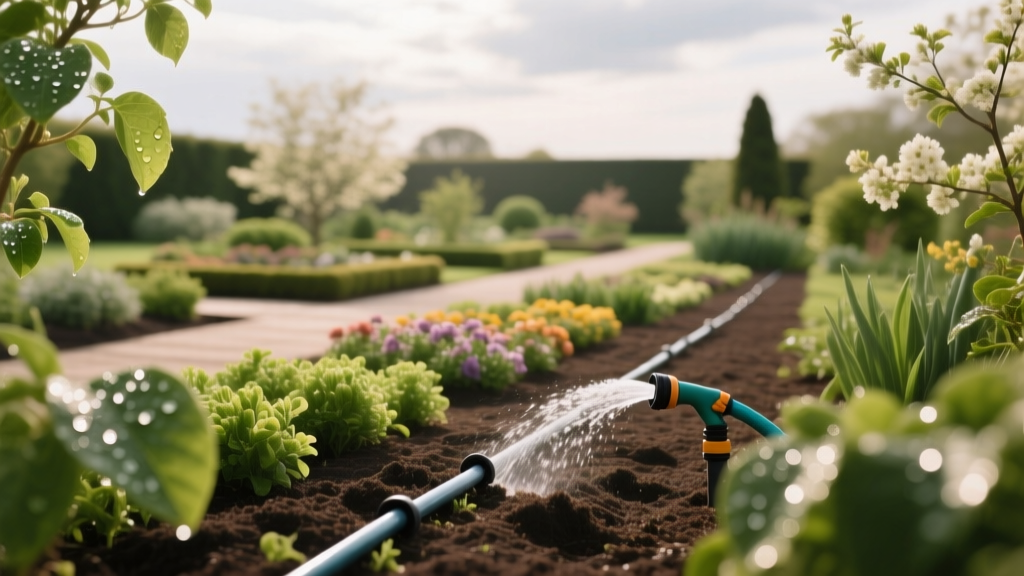
Seasonal Irrigation Adjustment Guide
The fastest way to lose plants in the next few weeks isn’t fertilizer or pruning—it’s watering on last season’s settings. As days lengthen or shorten, winds shift, and soil temperatures swing, irrigation that was “about right” can become either a root-rot invitation or a drought stress trap. Use this guide to adjust water now with clear triggers: temperature thresholds, calendar windows, and simple field checks you can do in under five minutes.
Keep this core rule in mind: your goal is consistent moisture in the active root zone, not a wet surface. Most ornamentals and vegetables concentrate roots in the top 6–12 inches; turf often uses the top 4–6 inches. If you’re only wetting the top inch, you’ll water more often and get weaker roots.
Priority 1: Reset irrigation by weather triggers (do this this week)
Use these concrete thresholds to change your schedule
Make one schedule change at a time, then reassess after 7 days. Use these triggers as your “seasonal switches”:
- Heat spike: When daytime highs reach 90°F for 3+ days, increase total weekly water by 15–25% (or add one deep watering cycle) for vegetables, containers, and new plantings.
- Cool-down: When highs stay below 75°F and nights dip under 55°F, reduce weekly irrigation by 10–20% to prevent slow-root waterlogging.
- Frost proximity: Within 2 weeks of your average first fall frost date (often mid-September to late October depending on USDA zone), taper water for warm-season crops to reduce disease; keep evergreens hydrated if soil is still above 40°F.
- Soil temperature cue: When soil at 2–4 inches depth is consistently above 60°F, roots and microbes are active—plants can use more water (and you’ll lose more to evaporation).
- Rain event: After 0.5 inch of soaking rain, pause irrigation for 2–4 days on loam; 4–7 days on clay; 1–2 days on sand (then verify with a soil check).
Do a 60-second soil check before you change anything
Don’t guess—verify. Use a trowel or soil probe:
- Dig 6 inches down in two spots (sunny and shaded). If soil forms a weak ball and feels cool, you’re likely adequate.
- If it’s powdery or crumbles immediately, you’re under-watering.
- If it’s shiny-wet, sticky, or smells sour, you’re over-watering or draining poorly.
Extension guidance consistently emphasizes deep, infrequent watering to encourage deeper roots and reduce evaporative losses. For example, Colorado State University Extension notes that watering less often but more deeply promotes deeper rooting and better drought resilience (CSU Extension, 2022). Likewise, University of California Agriculture and Natural Resources highlights that irrigation should match plant need and seasonality to avoid waste and disease pressure (UC ANR, 2019).
“Deep, infrequent irrigation encourages deeper rooting and improves drought tolerance compared to frequent, shallow watering.” — Colorado State University Extension (2022)
Priority 2: Calibrate your system (one afternoon that saves months of headaches)
Measure output: the “tuna can test” for sprinklers
For turf or beds watered by overhead sprinklers, place 6–10 straight-sided cans (tuna or cat food cans work) across one zone. Run sprinklers for 20 minutes, then measure water depth in each can. Average them to get inches per 20 minutes.
- If you collect 0.25 inch in 20 minutes, your sprinkler rate is 0.75 inch/hour.
- Adjust run time to deliver a targeted weekly depth (often 1.0 inch/week for cool-season turf in active growth, less in cool weather, more in heat or wind).
Drip irrigation: check emitters and pressure
Drip systems drift out of spec as filters clog and pressure changes.
- Clean filters every 2–4 weeks during heavy use.
- Confirm emitter output: a 1 GPH emitter should fill a quart jar in about 15 minutes (roughly). If it takes much longer, you’re not delivering what you think.
- Walk lines weekly for leaks, popped fittings, and chewed tubing (rodents love drip lines in dry spells).
Mulch: the quickest “irrigation upgrade” you can make
Add 2–3 inches of organic mulch (shredded bark, leaf mold, composted leaves) around vegetables, perennials, shrubs, and trees—keeping mulch 3–6 inches away from trunks and crowns. Mulch reduces surface evaporation and moderates temperature swings, which stabilizes moisture demand across seasonal transitions.
Priority 3: What to plant (and how to adjust water for establishment)
New trees and shrubs: set a separate “establishment” schedule
Newly planted woody plants fail most often from inconsistent moisture during the first season. Give them their own zone or hand-water on a plan:
- Weeks 1–2: Water every 2–3 days (slow soak) unless rain delivers 1 inch that week.
- Weeks 3–8: Water every 4–7 days, soaking the full root ball and slightly beyond.
- Remainder of first year: Deep water every 7–14 days depending on heat, wind, and soil.
In USDA Zones 8–10 with hot, dry summers, shorten the interval during heat waves; in Zones 3–5, watch for over-watering during cool spells when roots are slower.
Seasonal vegetable planting: water needs change by crop stage
Use growth stage, not the calendar alone:
- Seeded rows: Keep the top 1 inch evenly moist until emergence; light watering may be needed daily in wind or sandy soil.
- Transplants: Water at planting, then again 24 hours later; after that, shift to deeper watering every 3–5 days as roots expand.
- Flowering/fruiting (tomatoes, peppers, squash): Maintain consistent moisture—avoid big swings that trigger blossom end rot and fruit cracking.
Cool-season versus warm-season beds: irrigate to temperature
When daytime highs hover around 65–75°F, cool-season crops (lettuce, spinach, peas, brassicas) can often handle longer intervals—especially under mulch. When highs climb above 85°F, cool-season greens bolt and demand more careful moisture (or shade cloth), while warm-season crops use water rapidly.
Priority 4: What to prune (and how pruning changes irrigation)
Prune strategically to reduce water stress
Pruning changes leaf area, which changes water demand. Use that to your advantage—but don’t overdo it in heat.
- In hot, dry periods: Avoid heavy pruning that exposes inner bark or fruit to sunscald; reduce irrigation only slightly after light pruning.
- After removing dead/diseased wood: Keep irrigation steady for 7–10 days while plants recover.
- Tomatoes: If you prune suckers for airflow, maintain consistent soil moisture to prevent stress-induced blossom drop.
Stop watering the “suckers” you don’t want
If you have aggressive growth you’re trying to slow (certain ornamentals or overly lush turf), don’t respond to every wilt with more water. Confirm with the 6-inch soil check. Often, midday wilting in heat is temporary; if plants recover by evening and soil is moist below the surface, you can hold your schedule.
Priority 5: What to protect (pests, disease, and weather tied to irrigation)
Prevent fungal disease by changing when you water
Seasonal transitions often bring cooler nights and longer leaf-wetness periods—perfect conditions for powdery mildew and leaf spots. Irrigation timing matters:
- Water at dawn so foliage dries quickly.
- Avoid evening overhead watering when nights are below 60°F and humidity is high.
- Switch beds to drip or soaker hoses if you’re fighting mildew on cucurbits, roses, or phlox.
University of Minnesota Extension emphasizes that keeping foliage dry (and watering at the soil line) helps reduce many common foliar diseases (University of Minnesota Extension, 2021).
Insect pressure often tracks plant stress
Drought-stressed plants emit cues that can increase pest problems (aphids, spider mites). But over-watering can increase fungus gnats and root rot issues in containers and poorly drained beds.
- Spider mites (hot/dry): Increase plant vigor with consistent deep watering; hose off leaf undersides in the morning if populations start.
- Aphids (lush growth): Avoid excess nitrogen and over-watering that produces overly tender growth; use a sharp water spray early in the day.
- Slugs/snails (cool/wet): Don’t keep the soil surface constantly wet; water early and use mulch carefully around tender seedlings.
Freeze and heat events: irrigation as protection
- Heat wave response (90–100°F): Water deeply 24 hours before the hottest day when possible; plants handle heat better when hydrated ahead of time.
- Light frost risk (32°F): Moist soil holds heat better than dry soil. If a light frost is forecast and soil is dry, water earlier that day (not late at night) to help buffer temperature swings.
Priority 6: What to prepare (a seasonal monthly schedule you can follow)
Use this schedule as a template, then modify for your USDA zone and local rainfall. The key is to reassess weekly rather than set-and-forget.
| Month / Seasonal window | Irrigation adjustment | What to watch | Actionable checklist |
|---|---|---|---|
| Early spring (soil thaw to ~60°F soil temp) | Start low; water only when top 2–3 inches dry | Cool nights & slow roots; waterlogging risk | Clean filters; repair leaks; set controllers; mulch after soil warms |
| Late spring (after last frost date + 2 weeks) | Increase 10–20% as growth accelerates | Rapid evap on windy days; new transplants | Separate “new plant” watering; check sprinkler uniformity with cans |
| Summer (3+ days ≥ 90°F) | Increase 15–25%; prioritize deep morning watering | Heat stress; blossom end rot; mites | Inspect drip weekly; add shade cloth for greens; keep mulch at 2–3 inches |
| Late summer to early fall (nights < 55°F) | Reduce 10–20% to prevent disease | Powdery mildew; slower dry-down; slugs | Move to morning watering; switch to drip; remove diseased foliage promptly |
| Fall (within 2 weeks of first frost) | Taper annual beds; keep trees/shrubs hydrated until soil ~40°F | Frost; evergreen winter burn risk | Deep water evergreens every 10–14 days if dry; drain/insulate lines before hard freezes |
Regional scenarios: adjust like a local (3+ real-world variations)
Scenario 1: Pacific Northwest maritime (mild summer, dry summer drought, wet shoulder seasons)
In many PNW gardens (often USDA Zones 7–9 west of the Cascades), the trap is watering like it’s dry year-round. Late spring can still have cool nights and surprise rain.
- After a 0.5–1 inch rain, pause irrigation for several days and re-check soil at 6 inches.
- As summer drought sets in, shift to deep watering: shrubs and perennials often thrive on 7–10 day intervals once established, with mulch.
- Disease focus: powdery mildew in late summer—avoid overhead watering after evenings drop below 60°F.
Scenario 2: Southwest/desert and high desert (intense sun, low humidity, alkaline soils)
In arid regions (common USDA Zones 8–10 low desert; 5–7 high desert), evaporation and wind dominate. You may water “enough” but still lose plants because water isn’t reaching deep roots.
- Water pre-emptively before heat waves: a deep soak 24 hours before a 100°F day helps prevent afternoon collapse.
- Use basins around trees and shrubs to keep water from running off; deliver water slowly to penetrate 12 inches.
- Salt management: occasional deep irrigation (a longer soak) can help leach salts below the root zone—only if drainage is adequate.
- Pest focus: spider mites surge in hot, dusty conditions; reduce dust and keep plants evenly watered.
Scenario 3: Humid Southeast (heavy rain bursts, high disease pressure, sandy or compacted soils)
In the Southeast (often USDA Zones 7–9), the mistake is assuming frequent rain equals consistent soil moisture. Thunderstorms can dump water fast, but it may run off or percolate unevenly.
- After big storms, check for standing water; if soil stays saturated for 48 hours, reduce irrigation and improve drainage (raised beds, organic matter, aeration where appropriate).
- Water early morning only; avoid nighttime watering to reduce leaf diseases.
- Disease focus: leaf spot, blights, and root rots—keep foliage dry and improve airflow with selective thinning rather than heavy pruning in heat.
Scenario 4: Northern climates with short seasons (Zones 3–5) and rapid fall transitions
Where the growing season is compressed, irrigation mistakes often happen in the shoulder seasons: over-watering during cool spells and under-watering during sudden warm, windy days.
- When nights fall below 45–50°F, reduce irrigation frequency—plants use less and soils dry more slowly.
- Before the ground begins to freeze, give evergreens a final deep watering if autumn has been dry; winter wind can desiccate needles.
- Prepare irrigation shutdown earlier than you think: drain hoses and lines before repeated hard freezes (often below 28°F overnight).
Weekly timeline: the “right now” routine (repeat every 7 days)
This is the simplest way to stay seasonally accurate without obsessing over daily changes.
Day 1 (or your chosen check day)
- Check forecast highs/lows for the next 7 days (note any 90°F+ heat, or nights <55°F).
- Do two 6-inch soil checks (sun + shade).
- Adjust controller by 10–20% (not more) based on what you find.
Midweek (5-minute walk)
- Look for wilting that doesn’t recover by evening (under-watering) versus yellowing with wet soil (over-watering).
- Inspect drip emitters and spray patterns; unclog or replace as needed.
- Scout for powdery mildew, aphids, and mite stippling—address early.
End of week
- After any rain ≥ 0.5 inch, pause irrigation and re-check soil after 48 hours.
- Record changes: one line in a garden notebook (“Raised drip 15% due to 92°F week; mulch added”).
Quick checklists you can print
Irrigation adjustment checklist (seasonal changeover)
- Update controller seasonal adjust (%): start with 10–20% changes
- Confirm sprinkler output with a 20-minute can test
- Clean filters; flush drip lines
- Repair leaks and straighten tilted heads
- Add 2–3 inches mulch (keep away from crowns/trunks)
- Separate new plantings from established zones (or hand-water on schedule)
Plant health checklist tied to watering
- Morning-only overhead watering during disease-prone periods
- Even moisture for fruiting crops to prevent cracking and blossom end rot
- Keep leaves dry on cucurbits and roses (drip/soaker preferred)
- Scout weekly: mites in hot/dry; slugs in cool/wet; aphids on lush tips
- Remove diseased foliage—don’t “wash it off” with extra irrigation
Fine-tuning: matching water to soil type and plant type
Soil texture dictates how long water stays available:
- Sandy soil: Water penetrates quickly but drains fast; irrigate more frequently with adequate depth. Consider split cycles (two shorter runs separated by 30–60 minutes) to reduce waste.
- Loam: Ideal balance; aim for deep watering and moderate intervals.
- Clay: Slow infiltration; use cycle-and-soak (short run, wait, short run) to prevent runoff. Reduce frequency in cool weather to avoid saturation.
Plant type also matters. Shallow-rooted annuals and containers need more frequent attention; established shrubs and trees prefer deeper, less frequent watering. Turf often needs consistent weekly moisture during active growth, but should still be watered deeply enough to reach 4–6 inches.
Use the season’s opportunity: once your irrigation is calibrated and timed to temperature and rainfall, you’ll spend less time reacting to wilting and more time harvesting, pruning with purpose, and preventing disease before it starts. Set your weekly check day, make small percentage changes, and let soil moisture—not habit—drive every adjustment.