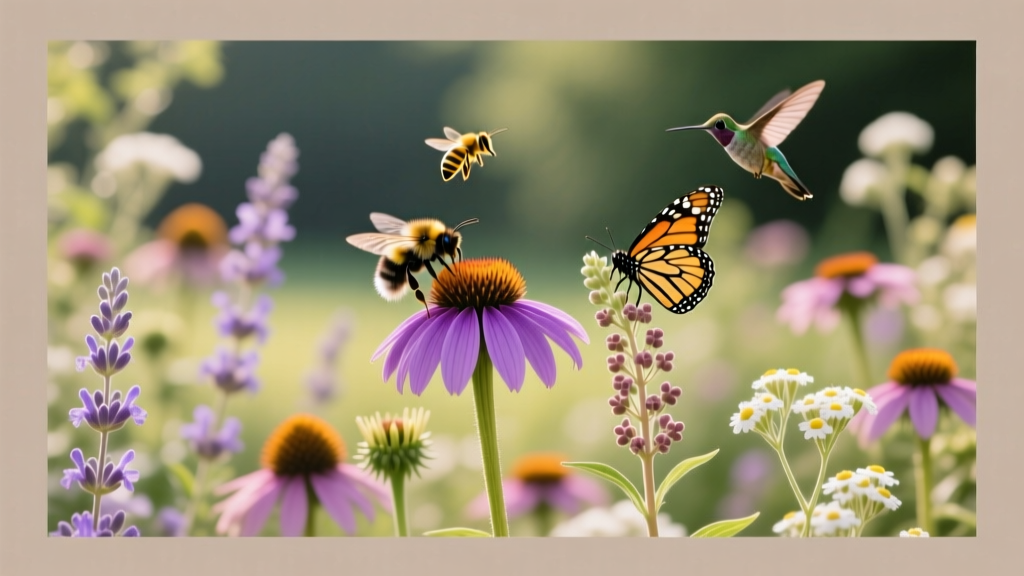
Supporting Pollinators in Your Summer Garden
Summer is when pollinator support stops being theoretical and becomes urgent. Nectar can dry up fast during heat waves, shallow water sources disappear, and pesticide drift spikes as lawns and landscapes get treated. At the same time, your garden can be a dependable “fuel stop” for bees, butterflies, hoverflies, moths, and beneficial wasps—right when they’re raising young and foraging hard. The next 4–8 weeks are your best window to stack blooms, protect nesting habitat, and prevent pest problems without cutting off the insects that keep your garden producing.
Use this as a right-now checklist and timeline. Adjust timing by your USDA hardiness zone and your local first fall frost date (often between September 15 and November 15 depending on region). When in doubt, prioritize continuous bloom, clean water, and low-risk pest control.
Priority 1: Plant for continuous bloom (the fastest way to increase pollinator visits)
If your garden has a “mid-summer gap” (lots of spring flowers, then a lull), pollinators feel it immediately. Aim for at least 3 plant types blooming at all times through the heat of summer. Focus on plants that flower reliably in warm nights and high daytime temperatures.
Plant now: heat-tough annuals and short-turn perennials
Most summer annuals can be planted once nights stay above 55°F and soil temperatures are reliably above 60°F. In many areas that’s late May through June; in cooler zones it may be early July. These choices are dependable pollinator magnets:
- Zinnias (Zinnia elegans): nonstop nectar; choose single or semi-double forms for easier access.
- Sunflowers (Helianthus annuus): stagger sowings every 10–14 days for continuous pollen.
- Cosmos (Cosmos bipinnatus): thrives in heat; avoid over-fertilizing to prevent leafy plants with few blooms.
- Basil (Ocimum basilicum): let a few plants flower; bees love the blooms and you still harvest leaves from others.
- Salvia (annual and perennial types): long bloom, drought tolerant once established.
- Nasturtiums (Tropaeolum majus): good for cooler summer regions and partial shade; also a trap crop for aphids.
Timing tip: If your first fall frost is around October 15, count back 60 days (about August 15) as the cutoff for sowing many fast-blooming annuals from seed. Transplants can go in later if watered well.
Plant now for late-summer and fall: “bridge” blooms that carry colonies and migrations
Late summer is a crunch time: wild colonies are storing food, and many beneficial insects are peaking. Add plants that bloom in August–October:
- Goldenrod (Solidago spp.) and asters (Symphyotrichum spp.): powerhouse native options for many regions.
- Joe-Pye weed (Eutrochium spp.): excellent for butterflies; prefers consistent moisture.
- Mexican sunflower (Tithonia): outstanding for bees and butterflies in hot climates; needs sun.
- Sedum/stonecrop (Hylotelephium): late blooms; very drought tolerant once established.
For containers, use a simple pollinator recipe: 1 tall (salvia), 1 mounding (zinnia), 1 spiller (nasturtium or trailing verbena). Place containers where you’ll notice them—pollinator activity is a daily feedback loop that helps you adjust quickly.
Regional scenario #1: Hot-summer, long-season gardens (USDA zones 8–10)
When daytime highs run 90–100°F for stretches, flowers can shut down or nectar can concentrate. Prioritize heat-proof species and plan for afternoon shade:
- Plant native salvias, lantana (where non-invasive), globe amaranth, and herbs allowed to flower (basil, oregano, thyme).
- Water early morning; avoid evening overhead watering that can increase foliar disease pressure.
- Give pollinator beds a light 2–3 inch organic mulch to moderate soil temperature, but leave some bare patches (see nesting section).
Regional scenario #2: Short-season or high-elevation gardens (USDA zones 3–5)
Your window is tighter. If you’re within 8–10 weeks of first frost, prioritize transplants and quick bloomers:
- Use nursery starts of asters/sedum or fast annuals (zinnia, cosmos, calendula).
- Protect blooms from cold snaps below 40°F with row cover at night.
- Focus on sunny, wind-sheltered microclimates near walls or fences.
Regional scenario #3: Coastal fog belts and humid summers
Where mornings are cool and damp (or humidity stays high), mildew can reduce flowering and pollinator access:
- Space plants for airflow; thin dense annuals by 20–30% mid-season.
- Choose mildew-tolerant varieties (many modern zinnias and bee balms are improved).
- Water at soil level; keep foliage dry.
Priority 2: Prune and deadhead to keep nectar coming (without removing habitat)
Summer maintenance is a balancing act: you want more blooms, but you don’t want to strip away nesting sites or future seed for birds. Think “selective and timed,” not “tidy everywhere.”
Deadhead strategically (weekly 10-minute rounds)
Every 7–10 days, do a quick pass:
- Deadhead zinnias, cosmos, marigolds, coreopsis to trigger new flowers.
- On lavender and catmint, shear lightly after the first flush to encourage a second bloom.
- Leave some seedheads later in summer on natives (coneflower, black-eyed Susan) if birds are part of your goal.
Keep at least one “messy corner” where stems remain standing and leaf litter isn’t removed. Many beneficial insects use sheltered spots during the heat of the day.
“Chelsea chop” as a late-spring/early-summer lever (if you haven’t done it yet)
If you’re still early enough in your season (often late May through mid-June in many temperate regions), cutting back certain perennials by about 1/3 can stagger bloom and prevent flopping. Good candidates include asters, goldenrod, and some garden mums. If you’re already in peak bloom, skip this and focus on deadheading instead.
Don’t prune these at the wrong time
- Spring-flowering shrubs (lilac, forsythia): prune right after bloom ends, not later in summer, or you remove next year’s buds.
- Milkweed (Asclepias): avoid heavy pruning once monarch eggs/larvae may be present; spot-trim only for access.
Priority 3: Protect pollinators while managing summer pests and diseases
Summer is when insect pressure and disease pressure can push gardeners toward broad-spectrum sprays. Resist that impulse. Many “quick fixes” remove the very predators and pollinators that stabilize your garden.
“Because bees forage on flowers and collect pollen, applying insecticides to blooming plants can expose bees to residues.”
—Penn State Extension, 2023
Use an IPM ladder: lowest-risk actions first
Integrated Pest Management (IPM) is a practical sequence: monitor, identify, set thresholds, then act with the least disruptive method. Extension guidance consistently recommends this approach for protecting beneficials and pollinators (e.g., University of Minnesota Extension, 2021).
- Step 1 (today): Scout. Check undersides of leaves and new growth twice a week. Note what pest is present and how widespread.
- Step 2: Use physical controls. Hand-pick hornworms; blast aphids off with water; use row cover over young squash until flowering.
- Step 3: Encourage beneficials. Keep small-flowered plants (dill, alyssum, yarrow) blooming to feed parasitoid wasps and hoverflies.
- Step 4: If you must spray, time it. Apply at dusk when bees are less active, and never spray open blooms. Avoid spraying when temperatures exceed 85–90°F if the label warns of phytotoxicity or volatility.
Summer pest issues and pollinator-safe responses
Aphids on roses, milkweed, and vegetables: Often peak in early-to-mid summer. Use a strong water spray in the morning; repeat every 2–3 days as needed. Avoid systemic insecticides; they can move into pollen/nectar.
Spider mites during hot, dry weather (often above 85°F): Increase humidity around affected plants with occasional rinsing of foliage (morning), and reduce plant stress with consistent watering. Remove heavily infested leaves. Mites flare when predators are killed by broad sprays.
Japanese beetles (regional): Hand-pick in early morning into soapy water. Focus on protecting key plants; tolerate some damage elsewhere. Avoid beetle traps near the garden—they can draw more beetles to your area.
Squash vine borer / cucumber beetles: Use row covers until first flowers open, then remove to allow pollination. Consider hand-pollinating squash early in the morning if pressure is intense and you need to keep covers on briefly.
Summer disease prevention that keeps flowers blooming
Powdery mildew (common on bee balm, phlox, squash): space plants, water at the base, and avoid excess nitrogen. Remove the worst leaves and keep plants growing steadily with deep watering. Improve airflow by thinning crowded stems.
Botrytis (gray mold) in humid regions: deadhead spent blooms, remove fallen petals, and avoid overhead watering. Harvest flowers and herbs early in the day so plants dry quickly.
Blossom drop in tomatoes/peppers during heat: when nights stay above 75°F or days exceed 95°F, fruit set can drop. Shade cloth (20–30%) can moderate stress; keep blooms coming for pollinators with nearby herbs and flowers that tolerate heat.
Pesticide guardrails you can act on this week
- Do not apply insecticides to plants in bloom. Mow or remove blooms in nearby weeds (like clover) before treating adjacent areas, if treatment is unavoidable.
- Avoid systemic products in beds aimed at pollinators.
- Spot-treat only the affected plant, not the whole garden.
Citation: Oregon State University Extension highlights that insecticides can harm bees through direct contact and residues on treated blooming plants, and recommends avoiding applications during bloom (OSU Extension, 2019).
Priority 4: Prepare habitat essentials (water, nesting, and heat relief)
Flowers are only half the story. In summer, water and shelter often become limiting factors.
Put out reliable water (today)
A birdbath is rarely ideal for insects by itself—too deep and too slick. Make a pollinator watering station in 5 minutes:
- Use a shallow dish (1–2 inches deep) with pebbles or corks as landing pads.
- Place it in dappled shade to slow evaporation.
- Refresh every 2–3 days to reduce mosquito breeding; scrub weekly.
Protect ground-nesting bees (leave some bare soil)
Many native bees nest in the ground. In summer, avoid covering every inch with landscape fabric or thick mulch. Leave a few 1–2 square foot patches of bare, well-drained soil in a sunny spot. Keep it undisturbed.
Keep stems for cavity nesters (but place them deliberately)
Small bees nest in hollow or pithy stems. Instead of cutting everything down, bundle trimmed stems (raspberry canes, sunflower stalks) and tuck them in a quiet corner. If you use a bee hotel, keep holes clean and sizes appropriate; poorly maintained hotels can concentrate disease.
Heat-wave protocol (when forecasts exceed 95°F for multiple days)
- Water deeply at dawn; avoid midday watering that evaporates quickly.
- Add temporary shade for containers and stressed bloomers (especially new plantings).
- Skip pruning and fertilizing during extreme heat; it can push tender growth that wilts.
- Keep water stations topped up daily during heat waves.
What to do right now: a 2-week action plan
If you only do a few things, do these. This sequence gives the biggest pollinator payoff with minimal effort.
Week 1 checklist (60–90 minutes total)
- Plant or pot up 3+ fast-blooming annuals (zinnia, cosmos, salvia) and 1 late-season bloomer (aster/sedum/goldenrod if available).
- Set up one shallow water station; add stones; place in partial shade.
- Do a dusk garden walk and note what’s blooming and what’s not; mark a “gap” area for planting.
- Scout pests on 10 plants (undersides of leaves); identify before acting.
Week 2 checklist (30–60 minutes total)
- Deadhead and lightly shear repeat bloomers; leave one area less “tidy.”
- Thin crowded plants for airflow (target 20–30% density reduction where foliage is packed).
- Mulch thoughtfully: keep 2–3 inches around plants, but leave a few bare patches for ground nesters.
- Stagger sow sunflowers or cosmos for the next wave of blooms (every 10–14 days).
Monthly schedule: keep blooms and habitat steady through summer
| Month | Bloom Strategy | Habitat & Water | Pest/Disease Focus |
|---|---|---|---|
| June | Fill gaps with annuals; start succession sowing every 10–14 days | Set water station; leave bare soil patches; avoid over-mulching | Scout aphids and early beetles; remove by hand/water spray |
| July | Deadhead weekly; add late-summer perennials in pots if beds are full | Refresh water every 2–3 days; provide shade for new plantings | Watch for spider mites & powdery mildew; thin for airflow |
| August | Prioritize asters, goldenrod, sedum; let some herbs flower | Maintain water daily during heat waves; keep some stems standing | Manage caterpillars by hand; avoid spraying blooms; monitor fungal issues after storms |
Timing anchors you can plug into your local frost date
Use these concrete numbers to adjust your moves by region:
- 8–10 weeks before first fall frost: prioritize transplants for late-season blooms; sow only quick annuals.
- 60 days before first fall frost: last practical window for many seed-sown annuals to bloom reliably.
- When nights stay above 55°F: warm-season annual planting is safer and growth is faster.
- When soil is ~60°F: many seeds and transplants establish without stalling.
- Heat wave: 95°F+: switch to heat protocol (extra water, shade, no hard pruning).
Three common summer garden situations (and what to do today)
Situation 1: “My garden blooms, but I don’t see many bees.”
Check bloom type and pesticide exposure. Double or heavily bred flowers can be low-access or low-nectar. Add simple, open blooms (single zinnias, cosmos, herbs in flower). Also check whether a neighbor’s mosquito or lawn treatment could be affecting activity. Increase diversity: add at least 5–7 different flowering species across the season.
Situation 2: “Everything is wilting, and flowers are stopping.”
That’s usually heat + water stress. Water deeply at dawn; aim to moisten soil 6–8 inches down for established beds. Add temporary shade for afternoon sun. Deadhead lightly, but don’t do major cutbacks during extreme heat. Add a second water station—pollinators will use it when nectar is scarce.
Situation 3: “Pests are surging, and I’m tempted to spray.”
Slow down and identify the pest first. Most summer outbreaks can be reduced with hand removal, water sprays, row covers (pre-bloom), or pruning out hotspots. If you must treat, do it at dusk and avoid open blooms. Preserve plants that feed beneficial insects (dill, alyssum, yarrow) so predators rebound.
Quick reference: pollinator-support checklist for the next 30 days
- Keep 3+ different plants blooming at all times; add succession sowings every 10–14 days.
- Deadhead weekly; shear selective perennials after flushes.
- Refresh shallow water every 2–3 days (daily during heat waves).
- Leave bare soil patches and some stems for nesting.
- Scout twice weekly; use physical controls first; avoid spraying blooms.
- Thin crowded foliage by 20–30% to prevent mildew and keep flowers accessible.
When you prioritize continuous bloom, clean water, and low-disruption pest control, pollinator numbers usually respond within days. Watch the hottest part of the afternoon and the first calm hour of morning—those are your best “field notes” times. If you see more hovering, more pollen baskets on legs, and more repeat visits to the same bed, your summer garden is doing its job.