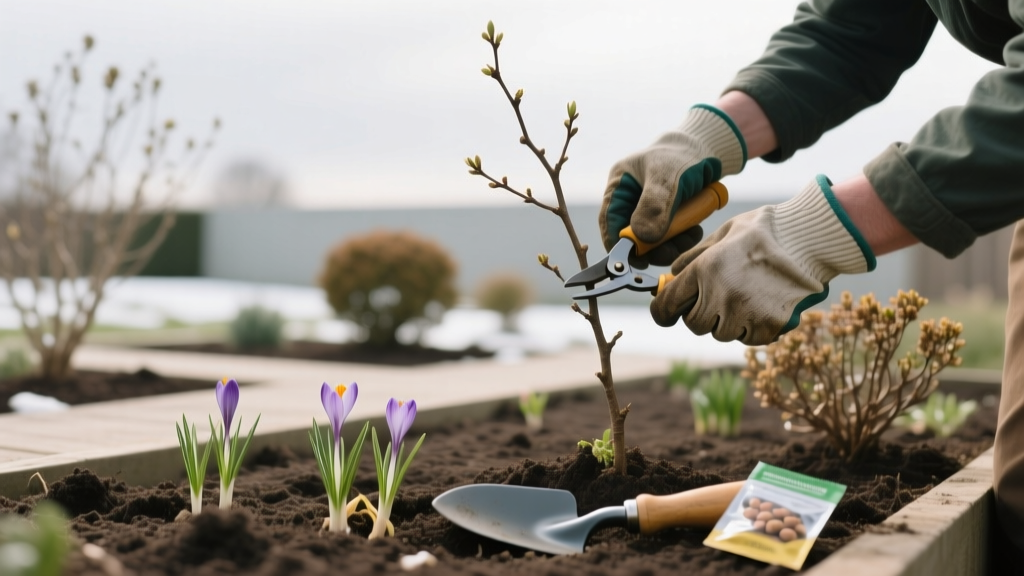
Late Winter Garden Tasks: Pre-Spring Preparation
Late winter is your narrow window to get ahead: buds are swelling, weeds are waking up, and soil is starting to breathe again—but most pests, pathogens, and perennials are still sluggish enough for you to intervene safely. The work you do in the next 2–6 weeks often decides how busy (or how frustrated) you’ll be when spring hits full speed. Use this guide like an almanac: prioritize what matters, time it to your frost dates and temperatures, and you’ll enter spring with momentum instead of backlog.
Rule of thumb for timing: when daytime highs are consistently 40–50°F and the soil surface is no longer frozen solid, you can begin many prep tasks. If your last spring frost date is still 4–10 weeks away, you’re in the sweet spot for pruning, bed prep, dormant sprays, and starting long-lead seedlings.
Priority 1: What to Prepare (Beds, Soil, Tools, Plans)
Preparation tasks pay the biggest dividends because they remove bottlenecks. Do these first, then move to planting and pruning as weather allows.
Week-by-week late winter timeline (adjust to your last frost date)
Use your local average last frost date (LFD) as the anchor. If you don’t know it, check a local extension office frost date tool or a trusted weather dataset; then work backward.
| Timing (relative to LFD) | What to do | Weather/temperature cues |
|---|---|---|
| 8–6 weeks before LFD | Order seeds; clean tools; test soil; start onions/leeks/celery indoors | Days lengthen; indoor sowing ok regardless of outdoor temps |
| 6–4 weeks before LFD | Prep beds when soil is workable; lay cardboard/mulch for weed suppression; prune apples/pears (dormant); start brassicas indoors | Soil passes “squeeze test”; highs often 40–55°F |
| 4–2 weeks before LFD | Direct sow peas/spinach if soil is 40°F+; apply dormant oil on fruit trees (as labeled); set up hoops/row cover | Soil temp ~40–45°F; buds swelling but not open for sprays |
| 2–0 weeks before LFD | Harden off cool-season transplants; sow radish/lettuce; divide perennials (when ground thaws) | Night lows near 28–35°F; be ready to cover tender seedlings |
Soil readiness: don’t destroy structure in a hurry
Late winter enthusiasm can wreck spring beds if you work wet soil. Do the squeeze test: grab a handful—if it forms a sticky ball that smears, wait. If it crumbles when you poke it, you’re good. Soil compaction now can reduce infiltration and root growth for months.
Action steps (1–2 hours per bed):
- Rake off matted leaves and winter debris (compost only if disease-free).
- Top-dress with 1–2 inches of finished compost; avoid tilling if possible.
- Refresh mulch paths; keep mulch 2–3 inches away from crowns and woody stems to reduce rot.
- Set up a simple bed map and crop rotation plan before you plant a single seed.
Soil testing and targeted amendments (do it now, not in May)
If you can only do one “grown-up” task this season, make it a soil test. Many labs need 1–3 weeks turnaround late winter. Amendments like lime can take months to fully react, so earlier is better.
Extension guidance consistently emphasizes matching amendments to test results rather than guessing. For example, University of Minnesota Extension notes that soil testing is the best way to determine lime and fertilizer needs and avoid over-application (University of Minnesota Extension, 2020).
“A soil test is the only way to know whether your soil needs lime and how much to apply.” — University of Minnesota Extension (2020)
Concrete targets to use with your results:
- Vegetable garden pH commonly performs well around 6.2–6.8.
- Blueberries require acidic soil, typically around 4.5–5.5; don’t lime blueberry beds.
- If applying lime per recommendations, do it as soon as soil is workable; water helps it begin reacting.
Tool sanitation and seed-starting setup checklist
Late winter is when plant disease prevention starts—on your pruners, trays, and stakes.
- Sharpen pruners/loppers; oil pivot points.
- Clean pots and seed trays: wash debris, then sanitize (follow product label directions).
- Replace old potting mix for seed-starting (don’t recycle garden soil indoors).
- Check grow light height and timers: aim for 14–16 hours of light daily for most seedlings.
- Inventory row cover, hoops, frost cloth, and clips before you need them at 5 p.m. on a freezing night.
Priority 2: What to Prune (Dormant, Structural, and Safety Cuts)
Late winter pruning is about structure, airflow, and reducing disease pressure. The timing is forgiving for many deciduous plants: you can see the bones, and the plant is not pushing soft growth yet.
Fruit trees: apples and pears first; stone fruit with more caution
For apples and pears, late winter (before bud break) is prime time in many regions. Aim for a dry day when temperatures are above 25–30°F so wood is less brittle and you’re not working in dangerous conditions.
- Remove dead, diseased, and damaged wood first.
- Cut out crossing branches and steep, weak crotch angles.
- Open the canopy: light and airflow reduce scab and mildew pressure.
- Disinfect tools between trees if you suspect disease issues.
Regional scenario #1 (Cold climates, USDA Zones 3–5): If deep cold persists (regular lows below 0°F), delay major cuts until the coldest stretch passes to reduce dieback risk. You can still remove obvious broken limbs any time for safety.
Stone fruits (peach, cherry, plum): Many growers delay heavy pruning until late winter’s end or early spring to reduce disease and dieback risks. If you’ve had issues with canker, prune only on dry days and remove infected wood promptly.
Berry crops: prune for yield, not just tidiness
Blueberries: In zones 5–8, prune during dormancy—often January–March depending on your winter. Remove low, twiggy growth and 1–2 of the oldest canes each year once plants are mature. The goal is a steady replacement of productive wood.
Raspberries/blackberries: Identify type first:
- Summer-bearing: remove dead canes (they fruited last year) and thin to strong canes with good spacing.
- Fall-bearing (primocane): you can mow/cut all canes to the ground in late winter for a single fall crop.
Ornamentals: hold off on spring bloomers, but don’t delay hazard pruning
Prune these after they flower (or you’ll cut off blooms): lilac, forsythia, azalea, rhododendron, many early-blooming spireas. Do prune immediately if there are broken limbs threatening people or property.
Hydrangea note: Bigleaf hydrangea (Hydrangea macrophylla) often blooms on old wood; late winter pruning can remove buds. Panicle and smooth hydrangeas bloom on new wood and can be pruned later winter/early spring.
Priority 3: What to Protect (From Frost, Critters, Sunscald, and Disease)
Protection tasks are about preventing irreversible damage—especially to bark, buds, and crowns. Late winter swings from warm sun to hard freezes are notorious for cracking bark and heaving shallow-rooted plants.
Freeze-thaw protection and frost readiness
When daytime highs hit 50–60°F for a few days, plants can deacclimate, then get slammed by 20–28°F nights. Keep protection materials staged.
- Use frost cloth/row cover when forecasts call for 28°F or lower on cool-season seedlings.
- Mulch perennials lightly if crowns are exposed by heaving; wait to fully uncover tender crowns until consistent thaw.
- Water on warmer days if soil is dry and not frozen—winter desiccation is real, especially for evergreens.
Sunscald and rodent damage on young trees
Late winter sun can heat bark during the day; rapid cooling at night causes cracks (sunscald/frost cracking). This is most common on young, thin-barked trees (maple, fruit trees). Use tree guards or white wraps on the south/southwest side, especially in zones 3–6.
Rodents chew bark under snow cover. Check guards now before snowmelt reveals the damage. If you see gnawing, reinforce with hardware cloth and reduce nearby tall grass and mulch piles that provide cover.
Dormant disease and insect prevention: time sprays precisely
Late winter is when dormant oils and certain fungicides can reduce overwintering pest populations and disease inoculum—if timed correctly. Always follow your product label and local guidance. The target window is usually when temperatures are above freezing (40°F is a common minimum on many labels) and buds are swelling but not open.
Cornell University’s fruit resources emphasize that dormant oil applications can suppress overwintering scales and mites when applied at the proper stage and coverage (Cornell University, 2019). Likewise, sanitation—removing mummified fruit and diseased leaves—reduces inoculum for spring infections.
- Remove and discard mummified fruit on trees and the ground (brown rot, apple scab cycles).
- Rake out diseased leaves under apples/pears if scab was present last year (don’t compost unless you hot-compost).
- Inspect branches for scale bumps; oils work best before heavy hatch.
Slug and cutworm prevention starts before you see holes
Slug eggs overwinter in protected spots, and cutworms hide in debris. Late winter cleanup reduces spring feeding pressure.
- Pull back boards, pots, and dense debris where slugs shelter; relocate or elevate them.
- Use collars for early brassica transplants to reduce cutworm damage.
- Keep mulch thin near seed rows until seedlings are established (moist mulch can harbor slugs).
Priority 4: What to Plant (Right Now, Indoors and Out)
Late winter planting is a mix of indoor head starts and cold-tolerant outdoor sowings—timed to soil temperature, day length, and your LFD.
Start indoors: long-lead crops you’ll be glad you didn’t delay
Count backward from your LFD. These timings are general; adjust for variety and your setup.
- Onions from seed: start 10–12 weeks before LFD for many intermediate/long-day types.
- Leeks: start 10–12 weeks before LFD.
- Celery/celeriac: start 10–12 weeks before LFD; slow germinators.
- Brassicas (broccoli, cabbage, cauliflower): start 6–8 weeks before transplanting; don’t start too early or they get leggy.
Temperature numbers that matter:
- Many cool-season seeds germinate well around 60–70°F indoors.
- Harden off transplants over 7–10 days, avoiding nights below 28–32°F unless plants are well acclimated and protected.
Direct sow outdoors (when soil temps cooperate)
If your soil is workable and has reached about 40°F, you can often sow:
- Peas: sow as soon as soil is workable; they tolerate frost.
- Spinach: germinates in cool soil; cover with row cover to speed emergence.
- Radish: quick wins; stagger sowings every 10–14 days.
- Arugula, mustard greens: fast and cold tolerant.
- Fava beans: excellent for cool springs in many regions.
Regional scenario #2 (Maritime/coastal Zones 8–10): Late winter may already feel like spring. Your urgency shifts: succession sow cool-season crops now before heat arrives. In many zone 9–10 areas, peas and spinach bolt quickly as days warm; prioritize them immediately and use shade cloth once highs approach 75–80°F.
Regional scenario #3 (High desert/intermountain West Zones 4–7): You may have warm days and freezing nights for weeks. Use low tunnels or hoops to buffer swings. Direct sow peas/spinach under cover, but delay transplanting until you can protect them from 20–25°F nights. Wind is often the bigger enemy than cold—anchor row covers aggressively.
Plant dormant bare-root stock and shrubs when ground is workable
Late winter into early spring is prime time to plant bare-root trees, roses, and shrubs in many zones. The key is workable soil (not frozen, not mud). Planting before bud break helps roots establish.
- Soak bare roots briefly if recommended by supplier (follow instructions; don’t over-soak).
- Dig a wide hole; avoid glazing the sides in wet soil.
- Water in deeply, then mulch lightly—again, keep mulch off the stem/trunk flare.
Late Winter Checklists You Can Print and Use
48-hour “next decent weather” checklist
- Walk the garden with a notebook: mark winter damage, standing water, and heaved perennials.
- Pick up and discard mummified fruit; remove obvious diseased debris.
- Cut back dead perennial stems you left for wildlife—leave a few hollow stems if you can for beneficial insects.
- Clear drains/gutters and check rain barrels before spring storms.
- Stage frost cloth, hoops, and clamps where you can grab them quickly.
Two-week high-impact checklist
- Send soil test (or use a reputable lab kit) and schedule amendments.
- Top-dress beds with compost; refresh paths; edge beds.
- Prune apples/pears and berry canes; remove dead wood across the landscape.
- Start onions/leeks/celery indoors; pot up if needed.
- Set up a simple succession plan: at least 3 sowing dates for greens spaced 10–14 days apart.
Pest and Disease Prevention That’s Specific to Late Winter
Late winter prevention is mostly about sanitation, interruption of life cycles, and avoiding wounds at the wrong time.
Sanitation: remove inoculum before it multiplies
If you had apple scab, powdery mildew, black spot, or blight issues last year, your late winter cleanup matters. Many pathogens overwinter on leaves, canes, and fruit. Remove infected debris now and reduce splash and spore load later.
- Rake and dispose of diseased leaves under roses and fruit trees.
- Cut out canes with visible lesions; prune to healthy tissue.
- Clean pruners between suspect cuts to avoid spreading disease.
Weed prevention: stop the first flush
Winter annuals and early spring weeds germinate as soon as soil warms slightly. If you suppress them now, you’ll do less weeding in April.
- Apply cardboard + 2–4 inches of mulch on new beds (keep away from stems).
- Flame-weed on calm days when seedlings are tiny (only where safe and legal).
- Hand pull small weeds after rain when roots release cleanly.
Watch-outs: pruning timing that can increase disease
Some species are more disease-prone if pruned at the wrong time.
- Oaks: in regions with oak wilt risk, avoid pruning during active vector periods; follow local extension guidance.
- Birch and maple: late winter/early spring can cause heavy sap “bleeding.” It usually doesn’t harm the tree, but if you care about mess, prune earlier in winter or after leaf-out.
- Roses: remove black spot-prone debris now; prune when buds swell and forsythia begins blooming (a practical phenological cue).
Three Quick Regional Game Plans (Pick the One That Matches Your Reality)
Cold winter, slow spring (USDA Zones 3–5; Upper Midwest, Northern New England): Focus on pruning, tool prep, seed starting, and snow/rodent inspection. As soon as soil reaches 40°F and is workable, sow peas/spinach under cover. Delay uncovering tender crowns until consistent thaw to avoid freeze-thaw damage.
Mild winter, early spring (USDA Zones 7–9; Mid-Atlantic, parts of the South): Prioritize weed suppression and disease prevention now—warm spells push growth early, and fungi wake up fast. Start succession sowing greens immediately. Have frost protection ready even if days are warm; late cold snaps still happen.
Wet winter, heavy soils (Pacific Northwest, clay regions across zones): The big enemy is compaction. Stay off beds until the squeeze test says “crumbles.” Use boards to distribute weight if you must access areas. Focus on drainage fixes, raised beds, and mulched paths now, so you can plant on time without mudding in soil structure damage.
Late Winter “Do This, Not That” Reminders
Do wait until soil is workable; don’t dig and till when it’s wet.
Do prune on dry days and remove diseased wood; don’t leave infected debris to “break down” under fruit trees.
Do keep mulch off crowns and trunks; don’t create a moist collar that invites rot and rodents.
Do harden off seedlings over 7–10 days; don’t move them from warm lights straight into wind and 28°F nights.
If you tackle the preparation and protection tasks first, you’ll have the capacity to plant at the first real opening—often the difference between a garden that “gets going” and one that limps into spring. Pick three items from the 48-hour checklist for your next workable day, then schedule one two-week block for soil testing, pruning, and seed-starting. When the forecast finally lines up—soil at 40°F, a stretch of highs in the 40s–50s, and your LFD still a few weeks out—you’ll be ready to act immediately instead of scrambling.
Citations: University of Minnesota Extension (2020), soil testing and lime guidance; Cornell University fruit resources (2019), dormant oil timing and overwintering pest suppression principles.