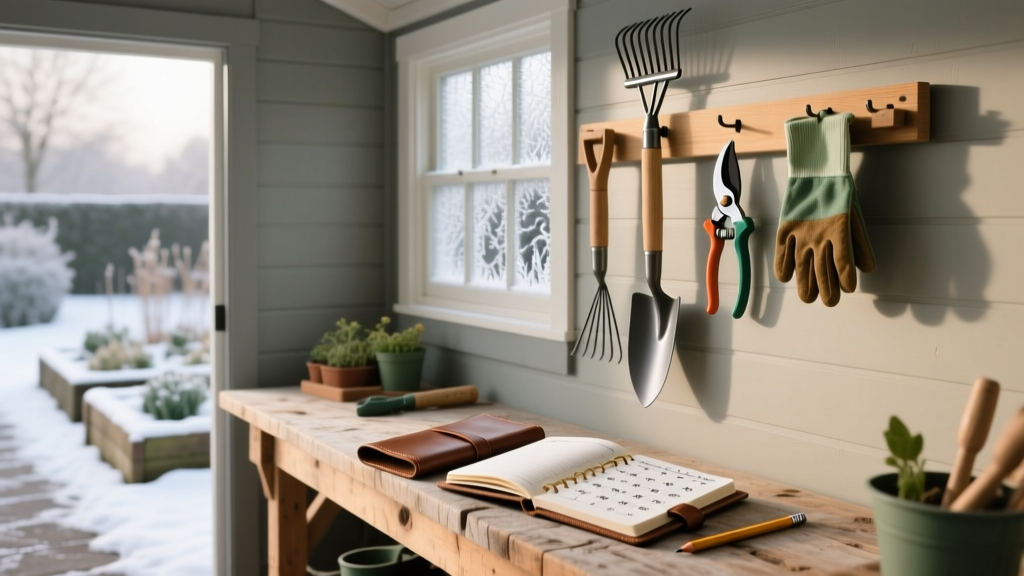
Winter Garden Prep: Tool Storage and Planning
The first hard freeze is the deadline you can’t negotiate with. Once nighttime lows hover around 28–32°F for a few hours, hoses split, damp tools start rusting fast, and tender perennials can heave out of the soil after the first freeze-thaw cycle. The opportunity is that winter prep is mostly one-time work that pays you back all spring: fewer broken tools, fewer disease carryovers, and a cleaner start when your soil finally hits 50°F again.
Use this as a “do it now” checklist and timeline. Adjust dates to your average first fall frost (often between Sept 15 and Nov 15 depending on region) and your USDA hardiness zone. If you don’t know your frost date, look it up by ZIP code and then follow the “X weeks before frost” markers below.
Priority 1 (This Week): Protect what you want to keep alive
What to protect right now (before the next cold snap)
When to act: As soon as forecasts show night lows below 35°F for multiple nights, or 7–10 days before your average first frost date.
- Drain and store hoses: Disconnect, drain fully, coil, and store where they won’t freeze. Shut off and drain outdoor spigots if you have a valve inside.
- Insulate exposed irrigation/backflow preventers: Even “frost-free” faucets fail if hoses stay attached during freezes.
- Protect tender perennials and newly planted shrubs: Mulch after the ground begins to cool but before it freezes solid. A good window is when soil temps dip under 45°F consistently.
- Move containers: Group pots against a sheltered wall; elevate slightly to prevent freeze-bonding to the ground. For borderline hardy plants, move into an unheated garage once nighttime lows hit 25–28°F.
- Prevent bark damage: On young fruit trees and thin-barked species, install trunk guards before rodents and sunscald season begins (sunny days + freezing nights).
Mulch timing matters: Apply winter mulch (2–4 inches) after a few light frosts, not during warm fall weather, to avoid inviting rodents and keeping crowns too warm. Iowa State University Extension notes that mulching is most effective after the soil has cooled to reduce temperature swings and winter injury (Iowa State University Extension, 2019).
Winter pest and disease prevention (do now, not “sometime”)
Winter prep is pest management. Many problems next year start as overwintering eggs, spores, and larvae in today’s debris.
- Remove diseased leaves: Especially from roses (black spot), peonies (botrytis), tomatoes (early blight), and fruit trees (scab). Do not compost visibly diseased material unless your compost routinely reaches hot-compost temperatures.
- Pick up fallen fruit and “mummies”: Dried fruit clinging to branches can carry brown rot and other diseases through winter.
- Rake and manage leaves wisely: Shred and compost healthy leaves or use as mulch. If you had heavy disease pressure on a plant (apple scab, rose black spot), keep those leaves out of garden beds.
- Clean up staking and trellising: Wipe down tomato cages, pepper stakes, and cucumber trellises to reduce pathogen carryover.
“Sanitation—removing diseased plant material and fallen fruit—is one of the most effective ways to reduce disease pressure next season, especially for fungal diseases that overwinter on debris.” — Extension plant pathology guidance summarized from multi-state extension recommendations (e.g., Cornell/UMN/OSU resources)
Priority 2 (Next 1–2 Weeks): Store tools so they’re ready on the first decent spring day
Tool triage: repair, replace, or retire
When: Plan one focused session within 14 days of your last big harvest. Choose a dry day—tool maintenance done damp tends to end in rust.
- Sort tools into three bins: “Ready,” “Needs work,” and “Replace.”
- Check wood handles: Splits, wobble, or soft spots mean repairs now or a broken handle mid-spring.
- Inspect cutting edges: Hand pruners, loppers, shears, and shovels benefit from sharpening before storage so they’re spring-ready.
Clean, disinfect, and oil (fast method that actually gets done)
Step-by-step:
- Remove soil: Stiff brush + putty knife. Soil holds moisture and salts that accelerate corrosion.
- Wash: Warm water with a small amount of dish soap; dry immediately.
- Disinfect cutting tools: Especially if you pruned diseased plants. Many extension services recommend sanitizing tools to reduce pathogen spread; for example, University of Minnesota Extension discusses cleaning/disinfecting tools as part of managing plant disease spread (University of Minnesota Extension, 2020).
- Oil metal: Wipe on a light coat of machine oil or a corrosion inhibitor. Don’t store tools wet.
- Condition wood: Light sanding + a wipe of boiled linseed oil helps prevent cracking (let it cure fully, store rags safely to prevent fire risk).
Pruner care: one small habit that prevents spring frustration
Before storing pruners and loppers:
- Tighten pivot nuts so blades don’t wobble.
- Sharpen to a clean bevel (a few minutes per tool).
- Lubricate springs and pivots.
- Store closed and dry.
Storage setup: keep rust and rodents out
Ideal conditions: Dry, stable temperatures, and airflow. If your shed sweats (common in humid regions), hang tools on wall racks so air moves around them.
- Hang, don’t pile: Piles trap moisture and bend tines.
- Use a “wet tool” zone: A boot tray or rubber mat near the door prevents damp tools from contaminating storage.
- Rodent-proof seed and bulb storage: Metal cans with tight lids beat plastic tubs in winter.
- Label and date chemicals: Store fertilizers and pesticides above freezing if the label requires it; keep tightly sealed and dry.
Priority 3 (2–6 Weeks Before the Ground Freezes): Plant what benefits from winter
What to plant (and the temperature cues to watch)
Timing target: Plant when soil is still workable but cooling—generally 2–4 weeks before the ground freezes in colder zones, or 4–8 weeks before your average first hard freeze in milder zones.
- Spring-blooming bulbs (tulips, daffodils, crocus): Best planted when soil temps drop to around 55°F or lower. In many areas that’s late September through November. In zones 3–5, earlier is safer; in zones 7–9, wait until later fall when soil cools.
- Garlic: Plant cloves when soil is cool but not frozen—often 2–3 weeks after the first light frost and about 4–6 weeks before hard freeze. Mulch after planting.
- Cover crops: Winter rye, crimson clover, or field peas (region-dependent). Seed when daytime highs are still moderate so seedlings establish before freezes. In many temperate regions, that’s 4–6 weeks before first frost.
- Trees and shrubs: Fall planting can be excellent where winters aren’t brutally dry and windy. Aim for 6 weeks before the ground freezes so roots can establish.
Regional scenario #1: Upper Midwest / Northern New England (USDA zones 3–5)
If your first frost commonly hits around Sept 15–Oct 10, your planting window closes quickly.
- Bulbs: Often best by late September to mid-October.
- Garlic: Frequently mid-October (adjust to your local hard freeze pattern).
- Tree wrap and critter guards: Install by late October before snow cover makes access hard.
Regional scenario #2: Mid-Atlantic / Pacific Northwest (USDA zones 6–8)
Longer falls allow more flexibility, but moisture creates disease and rot risks.
- Bulbs: Often thrive planted October through November.
- Fall cover crops: Excellent here; prioritize drainage and avoid compacting wet soil.
- Tool storage: Humidity is the enemy—oil tools and improve shed airflow.
Regional scenario #3: Southern Plains / Deep South (USDA zones 8–10)
“Winter prep” often overlaps with cool-season growing. Frost may arrive late (Nov 15 or later) or not at all in mild coastal pockets.
- Plant cool-season vegetables (where appropriate): spinach, kale, carrots, and lettuce can continue in many zone 8–9 gardens, especially with frost cloth.
- Watch warm soils: Bulbs may need pre-chilling in zone 9–10 depending on variety; aim for planting after soil cools closer to 55–60°F.
- Pest carryover: Mild winters mean more insects survive; sanitation and weed control matter even more.
Priority 4 (Late Fall to Early Winter): Prune with purpose, not impulse
What to prune now (and what to leave alone)
Rule of thumb: Prune for safety and disease control now; save major shape pruning for late winter/early spring unless your plant type calls for a different schedule.
- Prune now: Dead, damaged, or diseased branches any time you see them. Remove broken limbs before snow and ice load makes tearing worse.
- Wait on heavy pruning for many shrubs: Late fall pruning can stimulate tender new growth that gets hit by cold.
- Do not prune spring-flowering shrubs now (lilac, forsythia, many hydrangeas that bloom on old wood): you’ll remove buds. Mark them for pruning right after bloom.
- Perennials: Cut back only what is diseased or flopping into walkways. Leaving some seed heads and stems can protect crowns and support overwintering beneficial insects—unless disease pressure was high.
Temperature and timing cues for pruning
- After a hard frost (28°F), many annuals collapse—remove them to reduce overwintering pests.
- Major woody pruning often fits best in late winter when the coldest part has passed but before bud break (timing varies widely; in many climates this is January–March).
What to prepare: winter planning that saves money and steps in spring
Inventory your season (one hour, maximum payoff)
Do this indoors on the first evening you can’t stand being outside.
- Map what worked: Note beds that underperformed (shade changes, drainage, pest hotspots).
- Record first/last frost hits: If you saw frost at Oct 3 but your average is Oct 15, that’s useful for next year’s risk planning.
- List disease issues: Powdery mildew, blight, rust, black spot—write down where it occurred to plan rotations and resistant varieties.
- Track inputs: Mulch volume, compost needs, fertilizer use—this prevents repeat purchases and shortages.
Create a simple crop rotation and pest break plan
Winter is the moment to break pest cycles on paper. If tomatoes had blight or you battled squash bugs, plan distance and rotation now.
- Rotate plant families: Nightshades (tomato/pepper/eggplant), cucurbits (squash/cucumber), brassicas (cabbage/kale), legumes (beans/peas).
- Plan for sanitation: Put a note on your spring calendar to disinfect trellises and cages again before use.
- Order resistant varieties early: If you need scab-resistant apples or disease-resistant tomatoes, popular cultivars sell out.
Monthly winter prep schedule (adjust to your frost date)
| Timing | Outdoor tasks | Tool/storage tasks | Planning tasks |
|---|---|---|---|
| 6–8 weeks before first frost | Seed cover crops; remove diseased plants; reduce watering on perennials | Gather tool supplies (oil, brush, sharpener) | Note pest/disease problems and where they occurred |
| 2–4 weeks before first frost | Bring in tender plants; start bulb/garlic timing based on soil cooling | Clean and dry hand tools; check pruners and loppers | Inventory seeds; list must-order varieties |
| First hard frost window (28–32°F nights) | Pull annuals; harvest remaining tender crops; mulch after soil cools | Drain hoses; winterize sprayers; store fertilizers dry | Update garden map and rotation sketch |
| After leaf drop / late fall | Remove fruit mummies; protect trunks; finalize bulb planting if soil workable | Hang tools; set rodent-proof seed storage | Set spring calendar reminders (soil test, seed-start dates) |
Checklists you can print (or keep on your phone)
48-hour cold snap checklist (forecast shows 28–32°F)
- Disconnect hoses; drain and coil
- Cover tender plants with frost cloth before dusk (remove in morning)
- Pick remaining tomatoes/peppers/squash that won’t handle frost
- Move sensitive containers to shelter
- Secure row covers and low tunnels against wind
One-afternoon tool shutdown checklist
- Brush off all soil; wash and dry
- Disinfect pruners, snips, and saws (especially after disease work)
- Sharpen pruners and shovel edges
- Oil metal surfaces and moving parts
- Hang tools; keep handles off damp floors
Winter pest and disease prevention checklist
- Remove diseased leaves and stems from beds
- Pick up fallen fruit and fruit “mummies” from trees and ground
- Weed now: winter annuals set up spring headaches
- Clean tomato cages/trellises; store dry
- Protect young trunks from rodents and sunscald
Real-world timing examples (use the one closest to you)
If you garden in USDA zone 5 (e.g., parts of the Midwest/Northeast): An average first frost might land around Oct 10. Start tool cleaning and hose draining by late September. Aim to plant bulbs as soil cools (often late Sept–Oct) and get garlic in by mid-October. Install trunk guards by late October.
If you garden in USDA zone 7 (e.g., Mid-Atlantic): An average first frost might be Nov 1. You often have time for a cover crop in late September and bulb planting through November as soil temperatures finally drop toward 55°F. Focus on sanitation because fungal pressure can be high in wet falls.
If you garden in USDA zone 9 (e.g., Gulf Coast/parts of CA/AZ): Your first frost could be Dec 1 or later, and some years you may only see brief dips. Winter prep is less about freeze damage and more about organization, rust prevention in humid storage areas, and controlling overwintering pests that survive mild cold. Bulbs may need pre-chilling; check variety requirements and plant when soils cool closer to 55–60°F.
Planning ahead: set your spring start date now
Winter planning works best when you convert it into calendar reminders tied to temperatures and frost dates:
- Seed starting reminders: Count back 6–10 weeks from your last spring frost for tomatoes/peppers (varies by crop and variety).
- Soil test reminder: Schedule for late winter or very early spring so amendments can be planned; many labs get busy as spring approaches.
- Sharpening and supply restock: Put a reminder in late winter to check oil, sharpen again if needed, and replace worn gloves before the rush.
For gardeners who like hard triggers instead of dates, use these: once your soil is consistently under 45°F, focus on mulching and protection; when it climbs back toward 50°F in spring, that’s your cue to start transitioning from storage mode to active bed prep.
Finish your winter prep by walking the garden with a notepad: look for places water pools, where wind tunnels form, and which beds need edging or paths refreshed. The goal is simple—when the first decent spring weekend arrives, you’re planting instead of untangling hoses, hunting pruners, and scrubbing rust.
Citations: Iowa State University Extension (2019) guidance on mulching timing and winter protection principles; University of Minnesota Extension (2020) recommendations on cleaning/disinfecting garden tools to reduce disease spread.