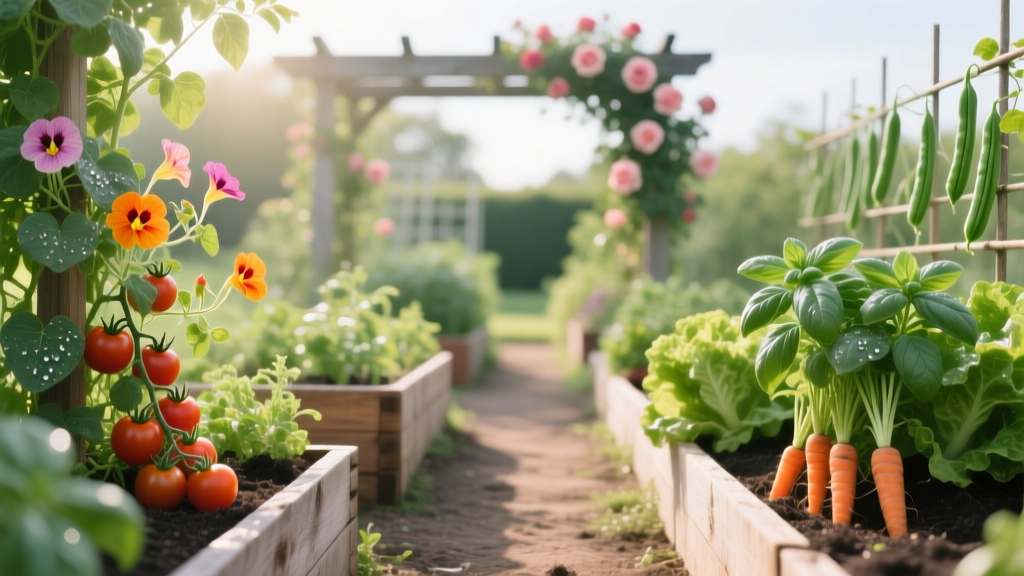
Summer Garden: Succession Planting for Continuous Harvest
Summer doesn’t reward hesitation. Beds that were bursting in June can look tired by mid-July, and bare patches after a garlic or pea harvest are lost opportunity if you leave them empty. The upside: warm soil and long days make summer the easiest time of year to seed quick crops, reset tired plantings, and lock in a steady harvest schedule that carries you right up to your first fall frost.
This is your “right now” playbook for succession planting—what to sow next, what to cut back, what to shield from heat and insects, and what to prep so you’re not scrambling later. Use it like an almanac: check your calendar, watch temperatures, and keep replanting.
Priority #1: What to plant now (succession crops that pay off fast)
Succession planting works best when you match crop to remaining time and temperature. Two anchors matter: (1) your first fall frost date (often anywhere from Sept 15 to Nov 15 depending on region), and (2) your soil temperature for germination. Most summer successions are seeded when soil is 60–85°F, with many warm-season crops happiest at 70–95°F for fast sprouting.
Use this simple timing formula
Days to maturity + 14 days buffer (for slower growth in late summer) must fit before your first frost if the crop is frost-sensitive. For frost-tolerant crops (kale, carrots, beets), you can run closer to frost and often harvest after light freezes.
- Example: Bush beans (55 days) + 14 = 69 days. If your first frost is Oct 10, your last reliable sowing is around Aug 2.
Fast wins for July–August sowing
These are the workhorses for continuous harvest. Seed them every 7–21 days depending on how much you eat and how quickly you can keep up.
- Bush beans: Sow every 2 weeks through early August in many Zone 5–7 gardens; later in Zones 8–10.
- Cucumbers (for late crop): Direct seed by mid-summer where remaining warm days allow 50–70 days before cool nights; trellis to reduce disease.
- Summer squash (short-season varieties): Good “reset crop” after spring greens; choose compact varieties to mature in 45–55 days.
- Carrots: Seed for fall sweetness. Germination improves when soil is kept evenly moist; many types mature in 70–80 days.
- Beets: Dependable in warm soil; thin early for best roots; 55–70 days.
- Chard: Heat-tolerant leafy green that bridges summer into fall; pick outer leaves weekly.
- Basil, dill, cilantro (managed): Basil loves heat; cilantro bolts fast—use partial shade and sow every 2–3 weeks.
- Lettuce (summer strategies): Choose heat-tolerant romaine/butterhead, use shade cloth, and sow every 10–14 days.
“Most vegetable crops require 1 to 2 inches of water per week. During hot, windy weather, water use is even higher.”
—University of Minnesota Extension (water management guidance, 2020)
Heat-smart sowing tactics (so seeds actually germinate)
In hot spells, the problem isn’t that seeds won’t grow—it’s that the top half-inch of soil dries out before the seed can finish germinating. Use these tactics when daytime highs are consistently 90°F+:
- Pre-moisten the row (water the furrow, then seed, then cover).
- Board trick: Lay a board over seeded rows; lift daily once sprouts start. It holds moisture and moderates heat.
- Mulch after emergence (not right on top of tiny seeds): a thin layer of straw or shredded leaves reduces surface drying.
- Shade cloth: 30–40% shade over lettuce, cilantro, and young seedlings prevents heat stalls.
Succession “modules” you can plug into gaps
When a crop finishes, don’t rethink the whole garden—drop in a module.
- After garlic or onions (often harvested late June–July): Seed carrots, beets, bush beans (if time), or transplant fall brassicas.
- After peas (early summer): Plant cucumbers, basil, or a second round of summer squash.
- After early potatoes: Seed beans or sow a cover crop if you’re done with vegetables there.
Priority #2: What to prune, pinch, and pull (to keep production rolling)
Succession planting is only half the equation. Summer gardens stall when plants are left overcrowded, diseased leaves stay on the plant, or fruiting crops are allowed to sprawl into a humid mess. Pruning and pulling creates airflow and frees space for the next sowing.
Tomatoes: prune for airflow, not for bare stems
- Indeterminate tomatoes: Remove suckers below the first flower cluster if you want fewer, larger fruits; keep foliage shading fruit to prevent sunscald.
- All tomatoes: Remove lower leaves that touch soil; aim for 8–12 inches of clear stem at the base once plants are established.
- Weekly task: Tie stems, remove yellowing leaves, and pick ripe fruit to keep plants cycling.
Cucumbers, squash, melons: manage vines to reduce disease
- Train cucumbers onto a trellis; it improves airflow and makes it easier to remove older leaves with powdery mildew.
- For squash, remove the oldest leaves first if mildew appears; never strip the plant bare during heat.
Herbs and greens: pinch early, harvest often
- Basil: Pinch above a leaf node every 7–10 days to delay flowering and keep leaves tender.
- Chard/kale: Harvest outer leaves weekly; consistent picking prevents toughness and frees light for new leaves.
- Cilantro: Harvest hard and resow; summer cilantro is often a short cycle unless shaded.
Pull and compost strategically (and when not to)
Pulling spent crops opens prime succession space. But don’t compost disease problems that spread easily.
- Compost: Spent beans, bolted lettuce, healthy pea vines.
- Do not compost (unless you hot-compost reliably): Tomato leaves with blight symptoms, cucurbit vines heavily infected with downy mildew, or plants with bacterial wilt.
Priority #3: What to protect (heat, water stress, pests, and summer diseases)
Mid-summer is when gardens lose momentum: heat waves, inconsistent watering, and pest pressure can wipe out the very successions you’re counting on. Protect young seedlings and keep fruiting plants stable so they keep setting.
Watering thresholds that matter
Aim for deep, consistent moisture rather than frequent sprinkles. Many extension services recommend roughly 1–1.5 inches of water per week for vegetables, more during extreme heat or wind. Use a rain gauge, not guesswork.
- When highs exceed 90°F for 3+ days: Check soil moisture daily for new seedings and transplants.
- Critical zones: Keep the top 1 inch consistently moist for germinating seeds; keep the root zone moist for fruiting crops to prevent blossom end rot and bitterness.
Research-based guidance on irrigation and moisture management is widely emphasized by extension programs; for example, Utah State University Extension highlights the importance of managing irrigation to reduce drought stress and improve vegetable quality (USU Extension, 2021).
Mulch and shade: your summer insurance policy
- Mulch depth: Apply 2–3 inches of straw, shredded leaves, or untreated grass clippings (thin layers) after seedlings are established.
- Shade cloth: Use 30% for tomatoes/peppers in extreme heat; 40–50% for lettuce and tender greens.
- Row cover in summer: Use lightweight insect netting (not heat-trapping fabric) to block pests on brassicas and cucurbits.
Summer pests to prevent (before they explode)
Succession planting means tender new growth is always present—exactly what pests prefer. Prevention beats reaction.
- Squash vine borer: In many areas, peak activity is early to mid-summer. Use insect netting until flowering, then hand-pollinate or uncover during the day. Remove and destroy infested vines.
- Cucumber beetles: Control early to reduce bacterial wilt risk; use yellow sticky traps near (not inside) plantings and insect netting on young plants.
- Tomato hornworm: Handpick at dusk; look for white cocoons (beneficial parasitoid wasps) and leave those worms in place.
- Aphids: Blast off with water; avoid excess nitrogen. Encourage beneficials with dill, alyssum, and yarrow nearby.
- Spider mites: Common in hot, dry weather. Increase humidity around plants with consistent watering and rinse leaf undersides early in the day.
Summer diseases: stop them with airflow and timing
- Powdery mildew (squash, cucumbers): Trellis, prune lightly, avoid overhead watering late day. Start successions on clean ground and rotate away from last year’s cucurbits.
- Tomato blights: Mulch to prevent soil splash, prune lower leaves, water at the base. Rotate tomato beds on a 3–4 year cycle where possible.
- Downy mildew (cucurbits): Can arrive suddenly in humid regions; plant early-maturing varieties and avoid dense canopies.
For home garden disease prevention, extension services consistently recommend sanitation, crop rotation, and airflow as primary controls; for example, Cornell Cooperative Extension publications on vegetable disease management emphasize reducing leaf wetness duration and improving airflow (Cornell Cooperative Extension, 2019).
Priority #4: What to prepare (space, soil, and a calendar you can follow)
The best succession plan is one you can execute in 20 minutes when a bed opens up. That means prepped soil, labeled seed packets, and a rolling schedule.
Quick bed reset (30–45 minutes per bed)
- Harvest and clear: Remove crop residues; cut plants at soil line when possible to leave roots in place.
- Weed fast: Shallow hoeing is enough if you do it right away.
- Compost and mineral touch-up: Add 1–2 inches of finished compost and scratch into the top few inches. If you suspect low fertility, use a balanced organic fertilizer per label.
- Re-level and water: Water the bed before sowing in extreme heat to cool and moisten the seed zone.
- Label the row with date: Succession planting fails when you forget what you seeded and when.
Monthly succession schedule (adjust by frost date and USDA zone)
| Month | What to sow/transplant | Interval | Key thresholds to watch |
|---|---|---|---|
| Late June | Beans, basil, carrots (for fall), heat-tolerant lettuce, cucumbers (2nd sowing) | Beans every 14 days; lettuce every 10–14 days | Soil temp ~70–85°F; manage drying winds |
| July | Beans (last rounds in cooler zones), beets, chard, dill, short-season squash; start fall brassica transplants | Beets every 2–3 weeks; herbs every 2–3 weeks | Heat waves (90°F+), consistent moisture for germination |
| August | Carrots, beets (last rounds for many), kale, collards, turnips, lettuce under shade; transplant broccoli/cabbage in many regions | Greens every 2 weeks (with shade/irrigation) | Count back 60–90 days to first frost; cool nights improve germination |
| September | Spinach (where nights cool), radishes, arugula, cover crops after final harvests | Radish every 10 days | Spinach germinates best as soil drops toward ~50–65°F |
3 regional scenarios (so you don’t follow the wrong calendar)
Scenario 1: Short-season North (USDA Zones 3–5; first frost often Sept 15–Oct 5).
You’re racing the clock. Focus on successions that mature in 30–70 days. Your last bean sowing may be late July or early August. Start fall brassicas as transplants, not seed, to save time. Prioritize carrots, beets, chard, kale, and fast salad greens under shade cloth. Begin counting backward from your frost date by mid-July and write “last sow” dates on seed packets.
Scenario 2: Temperate Midwest/Northeast (USDA Zones 5–7; first frost often Oct 5–Oct 25).
You can run two strong succession waves: mid-summer beans/cukes/squash, then late-summer/fall roots and greens. Plan for a late July bed reset after garlic and early potatoes: compost, replant beans or beets, and set out broccoli/cabbage transplants in August. Keep fungal disease pressure down with trellising, mulch, and morning watering.
Scenario 3: Long-season South/Coastal (USDA Zones 8–10; first frost often Nov 15 or later, if at all).
Summer heat can shut down fruit set on tomatoes and peppers when nights stay hot. Succession planting here often means “pause and protect” in peak heat, then restart heavy planting in late August through September. Use shade cloth, mulch, and consistent irrigation to keep plants alive through the toughest weeks, then prune lightly and feed to trigger fall production. Your late bean sowings may extend into September; fall cucumbers can be excellent if you manage beetles early.
Right-now checklists (printable logic without the printing)
This week (60–90 minutes total)
- Identify one bed or section opening up in the next 7–10 days.
- Seed one quick succession: beans or beets or a salad mix strip.
- Mulch around established plants to 2–3 inches (leave stems uncovered).
- Inspect cucurbits for beetles and egg clusters; remove eggs and protect young plants with netting.
- Prune tomato lower leaves for airflow; retie to supports.
Next 2 weeks
- Sow the second wave of the crop you eat most (repeat every 10–21 days).
- Start fall brassicas (broccoli, cabbage, kale) if you’re transplanting—aim to set out 6–8 weeks before your typical first frost in shorter-season regions.
- Set up shade cloth if you’ve had more than 3 days above 90°F and seedlings keep failing.
- Switch to soaker hoses/drip where possible to keep leaves dry and reduce disease.
By mid- to late summer (date it to your frost)
- Count back 70 days from first frost: last window for many “warm” successions like beans in cooler zones.
- Count back 90–100 days: prime window for carrots and storage beets in many gardens.
- Count back 30–45 days: keep sowing radishes, arugula, and fast greens (with moisture and pest protection).
Common succession mistakes that waste summer
Planting the same crop in the same spot repeatedly. Successions still need rotation. If you plant beans after beans, you invite soil-borne issues and nutrient imbalance. Rotate plant families even within the season when possible (legume → leaf → root is a simple pattern).
Skipping the buffer time. Late-summer growth slows as day length shortens. That’s why the +14 days buffer is practical for many fall-bound crops.
Letting beds sit “until you decide.” If you’re unsure, sow a short row of something you’ll definitely use (beets, basil, lettuce under shade). You can always pull a small planting later; you can’t recover lost heat and time.
Forgetting pest protection on new seedlings. The newest plants are the most vulnerable. Netting, collars, and daily checks for the first 10 days after emergence prevent most heartbreak.
A simple timeline you can run all summer
Use this cycle each time a space opens up:
- Day 0: Clear crop → weed → compost top-dress → water bed.
- Day 1: Sow seed or transplant starts. Label with date.
- Days 2–10: Keep seed zone evenly moist; inspect for pests every other day.
- Day 10–21: Thin seedlings; mulch lightly once established; begin gentle feeding for heavy feeders.
- Day 21+: Harvest early and often; schedule the next sowing on your calendar.
Summer succession planting isn’t about planting more—it’s about planting on purpose. When you treat empty soil like an urgent task, keep seedlings protected through heat, and run a repeating schedule, your harvest stops coming in waves and starts coming in a steady stream—right through the season’s final weeks and into the cool payoff of fall.