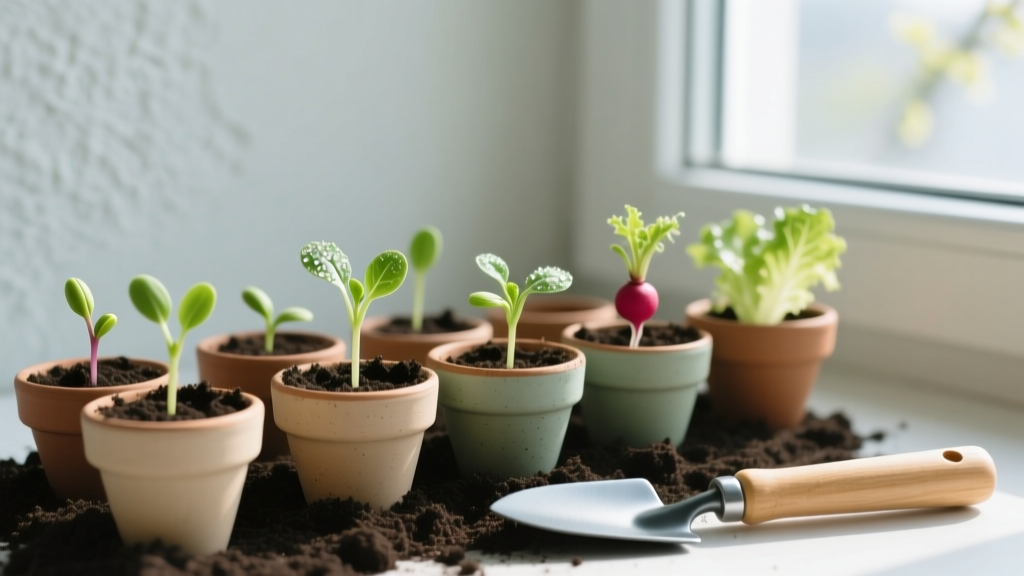
Starting Seeds for Early Spring Indoors
The fastest way to get a jump on spring isn’t waiting for the soil to warm—it’s starting the right seeds indoors before your last frost date. If you start now, you can transplant sturdy seedlings the moment the weather breaks, harvest weeks earlier, and avoid the bottlenecks that hit when every garden center sells out of varieties at once. The window is tight: most spring seedlings need 4–10 weeks indoors, and if you start too early you’ll end up with leggy, rootbound plants; too late and you lose the advantage.
Use your local average last frost date as the anchor, then count backward. Example targets: start onions and leeks 10–12 weeks before last frost; tomatoes 6–8 weeks; peppers 8–10 weeks; cucumbers and squash only 3–4 weeks. Keep one eye on temperature thresholds: many warm-season crops stall below 60°F and are damaged at 32°F, while cool-season seedlings can handle lower nights once hardened off. This is the season to be precise.
Priority 1: What to plant indoors right now (by weeks before last frost)
Start with crops that actually benefit from indoor time. Some plants resent root disturbance, and some germinate just fine outdoors. The following list is built around typical seedling timelines used by extension services and commercial propagation schedules.
10–12 weeks before last frost: slow starters and long-season crops
Start now if your last frost date is roughly 10–12 weeks away (for many Zone 6 gardens, that’s late February to early March; for Zone 4, often March; for Zone 8, December–January for earliest plantings).
- Onions (from seed): Start 10–12 weeks before last frost for sturdy transplants. Aim for pencil-thick seedlings by planting-out time.
- Leeks: Similar to onions; they need a long runway.
- Celery/celeriac: Often 10–12+ weeks and slow to germinate; maintain warm soil temps.
- Early brassicas (broccoli, cabbage, cauliflower): Start 8–10 weeks before last frost if you want early spring transplants. Use varieties bred for spring to reduce bolting risk.
8–10 weeks before last frost: peppers, eggplant, herbs with slow germination
- Peppers (sweet and hot): Start 8–10 weeks ahead; they’re slow early on and prefer warm roots.
- Eggplant: Similar to peppers; keep germination warm.
- Parsley: Slow germinator; start early if you want big spring plants.
- Perennial herbs (thyme, oregano, lavender): Start 10–12 weeks ahead if growing from seed; they’re slow and benefit from consistent moisture.
6–8 weeks before last frost: tomatoes and main-season brassicas
- Tomatoes: Start 6–8 weeks before last frost. Earlier than that often produces oversized plants that struggle after transplant.
- Brassicas for later planting: If your spring warms fast (Zones 7–9), starting brassicas too early can push them into heat before heading.
3–5 weeks before last frost: quick growers and sensitive roots
- Cucumbers, melons, squash: Only 3–4 weeks indoors. Overgrown cucurbits transplant poorly.
- Basil: 4–6 weeks; likes warmth and strong light.
- Lettuce (optional): 3–4 weeks if you want transplants for containers or protected beds; direct seeding is usually easier.
Temperature numbers to use immediately: Start most seeds at 70–75°F for fast, even germination; drop to 60–65°F after sprouting to prevent stretch (especially for brassicas). Plan to transplant warm-season crops only when nights are reliably above 50°F, and protect anything tender from unexpected dips near 32°F.
Indoor seed-starting checklist (do this before sowing)
- Find your average last frost date and count backward by crop weeks.
- Clean seed trays/pots with soap and hot water; sanitize if reusing.
- Use fresh, sterile seed-starting mix (not garden soil).
- Set up lights so seedlings can sit 2–3 inches below the fixture.
- Have a thermometer: root-zone temperature drives germination speed.
- Label everything with variety + sowing date.
Priority 2: What to prepare (seed-starting setup that prevents weak seedlings)
Indoor seedlings succeed or fail on two controllable factors: light intensity and root-zone management (water, oxygen, and temperature). Fix those and most “brown thumb” seed-starting problems disappear.
Light: prevent legginess with intensity, not wishful thinking
A sunny window is rarely enough for stocky seedlings in late winter. Use a shop light or LED grow light and keep it close. If your seedlings lean or stretch, the light is too weak or too far away. Run lights 14–16 hours per day to mimic long days, then turn them off at night to give seedlings a dark period.
“Most damping-off and weak seedling problems trace back to excess moisture and low light—good sanitation, bright light, and careful watering are the best preventive tools.” (Generalized from extension seed-starting recommendations; see cited sources below.)
Heat: use thresholds instead of guessing
Warm-season crops germinate faster and more uniformly with bottom heat. Use a heat mat set around 75–80°F for peppers and eggplant until germination, then remove heat or reduce to the low 70s. Cool-season crops (lettuce, brassicas) often germinate well closer to 60–70°F and can stall if too warm.
Water: damp, not wet—avoid the damping-off window
Damping-off fungi thrive in saturated mix and stale air. Water from the bottom when possible, and let the surface dry slightly between waterings. Run a small fan nearby for gentle airflow; it toughens stems and reduces fungal pressure.
Potting-up timeline: don’t let seedlings stall
Many gardeners lose time by leaving seedlings in tiny cells too long. Plan to pot up tomatoes and peppers once they have 1–2 sets of true leaves. Move them into 3–4 inch pots with fresh mix and bury tomatoes deeper to encourage rooting along the stem.
Priority 3: What to protect (seedlings, starts, and early spring transplants)
Late winter and early spring are a whiplash season: sunny days, cold nights, and dry indoor air. Protect your investment with a few simple practices.
Hardening off: a 7–10 day ramp, not a single afternoon
Start hardening off about 7–10 days before transplanting. Begin with 1–2 hours outside in bright shade when temperatures are above 45–50°F and winds are mild. Increase sun and time daily. Avoid putting tender seedlings out when nights will drop below 50°F (tomatoes, peppers), and keep frost cloth handy if temperatures threaten 32°F.
Frost protection tools that work
- Row cover/frost cloth: Adds a few degrees of protection and buffers wind.
- Low tunnels: Warms air and soil; vent on sunny days to prevent overheating.
- Water jugs/thermal mass: In small beds, can moderate night swings.
Pest and disease prevention (specific to indoor starts)
Indoor seed-starting has its own pest list. The goal is prevention and early detection.
- Fungus gnats: Usually a sign of consistently wet soil. Let the surface dry slightly, use yellow sticky cards, and consider a biological drench (BTi) if persistent.
- Damping-off: Prevent with sterile mix, clean trays, airflow, and careful watering. Don’t crowd seedlings.
- Aphids/whiteflies (on overwintered houseplants near seedlings): Keep seedlings separate from houseplants; inspect weekly and wash pests off early.
Priority 4: What to prune (now, before seedling season collides with outdoor chores)
Seed-starting season overlaps with late-winter pruning. Knock out the highest-value pruning tasks now so you’re not doing them during transplant crunch.
Fruit trees and berries (timing depends on dormancy and bud swell)
- Apple/pear: Prune in late winter while dormant, before heavy bud break.
- Blueberries: Remove dead wood and thin older canes before growth resumes.
- Grapes: Dormant pruning is best done before sap flow becomes heavy.
Hold off on pruning spring-blooming shrubs (like lilac, forsythia) until after they flower, or you’ll remove this year’s buds.
Timing table: a practical seed-starting schedule you can follow
Use this table with your last frost date. Replace “LF” with your local average last frost date (for example: LF = April 15 in parts of Zone 7, LF = May 15 in parts of Zone 5, LF = June 1 in parts of Zone 3).
| Crop | Start Indoors | Germination Temp Target | Transplant Outdoors | Notes |
|---|---|---|---|---|
| Onions (seed) | LF - 10 to 12 weeks | 65–75°F | 2–4 weeks before LF (with protection if needed) | Clip tops to ~4 inches if they flop |
| Broccoli/Cabbage | LF - 6 to 8 weeks | 60–70°F | 2–4 weeks before LF | Keep seedlings cool (55–65°F) after sprout |
| Tomatoes | LF - 6 to 8 weeks | 70–75°F | After LF; best when nights > 50°F | Pot up once; bury stems deep |
| Peppers | LF - 8 to 10 weeks | 75–85°F | 2–3 weeks after LF; nights > 55°F ideal | Heat mat improves uniformity |
| Cucumbers/Squash | LF - 3 to 4 weeks | 75–85°F | After LF; soil warmed, nights > 55°F | Don’t overgrow; transplant gently |
Three real-world seed-starting scenarios (adjustments that matter)
Your seed-starting calendar should change based on how spring behaves where you live, not just your zone number. Use these scenarios to fine-tune decisions.
Scenario 1: Short, cold spring (USDA Zones 3–5; last frost often May 15–June 1)
In colder zones, the temptation is to start everything very early. Resist that for fast-growing crops. Instead:
- Start onions/leeks early (10–12 weeks) because they tolerate cool transplanting.
- Start tomatoes at 6–7 weeks, not 10. You want compact plants at transplant, not vines.
- Use low tunnels or row cover to transplant brassicas 2–4 weeks before last frost if soil is workable.
- Plan for hardening off setbacks—cold winds can stall seedlings even above freezing.
Scenario 2: Windy, high-desert spring (parts of Zones 5–7; big day/night swings)
In high-desert climates, sun is intense and humidity is low. Seedlings harden off fast but can scorch or desiccate.
- Harden off in bright shade first; direct sun can burn leaves in 30–60 minutes.
- Use wind protection (fabric, temporary screens) for transplants.
- Start brassicas indoors, but transplant with row cover to reduce wind stress and flea beetle pressure.
Scenario 3: Mild winter, early spring heat spikes (USDA Zones 8–10; last frost often Feb 1–Mar 15)
In warm zones, the problem isn’t frost—it’s spring turning hot too quickly, especially for cool-season crops.
- Start brassicas earlier and transplant as soon as conditions allow; heat can cause bolting and poor heads.
- Shift tomatoes earlier, but still protect if a late cold front threatens 32–36°F.
- Consider succession sowing indoors every 2–3 weeks for lettuce and herbs to avoid a single glut.
Practical week-by-week timeline (from 10 weeks before last frost to transplant time)
Use this as a working plan. Adjust by your crop list and space under lights.
10–12 weeks before last frost
- Sow onions, leeks, celery/celeriac.
- Sanitize trays, set up lights, test heat mat temperatures with a thermometer.
- Start a seed log: sow date, germination date, notes.
8–10 weeks before last frost
- Sow peppers, eggplant, parsley, early herbs.
- Begin weekly inspection for fungus gnats; adjust watering before they explode.
- Thin crowded seedlings early—competition makes weak stems.
6–8 weeks before last frost
- Sow tomatoes and spring brassicas if not already started.
- Pot up early peppers/tomatoes once true leaves appear.
- Begin gentle airflow with a small fan.
4–6 weeks before last frost
- Sow basil and any final indoor starts.
- Prep outdoor beds on dry days: remove debris, top-dress compost, lay drip lines.
- Build or repair low tunnels/row cover supports before you need them fast.
2–3 weeks before last frost
- Start hardening off cool-season transplants on mild days (>45–50°F).
- Transplant brassicas outdoors if soil is workable and you can protect from hard freezes.
- Scout overwintered weeds and remove before they seed.
Last frost week and 1–3 weeks after
- Transplant tomatoes after last frost; wait for consistently mild nights (>50°F) if possible.
- Transplant peppers later than tomatoes in most regions; cold soil keeps them stuck.
- Keep frost cloth ready for surprise cold snaps.
Extension-backed best practices (what research and extension services emphasize)
Two points show up repeatedly in university extension recommendations: match your sowing date to the crop’s indoor growth rate, and prioritize sanitation plus environmental control (light, temperature, moisture).
According to the University of Minnesota Extension (2020), starting seeds indoors successfully depends on using clean containers, a sterile growing medium, and providing strong light to avoid weak, elongated growth. North Carolina State University Extension (2019) similarly emphasizes correct timing based on frost dates and avoiding excess water to reduce damping-off and other early seedling diseases.
These recommendations aren’t academic niceties—they directly translate to sturdier transplants that establish faster outdoors.
Quick troubleshooting: fix the problem before you sow more seeds
Seedlings are tall and floppy: Increase light intensity (bring lights closer), reduce temperature slightly after germination (aim 60–65°F for many crops), and avoid over-fertilizing early.
Seeds rot or never emerge: Medium is too wet/cold or seed is old. Check that the mix is moist like a wrung-out sponge. Hit 70–75°F for most crops; peppers often need warmer.
Leaves look purple (especially tomatoes): Often cold stress. Keep seedlings warmer and avoid chilling drafts from windows.
Algae or fuzzy surface growth on mix: Too wet and too still. Improve airflow, water less frequently, and increase light.
Seed-starting supplies: keep it simple, spend where it counts
- Worth spending on: a reliable LED grow light, a timer, a heat mat (if growing peppers/eggplant), and a thermometer.
- Optional upgrades: humidity dome for germination (remove promptly after sprouting), bottom-watering trays, soil-blocking tools.
- Don’t use: garden soil indoors (compaction + pathogens), unwashed reused pots, or lights placed far above seedlings.
Before you transplant: one last checklist
- Seedlings have strong stems and are not rootbound.
- Hardening off completed over 7–10 days.
- Outdoor soil is workable (not wet mud) and beds are prepared.
- Night temperatures match the crop: cool-season ok cooler; warm-season ideally >50°F.
- Row cover/frost cloth is staged for sudden cold snaps.
Start your first trays based on your frost-date math this week, not “when you have time.” Once the seeds are up, your job shifts to managing light, temperature, and moisture so the seedlings grow slowly and sturdily. Done right, indoor starts hit the garden with momentum—and early spring becomes your most productive season instead of a waiting game.
Sources: University of Minnesota Extension (2020), seed starting indoors guidance; North Carolina State University Extension (2019), seed starting and transplant timing recommendations.