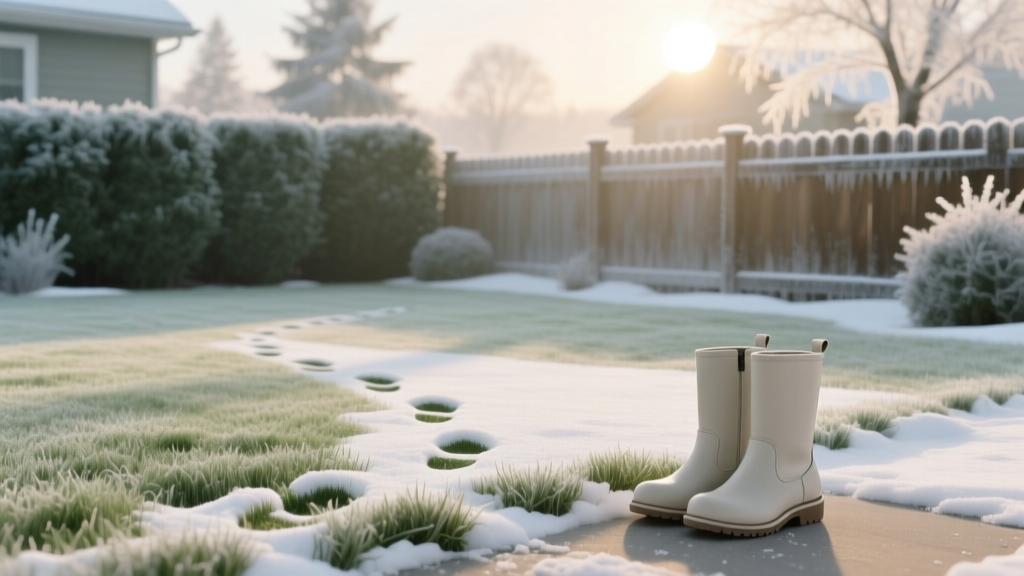
Winter Lawn Care: Minimizing Damage and Traffic
The fastest way to ruin a good lawn in winter is to treat it like summer—walking the same shortcut across frozen turf, piling snow where it will refreeze, or “helping” with an out-of-season fertilizer. Winter lawn care is less about doing more and more about preventing avoidable damage while setting up a clean spring green-up. The goal right now: keep crowns and roots alive, reduce compaction and abrasion, and stop winter diseases before they get a foothold.
Use this guide like a seasonal checklist. Timing is tied to temperatures, freeze/thaw cycles, and your USDA hardiness zone. If you only do three things this winter: control foot traffic, keep de-icers off grass, and manage snow/ice piles and shade.
Priority 1: Protect (traffic, ice, salt, and winterkill)
Stop traffic damage when grass is frozen
Frozen blades and crowns break under pressure. The most common winter lawn injury is simple: repeated foot traffic across the same path when turf is at or below 32°F. Damage is worst during freeze/thaw cycles (common when daytime highs reach 38–45°F and nights drop back below freezing), because crowns are brittle when frozen and vulnerable when thawing.
- Right now: Reroute people and pets. Put down stepping stones, mulch paths, or temporary fencing.
- Within 7 days of first persistent freeze: Identify “desire paths” (mailbox route, gate to shed, dog run) and block them with stakes and twine.
- All winter: Keep play (sleds, snow forts) off the same patch week after week.
Checklist: Winter traffic control
- Place a 3–4 ft wide temporary path (mulch, straw, or boards) where traffic is unavoidable.
- Move dog potty areas weekly; avoid repeated use of one spot.
- Shovel a walkway promptly so people don’t “cut across” the lawn.
- Skip walking on frosty grass in the morning; wait until it’s thawed and dry.
Keep salt and de-icers off turf (and out of runoff)
De-icing salts burn leaf tissue, disrupt water uptake, and concentrate in soil along driveways and sidewalks. If you see grass yellowing in a band near pavement in spring, winter de-icer exposure is a likely cause. University guidance consistently recommends limiting salt exposure and using alternatives where possible.
Use these priorities:
- First choice: Mechanical removal (shovel early; don’t let ice bond).
- Second choice: Traction materials (sand, fine gravel, or non-staining kitty litter).
- Third choice: If you must use de-icer, apply the minimum label rate and avoid broadcast spreading onto grass.
Washington State University Extension notes that de-icing salts can damage adjacent plants and recommends minimizing use and preventing salt-laden snow from being piled on planting areas (WSU Extension, 2020).
Manage snow piles to prevent suffocation and mold
Snow itself insulates, but repeated piling—especially from plowing—creates dense, dirty banks that melt slowly and invite disease. Piles also concentrate salt and grit. Aim to distribute snow evenly and keep piles off turf when possible.
- After each snowfall over 3–6 inches: Redirect plow/shovel piles to a sacrificial area (gravel edge, mulched bed, or designated snow zone).
- During thaws: Break up icy crusts on top of long-lasting piles to speed melting—without chopping into turf.
“Snow mold is most severe where snow cover persists and the turf is matted—especially when heavy snow falls on unfrozen ground.” — University of Minnesota Extension turf guidance (University of Minnesota Extension, 2019)
Watch for winter desiccation and wind burn
In exposed sites (corner lots, open plains, coastal winds), winter sun and wind can dry crowns even when soil is frozen. This shows up as tan patches in late winter/early spring, often on slopes or south-facing areas.
- Before soil freezes hard: Water deeply if autumn has been dry. A final irrigation when daytime temps are above 40°F and soil is still absorbent can reduce desiccation.
- All winter: Use snow fencing, burlap screens, or shrub windbreaks for the windiest edge if this is a recurring issue.
Priority 2: Prepare (tools, mowing height, drainage, and spring repair)
Set your last mowing height to reduce matting
If you’re reading this before consistent snow cover, adjust your last mow. Long grass mats under snow, increasing snow mold risk. Scalping, however, weakens crowns. Aim for a moderate final height:
- Cool-season lawns (Kentucky bluegrass, fescues, ryegrass): finish around 2.0–2.5 inches.
- Warm-season lawns (bermudagrass, zoysia, St. Augustine): in regions where they go dormant, avoid very low cuts heading into dormancy; follow local turf recommendations and avoid scalp-and-stress right before cold snaps.
Good timing: the last mow is typically 1–2 weeks before your average first hard freeze (often defined as 28°F). For many zone 5–6 areas, that’s commonly in late October to mid-November; for zone 7, often November; for zone 4, often October.
Fix drainage now (before ice makes ruts permanent)
Winter damage often starts as standing water that freezes, then shears turf during thaw. If water sits for more than 24 hours after rain in late fall/early winter, plan a drainage correction.
- Right now: Clear downspouts and extend them away from lawn edges.
- Within 2–3 weeks: Regrade small low spots with a sand/soil topdressing when ground is workable (above 40°F and not saturated).
- Plan for spring: If puddling is chronic, schedule core aeration and topdressing when cool-season turf is actively growing (often when soil temps reach 50–65°F in spring).
Service equipment and stage supplies for thaw windows
Winter often includes short “workable” thaws. If you’re prepared, you can jump on a 48-hour window without scrambling.
- Sharpen mower blade and clean underside before storage.
- Stock pet-safe traction material (sand) and a handheld spreader for precise application—never broad-cast near lawn edges.
- Buy grass seed now for spring patching; store cool and dry.
Monthly schedule: what to do and when
| Month | Primary Risks | High-Impact Actions (15–30 minutes) | What to Avoid |
|---|---|---|---|
| November | Leaf matting, first freezes | Final mow to 2.0–2.5", blow leaves weekly, block traffic paths | Late heavy nitrogen; walking on frosty turf |
| December | Freeze/thaw, compaction | Mark paths, place boards/stepping route, move snow piles off turf | Plowing snow onto lawn edges; salt overspread |
| January | Long snow cover, snow mold | Keep piles spread out, avoid piling where shade slows melt | “Checking” the lawn repeatedly (traffic) |
| February | Ice sheets, winter desiccation | Improve melt pathways (clear drains), protect windward edges | Breaking ice aggressively with tools on turf |
| March | Thaw ruts, mold reveal | Rake lightly when dry, redirect runoff, plan spring aeration/overseed | Heavy rolling on wet soil; early fertilizer “panic” |
Priority 3: Pest & disease prevention (snow mold, voles, and salt injury)
Snow mold: prevent now, respond correctly later
Snow mold (gray and pink snow mold) is most likely where snow lingers and grass was matted going into winter. Prevention is mostly cultural:
- Keep fall mowing reasonable (not long and floppy).
- Remove leaves before snowfall—matted leaves create a perfect humid layer.
- Avoid late fall heavy nitrogen that pushes lush growth heading into snow cover.
If snow mold appears after melt: wait until turf is dry, then lightly rake to stand up matted blades and improve airflow. Many lawns grow out of minor snow mold as temperatures stabilize above 50°F. If you have recurring severe snow mold, consult local extension guidance for your grass species and climate; fungicide decisions are location- and history-dependent.
Michigan State University Extension notes that snow mold risk increases with extended snow cover and matted turf and emphasizes leaf removal and proper mowing as key prevention (MSU Extension, 2018).
Voles (and other winter critters): reduce cover and inspect edges
In snowy regions, voles tunnel under snow, feeding on crowns and creating runways that appear at melt. Lawns adjacent to tall ornamental grasses, dense groundcovers, or unmowed field edges are at higher risk.
- Before consistent snow: Keep lawn and nearby edges tidy; reduce tall thatch and remove dense weed patches.
- Mid-winter thaw check (above 40°F): Inspect along foundations, shrub borders, and near brush piles.
- After snow melt: Rake runways lightly and overseed thin areas when appropriate for your zone.
Salt injury: identify and dilute early
Salt injury often shows as linear bands near sidewalks/driveways. If winter has been icy and salt-heavy, plan a spring flush: when soil thaws and daytime temperatures are consistently above 45–50°F, irrigate deeply (where permitted) to leach salts below the root zone. Avoid adding more stress with early herbicides on salt-burned edges; focus on recovery first.
Priority 4: What to prune (and what not to do to your lawn)
Skip “winter pruning” on grass—focus on sanitation and restraint
Your lawn doesn’t want pruning in winter; it wants stability. What you can do:
- Remove debris: If branches fall, lift them off the turf promptly to prevent smothering.
- Stay off saturated thaws: When soil is soft (boot prints sink), every step compacts roots.
- Don’t dethatch in winter: That’s a growing-season task.
Prune adjacent plants to reduce shade and snow load on turf
If a lawn area stays icy because of dense evergreen shade, carefully thin lower branches (when appropriate for the shrub/tree species) to increase winter light and airflow. Also prune broken limbs promptly after storms to prevent repeated branch drop and turf bruising.
What to plant (yes, even in winter—strategically)
In most regions: don’t seed frozen lawns unless you know your window
Winter seeding (often called dormant seeding) can work in some climates, but it’s not a default move. It’s most successful where winter stays consistently cold and seed remains in place until spring thaw. If your winter is erratic with warm spells and heavy rains, seed can rot or wash away.
Use these rules of thumb:
- Dormant seed cool-season grass only after soil temps are reliably below 40°F and you don’t expect extended warm-ups.
- Target timing is often late December through February in cold-winter zones (USDA zones 3–6), but local conditions matter more than the calendar.
- Don’t dormant-seed warm-season lawns; plan spring plugging/sodding once soils warm.
If you’re in USDA zone 7–8 with frequent mid-winter thaws, it’s usually better to wait for spring seeding windows (cool-season lawns) or late spring/early summer establishment (warm-season lawns).
Plant “traffic reducers”: winter-friendly paths and edges
The best winter lawn repair is preventing repeated wear. If you notice the same muddy shortcut every year, plan a permanent fix:
- Install stepping stones or a gravel ribbon path (even 18–24 inches wide) where people naturally walk.
- Edge beds clearly so snow clearing doesn’t creep onto turf.
- In mild-winter zones, consider expanding a mulched area near gates where foot traffic is unavoidable.
Regional scenarios: what to do depending on your winter
Scenario 1: Upper Midwest / Northern New England (USDA zones 3–5, long snow cover)
Your biggest risks are snow mold, vole damage, and matted turf under persistent snow. If snow arrives before the ground freezes, disease risk rises.
- Before first lasting snow (often by mid-November or earlier): remove leaves completely; finish mowing at 2.0–2.5".
- All winter: avoid piling plowed snow onto the same lawn edge; spread piles or move to a designated area.
- After melt (often March–April): rake lightly when dry; don’t tear wet turf.
Scenario 2: Transition zone (USDA zones 6–7, freeze/thaw and mixed grasses)
This is where winter traffic damage and compaction are most common because the lawn repeatedly freezes, thaws, then gets walked on. Warm-season lawns may be dormant while cool-season weeds stay active.
- Right now: treat freeze/thaw days as “no traffic” days on turf, especially mornings with frost.
- During thaws above 45°F: clear drainage channels and downspouts; fix puddling before the next freeze locks it in.
- Weed note: avoid blanket herbicide applications during cold snaps; follow label temperature requirements strictly.
Scenario 3: Pacific Northwest / Maritime climates (USDA zones 7–9, wet winters, less snow)
Ice may be rare, but saturated soils and fungal pressure are common. The most damaging “traffic” is walking on waterlogged turf and creating compaction that lasts into summer.
- All winter: keep people and pets on hardscapes during rainy weeks; use a mulched run for dogs.
- Within 2 weeks: clean gutters and route runoff away from lawn; standing water for >24 hours is a red flag.
- Disease prevention: keep the canopy open—remove leaves weekly to improve airflow.
Scenario 4: Mountain West / High Plains (USDA zones 4–6, sun + wind + dry cold)
Winter desiccation is a major threat, especially on south-facing slopes and in windy corridors. Snow cover can be intermittent, leaving crowns exposed.
- Before deep freeze: water during a warm spell (above 40°F) if soil is dry and irrigation is available.
- All winter: use windbreak fabric or snow fencing on the worst edge to reduce drying winds and drifting that piles snow unevenly.
- Spring plan: expect patching on exposed knolls; keep seed ready.
Right-now timelines (choose your window)
If you’re 2–4 weeks before your first hard freeze (28°F)
- Finish leaf cleanup (don’t mulch heavy piles into the turf).
- Mow to a final 2.0–2.5" for cool-season lawns.
- Mark walk paths and block shortcuts.
- Redirect downspouts and fix obvious drainage issues.
If the lawn is already frozen most mornings (32°F or below)
- Keep all foot traffic to cleared paths; don’t let pets repeatedly cross the same strip.
- Use sand/traction on ice instead of salt near lawn edges.
- Move snow piles off turf and away from the base of trees/shrubs.
If you’re in mid-winter with repeated snow events
- Rotate where you pile snow; avoid creating one dense bank that lasts all season.
- Check for vole activity during thaws; reduce nearby cover.
- Don’t apply fertilizer to frozen ground—nutrients are prone to runoff and won’t help dormant turf.
Damage triage: what to do when winter leaves its mark
Even careful lawns come out of winter with some bruises. The key is responding at the right time—when turf can actually recover.
- Matted areas after snow melt: Wait until the lawn surface is dry enough to walk on without sinking. Then rake lightly to lift blades.
- Ruts from walking on thawed soil: Don’t “fix” by rolling wet ground. Let it dry, then topdress and reseed in the proper spring window.
- Salt-burned edges: Flush with water after thaw (when temps are consistently above 45–50°F) and consider a spring overseed.
Plan spring repair by zone:
- Cool-season lawns (common in USDA zones 3–7): best overseeding window is often early fall, but spring patching works when soil warms to about 50°F and you can keep seed moist.
- Warm-season lawns (common in USDA zones 7–10): patch with plugs/sod after consistent warmth; avoid pushing growth too early while nights still dip near 40°F.
Winter lawn care is mostly discipline: keep traffic off frozen or saturated turf, keep salts and piled snow from concentrating stress, and keep the canopy clean going into long snow or long rain. If you do that, spring work becomes touch-up instead of rescue—and your lawn will green up faster, with fewer thin spots that invite weeds.
Sources cited: Washington State University Extension (2020) guidance on de-icing salts and plant damage; University of Minnesota Extension (2019) turf guidance on snow mold conditions; Michigan State University Extension (2018) turf notes on snow mold risk and prevention.