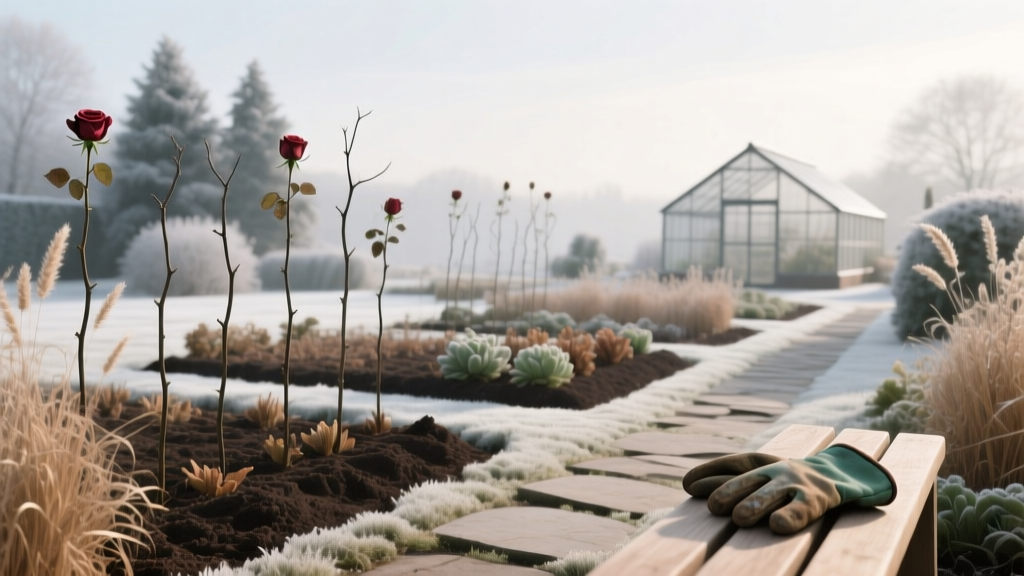
Winter Garden Cleanup: Final Bed Tidying
Once daytime highs regularly slip below 50°F and your first hard freeze is within 2–4 weeks, the garden shifts from “growth mode” to “preservation mode.” This is the narrow window where cleanup pays off: you can cut disease pressure, protect soil structure, and set beds up to warm and drain better in spring—without stripping away every bit of winter habitat. Think of this as final bed tidying: remove what spreads problems, keep what protects, and lock in next season’s advantages before the ground freezes.
Use the priority list below. If you only have one afternoon, do the first two sections. If you have a couple weekends, work through them in order.
Priority 1: Remove what will cause problems (disease, pests, weeds)
Pull and discard disease-prone annuals (today, before prolonged wet weather)
Start with anything that carried leaf spots, blight, mildew, or virus symptoms. Leaving infected debris in place over winter is an easy way to “seed” next season’s outbreaks. As a rule: healthy plant residue can be composted; diseased residue should be bagged, burned (where legal), or hot-composted properly.
High-priority removals:
- Tomato, potato, pepper, and eggplant vines showing blight or heavy leaf spot (solanaceous diseases commonly overwinter on debris).
- Squash, cucumber, melon vines with powdery mildew or downy mildew.
- Rose leaves with black spot; peony foliage with botrytis; iris leaves with leaf spot.
- Any plant with visible cankers, galls, or suspicious oozing on stems.
“Sanitation—removing infected plant material—reduces the amount of inoculum available to start disease the next season.” (Penn State Extension, 2023)
Timing note: Do this cleanup on a dry day when foliage isn’t dripping. Wet leaves spread spores more readily on tools and gloves. If night temps are already dipping to 28°F or lower, prioritize quick removal of mushy annuals to keep beds from turning into a soggy mat.
Cut weeds before they set seed (within 7 days)
Winter annual weeds (chickweed, henbit, deadnettle) can establish in fall and explode in spring. The goal now is seed prevention. If you see any weeds forming flower buds, act this week. A single neglected patch can drop thousands of seeds and create a multi-year cleanup bill.
Fast method: Slice weeds at the crown with a stirrup hoe on a dry afternoon, then cover the area with 2–3 inches of shredded leaves or finished compost. In colder zones (USDA 3–5), do it before soil crusts or freezes; in milder zones (7–9), you may need a second pass in late January.
Dispose of pest harborage: fruit “mummies,” fallen leaves, and borer stems
Winter cleanup isn’t about making the garden sterile—but it is about removing obvious pest reservoirs.
- Fruit trees: Remove and destroy shriveled fruit “mummies” still on branches or on the ground; many fungal diseases overwinter there. Rake and remove heavy leaf layers directly under trees if scab or leaf spot was severe.
- Raspberry/blackberry canes: Cut out spent floricanes (that fruited this year) at ground level after harvest; remove canes with swelling, splitting, or borer holes.
- Squash vine borer zones: If you had borer damage, pull and destroy old squash vines rather than leaving them as mulch.
Citation: University of Minnesota Extension notes that sanitation—removing diseased leaves and fruit—reduces apple scab and other disease carryover (University of Minnesota Extension, 2020).
Tool hygiene (same day as cleanup)
Don’t carry disease into next year on pruners. After working in suspect beds, wipe blades with 70% isopropyl alcohol or a disinfectant labeled for tools. Oil hinges before storage. This takes 10 minutes and prevents a lot of “mystery” spring infections.
Priority 2: Protect soil now (so it’s workable earlier in spring)
Mulch with purpose: insulate, suppress weeds, reduce erosion
Once soil temperatures fall below roughly 40–45°F, microbial activity slows and many perennials stop active growth. That’s the cue to mulch perennials and newly planted shrubs so you’re insulating roots rather than trapping warmth that encourages late, tender growth.
Mulch targets:
- Perennial beds: 2–4 inches of shredded leaves, pine fines, or straw (avoid thick mats).
- Newly planted shrubs/trees: a 3-inch ring, pulled back 3–6 inches from the trunk to prevent rot and rodent damage.
- Empty vegetable beds: 1–2 inches compost + 2–3 inches leaf mulch, or a cover crop (see “What to plant”).
Regional note: In windy, open sites (prairie states, exposed coastal gardens), anchor leaf mulch with a light layer of straw or lay down breathable netting. In wet winter climates (Pacific Northwest), keep mulch slightly thinner on heavy clay to avoid staying waterlogged.
Leave some stems standing—selectively (habitat without inviting disease)
Not every stem needs to be cut to the ground. Many beneficial insects overwinter in hollow stems, and seed heads feed birds. The trick is to leave “clean” structure and remove “problem” structure.
- Leave standing: healthy ornamental grasses, coneflower (Echinacea) seed heads, sedum heads, bee balm stems if not mildewed.
- Cut down: anything that was heavily diseased, especially powdery mildew-coated phlox/bee balm; peony foliage; iris fans with spotting; vegetables with disease history.
If you want a tidy look, bundle and tie grasses rather than cutting them now. In snowy zones (4–6), bundled grasses shed snow and reduce crown rot. Cut back in early spring when daytime highs return to 45–55°F.
Last compost move: top-dress, don’t till (before soil freezes)
If beds are empty, spread 1 inch of finished compost now. Avoid deep digging in winter; you’re more likely to destroy soil structure when it’s wet. Let freeze-thaw and soil organisms incorporate it gradually.
Timing thresholds: Apply compost when the soil is not saturated and before it locks up—often late October to mid-November in zones 4–6, and November to December in zones 7–8, depending on your local first hard freeze date.
What to plant right now (late fall through early winter)
Garlic (best in the 2–3 weeks before your ground freezes)
Garlic is the classic “final bed” crop. Plant cloves so they root before deep freeze but don’t sprout too much top growth.
- Planting depth: 2 inches in mild zones (7–8), 3 inches in colder zones (3–6).
- Spacing: 6 inches apart, rows 10–12 inches.
- Mulch after planting: 3–4 inches of straw or shredded leaves once nights are consistently below 32°F.
Timing example: If your average first hard freeze is October 20 (common in parts of zone 5), aim to plant garlic around October 1–15. If your first hard freeze is November 20 (many zone 7 locations), plant garlic around late October to mid-November.
Cover crops (choose based on how cold your winter gets)
If you can still work the soil and daytime highs are above 45–50°F, cover crops are a powerful “cleanup” move. They hold nutrients, prevent erosion, and add organic matter.
- Cold-hardy option (zones 5–8): cereal rye (germinates in cool soil; excellent for weed suppression).
- Legume option (milder winters): crimson clover (best when planted 6–8 weeks before hard freezes so it establishes).
- Quick cover (short window): oats (winter-kills around 10–20°F, leaving a mulch layer).
Citation: USDA SARE guidance emphasizes cover crops for erosion control, nutrient capture, and soil health improvements (SARE, 2020).
“Dormant seeding” of hardy annuals (zones 3–6, after consistent freezes)
In colder regions, you can sow certain hardy annuals after the ground is cold enough that seeds won’t germinate until spring—often after several nights below 25–28°F. This works for plants like larkspur, poppies, and bachelor’s buttons in suitable climates. Broadcast onto prepared soil and lightly cover with straw to reduce washout.
What to prune now (and what to leave until late winter)
Prune for safety and structure, not stimulation (late fall)
Late-fall pruning should be conservative. Heavy pruning can trigger new growth that’s easily damaged. Focus on removing what’s broken, diseased, or dangerous.
- Do now: remove dead or damaged branches anytime; cut out diseased wood several inches below symptoms; remove branches rubbing together.
- Wait until late winter (after the coldest period): major pruning of most fruit trees and many shrubs, typically February–March in zones 5–7 (adjust locally).
Perennials: cut back selectively
If you had disease pressure, cutting back is a sanitation move. If beds were healthy, you can leave stems for winter interest and beneficial insects.
- Cut back: peonies, iris, anything with botrytis, severe powdery mildew, or leaf spot.
- Leave: sturdy seed heads and grasses; cut them down when you see new basal growth in spring.
Hydrangea and roses: avoid the classic winter mistake
Don’t “tidy” hydrangeas blindly. Some types bloom on old wood; pruning now can remove next year’s flowers. For roses, avoid heavy pruning in fall in cold zones; it can encourage dieback.
- Hydrangea macrophylla (bigleaf): avoid major pruning now; just remove dead wood in spring.
- Panicle hydrangea (H. paniculata): can be pruned in late winter for shape.
- Roses in zones 4–6: remove leaves with black spot, clean up debris, and mound mulch; save shaping prune for spring.
What to protect (freeze, wind, rodents, and winter sun)
Water once more—deeply—before the ground freezes
Winter desiccation is a bigger killer than cold alone, especially for evergreens. If you’ve had a dry fall, give trees and shrubs a slow, deep watering when temps are still above 40°F. Aim for moist—not soggy—soil going into freeze-up.
Mulch and wrap: match the protection to the risk
Use these rules of thumb:
- New perennials and fall-planted shrubs: mulch after the soil cools (40–45°F) to prevent heaving from freeze-thaw cycles.
- Young tree trunks (thin bark): consider a trunk guard or wrap to reduce sunscald, especially on south/southwest sides.
- Exposed evergreens: in windy sites, burlap screens reduce winter burn; install before repeated nights below 20°F.
Rodent and rabbit prevention (set it up before snow cover)
Once snow arrives, rodents tunnel under it and chew bark. Install protection early:
- Hardware cloth guards around trunks, sunk 1–2 inches into soil.
- Keep mulch pulled back from trunks to avoid creating a cozy vole runway.
- In rural areas, reduce tall grass around young trees (a prime vole hideout).
Protecting tender crops in mild zones (USDA 8–10)
If you garden where winter is more “cool season” than “frozen season,” final bed tidying includes frost readiness.
- Have frost cloth ready for surprise dips to 32°F or 28°F.
- Harvest basil, peppers, and citrus before predicted cold snaps.
- Watch for increased fungal disease during long cool, damp stretches—improve airflow and avoid overhead watering late in the day.
What to prepare (spring speed, smarter rotations, fewer surprises)
Label, map, and rotate (one hour now saves a week later)
Before everything looks the same under mulch, mark beds and jot notes. Record where tomatoes, peppers, squash, and brassicas grew. This matters because rotation reduces disease and pest buildup—especially for soilborne issues.
Quick record checklist:
- Which beds had tomatoes/peppers/potatoes (rotate out for 3 years if disease was bad).
- Where squash/cucumbers grew (note vine borer or mildew pressure).
- Where you saw heavy weeds (plan a spring stale seedbed or heavier mulch).
Edge beds and reset paths (before freeze makes it harder)
Final tidying isn’t just inside the bed. Clean edges reduce grass creep and make spring prep faster. If your paths are muddy, top them with wood chips now; they’ll break down slowly and improve footing through winter thaws.
Soil testing: schedule it now (sample when soil is workable)
If you haven’t tested soil in the last 3 years, plan to sample in late fall or very early spring. Many labs are less busy in winter, and you’ll have amendment recommendations before planting time.
Seasonal schedule: what to do when (by month and temperature)
| Timing window | Temperature / frost cue | Top tasks (final bed tidying) | Notes |
|---|---|---|---|
| Late Oct–Early Nov (typical zones 4–6) | Nights near 32°F; first frost passed | Remove diseased annuals; pull weeds before seed; plant garlic (if ground workable) | Work on dry days to limit disease spread. |
| Mid–Late Nov | Soil cooling toward 45°F | Top-dress compost; mulch perennials; protect young trees | Mulch after soil cools to avoid encouraging late growth. |
| Dec (before deep freeze) | Before soil freezes solid; cold snaps below 28°F | Install rodent guards; finalize mulch; store hoses/tools | In wet climates, avoid compacting saturated soil. |
| Jan (mild zones 7–9) | Cool, wet season; occasional frost to 28–32°F | Second weed pass; monitor slugs/snails; cover tender plants on frost nights | Slug pressure often rises with winter rains—use traps/baits as needed. |
| Feb–Mar (many zones 5–7) | Late-winter prune window; daytime highs 45–55°F | Major pruning (as appropriate); cut back grasses; remove winter-damaged stems | Time pruning to species and local last frost dates. |
Three real-world scenarios: adjust your cleanup to your winter
Scenario 1: Cold-snowy winters (USDA zones 3–5; Upper Midwest, Northern New England, interior West)
Your biggest risks: freeze-thaw heaving, rodent damage under snow, and delayed spring soil warming from thick wet debris.
- Mulch perennials after soil cools to 40–45°F to reduce heaving.
- Prioritize trunk guards and keep mulch away from bark.
- Keep vegetable beds from forming a matted layer: chop residues and compost healthy material; remove diseased debris.
- Plant garlic 2–3 weeks before consistent ground freeze; mulch after several subfreezing nights.
Scenario 2: Wet, moderate winters (USDA zones 7–8; Pacific Northwest, Mid-Atlantic coastal areas)
Your biggest risks: fungal disease carryover, waterlogged soil, slugs/snails, and compaction.
- Be strict about removing diseased leaves—wet winters preserve pathogens.
- Use lighter, airier mulches (shredded leaves mixed with straw) to avoid smothering crowns.
- Add compost as a top-dress, but avoid stepping in beds when saturated—work from boards or bed edges.
- Monitor slug habitat: thick ground-hugging debris near seedlings is a winter-to-spring slug factory.
Scenario 3: Mild winters with occasional freezes (USDA zones 8–10; parts of the South, Southwest, coastal California)
Your biggest risks: surprise radiational freezes, winter weeds, and ongoing pest cycles (because winter doesn’t fully “reset” them).
- Keep frost cloth handy for dips to 28–32°F; protect citrus, tender succulents, and warm-season leftovers.
- Plan multiple weed passes: one now and another in 4–6 weeks.
- Sanitation remains important—diseases and pests can persist through mild winters.
- Consider cool-season planting (greens, brassicas) if your frost dates allow, but keep beds tidy to reduce aphids and mildew.
Pest and disease prevention that matters most in winter
Stop fungal cycles with targeted leaf cleanup
If you had apple scab, black spot on roses, or heavy vegetable leaf spot, don’t leave a thick carpet of infected leaves in place. Rake and remove the worst of it. Keep a thin layer of clean mulch or compost instead. This is one of the most effective off-season disease controls.
Reduce overwintering insect sites—without wiping out beneficials
Remove known pest shelters (mummified fruit, borer-infested canes, heavily infested crop residues). At the same time, preserve beneficial habitat by leaving a portion of healthy stems and some leaf litter in out-of-the-way areas. A good compromise is a “clean production bed, messy border” approach: keep vegetable beds and disease-prone ornamentals tidy, and let a back border hold some overwintering habitat.
Watch for winter-active pests in mild climates
In zones 8–10, aphids can persist on cool-season greens, and powdery mildew can continue on susceptible plants during humid spells. Increase spacing, remove heavily infected leaves promptly, and water early in the day so foliage dries before evening.
Final bed tidying checklists (print-and-go)
60-minute “must-do” checklist
- Pull and bag diseased annuals and vegetable residues.
- Remove fruit mummies and obvious pest harborage.
- Cut flowering weeds before they drop seed.
- Top-dress one problem bed with 1 inch compost (if soil isn’t saturated).
- Clean pruners with 70% alcohol; oil and store tools.
Weekend “reset the beds” checklist
- Edge beds and refresh paths with chips.
- Mulch perennials (2–4 inches) after soil cools below 45°F.
- Install trunk guards/hardware cloth for young trees.
- Plant garlic and label the bed clearly.
- Map next year’s crop rotation and note disease hotspots.
Two-week timeline (do this in order)
- Days 1–3: Sanitation sweep (disease debris, weeds, mummies).
- Days 4–7: Compost top-dress and mulch once soil cools; protect trunks.
- Days 8–14: Garlic/cover crop planting (if applicable), bed labels, tool care, and path fixes.
The best winter cleanup doesn’t aim for perfection—it aims for lower disease pressure, protected soil, and an earlier, easier spring start. If you finish the season with beds that are clean where they need to be, mulched where roots need buffering, and labeled for next year’s rotation, you’ve done the work that most gardeners wish they’d done when March mud arrives.
Sources: Penn State Extension (2023); University of Minnesota Extension (2020); USDA Sustainable Agriculture Research & Education (SARE) (2020).