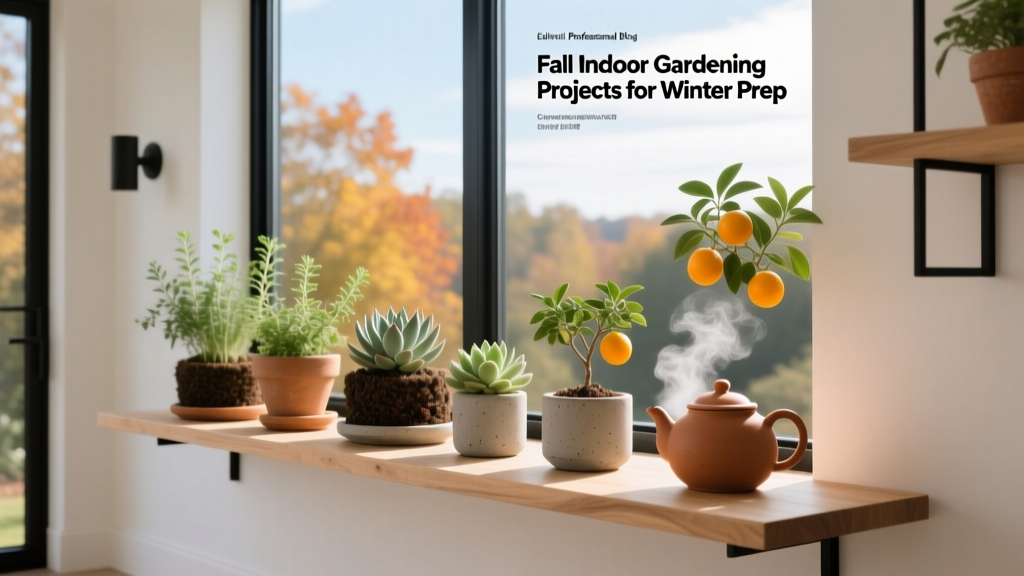
Fall Indoor Gardening Projects for Winter Prep
The window for easy wins is closing fast: once outdoor nights start dipping below 45°F, growth slows, pests look for shelter, and tender plants can crash from a single cold snap. Fall is the moment to pull your garden momentum indoors—propagate, pot up, sanitize, and set up systems—so winter doesn’t become a dead season. Treat the next 4–8 weeks (or the run-up to your first frost date) like a focused work sprint: small indoor projects now prevent big problems later.
Use your local first frost date as the anchor. Many Zone 3–5 gardens hit first frost around Sept 15–Oct 10, Zone 6 often around Oct 10–Oct 25, and Zone 7–8 frequently Nov 1–Nov 20 (microclimates vary). If you don’t know yours, look up the NOAA 30-year normals for your ZIP code and count backward in weeks from that date.
Priority 1: What to plant indoors (start now so plants size up before low-light winter)
Indoor planting in fall is less about instant harvest and more about building strong, compact plants before the light drops further. Your goal is sturdy roots and short internodes by late November—especially if you’re relying on windows instead of grow lights.
1) Start a winter salad pipeline (microgreens, baby greens, sprout trays)
If you want fast results, this is the highest-return project. Microgreens and baby greens don’t demand intense light, and they mature quickly enough to keep you motivated.
- Microgreens: radish, broccoli, mustard, pea shoots, sunflower. Typical harvest: 7–21 days depending on crop and temperature.
- Baby greens: lettuce, arugula, spinach, Asian greens. Harvest: 25–45 days with decent light.
- Target temperature: keep trays at 60–70°F for steady growth; germination is more uniform above 65°F for many species.
Action checklist (this weekend):
- Set up 2–4 shallow trays with drainage plus a solid tray underneath.
- Use fresh, sterile potting mix (avoid reusing outdoor soil indoors).
- Label sowing date and expected harvest date on painter’s tape.
- Stagger sowings every 7–10 days for continuous harvest.
2) Plant windowsill herbs that tolerate shorter days
Not all herbs handle winter light. Focus on herbs that keep flavor and growth under lower intensity.
- Good fall starts: chives, parsley, cilantro (cool-loving), thyme, oregano, mint (keep contained), sage.
- Harder in winter windows: basil (needs warm temps and strong light; often gets leggy below 60°F).
Timing: Start herbs 6–8 weeks before you expect consistently gray, short days (often late Nov–Dec). If you already missed that window, still plant—but add a small LED grow light for 12–14 hours/day to prevent stretching.
3) Root a batch of cuttings (backup plants and faster spring starts)
Fall propagation is winter insurance. If a favorite plant (geranium, coleus, rosemary, fuchsia) fails indoors, you still have clones. Also, cuttings root faster in fall than midwinter because parent plants are still vigorous.
- Best candidates: coleus, geranium (Pelargonium), tradescantia, pothos, spider plant, many succulents, rosemary (semi-hardwood), lavender (more finicky).
- Rooting window: ideally 2–4 weeks before indoor heating runs nonstop (dry air slows rooting).
- Technique: take 3–5 inch cuttings, remove lower leaves, root in water or moist perlite/soilless mix; keep at 65–72°F with bright indirect light.
“Sanitation—starting with clean pots, clean media, and clean tools—is one of the most effective ways to prevent disease problems when plants come indoors for winter.” — Extension guidance commonly emphasized in houseplant and overwintering recommendations (see citations below)
Priority 2: What to prune (and what not to prune) before plants move inside
Fall pruning indoors is about reducing pest habitat, improving airflow, and fitting plants into your available light footprint. It’s not about heavy shaping; major pruning can push weak, pale regrowth when light is limited.
1) Pre-entry haircut for overwintering container plants
Before you bring plants in, trim back soft growth and remove damaged leaves. This reduces fungus risk and the number of hiding places for aphids and mites.
- Timing: prune 7–10 days before bringing indoors so you can monitor for pests on fresh growth.
- How much: remove up to 25–33% of the canopy for vigorous plants like geraniums and fuchsias; go lighter on slow growers.
- Always remove: yellowing leaves, diseased foliage, dead stems, and any leaf litter on the soil surface.
2) Don’t prune these heavily in fall (common mistakes)
- Woody perennials you’re trying to overwinter indoors: heavy cuts can stress them when light is low.
- Plants already struggling: prioritize stable conditions first (light, moisture, pest control), then prune later.
- Blooming holiday cactus (Schlumbergera): avoid pruning in late fall if buds are forming.
3) Tool sanitation to prevent disease carryover
Clean cuts matter indoors. Wipe pruners between plants, especially if you see spots or rot. A practical approach is alcohol wipes or a spray bottle of 70% isopropyl alcohol for quick tool resets.
Priority 3: What to protect (plants, light, humidity, and your indoor ecosystem)
Indoor winter prep fails most often due to pests and environment swings—dry heat, cold windows, and low light. Protecting plants is mostly about controlling those variables before the first overnight freeze forces a rushed move.
1) Build a “quarantine station” for incoming plants (pest prevention)
Do not mix outdoor plants with established houseplants immediately. A short quarantine catches pests before they spread.
- Quarantine length: 14 days minimum.
- Inspection cadence: check leaves (top and underside) every 3–4 days.
- Where: bathroom with a window, laundry room, or a bright corner away from other plants.
Common fall hitchhikers: aphids, spider mites (often explode after indoor heat turns on), whiteflies, scale, fungus gnats (from wet media).
Targeted prevention steps:
- Rinse foliage with a firm shower spray; focus on leaf undersides.
- Replace the top 1 inch of potting mix to remove eggs/larvae and algae.
- Use yellow sticky cards for gnats/whiteflies during quarantine.
- Water only when the top 1–2 inches are dry to suppress fungus gnat larvae.
2) Temperature and window protection (avoid cold damage)
Cold glass can injure tropical leaves even when the room feels comfortable. Many common houseplants get stress symptoms when leaf tissue stays below 50°F.
- Keep leaves from touching window panes once outdoor temps drop below 32°F.
- Use a shelf or plant stand to create a 2–6 inch buffer from glass.
- If you have forced-air heat, avoid placing plants in the direct path; dry airflow accelerates spider mite outbreaks.
3) Humidity plan (simple and effective)
When indoor heating starts, relative humidity can drop below 30%. Many tropicals do better around 40–60%. You don’t need a rainforest—just stability.
- Best option: small humidifier on a timer near plant shelves.
- Low-tech: group plants together; use pebble trays (modest effect, but helps around the canopy).
- Do not: mist as your main strategy; it’s short-lived and can encourage leaf spot on some plants.
Priority 4: What to prepare (soil, lights, containers, and winter systems)
Indoor gardening runs smoother when your materials are clean, staged, and labeled. Fall is also when you can set up “quiet projects” that pay off all winter: mixing media, testing lights, and creating a potting workflow.
1) Refresh potting media and clean containers (reduce disease pressure)
Reusing pots is fine—reusing tired mix is often the problem. For indoor winter grows, start with clean media to reduce fungus gnats and damping-off risk.
- Wash pots with soap and water; sanitize if disease was present (follow label directions for disinfectants).
- Choose a high-quality soilless potting mix; for herbs/greens, consider adding perlite for air space.
- Pre-moisten mix before potting—aim for “wrung-out sponge” moisture.
Extension note: Indoor plant problems frequently trace back to overly wet media and low light—two conditions that intensify in winter. University extension sources consistently stress matching watering to reduced winter growth and light (see citations).
2) Set up a basic grow-light station (even a small one changes outcomes)
If you only do one prep project, do this. A modest light setup prevents leggy herbs, weak seedlings, and gloomy winter growth.
- Photoperiod: run lights 12–14 hours/day for herbs and leafy greens; 14–16 hours/day for seedlings/microgreens if needed.
- Distance: many LEDs perform well at 6–12 inches above the canopy (follow manufacturer guidance).
- Rule of thumb: if plants stretch toward the light, lower it or increase intensity.
3) Make a winter watering and scouting system (so you don’t guess)
Most winter plant losses come from inconsistent watering: long dry spells followed by overwatering. Create a simple routine.
- Pick two “plant-care days” each week (example: Wednesday and Sunday) for moisture checks and pest scouting.
- Use a kitchen scale or lift-test for pots to learn “dry weight” vs “wet weight.”
- Keep a small notebook: plant name, last watered date, pest notes.
Timing you can follow: a fall indoor project schedule (by month)
| Month | Indoor projects to prioritize | Key thresholds & timing cues |
|---|---|---|
| September |
|
|
| October |
|
|
| November |
|
|
| December |
|
|
Regional and real-world scenarios (adjust the projects to your conditions)
Fall indoor prep isn’t one-size-fits-all. Use these scenarios to choose the right level of intervention.
Scenario 1: Short, early fall (USDA Zones 3–5; first frost often Sept–early Oct)
If your first frost routinely arrives by Oct 1, your indoor prep must start earlier than your friends in warmer zones. Prioritize triage: only bring in plants you truly want to overwinter, and focus on cuttings for the rest.
- Best move: take cuttings by early September; they root and settle before indoor heat dries the air.
- Bring inside: when nights hit 45–50°F; don’t wait for frost warnings.
- Light: plan on grow lights—winter window light is usually insufficient at higher latitudes.
Scenario 2: Mild fall, long shoulder season (USDA Zones 7–8; first frost often November)
You can take advantage of outdoor growth longer, but pests also have more time to build up. Your indoor success will depend on quarantine discipline.
- Best move: start microgreens indoors now; keep herbs outdoors until nights approach 45°F, then transition.
- Watch for: whiteflies and aphids on outdoor herbs; they move indoors easily.
- Stagger: bring plants in batches so quarantine is manageable.
Scenario 3: Apartment gardeners with limited light and space
If you’re working with one bright window and a small footprint, skip big pots and focus on vertical productivity.
- Best crops: microgreens, baby greens, compact herbs (chives, thyme), and a pothos or philodendron for easy greenery.
- Space saver: a 2–3 shelf wire rack with one LED bar per shelf.
- Mess control: always use tray liners; water from below to avoid drips.
Scenario 4: Damp coastal climates vs. dry heated homes (disease vs. mites)
In coastal or rainy regions, fungal disease pressure can follow plants indoors (leaf spots, botrytis on damaged tissue). In dry, heated homes, spider mites are the classic winter enemy.
- Damp climate emphasis: prune for airflow, avoid wet foliage, and don’t crowd plants under lights.
- Dry home emphasis: stabilize humidity, keep plants away from heat vents, and rinse foliage regularly during quarantine.
Pest and disease prevention: fall-specific moves that stop winter outbreaks
Once plants are indoors, pests reproduce faster than you expect because conditions are stable and predators are absent. The best time to act is before pests spread.
Spider mites (often explode after heat turns on)
- Early signs: stippling on leaves, fine webbing, dull foliage.
- Prevention: keep humidity from crashing below 30%, rinse foliage weekly during quarantine.
- Response: isolate plant, shower rinse, then apply insecticidal soap or horticultural oil per label (avoid applying under intense lights until dry).
Fungus gnats (a symptom of consistently wet media)
- Prevention: let top 1–2 inches dry; bottom-water; use sticky cards to monitor.
- Response: reduce watering, top-dress with coarse sand or mosquito-bit tea (BTi) per product directions.
Powdery mildew and leaf spots (carried in from fall conditions)
- Prevention: don’t bring in visibly infected plants; remove affected leaves; improve airflow.
- Response: isolate, prune infected tissue, and avoid overhead watering; disinfect tools between cuts.
Quick timelines you can use (choose the one that matches your calendar)
If first frost is 2 weeks away
- Day 1–2: take cuttings; start microgreen trays.
- Day 3–4: clean pots; buy sticky cards; set up quarantine corner.
- Day 5–7: prune lightly; rinse plants; replace top 1 inch of potting mix.
- Day 8–14: bring indoors before nights hit 45°F; quarantine 14 days.
If first frost is 4–6 weeks away
- Week 1: start herbs and greens; order/assemble lights.
- Week 2: take cuttings; pot up rooted cuttings by end of week.
- Week 3: sanitize and stage media; label watering/scouting schedule.
- Week 4–6: bring plants inside in batches; keep strict quarantine.
Citations (extension and research-backed guidance)
These sources align with the seasonal practices above—especially sanitation, indoor pest prevention, and adjusting care to reduced winter light:
- University of Minnesota Extension (2019). Guidance on bringing plants indoors and managing houseplant pests and sanitation practices.
- Penn State Extension (2021). Houseplant pest management recommendations, including isolation/quarantine and monitoring strategies.
- North Carolina State University Extension (2020). Indoor plant care notes emphasizing reduced watering and light considerations during winter months.
Carry this punch list into the next two weekends
Weekend 1 (setup and propagation):
- Start 2 microgreen trays; label sow dates.
- Take 6–12 cuttings from tender favorites; set to root at 65–72°F.
- Assemble quarantine zone (separate room/corner + sticky cards).
- Clean pruners; set up alcohol wipes or 70% spray.
Weekend 2 (move-in and stabilization):
- Prune and rinse candidates; remove leaf litter.
- Replace top 1 inch of potting mix; water only if needed.
- Bring plants in before nights hold below 45°F.
- Start a twice-weekly check (example: Wed/Sun) for moisture and pests.
- Position plants away from cold glass once outdoor lows near 32°F.
By the time the first real freeze hits, your indoor garden should already be in motion: microgreens on rotation, cuttings rooting, lights timed, and incoming plants isolated and clean. That’s the difference between “just surviving winter” and having fresh harvests and healthy, pest-free plants all the way to spring.