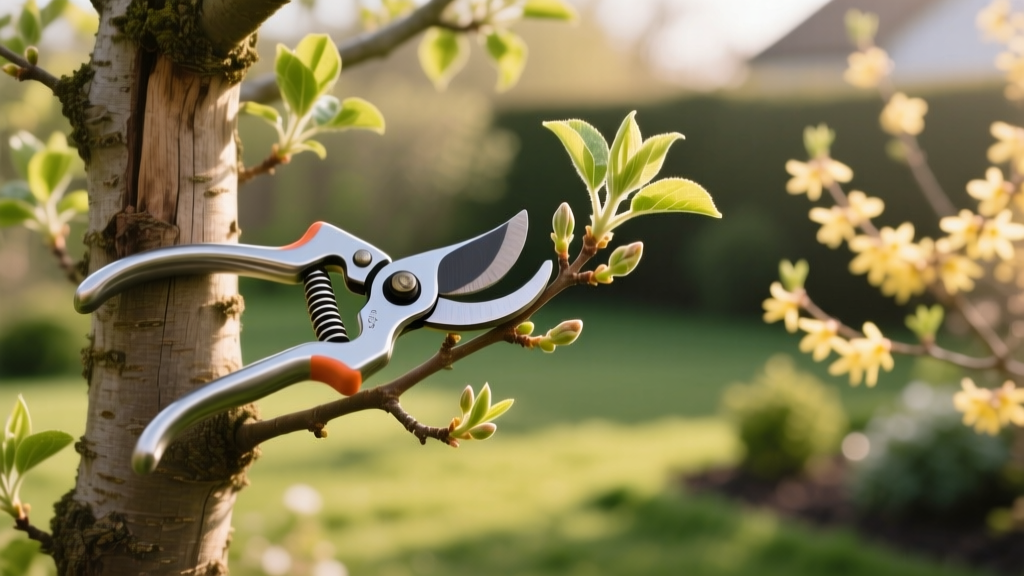
What to Prune in Spring
Spring pruning is a narrow window: cut too early and you risk dieback from late cold snaps; cut too late and you remove flower buds or push out weak, disease-prone growth. The payoff for getting it right is immediate—clean structure, better blooms, fewer pests, and plants that put energy where you want it. Use this guide like a quick seasonal checklist: prioritize what must be cut first, what can wait, and what should never be pruned until after flowering.
Before you pick up pruners, anchor yourself to a few numbers. In many regions, the “go” signal is when daytime highs hold around 50–60°F and buds are swelling but not fully leafed out. Track your local average last spring frost date (often between March 15 and May 20 depending on region). If a hard freeze (28°F or lower) is still likely, delay pruning of tender plants and anything that would push soft new growth.
Also, sanitize tools now—not later. A quick wipe with 70% isopropyl alcohol between plants reduces disease spread. For shrubs and trees with known issues (canker, fire blight), disinfect between every cut.
Priority #1 (Right Now): What to Prune
Start with safety, disease prevention, and plants that benefit most from early-season cuts. The order below is practical: remove hazards and disease first, then shape and stimulate growth on plants that bloom on new wood, then hold off on spring-flowering shrubs until after bloom.
1) Dead, damaged, diseased wood on everything
This is the no-regrets category. Any time you see winter-killed tips, cracked branches, or cankers, remove them back to healthy tissue. Use the “scratch test” on questionable stems: scrape a sliver of bark with your thumbnail. Green underneath = alive; brown and dry = dead.
- Timing: As soon as you can work outdoors without compacting wet soil—often when soil is no longer saturated and daytime temps are consistently above 40°F.
- Cut placement: Remove branches back to the branch collar (don’t leave stubs).
- Disease triage: If you see blackened shoots, oozing cankers, or sudden wilt, bag and trash the material—don’t compost.
Fire blight note (apples/pears): If you’re pruning out suspected fire blight strikes, many extension recommendations advise cutting well below visible symptoms and disinfecting tools between cuts. Confirm local guidance for your state and variety, because recommended distances can vary with disease pressure and season.
2) Summer-flowering shrubs (bloom on new wood)
These are your spring pruning workhorses. They flower on the current season’s growth, so early pruning encourages vigorous new shoots and larger bloom clusters.
Prune in early spring (often 2–6 weeks before last frost) for:
- Panicle hydrangea (Hydrangea paniculata) and smooth hydrangea (H. arborescens)
- Rose of Sharon (Hibiscus syriacus)
- Butterfly bush (Buddleja)
- Bluebeard (Caryopteris)
- Japanese spirea (Spiraea japonica)
Cut back last year’s growth by about 1/3 (or more for butterfly bush and smooth hydrangea if you want strong, upright stems). Remove thin, crossing, and inward-growing stems to open the center for airflow—your best defense against powdery mildew once nights warm and humidity rises.
“Most shrubs that bloom in summer do so on new growth and can be pruned in late winter or early spring before growth begins.” — University of Minnesota Extension (2023)
Citation: University of Minnesota Extension. “Pruning trees and shrubs.” 2023.
3) Roses: clean-up + structure before buds break hard
In USDA Zones 5–8, rose pruning often lands between late March and mid-April, or when forsythia begins to bloom (a reliable phenological cue). In Zones 9–10, much of this happens earlier—often January to February.
- Remove dead canes and any that are thinner than a pencil.
- Open the center for airflow; aim for 3–5 strong canes on hybrid teas and floribundas.
- Cut to outward-facing buds to prevent crowding.
Disease prevention: Spring is the time to reduce overwintering black spot and mildew. Rake and discard old rose leaves around the crown. If black spot was severe last year, plan a preventative spray program timed to leaf-out and wet weather (follow label directions and local extension guidance).
4) Fruit trees: structure, light, and fewer pests
Late winter through early spring is classic timing for apples and pears in colder zones, and earlier in mild-winter areas. The practical target: prune when the coldest weather has passed but before full bud break. In many northern gardens that’s roughly 4–8 weeks before bloom.
- Remove watersprouts and suckers.
- Thin crowded spurs and crossing limbs to let sunlight into the canopy.
- Keep branch angles wide (use limb spreaders if needed).
Pest prevention link: An open canopy dries faster after spring rains, reducing apple scab and other fungal pressure. Also remove and destroy any mummified fruit still hanging—those are spore factories when temperatures climb above 50°F with wetting events.
Citation: Penn State Extension. “Pruning home fruit trees.” 2020.
5) Perennials and ornamental grasses: cut back before new growth tangles
If you left stems for winter habitat, spring is the clean-up window. Cut back:
- Ornamental grasses (miscanthus, panicum) to 4–8 inches before new shoots are more than 1–2 inches tall.
- Perennials like coneflower, sedum, bee balm: remove dead stems to the basal rosette.
Leave some stems: If you have a known population of cavity-nesting native bees, consider leaving a portion of hollow stems until daytime highs reliably reach 60°F for a week—then cut and bundle stems in a dry corner to allow continued emergence.
What NOT to prune yet: spring bloomers that set buds last year
If it blooms before or around lilac season, it usually blooms on “old wood.” Prune these after flowering, not now, or you’ll remove this year’s flowers:
- Lilac
- Forsythia
- Weigela
- Mockorange
- Azalea and rhododendron
- Bigleaf hydrangea (Hydrangea macrophylla) and oakleaf hydrangea (H. quercifolia)
If they’re overgrown, you can remove a few of the oldest stems at ground level right after bloom (renewal pruning), rather than shearing the whole shrub.
Priority #2: What to Protect (Late Frosts, Sunscald, and Fresh Cuts)
Spring weather whiplash is real. A warm spell followed by a 28°F night can damage tender new growth—especially after pruning stimulates bud break.
Frost protection rules that actually help
- If a freeze is forecast within 48 hours: pause pruning on tender shrubs (hibiscus, some hydrangeas in colder zones) and avoid heavy rose pruning that would push soft growth.
- Cover early-blooming fruit trees only if they’re small enough and in bloom; blossoms are often damaged around 28°F (varies by species and stage). Use frost cloth, not plastic touching tissues.
- Water the day before a cold night if soil is dry—moist soil holds more heat.
Protect trunks and branches from sunscald and splitting
Late winter/early spring sun can warm bark during the day, then freeze it at night, causing cracking. This is common on young fruit trees and thin-barked species (maple, cherry) in exposed sites.
- Use a tree guard or wrap on young trunks, especially in Zones 3–6.
- Avoid dark wraps that heat up excessively.
Sealants and wound paint: usually skip them
For most pruning cuts, modern guidance is to let plants seal naturally; dressings can trap moisture and pathogens. Focus on clean cuts at the correct location and tool sanitation.
Priority #3: What to Prepare (Tools, Beds, and the “After-Pruning” Plan)
Pruning is only half the job—what you do after pruning determines whether plants rebound cleanly or limp into summer.
Tool tune-up checklist (do this once, then maintain weekly)
- Sharpen hand pruners and loppers (a sharp cut heals faster).
- Clean sap with a solvent wipe; disinfect with 70% alcohol.
- Check bypass pruner alignment; replace nicked blades.
- Keep a small bottle of alcohol and a rag in your pocket while pruning.
Mulch and feeding—timed to soil temperature
Apply mulch after the soil begins to warm, not while it’s still cold and soggy. A practical cue: when soil temps are consistently above 45°F and early weeds are germinating, spread 2–3 inches of mulch, keeping it a few inches away from stems and trunks.
Hold off on heavy nitrogen for woody plants that were heavily pruned until you see steady growth. Over-fertilizing right after pruning can encourage soft, pest-prone shoots—especially attractive to aphids.
Spring pest and disease prevention tied to pruning
Freshly opened canopies and cleaned beds reduce problems before they start:
- Apple scab / fungal leaf spots: rake and remove old leaves under apples, crabapples, and susceptible ornamentals before rainy periods and 50°F days arrive.
- Peach leaf curl: if you missed dormant spraying, pruning won’t fix it; focus on sanitation and plan for next dormant season. Remove badly distorted leaves as they fall to reduce stress.
- Aphids: avoid pushing lush growth with high nitrogen; encourage predators by leaving early flowers (alyssum, violas) nearby.
- Powdery mildew: thin dense shrubs and roses now; mildew loves crowded, shaded interiors once nights warm.
Priority #4: What to Plant (Because Pruning Reveals Space)
Once you’ve cut back shrubs and perennials, you’ll see gaps—use them. Spring planting is about timing soil, not the calendar. Work the soil when it crumbles in your hand, not when it forms a sticky ball.
Early spring (4–6 weeks before last frost)
- Cool-season annuals: pansies, violas, snapdragons (often tolerate light frosts).
- Vegetables: peas, spinach, lettuce, radish when soil is workable and around 40–45°F.
- Bare-root trees and shrubs: plant while still dormant if available; water deeply.
After last frost (0–2 weeks after your frost date)
- Warm-season vegetables: tomatoes, peppers after nights stay above 50°F.
- Summer annuals: zinnias, basil when soil is warm and frost risk is truly past.
Monthly pruning schedule (adjust by USDA zone)
Use this as a starting point, then shift earlier or later by your frost dates and bud development. Zone 3–5 generally runs later; Zone 8–10 runs earlier.
| Month | Primary pruning targets | What to avoid | Weather cues (numbers) |
|---|---|---|---|
| March | Dead/damaged wood; apples/pears (many areas); panicle & smooth hydrangea; butterfly bush (mild areas) | Spring bloomers (lilac, forsythia) before flowering | Start when highs hold 50°F; pause if a 28°F freeze is forecast |
| April | Roses (Zones 5–8); finish fruit tree structure; cut back ornamental grasses before shoots exceed 1–2 in | Bigleaf hydrangea “old wood” types until you confirm live buds | Typical last frost range begins (Mar 15–May 20 depending on region) |
| May | Prune spring bloomers right after flowering; light shaping; deadhead lilacs | Hard pruning of heat-stressed plants during early heat spikes | Wait to plant tender crops until nights are consistently 50°F+ |
Regional variations: 3 real-world spring pruning scenarios
Spring doesn’t arrive evenly. Use these scenarios to adjust timing without guessing.
Scenario 1: Upper Midwest / Northern New England (USDA Zones 3–5)
You may still have hard freezes into late April or even May. Prioritize safety cuts and sanitation first, then delay heavy pruning on tender shrubs until you’re within 2–4 weeks of your local last frost. Fruit tree pruning is often late March through April, but avoid pruning during extreme cold snaps (below about 20°F) because wood can be brittle and cuts can tear.
Action plan: Do deadwood removal as soon as you can access plants, prune apples/pears before bud break, wait on roses until forsythia blooms, and keep frost cloth ready for early fruit blossoms.
Scenario 2: Mid-Atlantic / Transition climates (USDA Zones 6–7)
False spring is common: a warm stretch in March followed by a cold dip. Don’t let a 70°F week trick you into hard pruning everything. Prune summer bloomers and fruit trees early, but stagger rose pruning—do the clean-up first, then final shaping when you’re closer to stable weather.
Action plan: Split pruning into two passes: (1) remove dead/diseased wood, (2) structural cuts 10–14 days later once forecasts look calmer.
Scenario 3: Pacific Northwest / Maritime climates (USDA Zones 7–9)
Cool, wet springs favor fungal disease. Your best “spray” is airflow. Thin dense shrubs, train espaliers and cane berries neatly, and keep pruning cuts clean. Also: avoid working around plants when everything is dripping wet—wet foliage spreads disease on your hands and tools.
Action plan: Prune on dry days, open the center of roses and shrubs, remove leaf litter, and mulch only after soil begins to warm (often later than you think in a cool spring).
Scenario 4: Warm-winter South / Coastal (USDA Zones 8–10)
Many plants start earlier, and some “spring pruning” happened in winter. The risk here is pushing tender growth that attracts aphids and mites early, plus sunscald on suddenly exposed branches. Also, some fruit trees may break dormancy too early in warm winters—pruning should focus on light thinning and training to avoid excessive vigor.
Action plan: Prune earlier (often January–February for roses), go lighter on nitrogen, and prioritize pest scouting weekly once highs stay above 60°F.
Spring pruning timelines you can follow
Use this as a practical countdown. Replace the frost date with your local average last frost.
6–8 weeks before last frost
- Sharpen/sanitize tools; set up a debris tarp.
- Remove dead/damaged wood on shrubs and trees.
- Prune summer-blooming shrubs that flower on new wood.
- Start fruit tree pruning (apples/pears) if buds are still tight.
4–6 weeks before last frost
- Finish structural fruit tree pruning; remove mummified fruit.
- Cut back ornamental grasses before new shoots elongate.
- Rake old leaves from under roses and fruit trees to reduce disease pressure.
2–4 weeks before last frost
- Prune roses in Zones 5–8 when buds swell and forsythia begins to bloom.
- Scout for overwintered aphids on tender tips; wash off early colonies with water.
- Mulch only if soil is no longer cold and saturated (aim for soil temps > 45°F).
0–2 weeks after last frost
- Prune spring-flowering shrubs after they bloom (lilac, forsythia, azalea).
- Do light shaping only—avoid heavy cuts that force weak growth.
- Dispose of pruning debris that shows disease symptoms.
Spring pruning checklists (printable-style)
Do-this-first checklist (one afternoon)
- Walk the garden with pruners and flagging tape; mark broken limbs and hazards.
- Sanitize tools with 70% alcohol.
- Remove dead/damaged/diseased wood across all shrubs and trees.
- Collect and remove old fruit, leaf litter under roses and fruit trees.
Spring shrub pruning checklist (one weekend)
- Identify bloom timing: spring bloomer (wait) vs summer bloomer (prune now).
- For summer bloomers: remove 1/3 of height, then thin crowded stems.
- Keep cuts just above outward-facing buds.
- Step back every 10 minutes—shape is easier to correct early than late.
After-pruning care checklist (next 7–14 days)
- Water deeply if rainfall is under 1 inch/week.
- Watch forecasts; cover vulnerable bloom/fruit during a 28°F freeze risk.
- Scout for aphids on fresh growth and fungal spotting after rainy spells.
- Mulch once soil warms; keep mulch off trunks and crowns.
Spring pruning isn’t about cutting everything—it’s about cutting the right plants at the right stage. If you’re unsure, identify the plant and ask one question: does it bloom on last year’s wood or this year’s growth? That single detail prevents most spring pruning mistakes. Handle the urgent cuts first, track your frost date and the 28°F nights, and you’ll head into late spring with healthier plants, cleaner structure, and far fewer problems to manage once summer heat arrives.