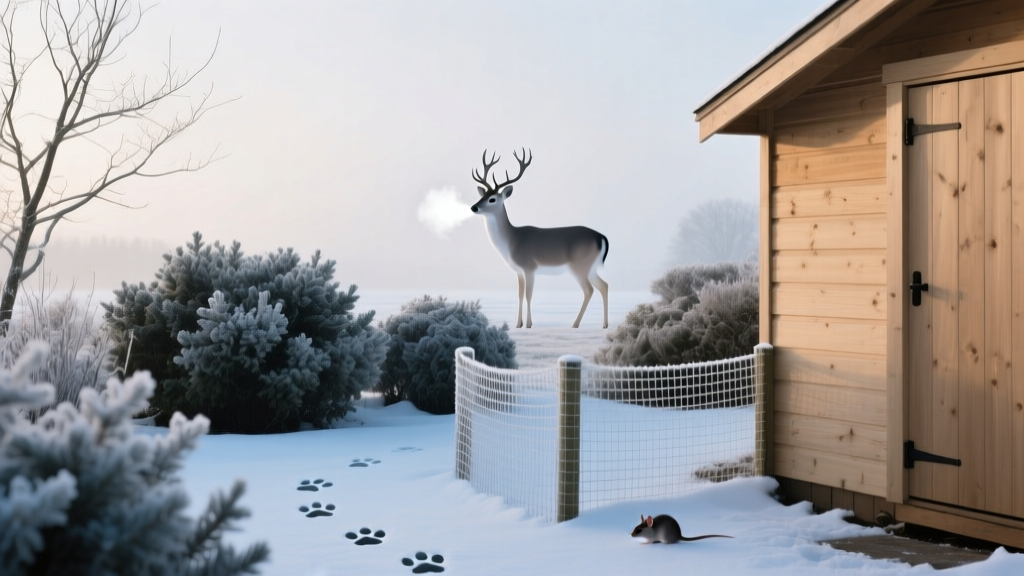
Winter Pest Control: Rodent and Deer Protection
The damage you don’t stop this week is the damage you’ll be staring at in April: girdled young trees, gnawed drip lines, chewed bulbs, and deer browsing that sets shrubs back a full growing season. Winter is when food gets scarce, snow compresses access routes, and hungry animals shift from “nuisance” to “destructive.” The upside is that winter also makes pest control more predictable—tracks are visible, feeding patterns tighten, and physical barriers work better when plants are dormant.
Use this as your right-now field plan: prioritize the plants most likely to be killed (young trees, newly planted shrubs), then protect your highest-value beds (bulbs, winter greens), then reduce habitat and access routes before deep freeze and snowfall lock your yard into whatever setup you leave behind.
Priority 1 (Do this first): Protect trees and shrubs from rodents and deer
1) Install trunk guards before persistent snow or hard freeze
Rodents—especially voles and rabbits—do their worst under snow cover. Once you’ve got consistent snowpack, they can chew bark unseen. Put guards on now, ideally before nighttime lows regularly hit 25°F (-4°C) and snow begins to linger.
What to protect first: apples, crabapples, pears, plums, cherries, serviceberry, dogwood, young maples, and any tree planted within the last 5 years. Also protect roses with woody canes and thin-barked ornamentals.
- Use hardware cloth (1/4-inch mesh) or rigid plastic tree guards. Wrap trunks from soil line to 18–24 inches high in low-snow areas; 30–36 inches where snow drifts are common.
- Keep guards 1–2 inches away from the bark to reduce moisture trapping and fungal issues.
- Bury the bottom edge 1–2 inches into soil to discourage voles from slipping under.
- Check that guards don’t rub—wind movement on young bark can create wounds that invite canker pathogens.
“Rabbits and voles often feed above the snow line; in winters with deep or drifting snow, damage can occur much higher than expected.” — University of Minnesota Extension, woody plant winter injury guidance (updated resource; widely cited principle)
Why this matters: Girdling (bark chewed all the way around) is often fatal. Partial girdling can still stunt growth and invites borers and disease. Physical exclusion is consistently more reliable than repellents once snow arrives.
2) Deer-proof what deer actually kill: evergreens, young trees, and “candy” shrubs
In many regions, the highest winter losses come from deer browsing and antler rubbing. Bucks rub saplings from roughly late October through December (and sometimes into January), and browsing pressure spikes during prolonged cold snaps and deep snow.
High-risk plants: arborvitae (Thuja), yew (Taxus), hemlock, hollies, rhododendrons/azaleas, roses, fruit trees, and any newly planted woody.
- Fence beats spray. For reliable protection, install a deer fence at least 8 feet tall around the most valuable area (bed or orchard row). Short fences (4–6 feet) may work only in low-pressure neighborhoods.
- For individual trees: use sturdy stakes and a 5–6 foot tall welded-wire cylinder, or protect trunks from rubbing with tree wrap plus a cage that extends above typical rub height.
- Protect arborvitae: wrap with breathable burlap (not plastic) and stake it so it doesn’t press foliage. Combine with a perimeter fence if deer already browse in your yard.
Timing cue: If your area’s average first hard freeze (28°F / -2°C) has passed and you’ve had your first snow dusting, deer are already shifting diets. Don’t wait for visible browsing—by then the buds that drive spring growth are already gone.
3) Apply repellents only as backup—and only when temperatures allow
Repellents can help, but they are maintenance-heavy in winter. Many stop adhering after rain/snow or become ineffective when deer are hungry. If you use them, treat them as a layer, not the plan.
- Apply when temps are above 40°F (4°C) so sprays dry properly.
- Reapply after heavy precipitation or thaw/freeze cycles—often every 2–4 weeks.
- Rotate active ingredients (putrescent egg solids, capsaicin, thiram) to reduce habituation.
- Never spray edible crops unless label-approved; follow all label directions.
Citation note: Extension services repeatedly emphasize fencing as the most effective deer exclusion method and repellents as variable; see Cornell Cooperative Extension deer management resources (multiple years) and state extension wildlife damage management pages.
Priority 2: Cut off rodent shelter and winter “runways”
4) Remove vole habitat within 3 feet of trunks and beds
Voles thrive where cover persists: thick mulch, tall grass, groundcovers, and weedy borders. Under snow, they build runways and chew bark at the base of plants.
- Mow or string-trim grass short in orchard rows and around shrub borders after the last growth spurt—often late November to early December in Zones 5–7; earlier in colder zones.
- Pull weeds and cut back dense groundcovers around young trees.
- Keep mulch 3–6 inches away from trunks (no “mulch volcanoes”).
- Avoid piling leaves against shrubs; compost them or shred and use in beds away from woody crowns.
Evidence-based practice: Habitat reduction is a consistent recommendation for vole management. Michigan State University Extension notes that voles are strongly associated with heavy vegetation and cover, and that reducing cover lowers damage risk (MSU Extension wildlife/vole resources, 2019).
5) Secure sheds, garages, and compost areas before the first long cold spell
Mice and rats move indoors and into protected spots when nighttime temperatures drop and food becomes limited. A single overlooked bag of bird seed can support a winter population that later spreads to your garden.
- Store bird seed and pet food in metal containers with tight lids.
- Seal gaps larger than 1/4 inch for mice; rats can use openings around 1/2 inch.
- Elevate compost bins and keep lids tight; don’t add meat/grease scraps.
- Move firewood stacks at least 20 feet from the house and off the ground if possible.
Priority 3: What to plant now (only if your ground and zone allow it)
6) Plant dormant bare-root trees/shrubs when soil isn’t frozen
In milder winter areas (often USDA Zones 7–9), dormant planting can continue through winter windows. The goal is root establishment without top growth.
- Plant on days when soil is workable and daytime highs are 45–60°F.
- Water in deeply at planting, then water during winter dry spells when soil is unfrozen.
- Immediately install trunk guards and deer protection; fresh plantings are high-risk.
7) Set up for winter sowing (but don’t rush the seed)
In colder zones, “winter sowing” in containers can be timed so seedlings don’t sprout during a January warm spell. As a rule, wait until your region is consistently cold—often after New Year’s in Zones 5–7, and December in Zones 3–4.
- Prepare jugs or covered trays with drainage now.
- Store seed dry and label everything before cold hands make it miserable.
Priority 4: What to prune now (and what not to touch)
8) Prune for safety and structure—avoid triggering tender growth
Winter pruning is powerful, but mistimed cuts can worsen winter injury or remove spring blooms.
- Prune broken, cracked, or crossing branches any time you see them—especially after ice or wind events.
- Delay pruning spring-blooming shrubs (lilac, forsythia, azalea) until after bloom, or you’ll remove flower buds.
- Fruit trees: in many regions, major pruning is best in late winter while fully dormant—often February to early March in Zones 4–6—before bud swell but after the coldest extremes pass.
Temperature threshold: Avoid pruning when temperatures are below 20°F (-6°C) to reduce brittle-wood breakage and to make cleaner cuts.
9) Don’t “neaten” perennials if it increases vole cover
It’s tempting to leave thick perennial stems and ornamental grasses for winter interest. In high-vole areas, that cover can be a liability near young woody plants.
- Cut back dense grasses within 3–4 feet of young trees and shrubs.
- Leave habitat farther from trunks if you want winter structure for beneficial insects.
Monthly winter pest-control schedule (adjust to your frost dates)
| Month | What to do this month | Trigger/Timing numbers |
|---|---|---|
| November | Install trunk guards; mow/trim vole cover; start deer fencing; store seeds/feeds in rodent-proof bins | Before first hard freeze 28°F; before persistent snow; aim to finish by Thanksgiving week in Zones 4–6 |
| December | Inspect barriers after storms; refresh repellents during warm windows; protect new plantings; check for rub damage | Reapply repellents when temps are >40°F; inspect after each snow/ice event |
| January | Track activity (runs, droppings, browse lines); reset traps where legal/appropriate; tighten fencing and repair gaps | Look after thaws; damage spikes after 7–10 days of deep snow cover |
| February | Late-winter orchard checks; plan late-winter pruning; protect buds from browsing; monitor sunscald risk on trunks | Prune on days >20°F; plan major pruning 4–6 weeks before bud swell |
| March | Remove or adjust guards if they trap moisture; repair winter damage; keep fencing until green-up reduces browsing pressure | After snowpack melts; keep deer protection until at least 2 weeks after consistent spring green-up |
Checklists you can use today
10-minute assessment checklist (walk your garden with purpose)
- Locate all young trees/shrubs planted within the last 5 years.
- Look for vole runways: narrow paths in grass, small holes, and apple-core-like gnaw marks at the base.
- Check browse lines: a flat “hedged” look on evergreens up to snow height.
- Inspect trunks for rub scars (shredded bark) on saplings.
- Find cover zones: tall grass, thick mulch against trunks, dense groundcover near woody plants.
Weekend action checklist (highest return on time)
- Install hardware cloth guards on every young fruit tree and thin-barked ornamental.
- Wrap or cage arborvitae and high-value shrubs.
- Trim grass short and remove weeds within 3 feet of trunks.
- Seal rodent entry points in sheds/garages; move feed to metal bins.
- Set up a dedicated “deer line” defense: fence, then repellent as backup.
Regional and real-world scenarios (adjust the playbook to your winter)
Scenario A: Upper Midwest / New England (Zones 3–5) with deep snow
Your risk: Vole damage skyrockets under consistent snow cover; deer browse rises when drifts push deer into neighborhoods. Expect damage higher on trunks because snow lifts animals up.
- Extend trunk guards to 36 inches where drifts form.
- Focus on habitat reduction before the first lasting snow—often between Nov 1–Dec 10 depending on location.
- Plan late-winter pruning for late Feb–March, avoiding extreme cold snaps.
Disease prevention angle: Remove and destroy mummified fruit and cankered twigs while plants are dormant to reduce inoculum. Don’t leave prunings piled where rodents can nest.
Scenario B: Mid-Atlantic / Pacific Northwest (Zones 6–8) with wet winters
Your risk: Rodents use lush winter cover; deer browse persists because snow is intermittent, keeping animals mobile. Wet conditions can cause guards to trap moisture if installed poorly.
- Choose rigid, vented guards and keep them slightly off the bark.
- Inspect every 2 weeks during rainy periods—reset guards that shift and abrade bark.
- Repellent windows are more frequent because you’ll have days above 40°F, but rainfall washes products off—schedule reapplications after storms.
Citation: Washington State University Extension materials on deer damage management emphasize exclusion and note the variable reliability of repellents, especially under heavy rainfall (WSU Extension, 2020).
Scenario C: Mountain West / High Plains (Zones 4–6) with freeze-thaw and wind
Your risk: Desiccation and sunscald on trunks combine with browsing and rubbing. Wind can loosen guards and fencing; snow may drift unpredictably.
- Anchor cages and fences with heavy stakes and check after wind events.
- Consider white tree wrap on susceptible trunks to reduce sunscald risk, then add an outer guard for rodents.
- Water during winter warm spells when soil is unfrozen—dry plants are more attractive to browsing and more likely to suffer dieback.
Season-specific pest and disease prevention: stop problems before spring
Rodents: traps, baits, and safe placement
In many home landscapes, trapping is the most controlled option when rodents are already established. If you use rodenticides, follow all local regulations and label directions carefully—non-target wildlife exposure is a real risk.
- Place snap traps in enclosed bait stations where pets and wildlife can’t access them.
- Target travel corridors: along walls, under decks, behind stored items.
- Outdoors, prioritize exclusion and habitat reduction; winter baiting can create secondary poisoning risks.
Citation: University of California Agriculture and Natural Resources highlights integrated rodent management—sanitation, exclusion, habitat modification, and targeted control—rather than relying solely on toxicants (UC ANR, 2018).
Deer: make your landscape less attractive in the coldest months
Deer diets shift in winter toward woody browse. You can’t change that, but you can decide which plants are available.
- Keep “deer candy” (yews, arborvitae, roses) inside protected zones.
- Use less-preferred plants on outer edges as a buffer (local results vary).
- Don’t pile prunings where deer can browse tender tips all winter.
Preventing cankers and rot around winter wounds
Chewed bark, rubs, and pruning cuts can invite disease. Your winter job is to keep wounds clean and plants stable.
- For deer rubs on young trees, straighten and stake if loosened; protect immediately with a cage.
- Do not paint wounds with sealants; focus on preventing further injury and maintaining vigor.
- Remove badly girdled saplings now and plan replacements—spring won’t fix a dead cambium ring.
Right-now timeline: the next 6 weeks
- Within 48 hours: Identify and guard the most vulnerable trunks; secure bird seed and pet food; trim grass around young trees.
- Within 7 days: Install or repair deer fencing around priority beds; cage any saplings showing rub signs; remove brush piles near beds.
- Within 2 weeks: Re-check after a storm; look for fresh tracks and new browse; adjust guard heights if snow begins to accumulate.
- Weeks 3–6: Inspect barriers every 10–14 days; reapply repellents on warm, dry days above 40°F; plan late-winter pruning dates based on bud swell and your average last frost (often April 10–May 15 depending on region).
Quick comparison: what works best against winter rodent and deer damage
| Method | Best for | Reliability in winter | Notes |
|---|---|---|---|
| Hardware cloth trunk guard | Voles/rabbits on young trees | High | Extend height for snow; keep slightly off bark; bury bottom edge 1–2 inches |
| 8-foot deer fence | Deer browsing and rubbing | High | Most dependable; focus on high-value zones first |
| Repellent sprays | Supplemental deer deterrence | Low–Medium | Reapply every 2–4 weeks; performance drops in heavy rain/snow |
| Habitat reduction (mowing, weed removal) | Vole pressure reduction | Medium–High | Best paired with guards; do before snow cover locks in protection for rodents |
Winter pest control is mostly logistics: barriers at the right height, installed before snow, checked on a schedule, and backed up by cleanup that removes hiding places. If you do those four things, you don’t just prevent damage—you keep your spring workload from exploding into replacements, retraining, and years of lost growth.
Set a calendar reminder for your next inspection in 10 days. Winter rewards the gardeners who check and adjust, not the ones who “set it and forget it.”