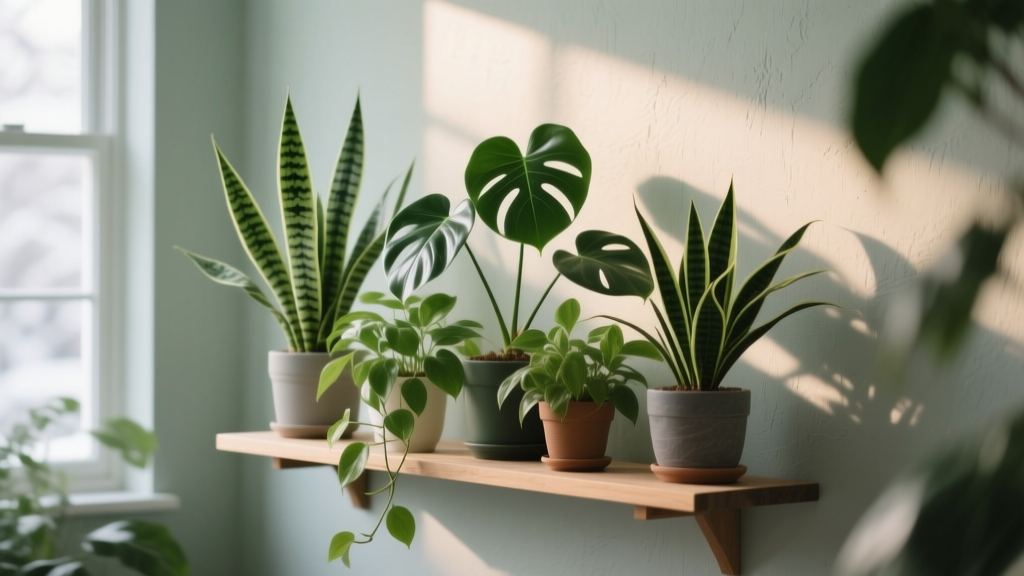
Winter Garden: Maintaining Houseplants in Low Light
The light has already dropped, your heating system is running, and houseplants are quietly deciding whether to coast through winter or slowly decline. The next 2–6 weeks are the make-or-break window: intervene now and plants hold their leaves, resist pests, and come out of winter ready to grow; ignore the shift and you’ll be troubleshooting yellowing, fungus gnats, and weak, stretched stems by late January. Use this as a right-now seasonal checklist—prioritized—so your indoor garden stays stable through the darkest part of the year.
Quick seasonal benchmarks to keep you on track: After the fall equinox (around September 22) most homes begin losing usable window light; the lowest natural light occurs near the winter solstice (December 21). Many homes also drop below 30% relative humidity once heat runs regularly. Cold injury risk spikes when leaves touch glass that’s below about 45°F, and many tropicals slow dramatically when room temperatures dip under 60°F.
Priority 1: What to protect (light, temperature, and humidity—do this first)
Week 1: Measure your winter light and move plants accordingly
Low light is rarely “no light.” It’s usually “less light than the plant needs to maintain its current leaf mass.” Start with placement before you change watering or fertilizer.
- Do a noon test: At midday, stand where the plant sits and read a page of print. If it’s hard to read without turning on a lamp, that spot is low light.
- Use a phone lux meter (optional but useful): Many foliage houseplants maintain better color above roughly 1,000–2,000 lux for several hours; bright-window plants often want far more. If you’re routinely below 500 lux, plan on a grow light.
- Rotate weekly: Turn pots ¼ turn every 7–10 days to reduce lean and lopsided growth.
Low-angle winter sun can be intense for a few hours in south- and west-facing windows—while the rest of the day is dim. If you see bleached patches on leaves, pull plants back 6–18 inches or add a sheer curtain, but don’t assume “winter can’t burn.”
Temperature thresholds that prevent winter setbacks
Houseplants hate surprises more than cool rooms. Focus on stable temperatures:
- Keep most tropical foliage plants at 65–75°F days and 60–68°F nights. Repeated dips below 55–60°F often trigger leaf drop in pothos, philodendron, and many dracaenas.
- Protect from window chill: If the glass is colder than 45°F, don’t let leaves touch it. Move plants inward at night, especially during cold snaps.
- Keep away from blasts: Don’t place plants within 3 feet of heating vents, radiators, or frequently used exterior doors.
Humidity: stop crispy edges and spider mite season before it starts
Once indoor humidity drops below 30–35%, you’ll see browning tips on thin-leaved plants and more spider mite flare-ups. Your goal is a realistic 35–50% RH in winter.
- Group plants: Clustering raises local humidity slightly and reduces airflow extremes.
- Use a humidifier: Aim for 40–45% RH in the plant area. Clean it weekly to reduce mineral dust and biofilm.
- Skip misting as your main strategy: It’s brief and can encourage leaf-spot on some plants. Use it only for temporary relief.
“Most indoor plant problems are rooted in environmental stress—low light, improper watering, and low humidity—rather than lack of fertilizer.” — Extension houseplant guidance summarized from university extension publications on indoor plant care (e.g., Clemson Cooperative Extension, 2020; University of Minnesota Extension, 2022).
Priority 2: What to plant (and what not to) during low-light winter
Plant now: low-light winners and winter-proof starts
Winter isn’t prime time for starting demanding, high-light plants on a windowsill. But it is a great time to add resilient foliage plants or to propagate select “forgiving” species if you provide supplemental light.
Best low-light houseplants to add now (buy or trade):
- ZZ plant (Zamioculcas zamiifolia)
- Snake plant (Dracaena/Sansevieria)
- Pothos (Epipremnum aureum)—note variegated types need more light to hold pattern
- Cast iron plant (Aspidistra elatior)
- Chinese evergreen (Aglaonema)
Propagation you can do in the next 2–4 weeks: Pothos, philodendron, tradescantia, and some begonias root reliably. Use clean snips, change water weekly, and pot up only after roots reach 2–3 inches.
Wait to plant: high-light bloomers and fussy growers
Delay or use grow lights for:
- Citrus, hibiscus, bougainvillea (they decline fast in dim rooms)
- Most succulents and cacti (unless under strong supplemental lighting)
- New orchids that require bright conditions to thrive (unless you already have a suitable setup)
If you must bring home a high-light plant in winter, plan for a grow light immediately—don’t “see how it does” for a month. That month is when it sheds leaves.
Priority 3: What to prune (clean-up cuts, not heavy shaping)
Prune for hygiene and balance—then stop
In low light, most houseplants aren’t actively growing; heavy pruning can stall recovery. Keep pruning minimal and strategic:
- Remove yellowing or damaged leaves at the base to reduce pest habitat and fungal issues.
- Pinch soft tips lightly on leggy tradescantia or coleus to encourage branching only if the plant is still pushing growth.
- Do not hard-prune woody houseplants (ficus, schefflera) in December unless there’s breakage or pest pressure. Schedule structural pruning for late winter/early spring as days lengthen (often late February to March).
Sanitation rules: Wipe blades with 70% isopropyl alcohol between plants; bag and discard infested leaves. This is one of the easiest winter disease-prevention moves.
Priority 4: What to prepare (watering, lighting systems, feeding, and repot timing)
Watering: change frequency, not just amount
In winter, low light slows photosynthesis; plants use less water. Most winter losses come from roots staying wet too long.
- Use a schedule trigger: Water only when the top 1–2 inches of mix are dry for most foliage plants; for succulents, wait until the mix is dry deeper down.
- Drain fully: Never leave pots sitting in water longer than 10–15 minutes.
- Water earlier in the day: Morning watering reduces the chance of cold, wet roots overnight near windows.
Extension guidance consistently emphasizes matching irrigation to reduced winter growth and light. The University of Minnesota Extension notes overwatering is a common cause of indoor plant decline, especially in low light (University of Minnesota Extension, 2022).
Fertilizer: pause for most plants, continue lightly for exceptions
If your plant is not producing new leaves, it doesn’t need fertilizer right now. Fertilizing a stressed, low-light plant can worsen salt buildup and leaf tip burn.
- Pause feeding from about mid-November to late February for many foliage plants, unless you’re using strong grow lights and seeing active growth.
- Exceptions: Herbs under grow lights, actively growing african violets, and some orchids may benefit from “weakly, weekly” feeding at ¼ strength.
- Flush salts: Once in winter (pick a mild day), run room-temperature water through the pot for 60 seconds to leach salts—only if drainage is excellent.
Clemson Cooperative Extension highlights that houseplants typically require less fertilizer during periods of low light and slower growth (Clemson Cooperative Extension, 2020).
Repotting: only if the plant is failing from root issues
Repotting is stressful in low light. Don’t repot just because you have time off work.
Repot now only if:
- Water runs straight through and the plant dries out in 24–48 hours (severely rootbound), or
- You suspect root rot and need to cut away mushy roots, or
- There’s a pest issue in the potting mix (e.g., persistent fungus gnats) and you’re changing media.
Otherwise, mark your calendar for 2–4 weeks before your last spring frost date (varies by region; many Zone 6 gardens see last frost around April 15–May 1, while Zone 8 may be March 1–March 20). That’s when indoor plants naturally ramp up and recover quickly after repotting.
Grow light triage: when windows aren’t enough
If you see stretched stems, smaller new leaves, fading variegation, or soil staying wet for too long, low light is the limiting factor. A modest grow light setup prevents most winter decline.
- Timing: Provide 10–12 hours of light daily for foliage plants; up to 12–14 hours for herbs.
- Distance: Start lights about 12–18 inches above foliage for many LED grow lights, then adjust based on response (bleaching = too close; legginess = too far/too weak).
- Consistency: Put lights on a timer within the next 7 days to stabilize plant rhythms.
Practical rule: if your winter window produces long shadows for only an hour or two, use supplemental light.
Pest and disease prevention: winter is peak time indoors
Weekly winter scouting (10 minutes, once every 7 days)
Indoor pests multiply quickly because there’s no weather to slow them down. Scout on the same day each week.
- Check leaf undersides and petiole joints with a flashlight.
- Look for fine webbing (spider mites), sticky residue (aphids/scale), cottony clusters (mealybugs), and tiny flying gnats near soil.
- Isolate any suspect plant immediately—distance matters more than you think in a dry, heated room.
Most common winter houseplant problems and what to do now
- Spider mites: Thrive when RH is under 35%. Raise humidity, rinse leaves in the shower, and use insecticidal soap or horticultural oil labeled for indoor use. Repeat treatments every 5–7 days for 3 rounds to catch hatchlings.
- Fungus gnats: A watering/soil moisture signal. Let the top 2 inches dry, use yellow sticky cards, and consider Bacillus thuringiensis israelensis (Bti) drenches weekly for 2–3 weeks.
- Mealybugs/scale: Spot treat with alcohol-dipped swabs, then follow with labeled soap/oil sprays. Recheck weekly for 4 weeks.
- Botrytis/leaf spots: Encourage airflow, remove affected tissue, and avoid wet foliage. Water at the soil line, earlier in the day.
Preventive habit that works: Dust leaves monthly. Dust blocks light—exactly what you can’t spare in winter.
Seasonal schedule: what to do from December to March
| Month | What to do this month | Key thresholds & timing |
|---|---|---|
| December | Reposition plants, add timers/lights, stop most fertilizing, begin weekly pest checks | Near Dec 21 light is at its lowest; keep leaves off cold glass below 45°F |
| January | Hold steady: conservative watering, humidity support, treat pests promptly, rotate pots | Maintain 35–50% RH; rotate every 7–10 days |
| February | Watch for new growth; resume light feeding only if growth starts; plan spring repotting list | Many homes see improving daylight after mid-month; consider repotting in late Feb only if actively growing |
| March | Gradually increase watering; begin repotting and pruning as growth returns; start acclimation plans for outdoor summering | Repot about 2–4 weeks before last frost; typical last frosts: Zone 8 (Mar 1–Mar 20), Zone 6 (Apr 15–May 1) |
Three real-world winter scenarios (and exactly how to respond)
Scenario 1: Northern winters (USDA Zones 3–6) with short days and very dry heat
What’s happening: Day length is short, sun angle is low, windows are cold, and forced-air heat drops humidity fast. Expect slower drying in pots near cold windows and faster drying near vents.
Do this in the next 14 days:
- Move tropicals back from glass at night; aim for leaf temperatures above 60°F.
- Run a humidifier to keep plant area around 40–45% RH.
- Add a grow light for any plant that must stay attractive (ficus, variegated pothos, citrus overwintering indoors).
- Water only after checking depth dryness—don’t water “because it’s Saturday.”
Scenario 2: Mild-winter regions (USDA Zones 8–10) with bright days but chilly nights near windows
What’s happening: You may have more light than northern homes, but night temperatures near windows can still drop sharply, and indoor plants may be near drafty sliders or uninsulated glass.
Do this this week:
- Use the “hand test” at night: if the window area feels cold, pull plants in 12 inches after sunset.
- Be cautious with watering—plants may still slow down even if days feel bright.
- Watch for scale and mealybugs on citrus, hoya, and ficus; treat early before populations build.
Scenario 3: Apartments/condos with limited windows (one exposure, lots of shade from buildings)
What’s happening: Your “bright window” may be functionally low light all winter. Plants survive, but aesthetics suffer without supplemental light.
Action plan for the next 7 days:
- Prioritize plants by value: keep your favorites under lights, and move tolerant plants (ZZ, snake plant) to darker areas.
- Install a simple shelf light with a timer set to 10–12 hours.
- Reduce watering frequency across the board; soil will dry slowly in dim rooms.
Right-now checklists (printable mindset, no guesswork)
This week (next 7 days)
- Move plants to maximize winter daylight; rotate pots ¼ turn.
- Confirm leaves aren’t touching cold glass; protect when glass is near/below 45°F.
- Start a weekly pest check (undersides, stems, soil surface).
- Pause fertilizing for dormant plants; keep notes on who is still growing.
- Set up humidity support to stay above 35% if possible.
Over the next 2–4 weeks
- Add a grow light for any plant showing stretch, leaf drop, or fading variegation.
- Trim only dead/diseased foliage; sanitize tools between plants.
- Address fungus gnats by drying the top layer and using sticky traps; escalate to Bti if needed.
- Wipe dust off leaves once; reassess light levels after cleaning.
By late February (or when you see new growth)
- Make a spring repot list; buy fresh mix and pots before the busy season.
- Plan structural pruning for woody houseplants as days lengthen (late Feb–March).
- Resume light feeding only for plants actively producing new leaves.
Timing notes tied to frost dates and indoor/outdoor transitions
Even though this is an indoor season, outdoor climate still matters because it affects your home environment and your spring plans.
If you “summer” houseplants outdoors, mark your average last spring frost date now. Many gardeners start acclimating houseplants outdoors only after nights reliably stay above 50°F—often 2–4 weeks after the last frost date in cooler zones. That planning starts in winter: keep plants healthy enough now that they can actually take advantage of spring light later.
USDA hardiness zones also hint at your indoor winter conditions: Zone 3–5 homes often have longer heating seasons (drier air for more months), while Zone 9–10 homes may fight indoor pests year-round. Adjust your priorities accordingly—humidity management in colder zones, pest vigilance in warmer ones.
Winter houseplant care is mostly restraint plus a few targeted upgrades: steadier light, steadier moisture, steadier air. Set the plants up now—within the next week—so you aren’t chasing problems when the calendar flips to January. When you notice the first clean push of new leaves in late February or March, you’ll know your winter system worked.